
How to Care for Chinese Money Plant in Hong Kong | Plantjai

Plantjai 植仔 · Care Encyclopedia
Chinese Money Plant
Hong Kong care guide — useful before you buy and after it arrives.
Shop this plantRound as an old coin and lucky by nature — the popular houseplant everyone's collecting right now.
Origin & characteristics
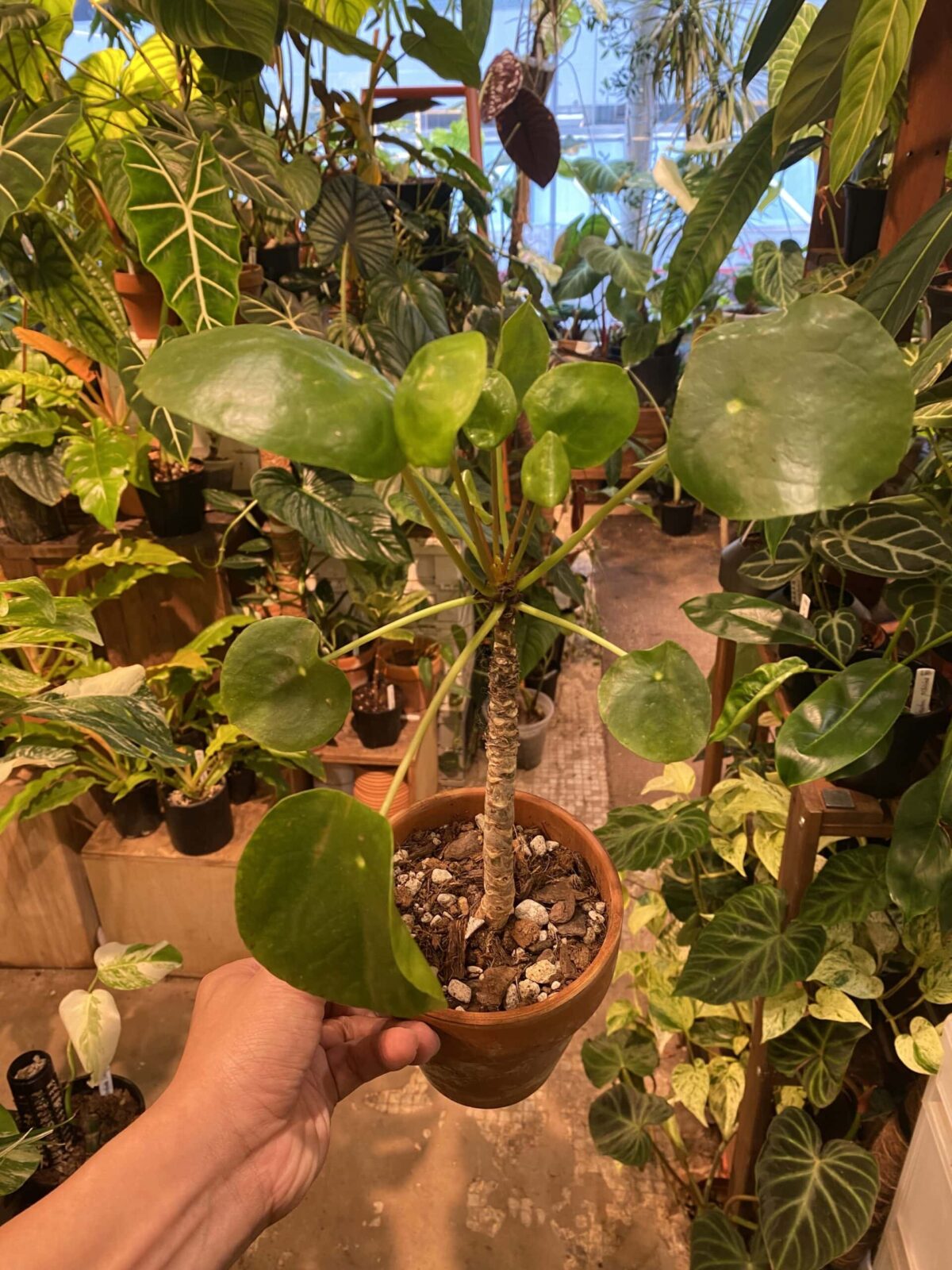
Chinese Money Plant is native to Yunnan, China, a perennial herb in the family Urticaceae, genus Pilea. Its round, flat leaves are glossy green and shaped like ancient coins, hence the nickname "Chinese Money Plant." It grows upright and compact, readily producing offset pups that make it easy to share. Highly adaptable, with moderate growth speed, it's become an extremely popular entry-level foliage plant in recent years, symbolising wealth and abundance, and makes a lovely gift or personal keepsake.
Light
Chinese Money Plant enjoys bright, diffused light, ideally near an east- or west-facing window. It tolerates partial shade, but insufficient light causes the stem to grow leggy and the leaves to shrink. Avoid harsh midday direct sun, which can leave yellow scorch marks on the leaves. Rotate the pot regularly to ensure even light on all sides, keeping the plant's growth balanced.
Watering
Follow the "let it dry, then water" principle, watering once the top 3 cm of soil is fully dry. In spring and summer, water roughly 1–2 times weekly, reducing to every 7–10 days in autumn and winter. Avoid waterlogging, and the pot must have drainage holes. The relatively thick leaves have some water-storing capacity, so brief dry spells aren't a major issue — overwatering is far more likely to cause harm.
Soil & pot
Use a well-draining, breathable potting soil, such as general potting mix combined with perlite (roughly 3:1) to boost drainage. A terracotta pot with drainage holes is ideal, helping keep the soil aerated and allowing excess moisture to evaporate. Its root system is fairly shallow, so a deep pot isn't necessary — a wide, shallow pot suits its growth form better.
Temperature & humidity
Suitable growing temperature is 15–25°C, with a minimum winter temperature no lower than 10°C — it's not frost-hardy. A relative humidity of 40–60% is sufficient, and typical indoor humidity generally suits it well. In summer, avoid placing it directly in AC airflow, and in winter keep it away from heaters.
Common problems
- Drooping, soft leaves: usually caused by overwatering leading to root rot. Check soil moisture and replace with drier soil if necessary.
- Yellowing leaves: may result from too much light or nutrient deficiency. Move to a shadier spot and fertilise appropriately during the growing season.
- Leggy stem with small leaves: caused by insufficient light — move to a brighter position.
- Brown spots on leaves: possibly from cold watering or water pooling on the leaf surface — water with room-temperature water and avoid wetting the crown.
- What to do with offset pups: keep them to fill out the plant, or cut them off once they reach 5–8 cm to propagate as cuttings.
How to explain to customers
"This Chinese Money Plant is also called the coin plant — nice and round, symbolising good luck! It's really easy to care for, just don't water it too often — let the soil dry out first. It naturally produces offset pups, and when they're ready you can cut them off and share with friends, which is sometimes called 'passing on your good fortune'!"
Fun facts
Chinese Money Plant wasn't discovered by Western horticulture until the mid-20th century, when a Norwegian missionary collected it in Yunnan and brought it back to Europe — hence its early Western nickname, "the missionary plant." Its offset pups propagate extremely easily, and it's known in horticultural circles as the "Pass-it-on plant," symbolising sharing and friendship.
Keywords
Chinese Money Plant, Pilea peperomioides, coin plant, Urticaceae, lucky plant, beginner plant, foliage plant, easy propagation, indoor potted plant, gift plant
In-depth care guide
Introduction
Chinese Money Plant (Pilea peperomioides) is a perennial evergreen herb in the family Urticaceae, genus Pilea, native to Yunnan Province, China. It goes by many names, including Chinese Money Plant, Pancake Plant, UFO Plant, and Friendship Plant. The "money plant" name comes from its round, coin-shaped leaves, which many Chinese people consider a symbol of prosperity and abundance.
Chinese Money Plant was brought to Europe from China in the early 20th century by Norwegian missionary Agnar Espegren, and it quickly became popular across Scandinavia. Because it readily produces offset pups that are easy to share with friends, it earned the nickname "Friendship Plant." Today, it's one of the world's most popular houseplants, fitting equally well in Nordic-minimalist and tropical-jungle-style homes.
Chinese Money Plant typically grows to around 30 cm tall, with leaves 5–10 cm in diameter, held aloft on long petioles that give the plant a shape reminiscent of a miniature umbrella. Under good care, it will also produce small clusters of white or pink flowers in spring and summer — not particularly showy, but a charming bonus.
Light requirements
Chinese Money Plant is most fond of bright but indirect light. You can place it a few feet from a window, or under light filtered through a sheer curtain. East- or west-facing windows are usually ideal spots, since the softer morning and evening sun won't scorch the leaves.
If placed in direct sun near a south-facing window, the leaves will easily develop yellow or brown scorch marks, especially under the harsh midday summer sun — and once damaged, they won't recover. Conversely, if light is too dim, the stem will become long and thin (a phenomenon known as etiolation), the leaves will become smaller and duller in colour, and fewer offset pups will form.
An important habit is rotating the pot regularly. Chinese Money Plant is phototropic, and without regular rotation it will lean toward the light, growing lopsided and unattractive. Rotate the pot a quarter turn every few days to ensure even light exposure on all sides.
If your home is genuinely too dark, consider using a grow light for 8–12 hours a day to keep the Chinese Money Plant looking its best.
Temperature requirements
Chinese Money Plant has a fairly wide temperature tolerance range, growing well between 13°C and 30°C. Generally speaking, typical indoor room temperature is more than sufficient for it to thrive happily.
That said, it has a few particular dislikes: first, cold drafts — never place it near frequently opened doors and windows or in direct AC airflow. Second, large temperature swings — for example, if the day-night temperature difference exceeds 10°C in winter, it will become unhappy and may drop leaves. Indoor growing is best kept between 18°C and 24°C.
Worth noting: some horticultural experts believe brief exposure to lower temperatures (close to 10°C) may encourage flowering. However, unless you're experienced, it's best to stay within the safe temperature range rather than risk the plant's health.
Watering method
Chinese Money Plant's watering needs can be summed up in one phrase: "better dry than wet, water only when dry." Its biggest fear is prolonged waterlogged soil, since this easily leads to root rot. The correct approach is to insert a finger about 2–3 cm into the soil before watering — if it feels dry, water thoroughly until it flows from the pot's base.
Generally speaking, water about once a week in summer and once every two weeks in winter, though actual frequency depends on your home's temperature, humidity, and pot size. A useful indicator is observing the leaves — if the Chinese Money Plant is thirsty, its leaves and stem will begin to droop, and watering promptly usually restores it within a few hours.
Always remember to use a pot with drainage holes, which is the first line of defence against root rot. If a pot has no drainage holes, excess water has nowhere to go, and the roots will eventually rot.
Water quality
Chinese Money Plant isn't particularly fussy about water quality, and ordinary tap water is generally fine. But if your tap water has a strong chlorine smell, it's best to let it stand in a jug or vase overnight to allow the chlorine to dissipate before use. In winter, use room-temperature water rather than icy-cold water, avoiding root shock.
Soil and repotting
Chinese Money Plant needs well-draining soil. Use a quality indoor potting soil, adding perlite or vermiculite to increase aeration. A simple recipe is 7 parts quality potting soil to 3 parts perlite. If you'd rather not fuss over it, a succulent-specific potting mix works too, thanks to its especially good drainage.
Ideal soil pH sits between 6.0 and 7.0, slightly acidic to neutral.
Repotting is best done in spring, when temperatures warm up and the plant becomes more active in growth, allowing for faster recovery. Here are a few signs that repotting is needed:
- Roots visible emerging from the pot's drainage holes
- Water draining through very quickly after watering, as if the soil can't retain moisture
- Growth clearly slowing despite normal watering and fertilising
When choosing a new pot, size up by only about 2–3 cm in diameter. Chinese Money Plant actually enjoys being slightly root-bound, and an overly large pot makes it harder for the soil to dry out, increasing the risk of root rot.
As for pot material, plastic, ceramic, or terracotta all work. Terracotta offers the best breathability but draws moisture away faster, requiring more frequent watering; plastic retains moisture better, so be careful not to water too often.
Fertilising recommendations
Chinese Money Plant doesn't need much fertiliser. During the growing season (spring and summer), apply a balanced liquid fertiliser (e.g. NPK 10-10-10) once a month, diluted to half the recommended package concentration. Using too concentrated a fertiliser risks burning the leaf edges.
A simple way to judge whether fertilising is needed is to observe whether new leaves are emerging. If new leaves are appearing, the plant is actively growing and can be fertilised; if not, growth has paused and fertilising isn't necessary.
Stop fertilising in autumn and winter, since cooler temperatures slow or halt growth, meaning the plant doesn't need extra nutrients. Fertilising regardless will only cause salt buildup, harming the root system.
Humidity and leaf care
Chinese Money Plant adapts fairly well to typical household humidity levels, but if your home runs AC or heating that makes the air especially dry, occasionally misting the leaf surface can help boost humidity. Note, though, that misting only briefly raises humidity — if conditions remain persistently dry, a humidifier is a better long-term solution.
Chinese Money Plant's round leaves easily collect dust, so it's a good idea to wipe the leaf surface gently with a damp cloth every few weeks, or give it a gentle rinse under lukewarm water from a showerhead. Clean leaves photosynthesise more effectively, which benefits the plant's overall health.
Propagation methods
Chinese Money Plant is one of the easiest houseplants to propagate, with several methods available:
Offset propagation (most recommended)
Chinese Money Plant naturally produces offset pups around the base of the mother plant, and these pups have their own independent root systems, making them easy to separate and pot individually:
- Wait until the offset has grown to at least 5–8 cm tall before separating it.
- Gently brush away the soil around the base of the offset to reveal where it connects to the mother plant.
- Use sterilised scissors or a blade to cut the offset away from the mother plant.
- Plant the separated offset in a small pot with fresh soil, keeping the soil lightly moist.
- Place in bright, indirect light — rooting typically takes about 2–4 weeks.
Water propagation
Separated offsets can also be rooted directly in water. Submerge the base of the offset in water (about 1–2 cm deep), changing the water every few days, and place in a bright location. White roots typically appear within one to two weeks. Once the roots reach about 2–3 cm long, transplant into soil.
Leaf cutting propagation
In theory, Chinese Money Plant can be propagated from a leaf with an attached petiole, but the success rate is relatively low and rooting takes longer. If you'd like to try, cut a healthy mature leaf (with a small section of petiole attached) and insert it into moist perlite or vermiculite, maintaining high humidity and a warm environment.
Common problems and solutions
Yellowing leaves
The two most common causes are overwatering or temperature too low. If it's an older leaf at the base yellowing, this may be normal ageing and not a cause for concern. But if many leaves yellow simultaneously, check soil moisture and surrounding temperature.
Drooping leaves
Almost certainly a sign of thirst. Chinese Money Plant's stem and leaves will droop when it lacks water, but it's fairly resilient and usually recovers after prompt watering. If it's been dry for too long, though, some leaves may fail to recover.
Curling leaves
May be caused by overly dry air, excessive cold, or overly concentrated fertiliser. Check ambient humidity and temperature, and recall whether you've recently fertilised.
Long stem with sparse leaves
This is called etiolation, caused by insufficient light. Move the Chinese Money Plant to a brighter position, or supplement with a grow light. Already-etiolated stems won't shorten, but new leaves will grow sturdier under better light.
No offset pups
Chinese Money Plant needs to be somewhat pot-bound before it readily produces offsets. If you want it to "have babies," consider holding off on repotting to a larger pot until the roots fill the current one. Sufficient light also promotes offset growth.
Pest and disease management
Chinese Money Plant is generally quite hardy, but if conditions aren't suitable or care is neglected for a long time, it may suffer from the following pests:
Mealybugs
The most troublesome pest for Chinese Money Plant owners. They hide in the crevices between leaves and stems, appearing as white cottony masses that feed on plant sap. If the infestation is mild, dab them off individually with a cotton swab dipped in alcohol. For severe infestations, use neem oil or insecticidal soap spray.
Aphids
These cluster on new leaves and shoots, causing leaf deformation. Rinse them off with a strong water spray, or use a soapy water spray.
Spider mites
These appear easily in dry conditions, causing small yellow spots on the leaves. Increasing humidity and misting regularly can effectively prevent spider mites.
Root rot
Caused by overwatering or poor drainage. Symptoms include yellowing leaves and a generally listless plant. If you suspect root rot, remove the plant from its pot immediately, trim away rotten roots, and replant in fresh soil.
Toxicity information
Good news! Chinese Money Plant is non-toxic to both humans and pets, making it a very safe houseplant choice. If you have young children or pets at home, you can grow it with confidence, without worrying about poisoning from accidental ingestion.
參考資料(想知來源可展開)
References
- Patch Plants. "Complete guide to Chinese money plant care." https://www.patchplants.com/pages/plant-care/complete-guide-to-chinese-money-plant-care/
- A Beautiful Mess. "Caring for Pilea (Chinese Money Plant)." https://abeautifulmess.com/caring-for-pilea-plants/
- The Spruce. "How to Care for a Chinese Money Plant (Pilea Peperomioides)." https://www.thespruce.com/growing-pilea-peperomioides-5090425
- Savvy Gardening. "Pilea peperomioides care: The best light, water, and food for a Chinese money plant." https://savvygardening.com/pilea-peperomioides-care/
- House Plant House. "Pilea peperomioides Care Guide." https://houseplanthouse.com/2021/01/22/pilea-peperomiodes-care-guide/
- Penn State Extension. "Pilea as a Houseplant." https://extension.psu.edu/pilea-as-a-houseplant/
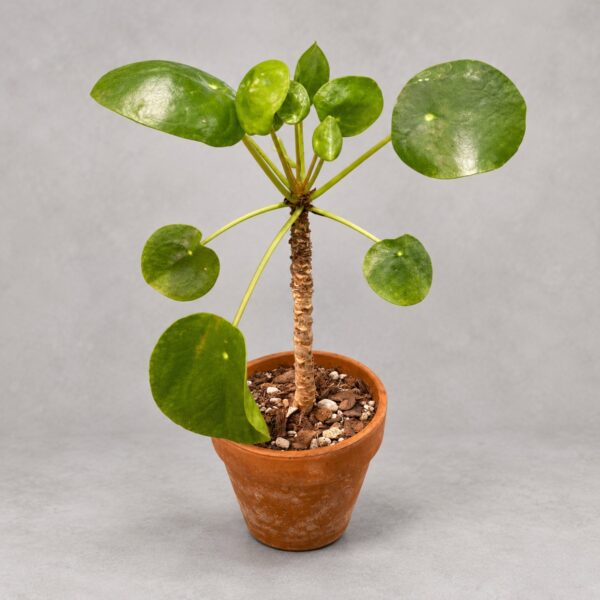
Plantjai shop · In stock online
Chinese Money Plant
Pilea peperomioides
HK$280.00
Hong Kong delivery · Causeway Bay pickup
For Hong Kong homes and offices. Stock and pricing follow the product page.
IN STORE NOW
Plants for this guide
Related plants in stock now — live prices, delivery or Causeway Bay pickup.
FREE PLANT ADVICE
Send us a photo before you change anything
WhatsApp a photo of the plant and your window light. Our Causeway Bay team will suggest care steps or plants that suit your space.
STORE · CAUSEWAY BAY
4/F, 39 Yiu Wa Street, Causeway Bay
Daily 12:30–8:00pm · ~3 min walk from Times Square
Map & directionsPlant Care