
Plant Care

How to Care for Caladium White Christmas in Hong Kong | Plantjai

Colocasia 'White Christmas' 白色戀人彩葉芋

Plantjai 植仔 · Care Encyclopedia

Caladium White Christmas

Colocasia 'White Christmas' 白色戀人彩葉芋

Hong Kong care guide — useful before you buy and after it arrives.

Shop this plant

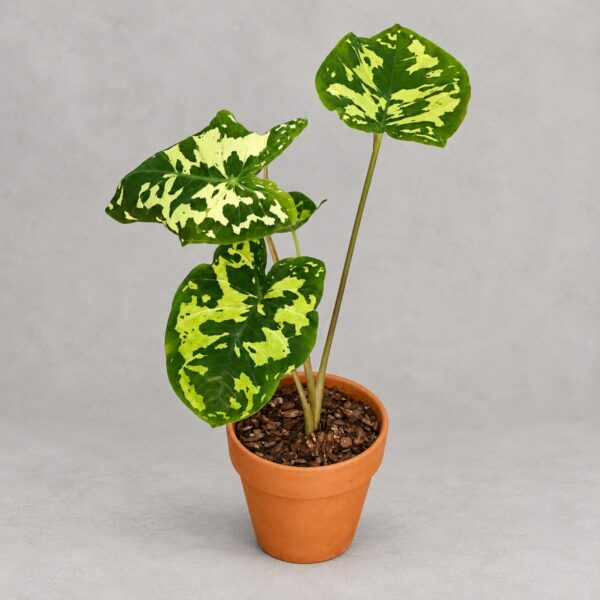
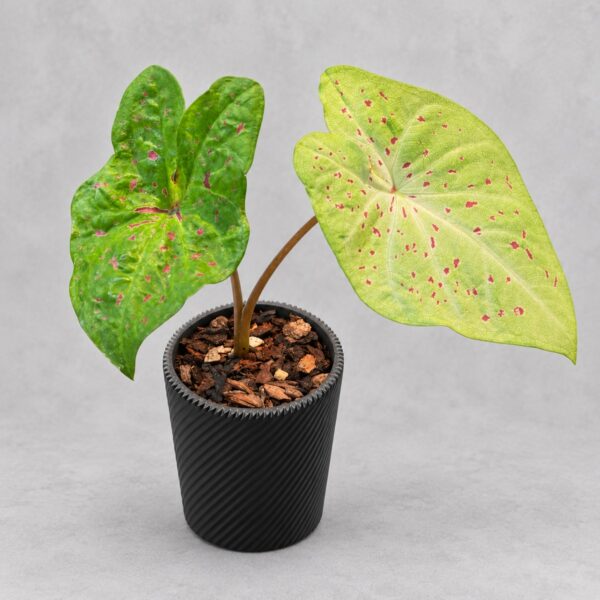
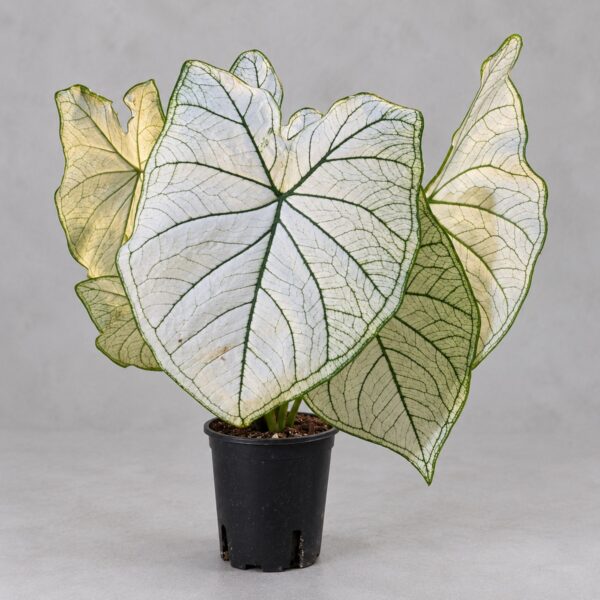
Snow-white heart-shaped leaves laced with vivid green veins — a showstopping seasonal plant that turns any summer corner into a gallery piece.

Origin & characteristics

'White Christmas' is a popular cultivar of Caladium bicolor, a tuberous aroid native to the Amazon basin of South America. Its heart- to arrowhead-shaped leaves are almost entirely white, with contrasting emerald-green veins and margins that give the foliage a striking, layered look. Like all caladiums, it grows from an underground tuber: it leafs out through spring and summer, then dies back and rests through autumn and winter, with the tuber staying dormant until it's replanted the following spring.

⚠️ Toxicity note: All parts contain calcium oxalate crystals. Chewing on leaves or the tuber causes painful irritation to the mouth, tongue, and throat. Keep well away from pets and small children.

Light

  • Loves bright, indirect light — aim for 4–6 hours of soft daylight per day
  • An east- or north-facing window works well; avoid strong direct sun
  • Too much sun scorches the white leaves or turns edges yellow/crispy
  • Too little light causes the leaves to fade and revert toward green

Watering

  • Keep soil evenly moist through the growing season (spring–summer); water as soon as the surface feels dry
  • Cut back drastically once dormancy begins in autumn — stop watering once the leaves have died back
  • While the tuber is stored, keep it just barely damp; a light mist now and then prevents it from shrivelling
  • Use room-temperature water — icy tap water can shock the roots

Soil & pot

  • A light, well-draining, slightly acidic peat-based mix is ideal
  • Suggested recipe: peat (or coco coir) : perlite : coco husk chips, roughly 4:3:3
  • Choose a pot at least 30 cm across with good drainage holes
  • Terracotta or breathable grow bags help the roots stay aerated

Temperature & humidity

  • Ideal range: 20–30°C; growth slows noticeably below 15°C
  • Below 10°C the plant enters dormancy — this is the cue to lift and store the tuber
  • Humidity of 60%+ is ideal; a pebble tray or occasional misting helps
  • Store dormant tubers somewhere cool and dry, around 13–18°C

Common problems

IssueLikely causeWhat to do
Leaves turning yellow and wiltingNatural dormancy, or overwatering causing rotCheck the tuber's condition before assuming the worst
Leaves fading back to greenNot enough lightMove to a brighter (still indirect) spot
Crispy, scorched leaf edgesDirect sun, or hard tap waterFilter your water and shift away from harsh light
Slow or no sproutingPlanted too early in cold soil, or an unhealthy tuberWait for warmer soil before replanting
Brown spotting on white leaf areasLow humidity or fungal issueIncrease airflow and ambient humidity

How to explain to customers

"This one's a seasonal showpiece — it puts on its best white-leaf display through summer, then goes to sleep for autumn and winter. When the leaves die back, just trim them off, lift the tuber, and store it somewhere cool and dry until spring. Keep it out of harsh direct sun — that pure white leaf sunburns very easily."

Fun facts

Caladium tubers can be lifted and stored through dormancy — wrap them in newspaper or sawdust and keep them somewhere cool and airy, then replant in spring for fresh growth. A single tuber can be replanted year after year, often multiplying into a bigger pot each season, making it a genuinely economical foliage choice.

Keywords

Caladium, tuberous plant, white foliage, seasonal plant, tropical plant, dormancy, well-draining soil, toxic plant, Caladium bicolor, indoor plant

參考資料(想知來源可展開)

References

  1. Royal Horticultural Society (RHS). "Caladium bicolor 'White Christmas'." RHS Plant Finder. https://www.rhs.org.uk/plants
  2. NC State Extension. "Caladium bicolor." NC State University Extension Gardener Plant Toolbox. https://plants.ces.ncsu.edu/plants/caladium-bicolor
  3. University of Florida IFAS Extension. "Caladiums for Florida." ENH1083. https://edis.ifas.ufl.edu
  4. American Society for the Prevention of Cruelty to Animals (ASPCA). "Caladium — Toxic and Non-Toxic Plants." https://www.aspca.org/pet-care/animal-poison-control/toxic-and-non-toxic-plants/caladium

⚠️ Pet/toxicity note: Caladium contains insoluble calcium oxalate crystals that are toxic to cats and dogs. Chewing the leaves or tuber can cause oral pain, drooling, vomiting, and difficulty swallowing — the tuber is the most toxic part. Keep it out of reach of pets, and wash your hands after handling the tuber.


In-depth care guide

Introduction

'White Christmas' belongs to Caladium bicolor, in the arum family (Araceae). It's a hybrid cultivar whose parent species trace back to the tropical rainforests of South America, particularly the Amazon basin of Brazil and the Guiana Highlands. In the wild, caladiums grow in the hot, humid understory of lowland rainforest, where they've evolved a fleshy underground tuber that lets them ride out the dry season in dormancy — a classic "grow in the wet season, rest in the dry season" strategy for a tropical perennial.

'White Christmas' is famous for leaves that are almost entirely white — a translucent, ivory-white blade with the main and side veins staying a deep contrasting green. The leaves are the classic caladium heart-to-arrowhead shape, thin and almost paper-like in texture. Mature plants reach about 30–60 cm tall, with a similar spread. Because the leaf blade has so little chlorophyll, 'White Christmas' is extremely sensitive to light intensity — too much and it scorches, too little and growth stalls. Its flowers, tiny spadices tucked inside a spathe, are fairly unremarkable — the whole appeal here is the foliage, not the bloom.

Habitat notes: In its native range, caladium grows beneath the forest canopy, receiving dappled, filtered light. That's shaped its thin, broad leaves, built to maximise light capture under low-light conditions. The tuber lets it disappear entirely during the dry season and re-emerge once the rains return — which matters for Hong Kong growers: when the leaves drop in winter, it doesn't mean the plant has died. It's simply following its normal seasonal cycle.

Light

'White Christmas' needs bright, indirect light — never direct sun. The nearly chlorophyll-free white leaf tissue has almost no protection against UV, and direct sunlight can cause irreversible, translucent brown scorch marks within just a few hours.

Practical guidance:

  • Ideal spot: an east-facing window (morning light only), or 1.5–2 metres back from a south- or west-facing window. A sheer curtain can help filter light further.
  • Light reference: using a free lux-meter phone app at midday, aim for readings of 800–1,500 lux at leaf level. Below 500 lux, new leaves get smaller and paler; above 2,000 lux, scorching becomes a real risk.
  • Hong Kong note: summer sun is intense enough that even a north-facing window can cause sunburn from strong reflected light. It's often safer to keep 'White Christmas' set back from the window entirely, or near a window that's shaded by an AC unit or a neighbouring building.

Watering

The caladium tuber rots very easily, yet the soil needs to stay consistently moist. The key principle is "steadily damp, never waterlogged."

Practical guidance:

  • Finger test: push a finger about 2 cm into the soil. If it feels slightly dry, water; if it's still moist, wait another 1–2 days.
  • Growing season (April–October): water roughly every 4–6 days, depending on pot size and airflow. In Hong Kong's humid summer, if indoor ventilation is good, you might need to check every 3–4 days instead.
  • Dormancy (November–March): as leaves start yellowing and dying back, taper off watering gradually. Once the foliage has completely dried, store the tuber somewhere dry, well-ventilated, and around 15–18°C for winter — just keep it from shrivelling by misting lightly once a month.
  • Watering method: water slowly around the rim of the pot until it runs from the drainage holes, and empty the saucer within 15 minutes. Never let the pot sit in standing water.
  • Water quality: room-temperature tap water is fine, though in areas of Hong Kong with harder water, filtered water or rainwater helps prevent brown mineral buildup along the leaf edges.

Soil & pot

Drainage is the deciding factor in whether a caladium survives long-term. The tuber rots quickly in waterlogged conditions, so the soil needs to be both moisture-retentive and well-aerated.

Recommended mixes:

  • Mix A (balanced): 40% good-quality peat or coco coir, 30% perlite, 20% pine bark fines, 10% worm castings. Aim for pH 5.5–6.5.
  • Mix B (Hong Kong humid version): given the high summer humidity, bump perlite up to 40% and cut back on peat so the mix dries out faster.
  • Mix C (easy version): a ready-made aroid mix, with a little extra perlite stirred in for drainage.

Choosing a pot:

  • Drainage holes are non-negotiable — never plant directly into a decorative pot without holes. Use a nursery pot with holes inside a cachepot, then lift it out to empty excess water after watering.
  • Pot size: the tuber doesn't need much room — a single tuber does fine in a 12–15 cm pot. An oversized pot stays wet too long and raises the risk of rot.
  • Material: terracotta breathes well and dries faster, suiting growers who check soil moisture often; plastic holds moisture longer and needs stricter watering discipline.

Planting the tuber:

  • Plant with the eyes facing up, buried about 4–5 cm deep.
  • If you're not sure which side is up, lay it on its side — the tuber will sort out its own growth direction.
  • Spring planting is best, once soil temperature is steadily above 18°C for reliable sprouting.

Temperature & humidity

'White Christmas' is a tropical plant and very sensitive to cold.

Temperature:

  • Ideal range: 21–29°C during the growing season.
  • Minimum tolerance: around 15°C; below 10°C the tuber risks cold damage.
  • Hong Kong practicalities: summer air conditioning that holds 24–26°C indoors suits it well, but avoid placing it directly in the AC's airflow — cold drafts dry out and crisp the leaf edges. If winter indoor temperatures dip below 15°C, move the dormant tuber somewhere warmer.

Humidity:

  • Ideal humidity: 60% or above.
  • Hong Kong practicalities: average humidity of 70–80% (sometimes over 90% in summer) means extra humidification is rarely needed. Ventilation matters more — high humidity with stagnant air invites fungal problems.
  • When heaters are running in winter: indoor humidity can drop below 40%. Grouping plants together or using a pebble tray (keeping the pot base clear of the water) helps.

Feeding

Caladiums are light feeders, and over-fertilising actually washes out the white colour (excess nitrogen boosts chlorophyll production, which pushes white leaves back toward green).

  • Growing season: feed every 2–4 weeks with a balanced liquid fertiliser (e.g. 10-10-10 or 20-20-20) diluted to half strength.
  • Timing: only feed when the soil is slightly moist — never on dry soil, as fertiliser salts can burn tender roots.
  • Dormancy: stop feeding entirely.
  • After repotting: fresh soil usually already contains nutrients, so skip feeding for the first 2–3 months.

Detailed common problems

IssueLikely causeWhat to do
Brown scorch patches, curled edgesDirect sun burning the white leaf tissueMove to a shadier spot; trim off badly burned leaves
Browning, dry leaf marginsLow humidity or overly dry soilRaise local humidity; check watering frequency
Overall greening, loss of whiteInsufficient light — plant compensates with more chlorophyllMove to a brighter (but still indirect) spot
Soft, smelly, rotting tuberOverwatering, waterlogging, or excess dormancy-period humidityRemove rotten tissue, repot in fresh soil, cut back watering
Full leaf yellowing in late autumnNormal dormancy — nothing to worry aboutTaper watering, then lift and dry-store the tuber once fully withered
Small new leaves, stalled growthInsufficient light, cold temperatures, or a depleted tuberCheck growing conditions; refresh the soil and add slow-release fertiliser in spring if needed

Toxicity

'White Christmas' — like all caladiums — contains insoluble calcium oxalate crystals throughout the plant. These microscopic, needle-like crystals puncture the mouth's mucous membranes when chewed, causing intense pain and swelling. This chemical defence is highly effective at deterring herbivores in the wild; for humans, it's entirely safe as long as no part of the plant is eaten. The tuber carries the highest concentration of these crystals, so wash your hands thoroughly after handling one during repotting or dividing.

References

  1. Royal Horticultural Society (RHS). "Caladium bicolor 'White Christmas'." RHS Plant Finder. https://www.rhs.org.uk/plants
  2. NC State Extension. "Caladium bicolor." NC State University Extension Gardener Plant Toolbox. https://plants.ces.ncsu.edu/plants/caladium-bicolor
  3. University of Florida IFAS Extension. "Caladiums for Florida." ENH1083. https://edis.ifas.ufl.edu
  4. American Society for the Prevention of Cruelty to Animals (ASPCA). "Caladium — Toxic and Non-Toxic Plants." https://www.aspca.org/pet-care/animal-poison-control/toxic-and-non-toxic-plants/caladium
  5. Missouri Botanical Garden. "Caladium bicolor." Plant Finder. http://www.missouribotanicalgarden.org/PlantFinder/PlantFinderDetails.aspx

Plantjai · Causeway Bay collector indoor plants · WhatsApp +852 66807550

Colocasia 'White Christmas'

Plantjai shop · In stock online

Colocasia 'White Christmas'

Colocasia 'White Christmas'

Original price was: HK$398.00.Current price is: HK$298.00.

Hong Kong delivery · Causeway Bay pickup

For Hong Kong homes and offices. Stock and pricing follow the product page.