
How to Care for Begonia White Ice in Hong Kong | Plantjai

Plantjai 植仔 · Care Encyclopedia
Begonia White Ice
Hong Kong care guide — useful before you buy and after it arrives.
Shop this plantSilvery-white speckles like frosted snow across the leaves — an elegant, compact indoor accent.
Brand: Plantjai
Category: Begoniaceae · Cane type
Toxicity: ⚠️ Contains calcium oxalate crystals; toxic to pets and children if ingested
Origin & characteristics
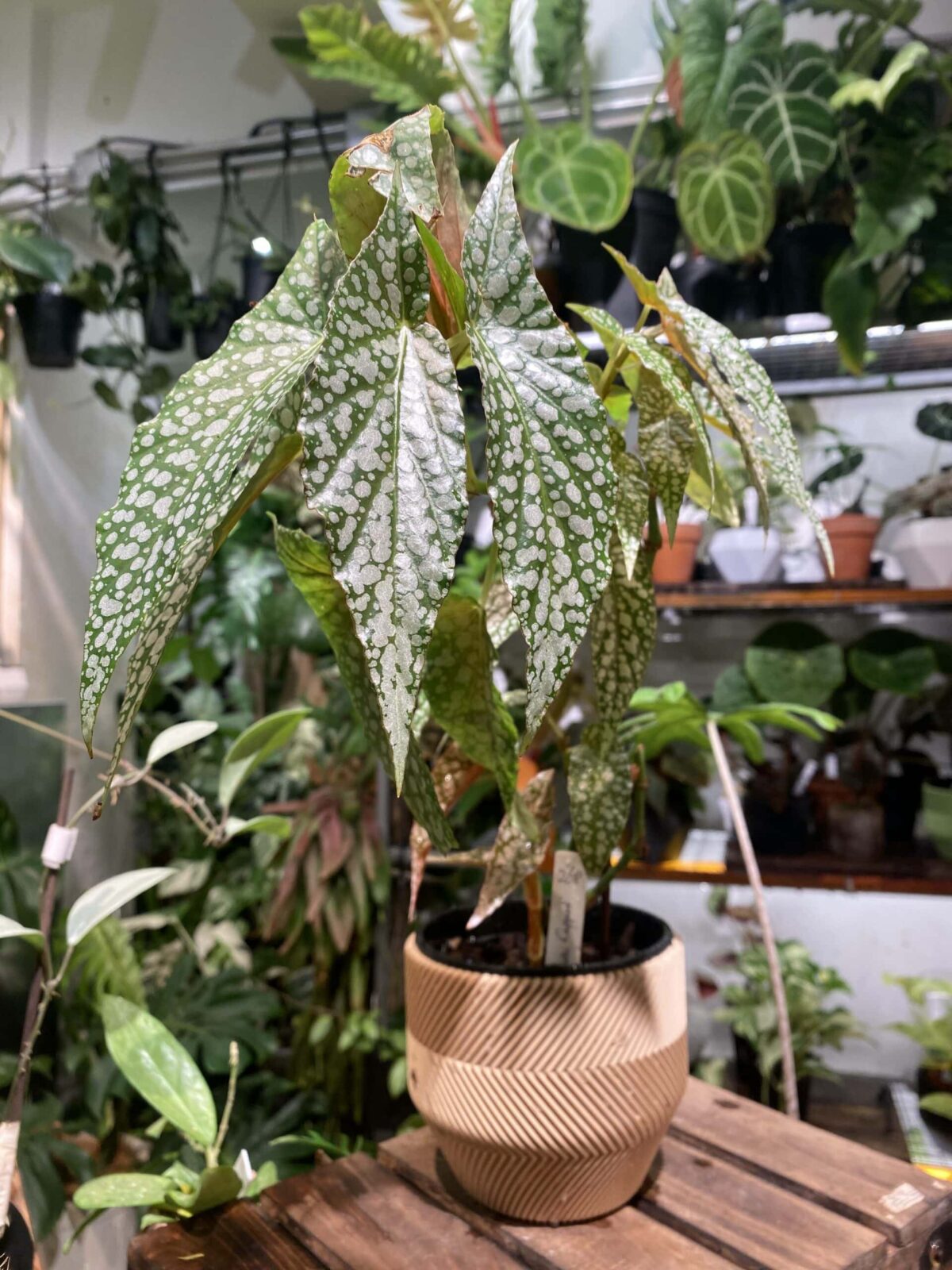
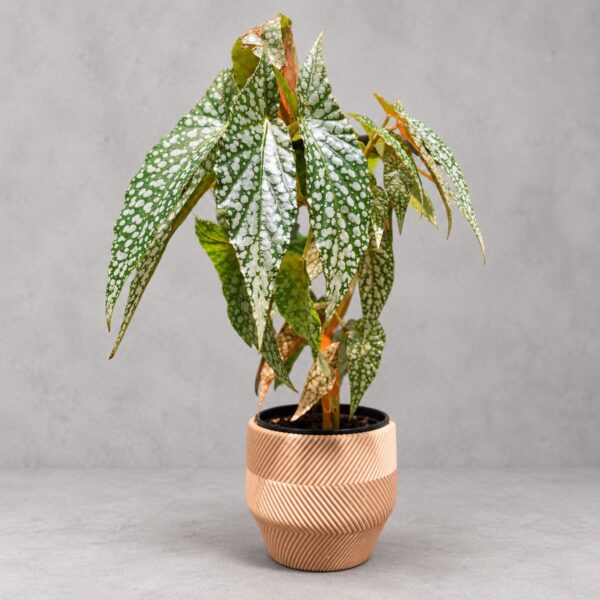
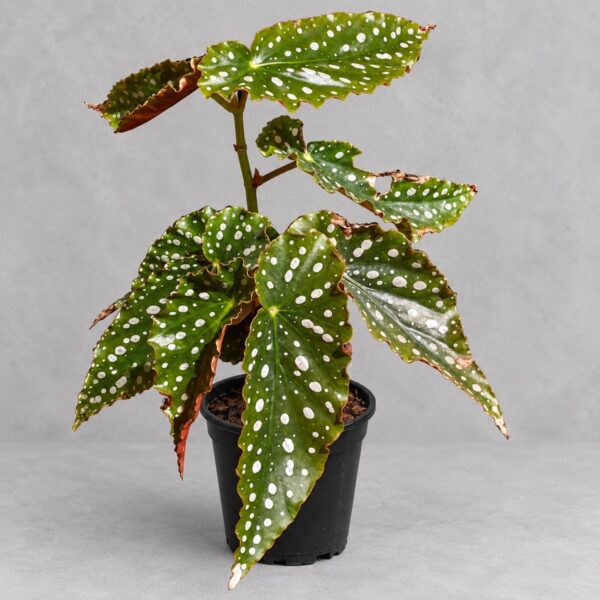
'White Ice' was bred in 1998 by American breeder Charles McGough and belongs to the cane-type upright begonias. Its deep green leaves are covered in a dense scatter of fine white spots, as if dusted with snow, while the underside carries a faint red tone. Small pink flowers appear in summer. Both internodes and petioles are relatively short, giving the plant a compact, dainty form, and its leaf colour shifts subtly with light, temperature, and moisture.
Light
- Ideal light: bright, diffused light, roughly 6–8 hours of indirect light daily
- Placement: near an east- or north-facing window, or 1–2 metres back from a south-facing one
- Avoid: direct summer sun, which scorches the leaves and causes the white spots to fade or the edges to crisp
- Signs of insufficient light: paler leaf colour, fewer spots, elongated and sparse internodes
- Tip: it can handle more morning light in winter, which helps keep the leaf colour vivid
Watering
- Frequency: water once the top 2–3 cm of soil dries out — generally 2–3 times weekly in summer, once weekly in winter
- Method: water slowly around the pot's edge until it drips from the drainage holes; avoid wetting the leaves
- Water quality: room-temperature water is best; letting tap water stand for 24+ hours reduces chlorine damage
- Waterlogging warning: never let water sit in the saucer, or root rot follows
- Tip: if leaves do get wet, ensure good ventilation afterwards to prevent fungal infection
Soil & pot
- Soil recipe: loose, airy, well-draining organic-rich soil
- Suggested ratio: 60% peat moss + 25% perlite + 15% vermiculite
- Or a Plantjai foliage plant potting mix
- pH: 5.5–6.5 (slightly acidic)
- Pot choice: terracotta or plastic both work, as long as the base has drainage holes
- Repotting: check the root system each spring; move to a larger pot once roots fill the current one, without planting too deep
Temperature & humidity
- Optimal temperature: 20–28°C
- Tolerance range: 15–32°C; below 10°C risks cold damage
- Humidity: 50–80% ideal
- Boosting humidity:
- Place a pebble tray under the pot (water shouldn't touch the pot base)
- Occasionally mist the surrounding air (avoid spraying leaves directly)
- Use a humidifier
- In summer: high heat and stuffiness invite rot, so keep in a well-ventilated, cool spot
- In winter: reduce watering; keeping above 10°C ensures safe overwintering
Common problems
| Issue | Likely cause | What to do |
|---|---|---|
| Small, thickened leaves with dry edges | Air too dry | Raise ambient humidity with a pebble tray or humidifier |
| Brown spots on leaves | Overwatering or standing water in the saucer | Reduce watering frequency, check drainage holes are clear |
| White spots fading or disappearing | Insufficient light | Move to a brighter spot with more diffused light |
| Yellowing, dropping leaves | Overwatering or root rot | Pause watering, check root health |
| White powder on leaf undersides or petioles | Powdery mildew | Improve ventilation, reduce leaf-surface moisture, use fungicide if needed |
| Elongated internodes, loose form | Insufficient light | Move to brighter spot; prune the tip to encourage branching if needed |
How to explain to customers
"'White Ice' is such an elegant plant — the leaves are covered in these fine white speckles that look just like fallen snow, and it instantly transforms the whole vibe of your home."
"Care is simple: just avoid direct sun and overwatering, and it's perfectly beginner-friendly."
"If you notice the white spots starting to fade, that's the plant telling you it wants more light — just adjust its position."
Fun facts
The density and intensity of 'White Ice's leaf spots shift with the environment — stronger light and cooler temperatures make the white spots more pronounced, turning the plant into a living environmental indicator! It resembles Begonia 'Silver Spot', but 'White Ice's spots are finer and denser, more like snowflakes than silver coins.
Keywords
Begonia White Ice, cane-type begonia, silver-spotted foliage plant, indoor foliage plant, Hong Kong potted plant, Plantjai, begonia care, diffused light plant, high humidity plant, pet-toxic plant
In-depth care guide
Introduction
Begonia 'White Ice' belongs to the cane-begonia group within the enormous genus Begonia, a group known for their bamboo-like jointed stems and clusters of dangling flowers. Bred in 1998 by American horticulturist Charles McGough, 'White Ice' quickly became popular for its densely speckled, almost frost-dusted leaves — a look distinct from the larger, splashier spots of similar cane types like 'Silver Spot' or 'Lucerna'.
The plant grows as an upright, jointed cane, with new growth emerging from nodes along mature stems. Its overall growth habit is compact compared with many cane begonias, which can become tall and leggy; 'White Ice' tends to stay bushier and more manageable for indoor collections, especially when given consistent bright light and occasional pinching.
Native background and growth habits
Cane begonias as a group trace their heritage back to various wild Begonia species native to Central and South America, where their ancestors grow as understory shrubs in humid, warm forests with dappled light filtering through the canopy. 'White Ice', as a hybrid cultivar, doesn't have a single wild native habitat, but it inherits the general preferences of its begonia ancestors: warm temperatures, high humidity, and bright but indirect light.
Growth is moderately fast during the warmer months, with new canes emerging from the base and elongating steadily. Given good conditions, mature plants can reach 40–60 cm tall, producing clusters of small pink flowers on hanging stems in summer — a lovely bonus on top of the already decorative foliage.
Light requirements
'White Ice' needs bright, indirect light to develop and maintain its signature white speckling. An east- or north-facing window is ideal, or a position 1–2 metres back from a south-facing window with a sheer curtain filtering the light.
Under strong direct sun, especially the harsh midday sun common in Hong Kong summers, the leaves scorch easily and the white spots can bleach or brown at the edges. On the other hand, insufficient light causes the plant to stretch, with elongated internodes, sparser leaves, and duller spotting. A good practical test: if you can comfortably read a book by the ambient light in the plant's spot without turning on a lamp, that's roughly the right brightness.
Rotating the pot a quarter turn every week or two helps prevent the plant from leaning toward the light source and keeps growth even on all sides.
Watering
Cane begonias like 'White Ice' prefer a "dry between waterings" approach rather than constant moisture. Water once the top 2–3 cm of soil has dried, then water thoroughly until it runs from the drainage holes. In Hong Kong's hot, humid summer, this typically means watering 2–3 times a week; in the cooler, drier winter months, once a week is usually enough.
Always water around the base of the plant rather than over the foliage — wet leaves combined with poor airflow are a common trigger for fungal problems. After watering, be sure to empty the saucer promptly; standing water is one of the fastest routes to root rot in this species.
Room-temperature water is best. If your tap water has a strong chlorine smell, let it sit out for 24 hours before use, which allows much of the chlorine to dissipate.
Soil and pot
A loose, airy, well-draining soil mix suits 'White Ice' best. A useful recipe combines 60% peat moss, 25% perlite, and 15% vermiculite, giving good moisture retention without waterlogging. The ideal pH sits in the slightly acidic range of 5.5–6.5.
Either terracotta or plastic pots work well, as long as there are drainage holes at the base. Check the root system each spring; once roots have filled the pot, move up to a slightly larger container, taking care not to bury the base of the stem too deep, which can encourage rot.
Temperature and humidity
'White Ice' grows best between 20°C and 28°C, tolerating a range of 15–32°C, though temperatures below 10°C risk cold injury. Hong Kong's typical indoor climate suits it well for most of the year.
Humidity should ideally sit between 50% and 80%. In summer, high heat combined with stuffiness can cause rot, so make sure the plant has good airflow and isn't crowded into a stagnant corner. In winter, if indoor air becomes dry from air conditioning or heating, use a pebble tray, occasional misting of the surrounding air (not the leaves directly), or a humidifier to keep conditions comfortable. Keeping the plant above 10°C through winter is essential for safe overwintering.
Common problems in detail
Small, thickened leaves with dry edges point to air that's too dry — raise ambient humidity using a pebble tray or humidifier.
Brown spots on the leaves usually follow overwatering or standing water in the saucer — reduce watering frequency and check that drainage holes are clear and functioning.
Fading or disappearing white spots are a classic sign of insufficient light — move the plant to a brighter position with more diffused light.
Yellowing, dropping leaves typically indicate overwatering or the onset of root rot — pause watering immediately and check the health of the root system.
White powder on leaf undersides or petioles signals powdery mildew — improve ventilation, reduce surface moisture on the leaves, and apply a fungicide if the problem persists.
Elongated internodes and a loose, leggy form result from insufficient light — move to a brighter spot, and prune the growing tip if needed to encourage bushier branching.
Toxicity information
'White Ice' contains calcium oxalate crystals throughout the plant, posing a toxicity risk to pets and children if ingested, potentially causing oral irritation and gastrointestinal upset. Keep the plant out of reach of curious pets and young children.
參考資料(想知來源可展開)
References
- American Begonia Society. Cane-type Begonias. https://www.begonias.org/
- RHS. Begonias as Houseplants. https://www.rhs.org.uk/plants/begonias/houseplants
- ASPCA. Begonia – Toxic and Non-Toxic Plants. https://www.aspca.org/pet-care/animal-poison-control/toxic-and-non-toxic-plants/begonia
- Missouri Botanical Garden. Begonia Cane-type Group. Plant Finder. http://www.missouribotanicalgarden.org/PlantFinder/
Plantjai shop · In stock online
Begonia 'White Ice'
Begonia 'White Ice'
HK$238.00
Hong Kong delivery · Causeway Bay pickup
For Hong Kong homes and offices. Stock and pricing follow the product page.
IN STORE NOW
Plants for this guide
Related plants in stock now — live prices, delivery or Causeway Bay pickup.
FREE PLANT ADVICE
Send us a photo before you change anything
WhatsApp a photo of the plant and your window light. Our Causeway Bay team will suggest care steps or plants that suit your space.
STORE · CAUSEWAY BAY
4/F, 39 Yiu Wa Street, Causeway Bay
Daily 12:30–8:00pm · ~3 min walk from Times Square
Map & directionsPlant Care