
How to Care for Begonia Sp Starry Sky in Hong Kong | Plantjai

Plantjai 植仔 · Care Encyclopedia
Begonia Sp Starry Sky
Hong Kong care guide — useful before you buy and after it arrives.
Shop this plantLeaves dotted with starlike spots against a night-sky backdrop — owning one is like owning a piece of the sky.
Origin & characteristics
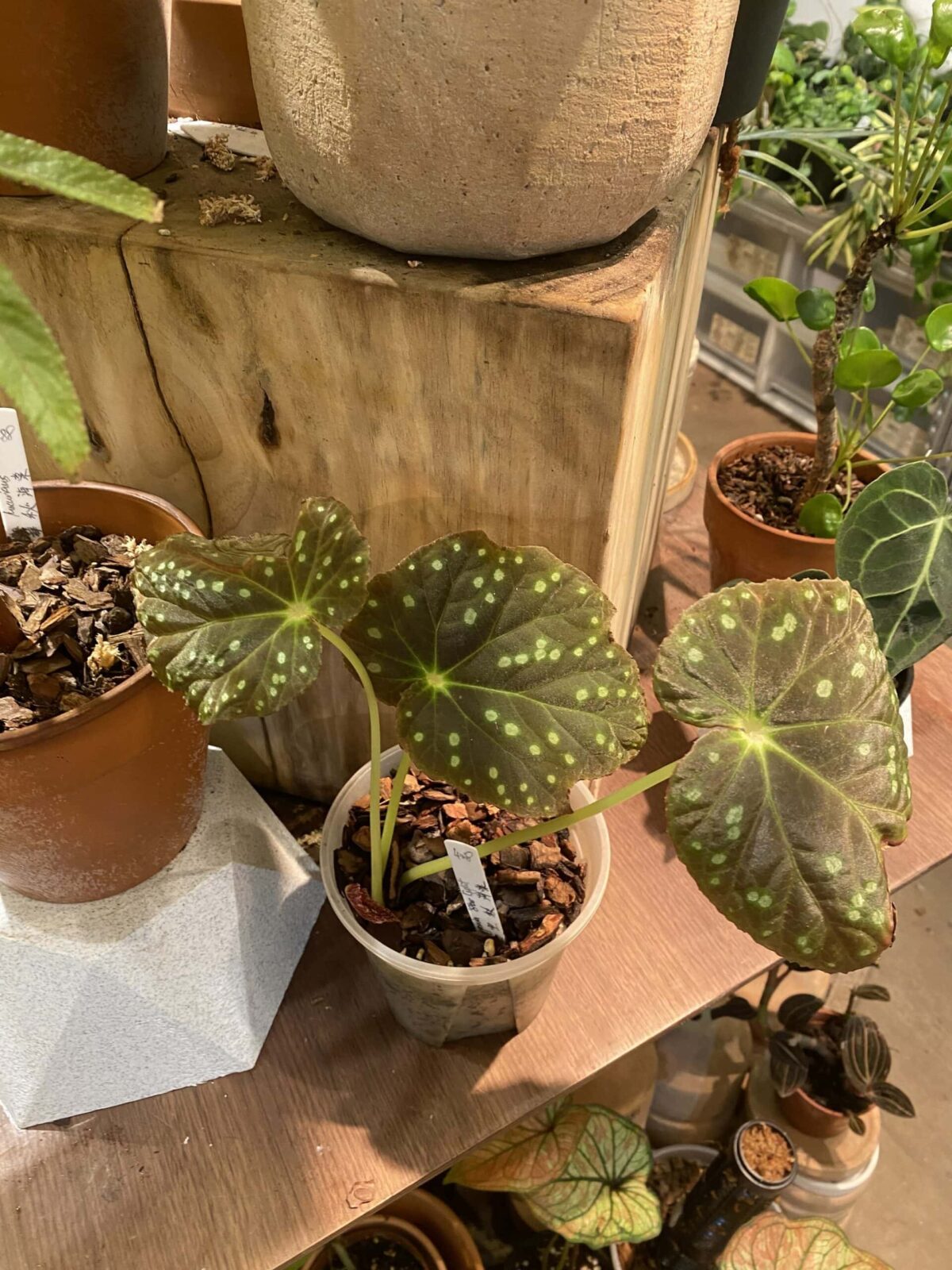
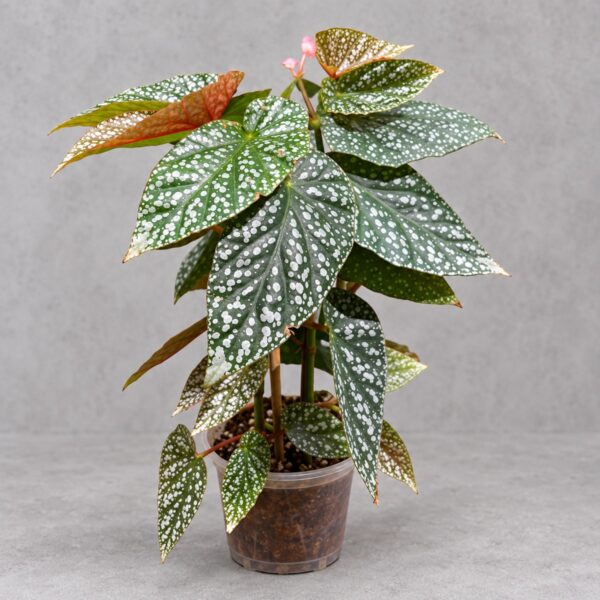
Starry Sky is a garden cultivar within the genus Begonia, with its botanical name still unconfirmed (labelled as Begonia sp. 'Starry Sky'). Its most iconic feature is the deep green, almost black leaves scattered with fine silvery-white spots, which from a distance resemble twinkling stars against a night sky — dreamlike and visually striking. The leaves are elongated ovals with a subtle velvety texture, and the plant stays at a medium height, making it a popular cultivar in the foliage plant world in recent years.
Botanical name unconfirmed: this cultivar currently circulates under the trade name 'Starry Sky'; its formal taxonomic classification is yet to be confirmed.
Light
- Bright, diffused light is best, tolerating gentle direct light in early morning or evening
- Ample light helps the star-like spots stand out more clearly, but overly strong sun will fade the leaves
- Indoors, position about 1–2 metres from a south-facing window, or supplement with a grow light
- Insufficient light causes legginess, thinner leaves, and fewer star-like spots
Watering
- Water thoroughly once the topsoil is dry about 2–3 cm down, avoiding a half-wet, half-dry state
- Starry Sky is somewhat sensitive to water quality; filtered or overnight-standing water is recommended
- Halve the watering frequency in winter, keeping the soil slightly dry
- Avoid water pooling on the leaves — the velvety texture traps moisture and can lead to bacterial infection
- Water along the pot's edge, avoiding the leaves
Soil & pot
- Choose a light, well-draining recipe: peat + perlite + coco coir + bark (roughly 4:3:2:1)
- A little vermiculite can be added to help with moisture retention
- Must use a pot with drainage holes — a terracotta or breathable ceramic pot is recommended
- Roots are relatively shallow, so a very deep pot isn't necessary
- Repot every 1–2 years, checking whether roots have emerged from the drainage holes
Temperature & humidity
- Optimal temperature: 20–28°C
- Never below 16°C; not cold-hardy
- Humidity of 60–80% is ideal, giving the star-like spots their best sheen
- Hong Kong's humid climate generally suits it well, but take particular care to maintain humidity when running AC
- Suits placement in a more humid spot such as a bathroom (with a window) or near a kitchen
- Avoid placing near AC or heater vents
Common problems
| Issue | Likely cause | What to do |
|---|---|---|
| Star-like spots fading or disappearing | Light too strong or too weak | Adjust to an appropriate diffused-light position |
| Leaves going soft and drooping | Underwatering or a root issue | Check soil moisture, inspect root health if necessary |
| Brown spots on leaves | Water pooling on leaves causing bacterial infection | Improve ventilation, avoid watering the leaves |
| Small new leaves | Nutrients insufficient or root-bound | Consider fertilising or repotting |
| Thin, elongated leaves | Legginess from insufficient light | Move closer to a light source or use a grow light |
⚠️ Plant safety note: Begonias are generally considered mildly toxic to humans and pets, and ingestion may cause gastrointestinal upset. Keep out of reach of children and pets.
How to explain to customers
"Starry Sky Begonia is genuinely stunning — those silvery-white spots really do look like you're staring up at a night sky, adding a dreamlike quality to any room. It does like it a bit more humid though, so remember to keep it somewhere humid when the AC's running."
"For watering, don't get the leaves wet — water along the pot's edge, since the leaves have fine hairs that can rot easily if water pools on them."
Fun facts
Starry Sky Begonia's deep, almost black leaves are actually a natural protective mechanism — darker leaves absorb more light, allowing the plant to photosynthesise effectively even in the low-light conditions of the forest floor. The silvery-white "stars" are special pigment cells on the leaf surface that shimmer under refracted light, creating an effect that genuinely looks like it's glowing.
Keywords
Starry Sky Begonia, foliage plant, dark leaves, silvery-white spots, indoor plant, high humidity, diffused light, garden cultivar, mildly toxic, pet safety
In-depth care guide
Introduction
Starry Sky Begonia (Begonia sp. 'Starry Sky') is a relatively new cultivar within the genus Begonia, renowned for its distinctive "starry sky" leaves. The leaves are elongated oval or lance-shaped, with fine silvery-white spots scattered across a deep green surface, resembling stars twinkling in a night sky — genuinely dreamlike. This cultivar has a shrub-like growth habit, with slender stems and a silky, smooth leaf texture that's a real pleasure to look at (GreenFlow HK, n.d.; My Home Nature, n.d.).
The exact botanical name for 'Starry Sky' hasn't yet been confirmed — "sp." stands for "species," meaning it may be an undescribed wild species, or a garden cultivar domesticated from a wild species. According to unconfirmed records from the American Begonia Society, some begonia collections from Ecuador and Vietnam share similar silvery-spotted characteristics, and may be related to 'Starry Sky' (American Begonia Society, 2021).
Its most captivating quality is how the leaf displays different visual effects depending on the light angle — new growth emerges red, mature leaves are deep green on top with silvery spots and red underneath, and when light reflects off the surface, a blue-purple sheen appears, just like twinkling stars in the night sky. This optical effect has made it rapidly popular within the plant collecting community, becoming a sought-after cultivar among begonia enthusiasts in recent years (GreenFlow HK, n.d.; My Home Nature, n.d.).
Morphological features
Starry Sky Begonia is a shrub-type begonia, generally reaching about 15–20 cm (6–8 inches) tall, making it well suited to small spaces, windowsill display, or terrarium growing. The stems are slender, reddish-brown, and slightly succulent; leaves are alternate, elliptical-lanceolate, about 5–8 cm long, with edges that may show fine serration. The leaf texture is smooth like velvet, a genuine pleasure to touch, and displays a subtle metallic sheen under appropriate lighting (GreenFlow HK, n.d.).
New leaves emerge a bright red, gradually turning deep green as they mature, but the silvery-white spots remain visible throughout. The underside is red, reflecting a metallic blue-purple sheen under light, creating a distinctive visual effect. This cultivar grows at a moderate pace, continuing to produce new leaves and maintain a compact shrub form when well cared for. Although it does produce small flowers, its ornamental value is concentrated primarily in the foliage.
Care essentials
Light
Starry Sky Begonia needs ample diffused light to display its best leaf colour. Position it near an east- or north-facing window, or filter strong light with a sheer curtain at a south/west-facing window. Although it can adapt to somewhat lower light, the silvery spots may become duller and new growth smaller. Avoid harsh midday direct sun, since it can scorch the leaves, and the velvety leaf surface is especially delicate (GreenFlow HK, n.d.; My Home Nature, n.d.).
Some growers suggest that providing about 10–12 hours of bright diffused light daily (natural light or LED grow lights) results in more vivid leaf colour and more vigorous growth. If you notice the plant becoming "leggy" (stems elongating, leaves sparse), that's a signal insufficient light — adjust promptly.
Temperature
As a tropical begonia, 'Starry Sky' prefers warm conditions, with an ideal temperature range of 18–26°C, never below 15°C. It's fairly sensitive to cold and temperature fluctuations, and cold drafts or sudden temperature drops can stall growth or damage leaves. In Hong Kong, winters are generally not a problem, but avoid placing it near AC vents or drafty doors and windows. Growth may slow during sustained heat above 30°C in summer, so pay attention to ventilation and appropriate shading (GreenFlow HK, n.d.; RHS, 2026).
Humidity
Starry Sky Begonia prefers higher humidity, ideally 50% or above. In dry conditions, leaf edges easily dry out, affecting ornamental value. Ways to raise humidity include using a humidifier, a pebble tray, grouping plants together, or growing in a terrarium. If humidity remains persistently low, consider using a clear cover or glass cabinet to maintain a higher local humidity. Regular misting of the surrounding air can provide a temporary humidity boost, but avoid spraying water directly onto the leaves, especially in poorly ventilated conditions (GreenFlow HK, n.d.; My Home Nature, n.d.).
Watering
Starry Sky Begonia's watering principle is "water when dry, water thoroughly." Wait until the topsoil is dry about 2–3 cm deep before watering, and water thoroughly until water flows from the pot's base. Never water frequently, especially during dormancy — overwatering is the main cause of root rot. Reduce watering substantially in winter, perhaps only once every two weeks (GreenFlow HK, n.d.; My Home Nature, n.d.).
Testing soil moisture with a finger is the most reliable method. For water quality, room-temperature filtered water or rainwater is ideal, avoiding directly using cold tap water.
Soil
Like other begonias, Starry Sky Begonia needs a light, loose, well-draining soil. A recommended recipe:
- 2 parts indoor potting soil
- 1 part perlite
- 1 part coco coir or peat
This combination ensures good drainage and breathability while retaining adequate moisture. The pot must have drainage holes to prevent waterlogging. Given 'Starry Sky's smaller size, you can choose a smaller pot, allowing faster soil moisture cycling and reducing root rot risk. Rhizomatous begonias suit shallower, wider pots, giving the rhizome room to spread horizontally (RHS, 2026; Longfield Gardens, 2026).
Fertilising
During the growing season (spring to summer), apply a diluted, half-strength balanced liquid fertiliser every two to four weeks, which helps promote healthy growth and vivid leaf colour. Stop fertilising in autumn, letting the plant enter natural dormancy. Overfertilising causes salt buildup, damaging the delicate root system. If new leaves appear pale yellow or growth slows, this may indicate a nutrient deficiency, in which case you can slightly increase fertilising frequency (GreenFlow HK, n.d.; RHS, 2026).
Propagation methods
Starry Sky Begonia can be propagated through the following methods:
Stem cuttings
- Select a healthy stem section, cutting about 8–10 cm long with 2–3 leaves
- Remove the lower leaves, keeping 1–2 at the top to reduce water loss
- Insert into moist propagation soil (peat mixed with perlite)
- Cover with a clear plastic bag or humidity dome to maintain high humidity
- Place in bright, diffused light — roots form after about 3–6 weeks, after which the cover can be gradually removed to acclimatise the plant to normal conditions (RHS, 2026; Longfield Gardens, 2026)
Leaf cuttings
While success rates may be lower than stem cuttings, you can try the leaf-vein cutting method:
- Cut a healthy, mature leaf, keeping about 2.5 cm of petiole
- Make several cuts along the main vein on the underside, roughly every 2.5 cm
- Lay the leaf flat on moist propagation soil, underside down, securing with U-shaped pins or small stones to ensure the cuts contact the soil
- Cover with a humidity dome, keeping it moist and warm
- New plantlets emerge at the cut points after several weeks — once they have 2–3 leaves, carefully separate and transplant (RHS, 2026)
Division
When repotting, if you find rooted side shoots at the base, you can gently separate and plant them. This method is the most direct, with the highest success rate.
Common problems
Dry, brittle leaf edges: Humidity too low. Increase humidity, keep away from heater or AC vents, consider using a humidifier.
Dull, faded silvery spots: Insufficient light. Move the plant to a brighter position, or increase artificial lighting duration.
Yellowing, dropping leaves: May be overwatering (root rot) or temperature too low. Check soil moisture, adjust ambient temperature, repot to check roots if necessary.
Legginess, elongated stems: Severe light deficiency. Increase light, and appropriately prune the top to encourage branching for a more compact form.
Powdery mildew: Triggered by poor ventilation combined with excess humidity. Improve ventilation, remove infected leaves, use an organic fungicide if necessary. Avoid watering the leaves in the evening (RHS, 2026; Longfield Gardens, 2026).
Pests: Occasionally whitefly (white cottony small insects clustering at leaf axils) or spider mites (fine webbing on leaf undersides, yellow spots on leaves). Check regularly, wipe with alcohol-dipped cotton swabs or spray diluted insecticidal soap. Keeping the leaves clean helps prevent pests.
Placement recommendations
Starry Sky Begonia's compact, delicate size, combined with its dreamlike leaf effect, makes it an excellent decoration for a desk, bedside table, office table, or small side table. Given its humidity requirements, a bathroom (if it has enough light) or a room with a humidifier are both good choices. Growing it in a glass terrarium can create a scene resembling a tropical rainforest floor in miniature, adding real atmosphere (GreenFlow HK, n.d.; My Home Nature, n.d.).
If you want to create a "starry sky" themed plant corner, you can pair 'Starry Sky' with other silver-leaved plants (such as Scindapsus pictus 'Argyraeus') or deep green foliage plants, creating a layered, rich visual effect. Its delicate form and unique leaf effect are sure to make it one of the most delightful surprises in your plant collection.
參考資料(想知來源可展開)
References
- GreenFlow HK. (n.d.). "Starry Sky (Begonia sp)." Retrieved from https://www.greenflow.hk/en/products/starry-sky-begonia-sp
- My Home Nature. (n.d.). "Starry Sky (Begonia sp) for Sale." Retrieved from https://www.myhomenature.com/products/starry-sky-begonia-sp
- American Begonia Society. (2021). "Unidentified Species List." Retrieved from https://www.begonias.org/unidentified-species-list/
- RHS. (2026). "Begonias as Houseplants." Retrieved from https://www.rhs.org.uk/plants/begonias/houseplants
- Longfield Gardens. (2026). "How to Care for Begonia Rex Plant: A Complete Guide." Retrieved from https://www.longfield-gardens.com/blogs/begonia-care/how-to-care-for-begonia-rex-plant-a-complete-guide
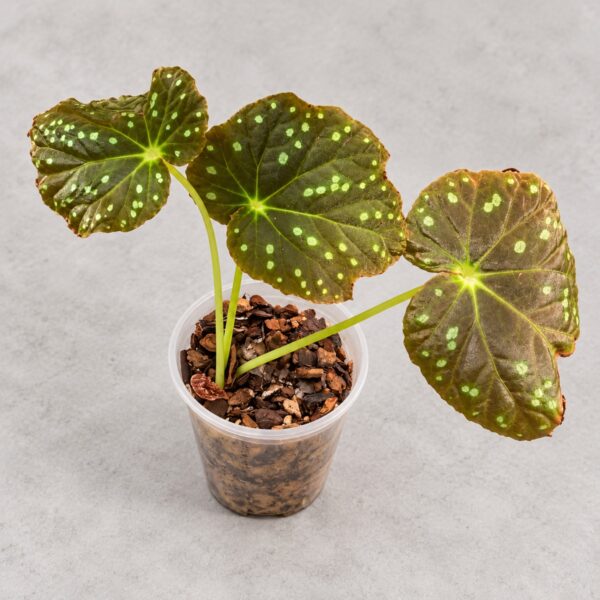
Plantjai shop · In stock online
Begonia sp.starry sky
HK$428.00
Hong Kong delivery · Causeway Bay pickup
For Hong Kong homes and offices. Stock and pricing follow the product page.
IN STORE NOW
Plants for this guide
Related plants in stock now — live prices, delivery or Causeway Bay pickup.
FREE PLANT ADVICE
Send us a photo before you change anything
WhatsApp a photo of the plant and your window light. Our Causeway Bay team will suggest care steps or plants that suit your space.
STORE · CAUSEWAY BAY
4/F, 39 Yiu Wa Street, Causeway Bay
Daily 12:30–8:00pm · ~3 min walk from Times Square
Map & directionsPlant Care