
How to Care for Begonia Snow Cap in Hong Kong | Plantjai

Plantjai 植仔 · Care Encyclopedia
Begonia Snow Cap
Hong Kong care guide — useful before you buy and after it arrives.
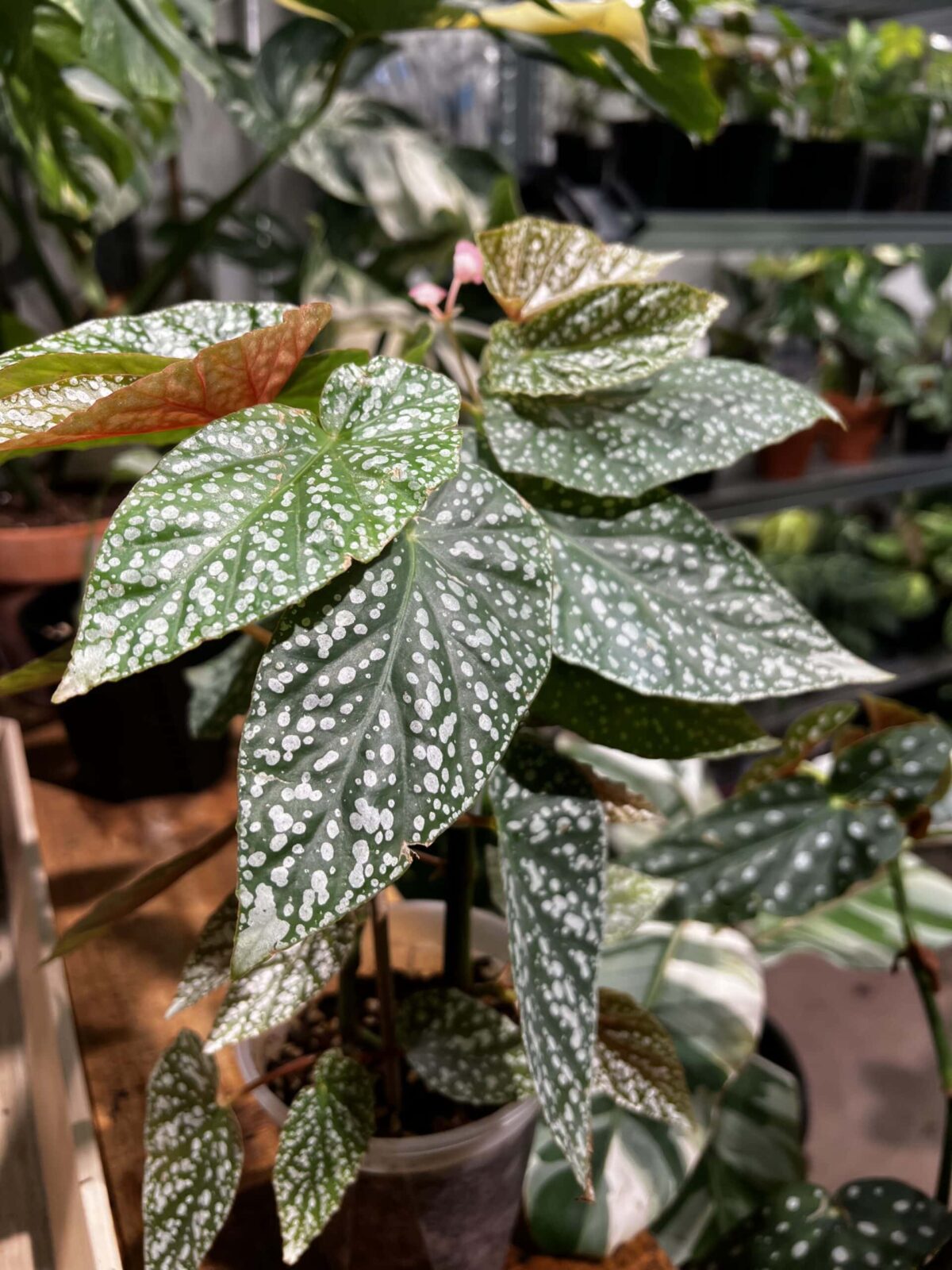
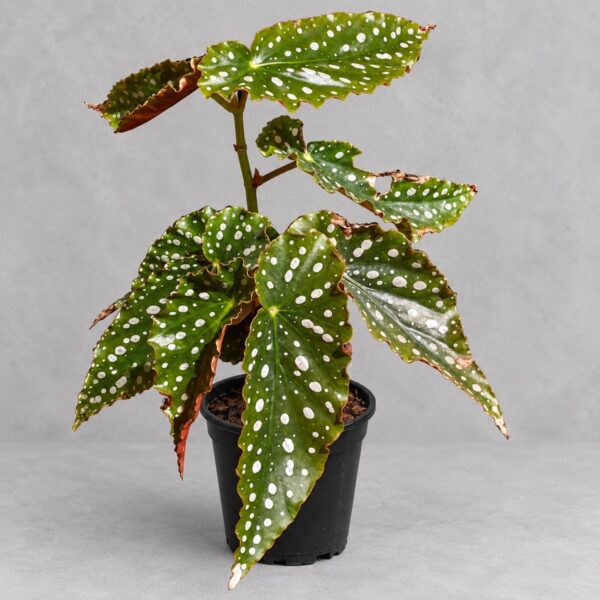
Shop this plantGreen leaves dotted with snowflake-like white spots — like a dusting of snow on the peak of Mount Fuji.
⚠️ Toxicity warning: Begonias contain soluble calcium oxalate, which can cause oral burning and vomiting if ingested, and are toxic to pets and children. Keep out of reach.
Origin & characteristics
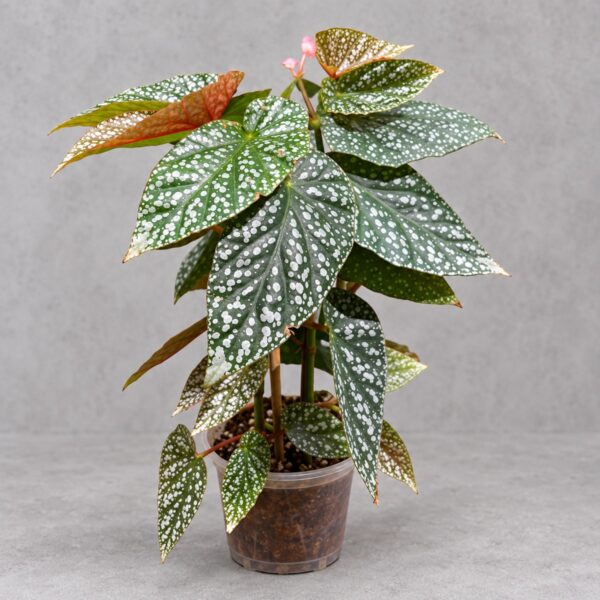
Snow Cap (also sold as 'Snow Capped') is a fibrous-rooted hybrid begonia. Its emerald green leaves are speckled with snowflake-white spots, giving the impression of snow-capped mountain peaks from a distance, hence its evocative name. The flowers are a soft pink, making this cultivar attractive for both foliage and flowers. It stays compact, with a moderate growth rate, well suited to indoor potted growing, and is easy enough to care for that it makes a great choice for beginners.
Light
- Prefers bright, indirect light, which helps the white spotting stand out more vividly
- Best placed near a well-lit window, avoiding harsh direct sun
- An east- or north-facing window is ideal, tolerating gentle morning sun
- Too much light causes sunburn and yellowing of the white spots
- Insufficient light causes legginess and reduces flowering
- If using a grow light, aim for about 10–12 hours daily
Watering
- Keep the soil consistently lightly moist, avoiding both complete dryness and waterlogging
- Water once the topsoil is dry about 2 cm down
- Roughly every 5–7 days during spring/summer's active growth
- Roughly every 7–10 days in autumn/winter, adjusted to conditions
- Avoid watering onto the leaves, since residual moisture can cause fungal infection
- Watering in the morning is recommended, allowing the soil surface to dry out again by evening
- Room-temperature standing tap water or rainwater is best
Soil & pot
- Needs a well-draining, loose potting mix
- Recommended recipe: quality potting soil 50% + perlite 25% + coco coir 15% + bark 10%
- Ensure the pot has drainage holes; avoid using a decorative pot cover with no holes
- A moderately sized pot is sufficient — an oversized pot invites root rot
- Repot every 12–18 months, ideally in spring
- A little slow-release fertiliser can be added as a base feed when repotting
Temperature & humidity
- Ideal temperature: 18–24°C
- Minimum tolerance: about 10°C; move indoors below this
- Avoid cold drafts near windows in winter, which can cause large temperature swings and leaf drop
- Humidity requirement: 50–65%
- Hong Kong's climate is generally suitable, with usually sufficient summer humidity
- In dry autumn/winter conditions, mist regularly (avoiding direct leaf spray) or use a humidifier
- An enclosed growing method can also help maintain stable humidity
Common problems
| Issue | Likely cause | What to do |
|---|---|---|
| White spots yellowing or disappearing | Light too strong or too weak | Adjust to an appropriate diffused-light position |
| Leaves yellowing and dropping | Overwatering or poor drainage | Reduce watering, check pot drainage |
| Little or no flowering | Insufficient light or lacking nutrients | Increase light, feed diluted liquid fertiliser every two weeks during growth |
| Brown spots on leaves | Fungal infection or improper watering | Avoid wetting the leaves, improve ventilation |
| Leggy growth | Severe light deficiency | Move to a brighter position |
| Scorched leaf edges | Air too dry | Increase surrounding humidity |
How to explain to customers
"Snow Cap Begonia looks so lovely — green leaves with white spots, genuinely like there's snow on a mountain peak! It's really soothing to have around."
"It's not too difficult to care for — just remember, no direct sun, and don't overwater it. See dry, then water, and it'll even reward you with pink flowers!"
Fun facts
Snow Cap's white spots are actually areas of the leaf lacking chlorophyll, a phenomenon horticulturists call a "chimera" — meaning every leaf pattern is genuinely one of a kind. The genus Begonia is one of the most diverse genera among flowering plants, with over 1,800 known species worldwide, and new varieties continue to be discovered or bred every year.
Keywords
Snow Cap Begonia, Begonia Snow Cap, Begonia Snow Capped, fibrous-rooted begonia, white-spotted begonia, flowering and foliage plant, bright indirect light, lightly moist soil, toxic plant, beginner-friendly cultivar, Plantjai, Hong Kong plant shop
In-depth care guide
Introduction
Snow Cap, sometimes also sold under the name 'Snow Capped', belongs to the fibrous-rooted begonia group — a category distinct from the rhizomatous Rex begonias in that it grows from a more conventional fibrous root system rather than a creeping rhizome. This structural difference actually makes Snow Cap somewhat more forgiving to care for than many of its rhizomatous cousins, which is part of why it's often recommended as an entry point for people new to growing begonias.
Visually, Snow Cap earns its name from the striking white speckling scattered across its emerald green leaves, evoking the image of snow dusting a mountain peak when viewed from a distance. Add to this its soft pink flowers, and you have a cultivar that delivers genuine ornamental value on two fronts — foliage and bloom — throughout much of the year, all while staying compact and manageable in a typical Hong Kong apartment.
Light requirements
Snow Cap does best in bright, indirect light, which helps intensify and clarify its distinctive white spotting. An east- or north-facing window works particularly well, offering gentle morning sun without the risk of harsh midday exposure. Direct sun should be avoided, since it causes sunburn and can cause the white spots to yellow and lose their crisp definition.
At the other extreme, insufficient light causes the plant to become leggy and noticeably reduces flowering, so aim for a consistently bright spot rather than a dim corner. If using a grow light as a supplement, around 10–12 hours daily is a reasonable target.
Watering
Snow Cap prefers soil that stays consistently lightly moist, avoiding both extremes of complete dryness and waterlogging. Water once the topsoil has dried out to a depth of about 2 cm, which typically works out to every 5–7 days during spring and summer's active growth, extending to every 7–10 days in autumn and winter depending on conditions.
Avoid watering onto the leaves themselves, since residual moisture sitting on the foliage can lead to fungal infection. Watering in the morning is a good habit, allowing the soil surface to dry out again by evening rather than staying damp overnight. Room-temperature standing tap water or rainwater both work well for this cultivar.
Soil and pot
A well-draining, loose potting mix suits Snow Cap well. A useful recipe combines quality potting soil (50%), perlite (25%), coco coir (15%), and bark (10%), giving a good balance of moisture retention and drainage. Ensure the pot has drainage holes, and avoid decorative pot covers without holes, which can trap excess water around the roots.
A moderately sized pot is sufficient for this plant — avoid sizing up too aggressively, since an oversized pot holds more moisture than the root system can use, increasing the risk of root rot. Repot roughly every 12–18 months, ideally in spring, and consider adding a little slow-release fertiliser as a base feed at repotting time.
Temperature and humidity
Snow Cap grows best between 18°C and 24°C, tolerating a minimum of around 10°C before needing to be moved indoors for warmth. Avoid cold drafts near windows in winter, since large temperature swings can trigger leaf drop. Humidity should ideally sit between 50% and 65%.
Hong Kong's climate generally suits this cultivar well, with summer humidity usually sufficient on its own. During the drier autumn and winter months, regular misting of the surrounding air (avoiding direct spray onto the leaves) or a humidifier can help maintain more stable conditions. Growing the plant in a somewhat enclosed setup, such as near other plants or in a lightly covered space, can also help maintain steady humidity.
Common problems in detail
Yellowing or disappearing white spots results from light that's either too strong or too weak — adjust to a more appropriately bright, diffused-light position.
Yellowing, dropping leaves point to overwatering or poor drainage — reduce watering frequency and check that the pot drains properly.
Little or no flowering usually indicates insufficient light or a lack of nutrients — increase light exposure and feed with a diluted liquid fertiliser every two weeks during the growing season.
Brown spots on the leaves can result from fungal infection or improper watering practices — avoid wetting the leaves directly and improve air circulation around the plant.
Leggy growth signals severe light deficiency — move the plant to a brighter position as soon as possible.
Scorched leaf edges typically point to air that's too dry — increase ambient humidity through misting or a humidifier.
Toxicity information
Snow Cap contains soluble calcium oxalate throughout the plant, which can cause oral burning and vomiting if ingested, and is toxic to both pets and children. Keep the plant well out of reach, and wash your hands after handling or pruning.
參考資料(想知來源可展開)
References
- American Begonia Society. Fibrous-rooted begonia cultivars. https://www.begonias.org/
- RHS. Begonias as Houseplants. https://www.rhs.org.uk/plants/begonias/houseplants
- ASPCA. Begonia – Toxic and Non-Toxic Plants. https://www.aspca.org/pet-care/animal-poison-control/toxic-and-non-toxic-plants/begonia
Plantjai shop · In stock online
Begonia 'Snow Cap'
Begonia 'Snow Cap'
HK$288.00
Hong Kong delivery · Causeway Bay pickup
For Hong Kong homes and offices. Stock and pricing follow the product page.
IN STORE NOW
Plants for this guide
Related plants in stock now — live prices, delivery or Causeway Bay pickup.
FREE PLANT ADVICE
Send us a photo before you change anything
WhatsApp a photo of the plant and your window light. Our Causeway Bay team will suggest care steps or plants that suit your space.
STORE · CAUSEWAY BAY
4/F, 39 Yiu Wa Street, Causeway Bay
Daily 12:30–8:00pm · ~3 min walk from Times Square
Map & directionsPlant Care