
How to Care for Begonia Mirage in Hong Kong | Plantjai

Plantjai 植仔 · Care Encyclopedia
Begonia Mirage
Hong Kong care guide — useful before you buy and after it arrives.
Shop this plantLeaf colours shift like a desert mirage — mesmerising and ever-changing.
Origin & characteristics
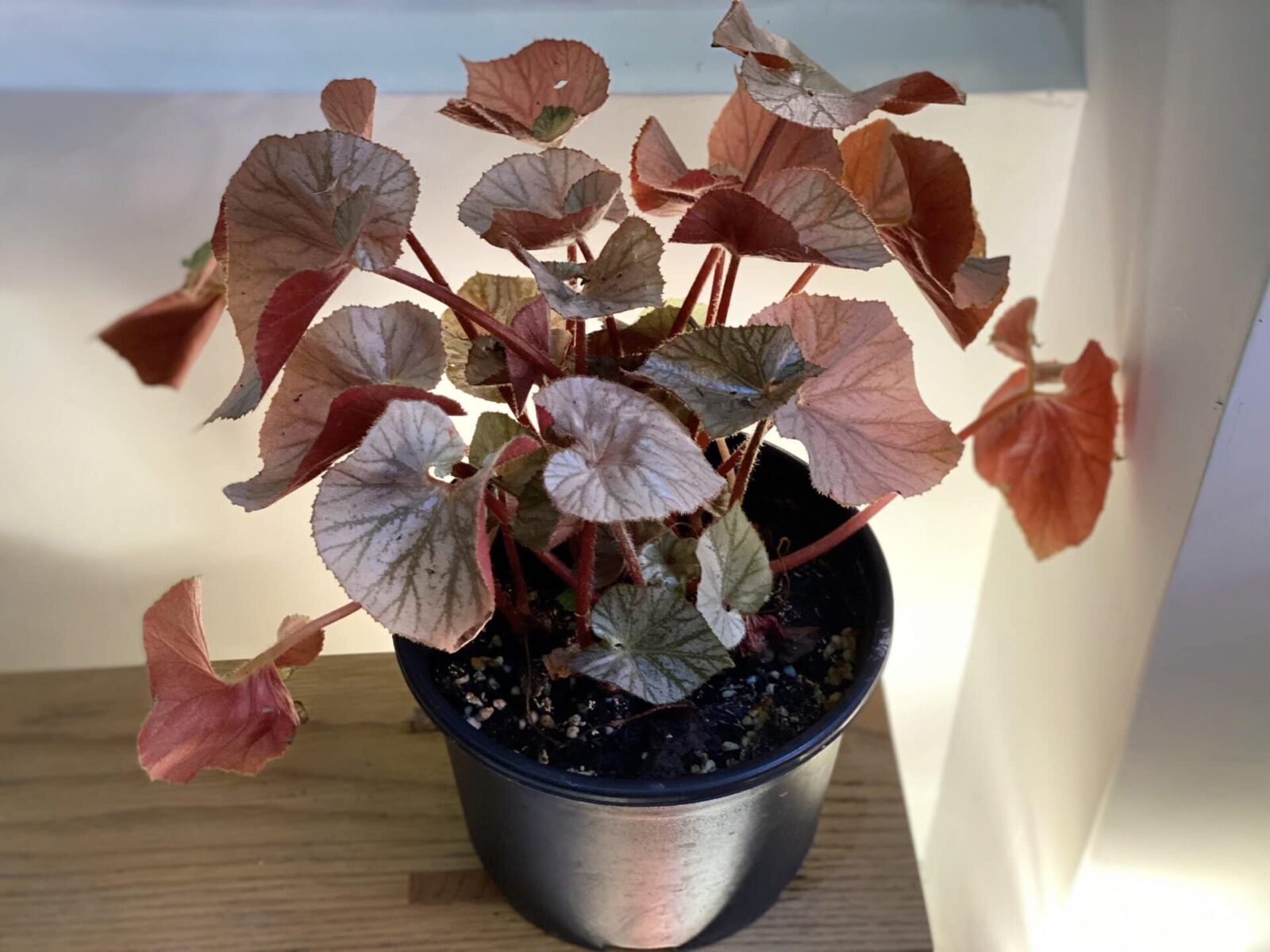
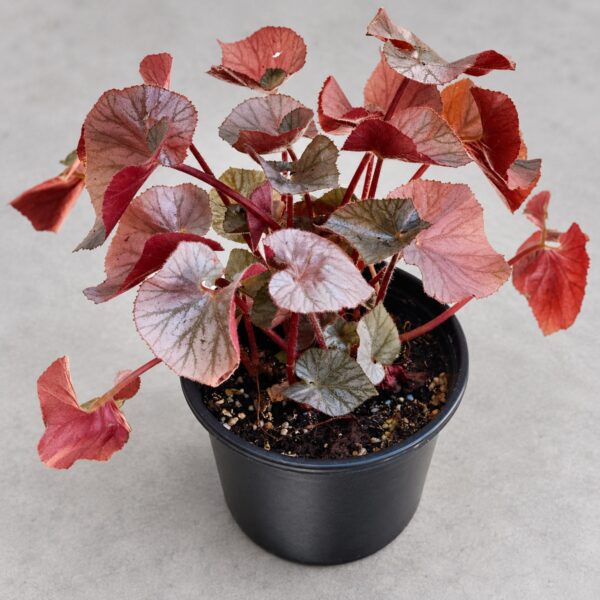
Mirage belongs to the Rex Cultorum Group, bred over multiple generations from begonia species native to Southeast Asia and the Himalayas. Its leaves blend silver-grey, purple-red, emerald green, and pink-orange tones, with patterning that shifts and swirls like a desert mirage. The leaf surface carries a metallic sheen with a fine velvety texture; the plant stays compact at 25–35 cm tall, making it a dream cultivar for foliage plant collectors. The whole plant contains calcium oxalate crystals and is toxic if ingested, potentially causing oral burning and gastrointestinal upset.
Light
- Needs bright, diffused light to show its best colouring — an east- or north-facing windowsill suits it well
- Under ample light, the layered colouring is richest and the metallic sheen most pronounced
- Strictly avoid direct sun, which scorches the velvety leaf surface and fades the colour patches
- Too little light makes the colour flat and dull, with loose, leggy growth
- Shorter winter daylight may push the plant into semi-dormancy, when softer light is acceptable
- Rotate the pot a quarter turn weekly to ensure even light exposure
Watering
- Water once the topsoil is dry about 2–3 cm down, roughly every 5–7 days during the growing season
- The "finger test" or "lift the pot" method is more reliable than a fixed schedule
- Water thoroughly until it flows from the pot's base, but empty the saucer promptly
- Keep the soil lightly moist, never wet — Rex begonias are extremely sensitive to standing water
- Water directly onto the soil, never the leaves — the velvety surface traps moisture and invites mould
- Reduce watering significantly in winter, letting the soil run drier
Soil & pot
- A light, loose, breathable substrate is essential
- Recommended recipe: coco fibre potting mix + orchid bark (1/8–1/4 inch) + perlite (roughly 1:1:1)
- A shallow-rooted plant with a horizontally creeping rhizome — choose a wide, shallow pot
- Must have drainage holes; terracotta offers better airflow
- Let the rhizome sit slightly proud of the soil surface when potting — burying it too deep causes rot
- The plant prefers being slightly root-bound, so frequent repotting into larger pots isn't necessary
Temperature & humidity
| Factor | Ideal range | Notes |
|---|---|---|
| Temperature | 18–24°C | Prolonged exposure below 15°C may trigger dormancy or cold damage |
| Humidity | 50–70% | Some thin-leaved forms may need up to 80% |
- Keep away from AC vents, heaters, and drafty doors/windows
- Good air circulation is essential — stagnant, humid conditions invite powdery mildew and grey mould
- Never mist the leaves; use a pebble tray or humidifier to raise ambient humidity instead
- Scorched leaf edges signal insufficient humidity — adjust promptly
- Grouping with other foliage plants helps raise local humidity naturally
Common problems
| Issue | Likely cause | What to do |
|---|---|---|
| Colouring becoming less vibrant | Light too strong or too weak | Adjust to a stable, bright, diffused position, away from direct sun |
| Powdery mildew (white powder on leaves) | Stagnant air, humidity too high | Trim badly affected leaves, improve ventilation, spray a preventive baking soda solution every 10–14 days |
| Rhizome rot | Overwatering, rhizome buried too deep, or standing water in the pot | Reduce watering, check rhizome position, repot and trim roots if needed |
| Winter leaf drop / dormancy | Shorter daylight hours, dropping temperatures | Reduce watering, stop fertilising, move to a warmer spot, let it recover naturally in spring |
| Scorched, brittle leaf edges | Humidity too low or fertiliser too concentrated | Increase surrounding humidity, dilute fertiliser to half the recommended strength |
| Brown spots on leaves | Water splashed onto leaves or water too hard | Switch to soft water (rainwater/distilled), water along the pot's edge to avoid wetting leaves |
How to explain to customers
"Mirage is such a special variety — the leaf really has so many layers, silver-grey mixed with purple-red, like something out of a dream, and it completely changes the mood of a room. It is a bit more particular though, so remember: no direct sun, and don't overwater it until it's soggy."
"It might drop leaves and go dormant in winter — when that happens, don't panic and add more water, that only speeds up its decline. Just let it rest, and once new growth appears in spring, you'll know it's fine. Also remember never to mist the leaves — the velvety texture makes it very prone to mould."
Fun facts
The Rex Cultorum Group has over 4,000 registered cultivars, all tracing their lineage back to Begonia rex; the name "Mirage" is said to come from the breeder being struck by the leaf's ever-shifting colours, evoking the illusory, shimmering quality of a desert mirage.
Keywords
Mirage Begonia, Begonia Mirage, Rex begonia, Rex Cultorum Group, foliage plant, metallic sheen leaves, silver-grey purple-red patterning, collector's cultivar, indoor potted plant, bright diffused light, high humidity plant, toxic plant, rhizome propagation, leaf cutting propagation, shallow pot planting
參考資料(想知來源可展開)
References
- American Begonia Society. Rex Cultorum Group. https://www.begonias.org/
- RHS. Begonias as Houseplants. https://www.rhs.org.uk/plants/begonias/houseplants
- ASPCA. Begonia – Toxic and Non-Toxic Plants. https://www.aspca.org/pet-care/animal-poison-control/toxic-and-non-toxic-plants/begonia
⚠️ Toxicity warning: Mirage contains calcium oxalate crystals throughout the plant and is toxic if ingested, potentially causing oral burning and gastrointestinal upset. Keep out of reach of children and pets.
In-depth care guide
Introduction
Mirage is a member of the Rex Cultorum Group — the enormous family of ornamental begonia cultivars descended from Begonia rex and bred over generations from species native to Southeast Asia and the Himalayan foothills. With over 4,000 registered cultivars in this group, Mirage distinguishes itself through an unusually rich blend of colours: silver-grey, purple-red, emerald green, and pink-orange all swirl together across the leaf surface in patterns that seem to shift depending on the light and angle, exactly like the shimmering, illusory quality of a desert mirage.
Like all Rex-cultorum begonias, Mirage grows from a thick, creeping rhizome rather than a conventional stem, and this rhizome is both the plant's greatest strength and its biggest vulnerability. It stores water and energy reserves, giving the plant modest drought tolerance, but it rots readily if kept consistently wet — a fact that shapes almost every aspect of how this begonia should be watered and potted.
Light requirements
Mirage needs bright, diffused light to develop and maintain its signature multi-toned colouring. An east- or north-facing windowsill works particularly well, giving the plant consistent bright light without the risk of harsh midday sun. Under good light, the layered colouring becomes richest and the metallic sheen most pronounced; in weaker light, the colours flatten toward a duller, more uniform green and the plant becomes loose and leggy as it stretches for more light.
Direct sun should be avoided entirely — even brief exposure scorches the velvety leaf surface and fades the delicate colour patches that make this cultivar so desirable. Note that shorter daylight hours in winter can push the plant into semi-dormancy, during which slightly softer light is perfectly acceptable and even preferable. Rotating the pot a quarter turn each week helps keep growth balanced on all sides.
Watering
Water once the topsoil has dried out to a depth of about 2–3 cm, typically every 5–7 days during the growing season. Rather than following a fixed schedule, use the finger test or simply lift the pot to judge its weight — both give a more accurate read on actual soil moisture. When you do water, water thoroughly until it flows from the drainage holes, but empty the saucer promptly afterward; Rex begonias are extremely sensitive to standing water, and even a short period of waterlogging can cause lasting rhizome damage.
Always water directly onto the soil rather than over the foliage. The velvety leaf surface holds moisture for a long time when wetted, creating ideal conditions for fungal growth. In winter, reduce watering substantially, letting the soil dry out more between waterings as the plant's growth slows.
Soil and pot
Mirage needs a light, loose, highly breathable substrate. A useful recipe combines coco fibre potting mix with orchid bark (roughly 1/8–1/4 inch pieces) and perlite in a 1:1:1 ratio, giving the shallow root system plenty of airflow. Because the rhizome spreads horizontally along the soil surface rather than growing deep, a wide, shallow pot suits this plant far better than a deep one.
The pot must have drainage holes, with terracotta generally preferable to plastic for the extra breathability it offers. When potting, position the rhizome so it sits slightly proud of the soil surface — burying it too deep is one of the most common causes of rot in this group. Mirage also tends to prefer being slightly root-bound, so there's no need to size up the pot frequently; repotting only when the plant has clearly outgrown its container is sufficient.
Temperature and humidity
Mirage grows best between 18°C and 24°C. Prolonged exposure to temperatures below 15°C can trigger dormancy or, in more severe cases, cold damage, so keep the plant away from cold drafts during Hong Kong's cooler winter months. Humidity should ideally sit between 50% and 70%, though some thinner-leaved forms within this cultivar group may appreciate humidity as high as 80%.
Keep the plant well away from AC vents, heaters, and drafty gaps around windows and doors. Good air circulation matters as much as humidity itself — stagnant, warm, humid conditions are the perfect breeding ground for powdery mildew and grey mould, two of the most common issues affecting Rex-type begonias. Never mist the leaves directly; instead, use a pebble tray or humidifier to raise ambient humidity without wetting the foliage. If you notice the leaf edges starting to scorch and dry, that's a clear sign humidity needs adjusting. Grouping the plant with other foliage plants is a simple, effective way to build a naturally more humid microclimate.
Common problems in detail
Fading, less vibrant colouring results from light that's either too strong or too weak — adjust to a stable position with bright, diffused light, avoiding both harsh direct sun and dim corners.
Powdery mildew, appearing as a white powdery coating on the leaves, stems from stagnant air combined with excess humidity — trim off badly affected leaves, improve airflow around the plant, and consider a preventive spray of diluted baking soda solution every 10–14 days.
Rhizome rot typically follows overwatering, a rhizome planted too deep, or standing water left in the pot — reduce watering, check the rhizome's position relative to the soil surface, and repot with root trimming if necessary.
Winter leaf drop or dormancy is usually a natural response to shorter days and falling temperatures — reduce watering, stop fertilising, move the plant somewhere warmer, and let it recover naturally once spring arrives.
Scorched, brittle leaf edges point to humidity too low or fertiliser applied too concentrated — raise ambient humidity and always dilute fertiliser to half the recommended strength.
Brown spots on the leaves often come from water splashed onto the foliage during watering, or from using water that's too hard — switch to soft water such as rainwater or distilled water, and water along the pot's rim to keep the leaves dry.
Toxicity information
Mirage contains calcium oxalate crystals throughout the plant, toxic if chewed or ingested by humans or pets, potentially causing oral burning and gastrointestinal upset. Keep the plant well out of reach of children and pets, and wash your hands after handling or pruning.
References
- American Begonia Society. Rex Cultorum Group. https://www.begonias.org/
- RHS. Begonias as Houseplants. https://www.rhs.org.uk/plants/begonias/houseplants
- ASPCA. Begonia – Toxic and Non-Toxic Plants. https://www.aspca.org/pet-care/animal-poison-control/toxic-and-non-toxic-plants/begonia
- Missouri Botanical Garden. Begonia rex-cultorum Group. Plant Finder. http://www.missouribotanicalgarden.org/PlantFinder/
Plantjai shop · In stock online
Begonia 'Mirage'
Begonia 'Mirage'
Original price was: HK$588.00.HK$198.00Current price is: HK$198.00.
Hong Kong delivery · Causeway Bay pickup
For Hong Kong homes and offices. Stock and pricing follow the product page.
IN STORE NOW
Plants for this guide
Related plants in stock now — live prices, delivery or Causeway Bay pickup.
FREE PLANT ADVICE
Send us a photo before you change anything
WhatsApp a photo of the plant and your window light. Our Causeway Bay team will suggest care steps or plants that suit your space.
STORE · CAUSEWAY BAY
4/F, 39 Yiu Wa Street, Causeway Bay
Daily 12:30–8:00pm · ~3 min walk from Times Square
Map & directionsPlant Care