
How to Care for Begonia Izumo No Kiraboshi in Hong Kong | Plantjai


Plantjai 植仔 · Care Encyclopedia
Begonia Izumo No Kiraboshi
Begonia Izumo No Kiraboshi 出雲秋海棠
Hong Kong care guide — useful before you buy and after it arrives.
Shop this plantJapanese starlit silver spots against a wine-red underside — miniature and exquisite, like a piece of art.
Origin & characteristics
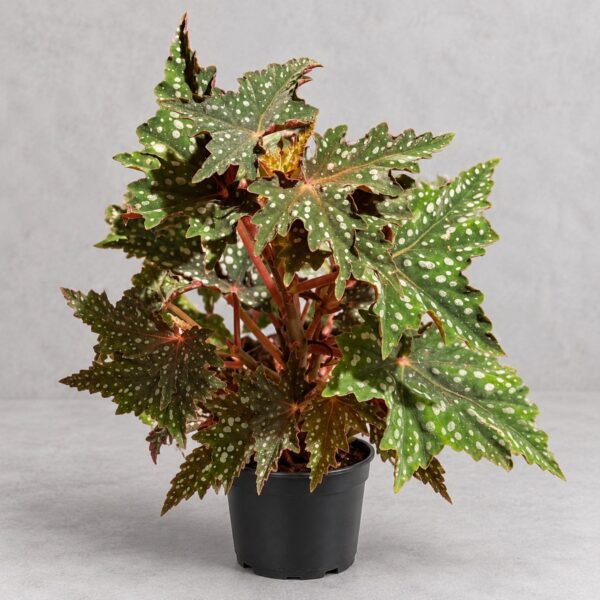
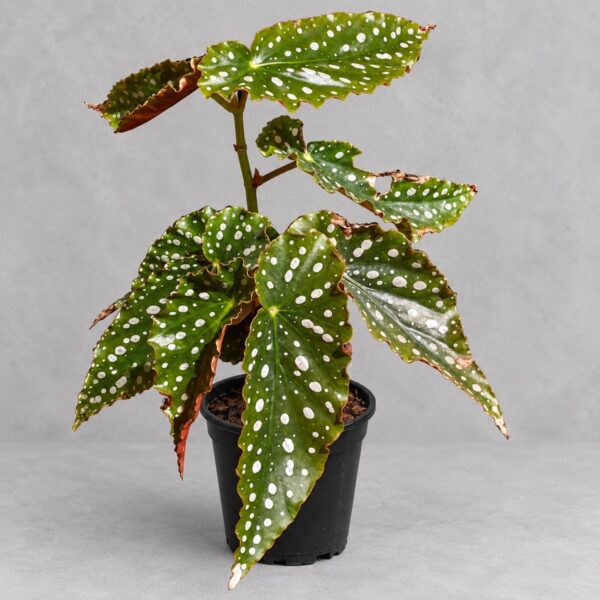
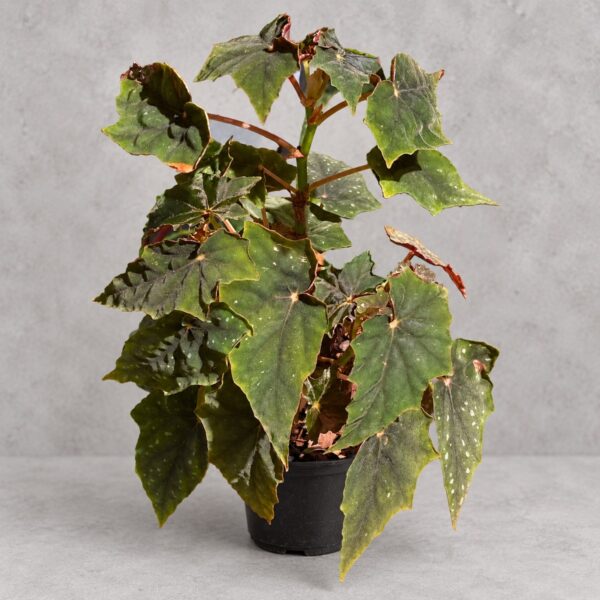
Izumo No Kiraboshi is a hybrid begonia from Japan; "Izumo No Kiraboshi" translates from Japanese as "sparkling stars of Izumo." Leaves are deep green covered in silvery-white star-like spots, with jagged, saw-toothed edges; the leaf underside is a deep wine-red, giving it real ornamental appeal. The plant is compact in size with moderate growth speed, and a variegated form (Aurea Variegated) exists, displaying yellow-orange-pink patches — deeply prized by collectors.
Light
- Ideal light: medium-strength diffused light, roughly 100–200 PPFD (µmol/m²/s)
- Placement: 30–60 cm from an east- or north-facing window, or 1–2 metres from a south-facing window
- Avoid: prolonged direct sun will scorch the leaves, and the variegated sections are especially delicate
- Signs of too much light: the green portions fade and turn pale, leaf edges scorch
- Signs of insufficient light: silvery-white spots diminish, leaves become thin and soft, growth stalls
- Tip: the variegated form needs gentler light — avoid strong light, which turns the variegated patches brown
Watering
- Frequency: keep the soil evenly moist but never waterlogged, roughly every 5 days, adjusting to conditions
- Method: water once the top 1–2 cm of soil has dried, pouring along the pot's edge until it drains from the bottom
- Water quality: room-temperature water, or tap water left standing for 24 hours works even better
- Note: variegated cultivars have weaker root systems and are prone to rot from excess moisture — better slightly dry than overwatered
- Tip: check soil moisture with a finger, or gauge by the pot's weight
Soil & pot
- Soil recipe: a light, loose, well-draining, slightly acidic medium
- Recommended ratio: peat moss 50% + perlite 30% + coco coir 20%
- Or use Plantjai's dedicated begonia soil mix
- pH: 5.5–6.5
- Pot selection: a small pot is recommended, either plastic or terracotta, must have drainage holes
- Repotting timing: repot into a larger pot once roots fill the current one, ideally in spring or summer — avoid planting too deep
Temperature & humidity
- Ideal temperature: 18–24°C
- Tolerance range: 15–30°C; growth stalls below 10°C
- Humidity requirement: above 60% is ideal; higher humidity produces fuller, more robust leaves
- Humidification methods:
- Growing in a glass terrarium or humidity box
- A pebble tray beneath the pot
- Occasional misting of the surrounding area (avoid misting directly onto the leaves)
- Tip: this cultivar is fairly sensitive to environmental change — when relocating it, acclimate gradually, changing no more than 10% of its conditions at a time
Common problems
| Issue | Likely cause | What to do |
|---|---|---|
| Variegated sections browning, drying out | Light too strong or humidity insufficient | Move to a more shaded position, increase surrounding humidity |
| Leaves thinning, becoming soft | Insufficient light or overwatering | Adjust placement, check watering amount |
| Fewer silvery-white spots | Light insufficient | Move to a brighter spot, maintain stable diffused light |
| Scorched leaf edges | Air too dry or fertiliser burn | Increase humidity, reduce fertiliser concentration and frequency |
| Slow or stalled growth | Temperature too low or root issues | Check environmental temperature, repot to inspect roots if necessary |
| Water-soaked spots on leaves | Bacterial leaf spot | Remove affected leaves, avoid wetting leaves, improve ventilation |
How to explain to customers
"Izumo No Kiraboshi is a lovely cultivar from Japan — the leaves look just like a starry sky covered in silver spots, and the underside is wine-red, genuinely like a painting come to life!"
"It's fairly compact in size, so it's perfect for a desk or a small cabinet — really eye-catching."
"Just remember it likes a bit more humidity, and be gentle with the variegated leaves on the colourful form — keep them out of direct sun and they'll be fine."
Fun facts
Izumo No Kiraboshi's name comes from a legend in Japan's Izumo region, Shimane Prefecture, where locals believe a sky full of stars symbolises good fortune and blessing. This cultivar has an extremely rare variegated form, with random patches of yellow, orange, and pink appearing on the leaves — each plant is genuinely one of a kind, making it a dream find for plant collectors.
Keywords
Izumo No Kiraboshi Begonia, Japanese begonia, starry-sky begonia, silver-spotted foliage plant, variegated begonia, Aurea Variegated, miniature foliage plant, high-humidity plant, indoor potted plant, Hong Kong plant shop, Plantjai, begonia care, pet-toxic plant
參考資料(想知來源可展開)
References
- American Begonia Society. Rex Cultorum and Rhizomatous Begonias. https://www.begonias.org/
- Missouri Botanical Garden. Begonia species and hybrids. Plant Finder. http://www.missouribotanicalgarden.org/PlantFinder/
- ASPCA. Begonia – Toxic and Non-Toxic Plants. https://www.aspca.org/pet-care/animal-poison-control/toxic-and-non-toxic-plants/begonia
⚠️ Toxicity warning: Izumo No Kiraboshi Begonia contains calcium oxalate crystals, toxic to pets and children. Avoid ingestion.
In-depth care guide
Introduction
Izumo No Kiraboshi Begonia is a hybrid variety from Japan, its name translating from Japanese as "sparkling stars of Izumo" — a poetic reference that perfectly describes its most distinctive feature: deep green leaves densely dotted with silvery-white, star-like spots that genuinely evoke the night sky. The leaf margins are jagged and saw-toothed, adding textural interest, while the underside displays a rich, deep wine-red that provides dramatic contrast whenever the leaves are viewed from different angles.
This is a compact cultivar, well suited to smaller display spaces like a desk, side table, or narrow shelf, with a moderate growth speed that makes it manageable for growers who don't want a fast-spreading plant. A particularly prized variegated form, known as Aurea Variegated, displays random patches of yellow, orange, and pink scattered across the leaves — since the variegation pattern varies from plant to plant, each specimen is genuinely unique, making it a favourite among dedicated collectors willing to put in the extra care this form requires.
Light requirements
Izumo No Kiraboshi needs medium-strength diffused light, roughly in the range of 100–200 PPFD. A position 30–60 cm from an east- or north-facing window works well, or roughly 1–2 metres from a south-facing window if that's your only option. Prolonged direct sun exposure will scorch the leaves, and this risk is especially pronounced for the variegated sections of the Aurea form, which are noticeably more delicate than the solid green portions.
Watch for two opposite warning signs: if the green portions fade and turn pale with leaf edges scorching, light is too strong; if the silvery-white spots diminish, leaves become thin and soft, and growth stalls, light is insufficient. For the variegated form specifically, gentler light is essential — strong light will turn the colourful patches brown rather than allowing them to remain vivid.
Watering technique
Keep the soil evenly moist but never waterlogged, watering roughly every five days depending on conditions, whenever the top 1–2 cm of soil has dried. Pour along the pot's edge until water drains from the bottom. Room-temperature water works fine, though tap water left standing for 24 hours (allowing chlorine to dissipate) is even better.
Variegated cultivars in particular have somewhat weaker root systems and are more prone to rot from excess moisture, so it's better to err on the side of slightly dry rather than overwatered. Checking soil moisture with a finger, or simply gauging the pot's weight before and after watering, are both reliable ways to judge when the next watering is due.
Soil and potting
A light, loose, well-draining, slightly acidic medium suits this cultivar best: peat moss, perlite, and coco coir in a 50:30:20 ratio, maintaining a pH between 5.5 and 6.5. A small pot is recommended given the plant's compact size, either plastic or terracotta, as long as it has drainage holes. Repot into a larger pot once roots have filled the current one, ideally during spring or summer — avoid planting too deep, since this variety, like other rhizomatous begonias, prefers to have its growing point close to the soil surface rather than buried.
Temperature and humidity
Izumo No Kiraboshi grows best between 18°C and 24°C, tolerating a range of 15–30°C, though growth stalls below 10°C. Humidity requirements are on the higher side, ideally above 60% — higher humidity produces fuller, more robust leaves overall.
Growing the plant in a glass terrarium or dedicated humidity box provides the most stable, high-humidity environment this cultivar appreciates. A pebble tray beneath the pot offers a simpler alternative, and occasional misting of the surrounding air (rather than directly onto the leaves) can also help. This cultivar is notably sensitive to sudden environmental changes — when relocating it to a new spot, acclimate it gradually, changing no more than roughly 10% of its growing conditions at a time to avoid shock.
Common problems in detail
Browning, drying variegated sections point to light that's too strong or humidity that's insufficient — move the plant to a more shaded position and increase surrounding humidity.
Thinning, softening leaves suggest either insufficient light or overwatering — adjust the plant's placement and review your watering amount.
Fewer silvery-white spots indicate insufficient light — move the plant to a brighter spot while maintaining stable, diffused conditions.
Scorched leaf edges can result from air that's too dry or fertiliser burn — increase humidity and reduce fertiliser concentration and frequency.
Slow or stalled growth may indicate temperatures too low or underlying root issues — check the ambient temperature and consider repotting to inspect root health if the problem persists.
Water-soaked spots on leaves signal bacterial leaf spot — remove affected leaves, avoid wetting the foliage when watering, and improve ventilation around the plant.
Toxicity information
Izumo No Kiraboshi Begonia contains calcium oxalate crystals, toxic to pets and children if ingested. Keep the plant out of reach, particularly given its compact size often places it within easy reach on low shelves or desks.
References
- American Begonia Society. Rex Cultorum and Rhizomatous Begonias. https://www.begonias.org/
- Missouri Botanical Garden. Begonia species and hybrids. Plant Finder. http://www.missouribotanicalgarden.org/PlantFinder/
- ASPCA. Begonia – Toxic and Non-Toxic Plants. https://www.aspca.org/pet-care/animal-poison-control/toxic-and-non-toxic-plants/begonia
- RHS. Begonias as Houseplants. https://www.rhs.org.uk/plants/begonias/houseplants
Plantjai shop · In stock online
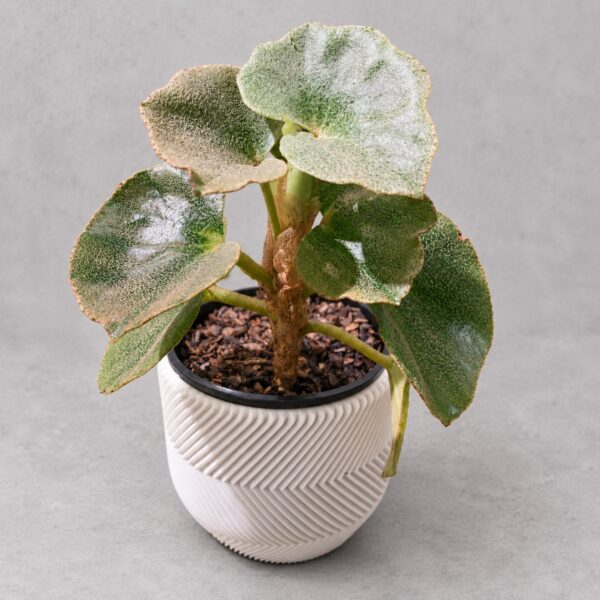
Begonia Izumo no Kiraboshi Izumo
HK$198.00
Hong Kong delivery · Causeway Bay pickup
For Hong Kong homes and offices. Stock and pricing follow the product page.
IN STORE NOW
Plants for this guide
Related plants in stock now — live prices, delivery or Causeway Bay pickup.
FREE PLANT ADVICE
Send us a photo before you change anything
WhatsApp a photo of the plant and your window light. Our Causeway Bay team will suggest care steps or plants that suit your space.
STORE · CAUSEWAY BAY
4/F, 39 Yiu Wa Street, Causeway Bay
Daily 12:30–8:00pm · ~3 min walk from Times Square
Map & directionsPlant Care