
How to Care for Begonia Irene Nuss in Hong Kong | Plantjai

Plantjai 植仔 · Care Encyclopedia
Begonia Irene Nuss
Hong Kong care guide — useful before you buy and after it arrives.
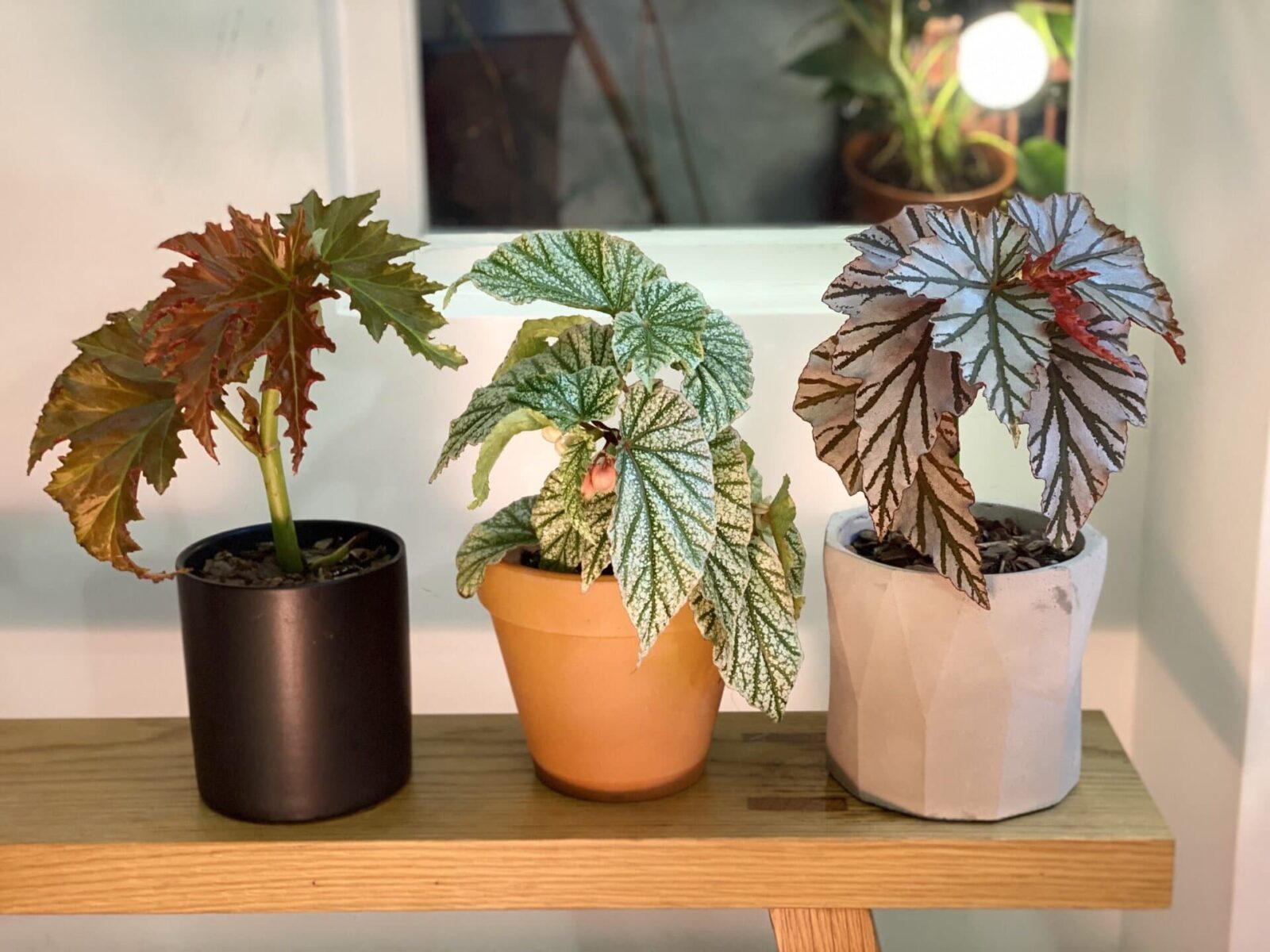
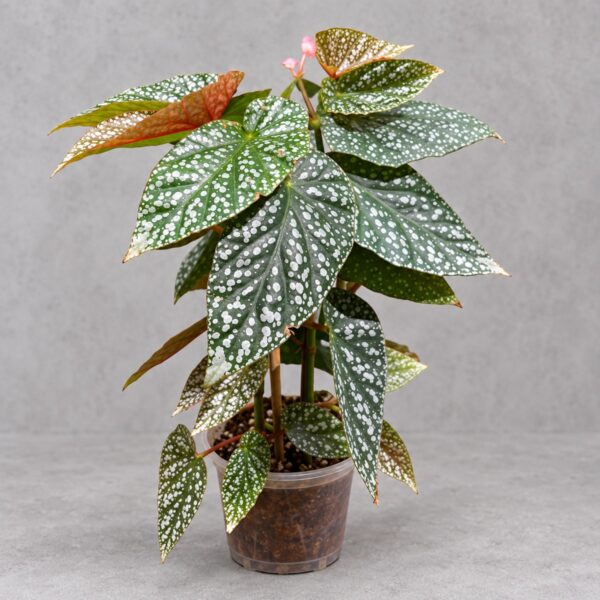
Shop this plantBronze-green angel wings paired with strings of pink flowers — a timeless, elegant classic.
Origin & characteristics
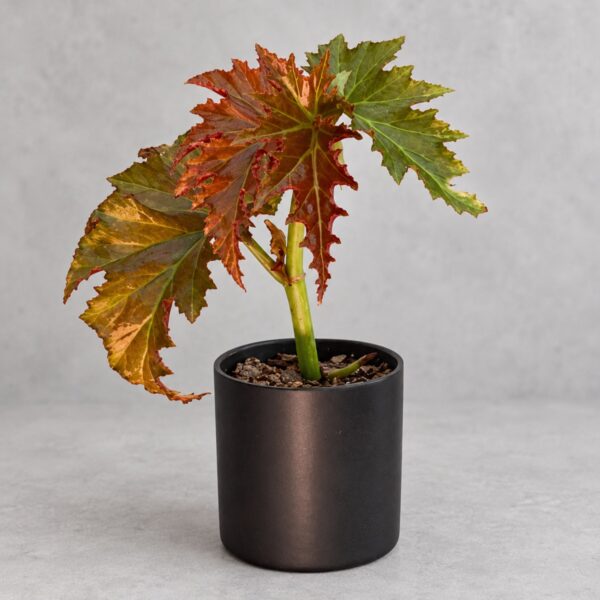
Bred by American amateur horticulturist Irene Nuss in California in 1971, from a cross between 'Kentwood' and 'Lenore Olivier', Irene Nuss belongs to the Superba group within cane-type begonias. The plant grows upright, reaching 60–90 cm tall. Leaves are large, deeply lobed in a wing-like shape, ranging from deep green to bronze in tone with deeply etched veining. Pink flower clusters hang in pendant sprays with a subtle fragrance. It has received the Royal Horticultural Society's Award of Garden Merit (AGM) and remains one of the most widely grown classic cultivars worldwide.
Light
- Ideal placement: bright, diffused light, such as 1–2 metres from a south- or west-facing window
- Acceptable range: partial shade to bright, filtered light
- Notes:
- Needs adequate light to maintain sturdy stems and abundant flowering, but avoid harsh direct sun
- Insufficient light causes stems to elongate, reduced flowering, and smaller leaves
- Too much light easily scorches the leaves, leaving browned edges
- Can tolerate gentle morning light, avoiding harsh midday sun
Watering
- Principle: water thoroughly once the topsoil is dry roughly 5 cm down
- Frequency: roughly every 5–7 days in summer, every 7–10 days in winter
- Method:
- Water along the pot's edge, avoiding wetting the leaves or the crown
- After watering thoroughly, let excess water drain away, never let it stand
- Keep the soil lightly moist, never soggy
- Winter adjustment: significantly reduce watering, letting the topsoil dry out fully before watering, to avoid root rot
- Important note: cane-type begonias are sensitive to overwatering — better slightly dry than overwatered
Soil & pot
- Soil recipe: well-draining, organic-matter-rich
- Recommended: peat-free potting soil mixed with perlite (roughly 3:1 ratio)
- Or: general potting soil with about 30% perlite added
- pH: slightly acidic (5.5–6.5)
- Pot selection:
- Choose a medium-depth pot with drainage holes
- Terracotta or breathable plastic pots both work
- As the plant grows taller, move up to a larger pot to provide support
- Repotting: roughly once every 1–2 years in spring, using fresh potting soil
- Feeding: during the growing season (May–September), apply a high-potassium liquid fertiliser every 2–4 weeks, diluted to half strength
Temperature & humidity
| Factor | Ideal range | Minimum tolerance |
|---|---|---|
| Temperature | 15–22°C | 10°C |
| Humidity | 40–60% | 40% |
- Temperature notes:
- Ideal temperature range is 15–22°C
- Can tolerate 7–35°C, but growth slows if sustained below 13°C
- Keep above 10°C in winter
- Avoid placing near AC vents or heaters
- Humidity:
- Adapts well to typical home humidity
- Can be placed on a pebble-lined tray to boost humidity (pot base not touching the water)
- Keep good airflow, avoid stuffy conditions
Common problems
| Issue | Likely cause | What to do |
|---|---|---|
| Leaves fading | Sunburn from too much light | Move to a more shaded position |
| Elongating stems, reduced flowering | Insufficient light | Move closer to a light source |
| Leaves yellowing, going soft | Overwatering or poor drainage | Reduce watering, check drainage |
| Browning, brittle leaf edges | Humidity too low or temperature too high | Increase humidity, move away from heat sources |
| Grey mould spots on leaves | Botrytis (poor ventilation) | Remove affected leaves, improve ventilation, avoid wetting leaves |
| White powder on leaves | Powdery mildew | Remove affected leaves, use a fungicide |
| Leaf drop, weak plant | Temperature too low or sudden environmental change | Check temperature, avoid moving the plant frequently |
| Pests (mealybugs, thrips, spider mites) | Poor ventilation | Wipe with alcohol swabs, treat with neem oil |
⚠️ Toxicity warning
Begonias contain soluble calcium oxalate throughout the plant, toxic to both humans and pets.
- To humans: ingestion may cause oral burning, drooling, vomiting, and diarrhoea
- To cats and dogs: toxic; ingestion causes drooling, difficulty swallowing, and vomiting
- Recommendation: keep out of reach of children and pets; wash your hands after handling
How to explain to customers
"Irene Nuss is a genuine classic — big leaves that look just like angel wings, deep green with bronze tones, and it produces strings of pink flowers too, so lovely. It likes brighter light, but never direct sun. For watering, wait until the soil is dry before watering again — go even easier in winter, and it's really quite easy to grow."
Fun facts
Irene Nuss began hybridising begonias in 1959 and over her lifetime bred more than 65 registered cultivars, laying the foundation for the entire Superba group of cane-type begonias. She was known as a "community builder," with a breeding philosophy summed up in her own words: "As long as everyone enjoys growing them, I'm satisfied."
Keywords
Irene Nuss Begonia, cane-type begonia, Superba group, angel wing begonia, foliage plant, bronze-green leaves, pink flower clusters, upright growth, indoor plant, bright diffused light, toxic plant, calcium oxalate, Plantjai, AGM award-winning cultivar, bred in 1971, garden hybrid
參考資料(想知來源可展開)
References
- American Begonia Society. Cane-like Begonias — Superba Group. https://www.begonias.org/
- RHS. Begonias as Houseplants. https://www.rhs.org.uk/plants/begonias/houseplants
- ASPCA. Begonia – Toxic and Non-Toxic Plants. https://www.aspca.org/pet-care/animal-poison-control/toxic-and-non-toxic-plants/begonia
In-depth care guide
Introduction
Irene Nuss Begonia is a beloved classic within the cane-type begonia family, bred in 1971 by American amateur horticulturist Irene Nuss in California, from a cross between 'Kentwood' and 'Lenore Olivier'. It belongs to the Superba group of cane-type begonias, characterised by large, deeply lobed, wing-shaped leaves in tones ranging from deep green to bronze, with deeply etched vein patterns adding textural richness. The plant produces pendant clusters of pink flowers with a subtle, pleasant fragrance, and has earned the Royal Horticultural Society's Award of Garden Merit (AGM) — a recognition reflecting its enduring popularity and reliable garden performance across generations of growers worldwide.
Growing upright to a substantial 60–90 cm, Irene Nuss makes a genuine architectural statement in any indoor plant collection, combining bold foliage with an extended, fragrant flowering period that few other foliage-focused begonias can match.
Light requirements
Irene Nuss needs ample light to maintain sturdy stems and abundant flowering, ideally positioned 1–2 metres from a south- or west-facing window in bright, diffused light. It can also tolerate partial shade or bright, filtered conditions. Insufficient light causes the stems to elongate awkwardly, reduces flowering considerably, and results in smaller leaves — undermining the plant's naturally full, floriferous character. Conversely, too much direct light easily scorches the leaves, leaving browned, crisp edges. Gentle morning light is generally well tolerated, but harsh midday sun should always be avoided.
Watering technique
Water Irene Nuss thoroughly once the soil is dry to a depth of roughly 5 cm, which typically works out to every 5–7 days in summer and every 7–10 days in winter. Water along the pot's edge, avoiding wetting the leaves or the crown of the plant, and let excess water drain away completely after each thorough soak — never let it stand in the saucer. Keep the soil lightly moist rather than consistently soggy. In winter, significantly reduce watering, letting the topsoil dry out fully before watering again to avoid root rot. Cane-type begonias like Irene Nuss are notably sensitive to overwatering, so it's always better to err on the side of slightly dry rather than risk waterlogged roots.
Soil and potting
A well-draining, organic-matter-rich soil mix works best: peat-free potting soil mixed with perlite in roughly a 3:1 ratio, or general potting soil with about 30% perlite added, maintaining a slightly acidic pH between 5.5 and 6.5. Choose a medium-depth pot with drainage holes — terracotta or breathable plastic both work well. As the plant grows taller over time, moving up to a larger pot provides useful additional support and stability. Repot roughly once every one to two years in spring, using fresh potting soil each time. During the growing season from May to September, apply a high-potassium liquid fertiliser every 2–4 weeks, diluted to half strength, to support both healthy foliage growth and the plant's characteristic abundant flowering.
Temperature and humidity
Irene Nuss grows best between 15°C and 22°C, tolerating a broader range of 7–35°C, though growth slows noticeably if temperatures remain sustained below 13°C. Keep it above 10°C in winter, and avoid placing it near AC vents or heaters, both of which cause damaging temperature swings and localised dryness. Humidity between 40% and 60% suits this variety well, and it adapts readily to typical home humidity levels. A pebble-lined tray beneath the pot can help boost humidity when needed, provided the pot's base doesn't directly touch the water. Good airflow is important — avoid placing the plant in a stuffy, poorly ventilated corner.
Common problems in detail
Fading leaves point to sunburn from excessive light — move the plant to a more shaded position.
Elongating stems with reduced flowering signal insufficient light — move the plant closer to a light source to restore both compact growth and reliable blooming.
Yellowing, softening leaves indicate overwatering or poor drainage — reduce watering and verify the pot drains properly.
Browning, brittle leaf edges typically result from humidity too low or temperatures too high — increase surrounding humidity and move the plant away from direct heat sources.
Grey mould spots on leaves indicate botrytis, usually triggered by poor ventilation — remove affected leaves, improve airflow, and avoid wetting the leaves when watering.
White powdery coating on leaves points to powdery mildew — remove affected leaves and treat with a fungicide if needed.
Leaf drop with a generally weakened plant may result from temperatures too low or sudden environmental changes — check the ambient temperature and avoid moving the plant frequently between different locations.
Pests such as mealybugs, thrips, or spider mites typically arrive via poor ventilation — wipe them away with alcohol-dipped cotton swabs or treat with a neem oil spray.
Toxicity information
Begonias contain soluble calcium oxalate throughout the plant, toxic to both humans and pets. In humans, ingestion may cause oral burning, drooling, vomiting, and diarrhoea. In cats and dogs, ingestion causes drooling and difficulty swallowing, along with vomiting. Keep the plant out of reach of children and pets, and wash your hands thoroughly after handling.
References
- American Begonia Society. Cane-like Begonias — Superba Group. https://www.begonias.org/
- RHS. Begonias as Houseplants. https://www.rhs.org.uk/plants/begonias/houseplants
- ASPCA. Begonia – Toxic and Non-Toxic Plants. https://www.aspca.org/pet-care/animal-poison-control/toxic-and-non-toxic-plants/begonia
- Missouri Botanical Garden. Begonia – Cane Begonia Group. Plant Finder. http://www.missouribotanicalgarden.org/PlantFinder/
Plantjai shop · In stock online
Begonia 'Irene Nuss'
Begonia 'Irene Nuss'
Original price was: HK$588.00.HK$198.00Current price is: HK$198.00.
Hong Kong delivery · Causeway Bay pickup
For Hong Kong homes and offices. Stock and pricing follow the product page.
IN STORE NOW
Plants for this guide
Related plants in stock now — live prices, delivery or Causeway Bay pickup.
FREE PLANT ADVICE
Send us a photo before you change anything
WhatsApp a photo of the plant and your window light. Our Causeway Bay team will suggest care steps or plants that suit your space.
STORE · CAUSEWAY BAY
4/F, 39 Yiu Wa Street, Causeway Bay
Daily 12:30–8:00pm · ~3 min walk from Times Square
Map & directionsPlant Care