
How to Care for Begonia Highway in Hong Kong | Plantjai

Plantjai 植仔 · Care Encyclopedia
Begonia Highway
Hong Kong care guide — useful before you buy and after it arrives.
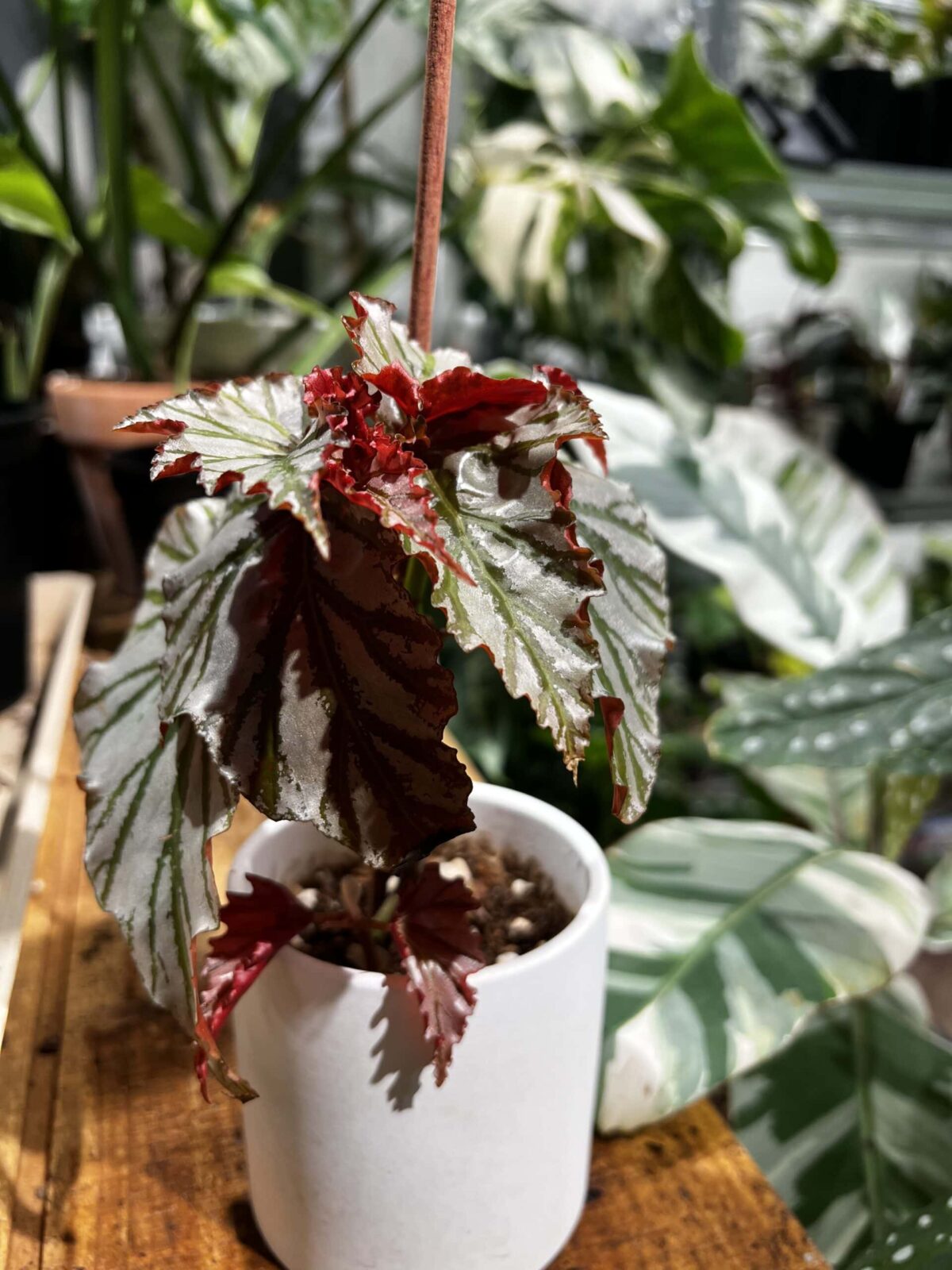
Shop this plantSilver leaves with green veins fading to black — an elegant, tall beauty with real layered depth.
Origin & characteristics
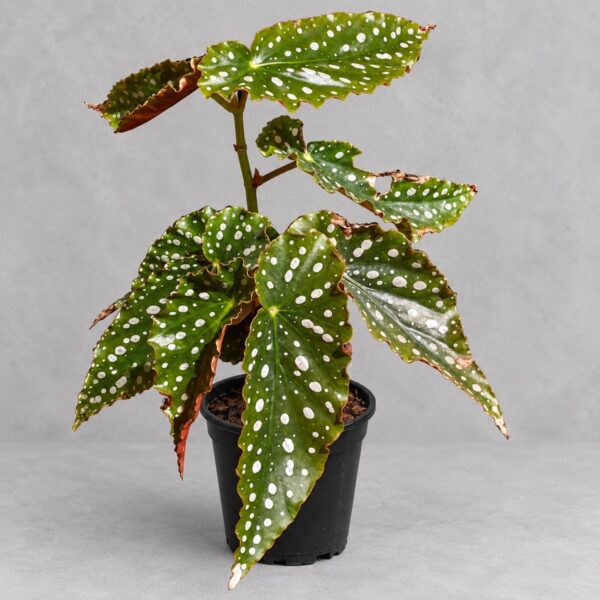
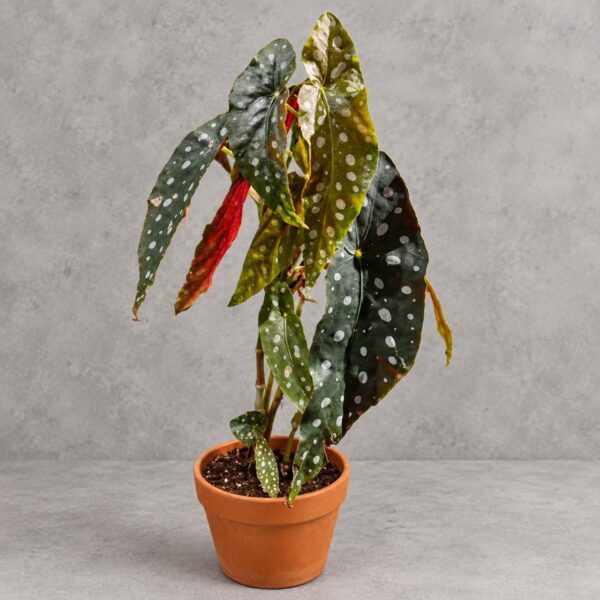
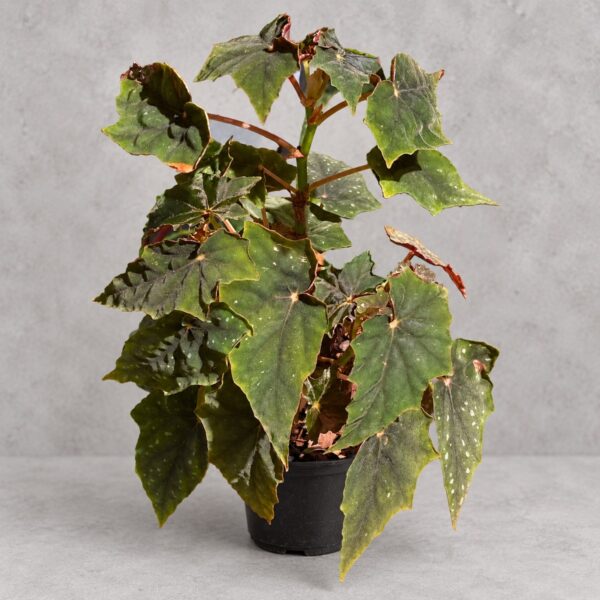
Highway Begonia is a garden hybrid, a cane-type begonia with the botanical name still unconfirmed. The plant grows upright in a clumping form, exceeding 40 cm tall. Leaves are large and elongated, asymmetrical, with young leaves emerging a soft pink before maturing into silver with striking green veining, and older leaves gradually deepening toward a near-black tone, while the undersides are deep red — creating a genuinely layered, rich visual effect. It's often confused with the "Looking Glass" begonia, but Highway's leaves are more rigid and angular, with a more solidly silver tone. It produces pale pink flowers.
Light
- Ideal placement: bright, diffused light, such as an east- or north-facing window
- Acceptable range: partial shade, tolerating gentle morning light
- Notes:
- Avoid harsh direct sun, especially midday sun, which easily scorches the leaves
- Too much light fades the silver patterning, turning it white
- Too little light causes stems to elongate, leaves to shrink and thin, and the plant to lose its compact form
- Can tolerate gentle morning sun (before 9 am)
Watering
- Principle: water once the topsoil is dry roughly 5 cm down
- Frequency: roughly every 5–7 days in summer, every 7–10 days in winter
- Method:
- Water along the pot's edge, avoiding wetting the leaves, to prevent rot
- After watering thoroughly, let excess water drain away, never let it stand
- Avoid overwatering, which causes root rot
- Winter adjustment: reduce watering frequency, letting the topsoil dry out fully before watering
Soil & pot
- Soil recipe: well-draining, organic-matter-rich
- Recommended: quality potting soil mixed with perlite and peat moss (roughly 3:1:1 ratio)
- Or: general potting soil with about 30% perlite added for extra aeration
- pH: slightly acidic to neutral (5.5–6.5)
- Pot selection:
- Choose a pot with drainage holes, material doesn't matter much
- Given its taller growth habit, a slightly deeper pot can add stability
- As the plant grows taller, it may need a support stake
- Repotting: roughly once every 1–2 years in spring, or when roots fill the pot
Temperature & humidity
| Factor | Ideal range | Minimum tolerance |
|---|---|---|
| Temperature | 18–35°C | 10°C |
| Humidity | 40–60% | 40% |
- Temperature notes:
- Ideal growing temperature is roughly 18–24°C
- Can tolerate higher temperatures (up to 35°C), but needs good ventilation and humidity
- Keep above 10°C in winter, avoiding cold drafts
- Humidity:
- Adapts well to typical home humidity (40–60%)
- Grouping with other plants can help raise local microclimate humidity
- Avoid misting directly onto the leaves
Common problems
| Issue | Likely cause | What to do |
|---|---|---|
| Lower leaves dropping | Overwatering or poor soil drainage | Check drainage, adjust watering frequency |
| Leaves fading, turning white | Sunburn from too much light | Move to a more shaded position |
| Elongating stems, sparse growth | Insufficient light | Move closer to a window or add a grow light |
| Browning leaf edges | Humidity too low or large temperature swings | Increase surrounding humidity, keep away from AC vents |
| Leaves yellowing, going soft | Overwatering causing root rot | Reduce watering, check root health |
| White powder on leaves | Powdery mildew | Remove affected leaves, improve ventilation |
| Growth stalling | Temperature too low or nutrient deficiency | Check environmental temperature, fertilise appropriately |
| Pests (mealybugs, aphids) | Poor ventilation | Wipe with alcohol swabs or treat with neem oil |
⚠️ Toxicity warning
Begonias contain soluble calcium oxalate throughout the plant, toxic to both humans and pets.
- To humans: ingestion may cause oral burning, drooling, vomiting, and diarrhoea
- To cats and dogs: toxic; ingestion causes drooling, difficulty swallowing, vomiting, and diarrhoea
- Recommendation: keep out of reach of children and pets; wash your hands after handling
How to explain to customers
"Highway Begonia is so distinctive — the new leaves come in pink, then gradually turn silver, and eventually deepen toward black, so much depth and character in one plant. It likes brighter diffused light, but never direct sun. For watering, wait until the soil is dry before watering again — never let the roots sit in water."
Fun facts
Highway Begonia is often mistaken for the "Looking Glass" begonia, but its leaves are actually more rigid and angular, with a more solidly silver tone — a distinction only true connoisseurs can spot at a glance, making it a genuinely advanced pick for collectors who know their cultivars.
Keywords
Highway Begonia, cane-type begonia, foliage plant, silver-black leaves, green veining, upright growth, gradient leaf colour, indoor plant, partial-shade plant, toxic plant, calcium oxalate, Plantjai, botanical name unconfirmed, garden hybrid
參考資料(想知來源可展開)
References
- American Begonia Society. Cane-like Begonias. https://www.begonias.org/
- RHS. Begonias as Houseplants. https://www.rhs.org.uk/plants/begonias/houseplants
- ASPCA. Begonia – Toxic and Non-Toxic Plants. https://www.aspca.org/pet-care/animal-poison-control/toxic-and-non-toxic-plants/begonia
In-depth care guide
Introduction
Highway Begonia is a garden hybrid within the cane-type begonia group, with its precise botanical parentage not formally confirmed in available records. What sets it apart is its remarkable leaf colour progression — new leaves emerge a soft, delicate pink, gradually maturing into a silver tone accented by striking green veining, before older leaves deepen further still toward a near-black colouring, while the underside remains a consistent deep red throughout. This creates a genuinely layered, multi-toned appearance across a single plant, since leaves at different stages of maturity display distinctly different colours simultaneously — a visual richness that few other begonia cultivars can match.
Growing in an upright, clumping form that can exceed 40 cm in height, Highway is frequently confused with the similarly silver-leaved "Looking Glass" begonia. However, experienced growers note that Highway's leaves are noticeably more rigid and angular in form, with a more solidly, uniformly silver tone compared to its lookalike — a subtle distinction that only becomes apparent with close, side-by-side comparison.
Light requirements
Highway does best in bright, diffused light, such as that from an east- or north-facing window, and can tolerate partial shade or gentle morning sun before roughly 9am. Harsh direct sun, particularly around midday, should always be avoided, since it easily scorches the delicate leaf surface. Too much light causes the signature silver patterning to fade toward an unattractive white, while too little light causes the stems to elongate awkwardly, leaves to shrink and thin, and the plant to lose the compact form that shows off its colour gradient to best effect.
Watering technique
Water Highway once the soil is dry to a depth of roughly 5 cm, which typically works out to every 5–7 days in summer and every 7–10 days in winter. Always water along the pot's edge rather than over the plant's centre, avoiding wetting the leaves, which can lead to rot given their delicate, layered colouring. After a thorough soak, let excess water drain away completely and never allow it to stand in the saucer, since overwatering is a leading cause of root rot in this variety. In winter, reduce watering frequency further, letting the topsoil dry out fully before watering again.
Soil and potting
A well-draining, organic-matter-rich soil mix works best: quality potting soil combined with perlite and peat moss in roughly a 3:1:1 ratio, or general potting soil with about 30% perlite added for extra aeration, maintaining a pH between 5.5 and 6.5. Choose a pot with drainage holes, and given Highway's taller growth habit compared with many other begonia cultivars, a slightly deeper pot can provide useful additional stability. As the plant grows taller, it may benefit from a support stake to prevent toppling. Repot roughly once every one to two years in spring, or whenever the roots have filled the current pot.
Temperature and humidity
Highway grows best between 18°C and 24°C, though it can tolerate a notably wide range extending up to 35°C, provided good ventilation and adequate humidity accompany the higher temperatures. Keep it above 10°C in winter, avoiding cold drafts that can shock the plant. Humidity between 40% and 60% suits this variety well, and it adapts readily to typical home humidity levels without requiring intensive humidification measures. Grouping the plant with others can help raise the local microclimate humidity when needed, but avoid misting directly onto the leaves, which can affect their delicate colouring and increase fungal risk.
Common problems in detail
Lower leaves dropping typically results from overwatering or poor soil drainage — check that the pot drains properly and adjust your watering frequency accordingly.
Fading, whitening leaves point to sunburn from excessive light — move the plant to a more shaded position.
Elongating stems with sparse growth signal insufficient light — move the plant closer to a window or add a grow light to encourage more compact growth.
Browning leaf edges usually result from humidity too low or significant temperature swings — increase surrounding humidity and keep the plant away from AC vents.
Yellowing, softening leaves indicate overwatering leading to root rot — reduce watering and check the health of the root system.
White powdery coating on leaves points to powdery mildew — remove affected leaves and improve ventilation around the plant.
Stalled growth may result from temperatures too low or a nutrient deficiency — verify environmental temperature and fertilise appropriately during the growing season.
Pests such as mealybugs or aphids typically arrive via poor ventilation — wipe them away with alcohol-dipped cotton swabs or treat with a neem oil spray.
Toxicity information
Begonias contain soluble calcium oxalate throughout the plant, toxic to both humans and pets. In humans, ingestion may cause oral burning, drooling, vomiting, and diarrhoea. In cats and dogs, ingestion causes drooling, difficulty swallowing, vomiting, and diarrhoea. Keep the plant out of reach of children and pets, and wash your hands thoroughly after handling.
References
- American Begonia Society. Cane-like Begonias. https://www.begonias.org/
- RHS. Begonias as Houseplants. https://www.rhs.org.uk/plants/begonias/houseplants
- ASPCA. Begonia – Toxic and Non-Toxic Plants. https://www.aspca.org/pet-care/animal-poison-control/toxic-and-non-toxic-plants/begonia
- Missouri Botanical Garden. Begonia – Cane Begonia Group. Plant Finder. http://www.missouribotanicalgarden.org/PlantFinder/
For Hong Kong homes and offices. Stock and pricing follow the product page.
IN STORE NOW
Plants for this guide
Related plants in stock now — live prices, delivery or Causeway Bay pickup.
FREE PLANT ADVICE
Send us a photo before you change anything
WhatsApp a photo of the plant and your window light. Our Causeway Bay team will suggest care steps or plants that suit your space.
STORE · CAUSEWAY BAY
4/F, 39 Yiu Wa Street, Causeway Bay
Daily 12:30–8:00pm · ~3 min walk from Times Square
Map & directionsPlant Care