
How to Care for Begonia Gryphon in Hong Kong | Plantjai

Plantjai 植仔 · Care Encyclopedia
Begonia Gryphon
Hong Kong care guide — useful before you buy and after it arrives.
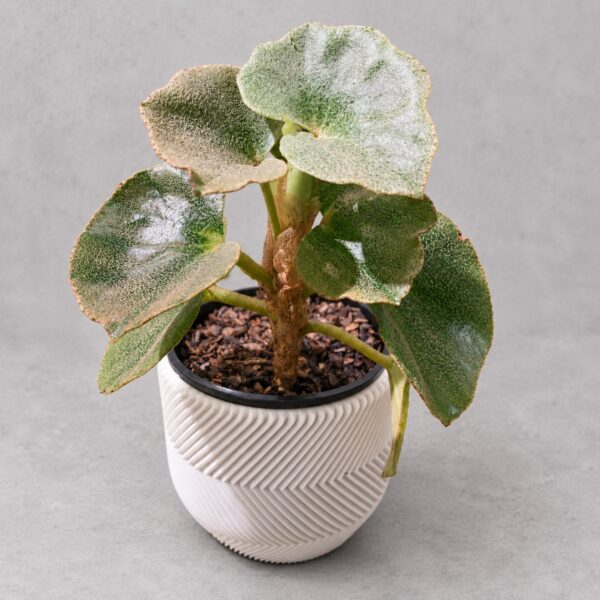
Shop this plantGiant silver-green palmate leaves with a reddish-brown underside — power and elegance in one plant.
Origin & characteristics
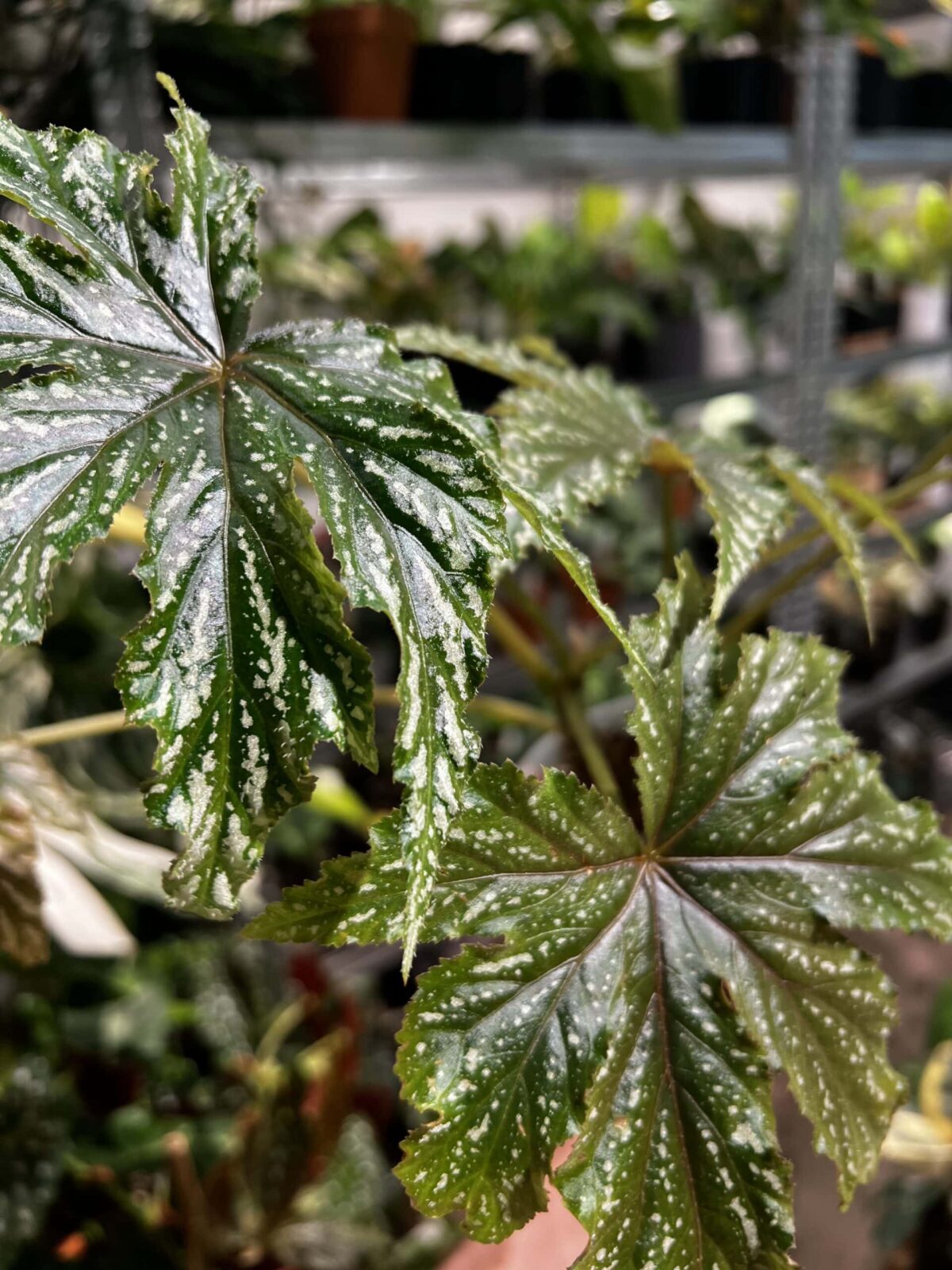
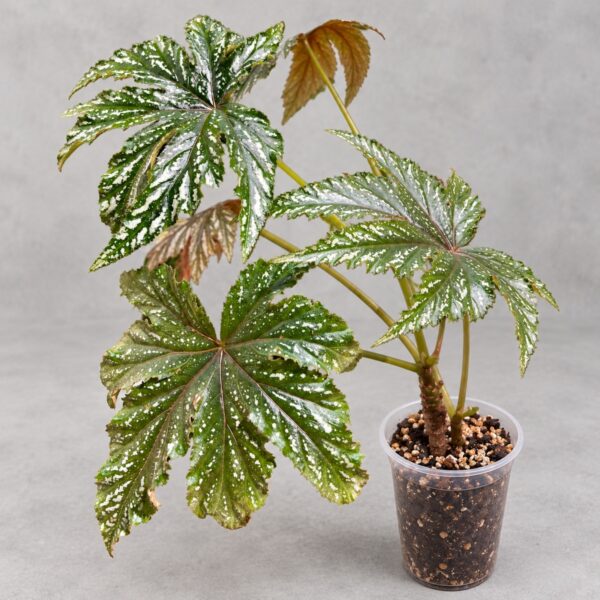
Gryphon Begonia was bred by PanAmerican Seed, a hybrid that combines the qualities of both cane-type and rhizomatous begonias. Its botanical name, Begonia × hybrida 'Gryphon', takes its English name from the mythical griffin — a creature with a lion's body and eagle's head — symbolising the plant's robust, commanding presence. The plant grows upright, reaching 30–45 cm tall. Leaves are deeply palmate-lobed, green with a silver dusting, with veins and undersides in deep reddish-brown; stems become semi-woody as the plant matures. Occasional pale pink or white flowers appear, but the foliage is the main attraction.
Light
- Ideal placement: bright, diffused light, such as a north- or east-facing window
- Indoor placement: 1–2 metres from a south- or west-facing window, avoiding direct light
- Notes:
- Avoid harsh direct sun, especially afternoon sun, which easily scorches the leaves
- Too much light fades the silver patterning and can turn the leaves white or scorched
- Too little light causes stems to elongate, leaves to shrink, and the plant to become sparse
- Can tolerate gentle morning light (before 9 am)
Watering
- Principle: water once the top 1–2 inches of soil has dried, erring on the dry side
- Frequency: roughly every 5–7 days in summer, every 7–10 days in winter
- Method:
- Water along the pot's edge or bottom, avoiding wetting the leaf surface
- After watering thoroughly, empty standing water from the saucer after 15–20 minutes
- This variety is somewhat drought-tolerant, since the stems store water
- Signs of underwatering: stems visibly droop and curve, recovering a few hours after watering
- Winter adjustment: reduce watering significantly, watering only once the topsoil is fully dry
Soil & pot
- Soil recipe: well-draining, organic-matter-rich
- Recommended: quality potting soil mixed with perlite and coco coir (roughly 2:1:1 ratio)
- Or: general potting soil with about 30% perlite added
- pH: slightly acidic to neutral (5.5–6.5)
- Pot selection:
- Choose a wide-mouthed but not overly deep pot, since cane-type begonias have relatively shallow roots
- Must have drainage holes
- This plant prefers being slightly root-bound, so doesn't need an oversized pot
- Repotting: roughly once every 1–2 years, when roots emerge from drainage holes or the soil dries unusually fast
Temperature & humidity
| Factor | Ideal range | Minimum tolerance |
|---|---|---|
| Daytime temperature | 18–24°C | 15°C |
| Nighttime temperature | 16–19°C | 13°C |
| Humidity | 50–70% | 40% |
- Temperature notes:
- Keep above 13°C in winter; low temperatures easily cause cold damage
- Ideal temperature swing: roughly 20–24°C during the day, 16–19°C at night
- Humidity:
- Adapts well to typical home humidity, no special humidification needed
- Good airflow is the top priority — use a fan or air circulator if needed
- Avoid placing near AC vents or heaters
Common problems
| Issue | Likely cause | What to do |
|---|---|---|
| Leaves turning white, fading | Sunburn from too much light | Move to a diffused-light position |
| Stems elongating, leaves shrinking | Insufficient light | Move closer to a light source or add a grow light |
| Dry, brittle leaf edges | Humidity too low or inconsistent watering | Increase surrounding humidity, water on a consistent schedule |
| Leaves yellowing, going soft | Overwatering or poor drainage | Reduce watering, check pot drainage |
| Soft, rotting stem base | Stem rot (from overwatering) | Trim away rotten sections, replant in fresh soil |
| White powder on leaves | Powdery mildew (poor ventilation) | Remove affected leaves, improve ventilation |
| Pests (mealybugs, spider mites, aphids) | Poor ventilation or introduced with new plants | Wipe with alcohol swabs or spray with neem oil |
| Drooping stems | Underwatering or temperature too low | Check soil moisture, adjust placement |
⚠️ Toxicity warning
Begonias contain soluble calcium oxalate throughout the plant, toxic to both humans and pets.
- To humans: ingestion may cause oral burning, drooling, vomiting, and diarrhoea; sensitive individuals may develop skin allergic reactions from contact with the sap
- To cats and dogs: toxic; ingestion causes drooling, difficulty swallowing, and vomiting, with severe cases potentially causing breathing difficulties
- Recommendation: keep out of reach of children and pets on a high shelf; wash your hands after pruning
How to explain to customers
"This Gryphon Begonia has real presence! Big leaves, green with silver patterning, and turn it over and you get that reddish-brown underside — genuine style in any home. It's fairly easy to care for too, just remember not to overwater — let the soil dry out before watering again. The stems store water, so it's more drought-tolerant than moisture-loving."
Fun facts
Gryphon Begonia is a "photoperiodic" plant, only flowering when day length stays under 11 hours for at least 8–10 consecutive weeks — so in Hong Kong, it's mostly grown for its foliage, and getting it to flower actually requires some patience through the shorter days of autumn and winter.
Keywords
Gryphon Begonia, cane-type begonia, foliage plant, silver-green leaves, reddish-brown underside, palmate leaves, upright growth, PanAmerican Seed, indoor plant, partial-shade plant, toxic plant, calcium oxalate, Plantjai, garden hybrid
參考資料(想知來源可展開)
References
- PanAmerican Seed. Begonia Gryphon. https://www.panamseed.com/
- RHS. Begonias as Houseplants. https://www.rhs.org.uk/plants/begonias/houseplants
- ASPCA. Begonia – Toxic and Non-Toxic Plants. https://www.aspca.org/pet-care/animal-poison-control/toxic-and-non-toxic-plants/begonia
In-depth care guide
Introduction
Gryphon Begonia is a distinctive hybrid bred by PanAmerican Seed that combines characteristics of both cane-type and rhizomatous begonias, resulting in a plant with real structural presence. Its English name references the mythical griffin — a creature with a lion's body and an eagle's head — a fitting nod to the plant's robust, commanding growth habit and striking foliage. The deeply palmate-lobed leaves are large, green with a fine silver dusting across the surface, while the veins and undersides show a deep reddish-brown that provides dramatic contrast whenever the leaves move or are viewed from below. As the plant matures, its stems gradually become semi-woody, adding further structural interest.
While Gryphon does occasionally produce pale pink or white flowers, it's primarily grown and appreciated for its bold, architectural foliage, making it a standout choice for anyone wanting a begonia with genuine visual weight in their indoor plant collection.
Light requirements
Gryphon does best with bright, diffused light, such as that from a north- or east-facing window. If placed near a south- or west-facing window, keep it 1–2 metres back to avoid direct light exposure, since harsh direct sun — particularly afternoon sun — easily scorches the leaves. Too much light causes the silver patterning to fade, and in severe cases can turn leaves white or visibly scorched. Too little light, on the other hand, causes the stems to elongate awkwardly, leaves to shrink, and the overall plant to become sparse and leggy rather than maintaining its naturally full, structural form. Gentle morning light before roughly 9am is generally well tolerated and can even benefit the plant.
Watering technique
Water Gryphon once the top 1–2 inches of soil has dried, erring on the dry side rather than keeping the soil consistently moist. This typically works out to roughly every 5–7 days in summer and every 7–10 days in winter. Water along the pot's edge or from the base, avoiding wetting the leaf surface, and empty any standing water from the saucer after 15–20 minutes. This variety shows a useful early warning sign when underwatered — the stems visibly droop and curve, then recover within a few hours of watering, giving you a clear, reliable signal without needing to guess. In winter, reduce watering significantly, waiting until the topsoil is fully dry before watering again, since the plant's water-storing stems provide some buffer against underwatering during the dormant season.
Soil and potting
A well-draining, organic-matter-rich soil mix works best: quality potting soil mixed with perlite and coco coir in roughly a 2:1:1 ratio, or general potting soil with about 30% perlite added, maintaining a pH between 5.5 and 6.5. Choose a pot that's wide-mouthed but not overly deep, since cane-type begonias like Gryphon have relatively shallow root systems. Drainage holes are essential. This variety actually prefers being slightly root-bound, so avoid jumping to an oversized pot — repot roughly once every one to two years, whenever roots start emerging from the drainage holes or the soil dries unusually quickly after watering.
Temperature and humidity
Gryphon grows best with daytime temperatures of 18–24°C and nighttime temperatures of 16–19°C, tolerating a minimum of 15°C during the day and 13°C at night. Keep it above these thresholds in winter, since low temperatures easily cause cold damage. Humidity between 50% and 70% is ideal, though the plant adapts well to typical home humidity levels without requiring special humidification measures. Good airflow is actually the top environmental priority for this variety — consider using a fan or air circulator if your space tends toward stagnant air — and keep the plant away from AC vents and heaters, which cause both temperature swings and localised dryness.
Common problems in detail
Leaves turning white or fading points to sunburn from excessive light — move the plant to a properly diffused-light position.
Elongating stems with shrinking leaves signals insufficient light — move the plant closer to a light source or add a grow light to encourage more compact, sturdy growth.
Dry, brittle leaf edges typically result from humidity too low or inconsistent watering — increase surrounding humidity and establish a more regular watering schedule.
Yellowing, softening leaves indicate overwatering or poor drainage — reduce watering and verify that the pot drains properly.
Soft, rotting stem base signals stem rot from excess moisture — trim away the rotten sections and replant healthy portions in fresh, well-draining soil.
White powdery coating on leaves points to powdery mildew, usually triggered by poor ventilation — remove affected leaves and improve airflow around the plant.
Pests such as mealybugs, spider mites, or aphids typically arrive via poor ventilation or newly introduced plants — wipe them away with alcohol-dipped cotton swabs or treat with a neem oil spray.
Drooping stems signal either underwatering or temperatures too low — check soil moisture first, then consider whether the plant's location needs adjusting.
Toxicity information
Begonias contain soluble calcium oxalate throughout the plant, toxic to both humans and pets. In humans, ingestion may cause oral burning, drooling, vomiting, and diarrhoea, while sensitive individuals may develop skin allergic reactions from contact with the sap. In cats and dogs, ingestion causes drooling, difficulty swallowing, and vomiting, with severe cases potentially causing breathing difficulties. Keep the plant well out of reach of children and pets, ideally on a high shelf given its substantial size, and wash your hands thoroughly after pruning.
References
- PanAmerican Seed. Begonia Gryphon. https://www.panamseed.com/
- RHS. Begonias as Houseplants. https://www.rhs.org.uk/plants/begonias/houseplants
- ASPCA. Begonia – Toxic and Non-Toxic Plants. https://www.aspca.org/pet-care/animal-poison-control/toxic-and-non-toxic-plants/begonia
- Missouri Botanical Garden. Begonia – Cane Begonia Group. Plant Finder. http://www.missouribotanicalgarden.org/PlantFinder/
Plantjai shop · In stock online
Begonia 'Gryphon'
Begonia 'Gryphon'
HK$298.00
Hong Kong delivery · Causeway Bay pickup
For Hong Kong homes and offices. Stock and pricing follow the product page.
IN STORE NOW
Plants for this guide
Related plants in stock now — live prices, delivery or Causeway Bay pickup.
FREE PLANT ADVICE
Send us a photo before you change anything
WhatsApp a photo of the plant and your window light. Our Causeway Bay team will suggest care steps or plants that suit your space.
STORE · CAUSEWAY BAY
4/F, 39 Yiu Wa Street, Causeway Bay
Daily 12:30–8:00pm · ~3 min walk from Times Square
Map & directionsPlant Care