
How to Care for Begonia Ginny Galaxy in Hong Kong | Plantjai

Plantjai 植仔 · Care Encyclopedia
Begonia Ginny Galaxy
Hong Kong care guide — useful before you buy and after it arrives.
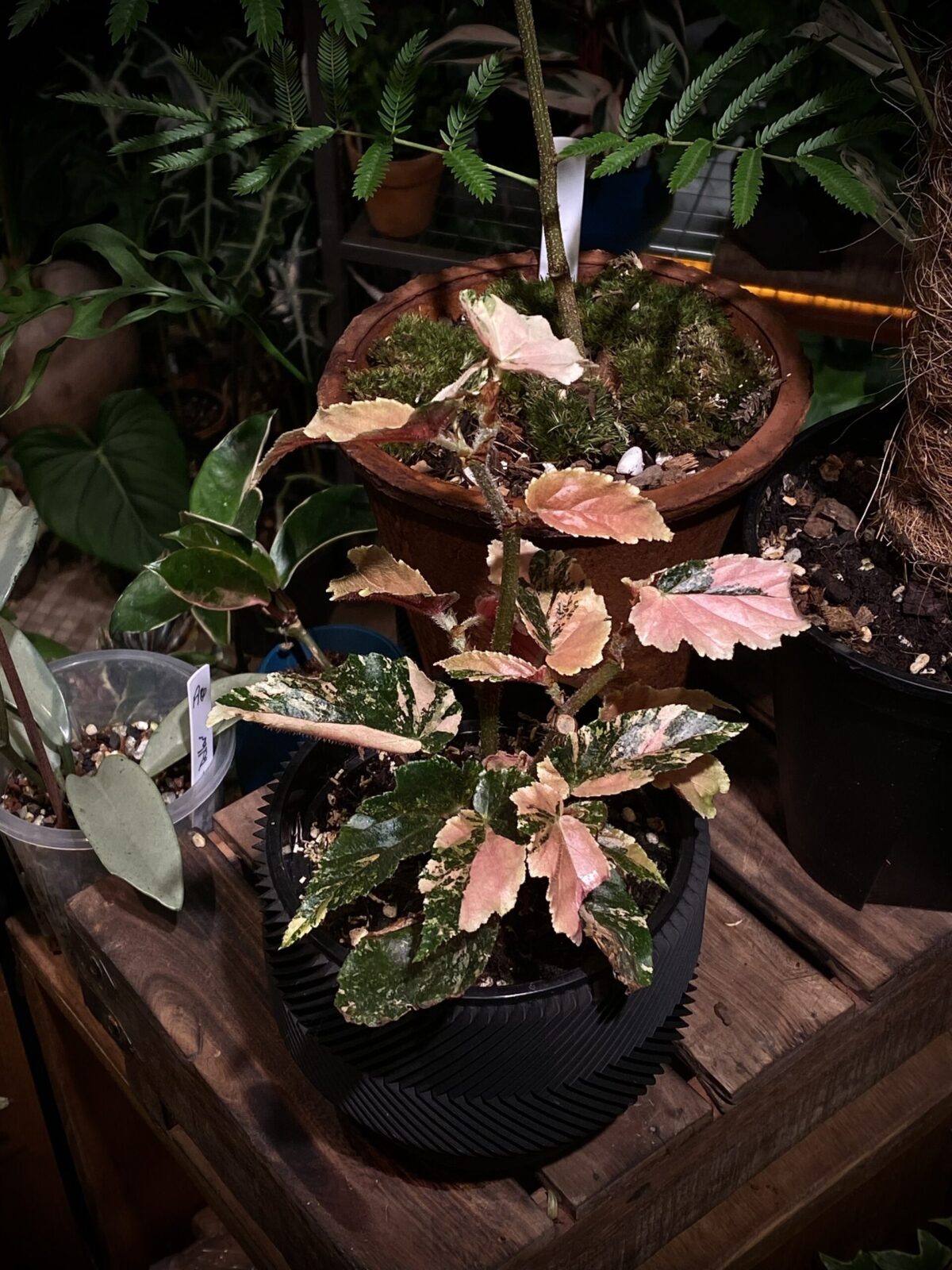
Shop this plantSilver star-like flecking scattered across the leaves — like stepping into the galaxy itself.
Origin & characteristics
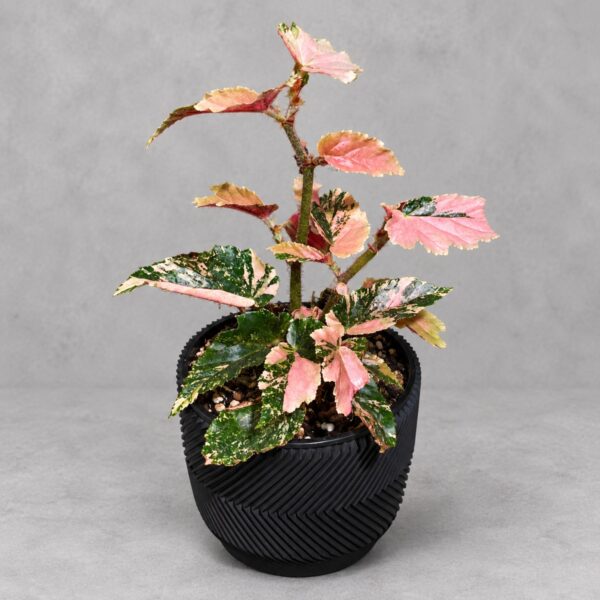
Ginny Galaxy Begonia is a cultivated hybrid known for its distinctive silver star-flecked patterning. Leaves range from deep green to purplish-brown, covered in star-like silver spots that give the plant a futuristic visual quality. This is a medium-sized begonia with moderate growth speed, well suited to indoor cultivation as an ornamental focal point. Hybrid varieties generally show stronger adaptability, making this one easier to care for than many species begonias.
Light
- Prefers bright, diffused light, and can tolerate somewhat lower light conditions
- The silver flecking needs adequate light to show clearly — insufficient light causes the pattern to fade
- Avoid strong direct sun, which easily scorches the leaves
- Indoors, position 1–2 metres from a south-facing window, or supplement with a grow light for 12 hours daily
- When rotating the pot or changing its position, gradually acclimate the plant to new light conditions
Watering
- Water once the top 2–3 cm of soil has dried, keeping the soil just lightly moist
- Better slightly dry than overwatered — begonias are especially prone to root rot
- Keep soil consistently moist during the summer growing season; reduce watering frequency in winter
- Water with room-temperature water along the pot's edge, avoiding standing water on the leaves
- Filtered water or rainwater is recommended; if using tap water, let it stand overnight first
Soil & pot
- Needs a loose, airy, excellently draining soil
- Recommended recipe: peat moss 3 parts + perlite 3 parts + coco coir 2 parts + bark chips 2 parts
- Pot must have drainage holes; terracotta is preferred, helping moisture evaporate
- Choose a pot sized appropriately for the plant — too large increases the risk of waterlogging and root rot
- Repot once every 1–2 years, ideally in spring
Temperature & humidity
- Ideal growing temperature: 20–28°C
- Never below 15°C; growth slows above 33°C
- In Hong Kong summers, pay attention to ventilation, avoiding prolonged stuffy conditions
- Recommended humidity: 60–80%; higher humidity keeps the leaves looking their best
- Use a humidifier, water tray, or enclosed growing setup to maintain humidity
- Ventilate regularly to prevent fungal disease
Common problems
| Issue | Likely cause | What to do |
|---|---|---|
| Fading silver flecking | Insufficient light | Move to a brighter spot, gradually increase light intensity |
| Leaves yellowing and dropping | Overwatering or poor drainage | Check roots, reduce watering, improve drainage |
| Browning leaf tips | Humidity too low or water too alkaline | Increase humidity, switch to rainwater or filtered water |
| Stems turning soft and rotting | Bacterial soft rot | Trim affected areas, reduce watering, improve ventilation |
| Curling leaves | Environment too dry or temperature too high | Increase humidity, move to a cooler spot |
How to explain to customers
"Ginny Galaxy is a hybrid, so it's much more adaptable than most species begonias — great for beginners too! Those silver star-flecks on the leaves are so pretty — remember to keep it in diffused light, since enough light is what really brings out the pattern. For watering, less is more — check the soil with your finger, and only water once it's dry."
Fun facts
Ginny Galaxy's silver flecking is actually a structural colour effect from the leaf's epidermal cells rather than pigmentation, which is why it appears to shimmer slightly depending on the viewing angle. Hybrid begonia cultivar names are typically enclosed in single quotes, like 'Ginny Galaxy', indicating they're a cultivated variety rather than a wild species.
Keywords
Ginny Galaxy Begonia, Begonia Ginny Galaxy, hybrid begonia, foliage plant, silver flecking, star-spotted begonia, indoor plant, Plantjai, Hong Kong plant shop, diffused light, medium-sized begonia, easy-care plant
參考資料(想知來源可展開)
References
- Lemon8. Begonia Ginny Galaxy: My 6-Month Growth & Variegation Secrets! https://www.lemon8-app.com/@livinginviridian/7440878527999672887
- Longfield Gardens. How to Care for Begonia Rex Plant: A Complete Guide. https://www.longfield-gardens.com/blogs/begonia-care/how-to-care-for-begonia-rex-plant-a-complete-guide
- RHS. Begonias as Houseplants. https://www.rhs.org.uk/plants/begonias/houseplants
⚠️ Toxicity warning: Begonias contain calcium oxalate crystals throughout the plant. Ingestion may cause oral irritation, drooling, and vomiting — keep out of reach of children and pets.
In-depth care guide
Introduction
Ginny Galaxy Begonia, Begonia 'Ginny Galaxy', is a hugely popular ornamental cultivar within the Begoniaceae family, known for its dreamy tri-colour leaf patterning of pink, silvery-white, and green — as if the galaxy itself has been condensed into each individual leaf. This cultivar belongs to the Rex Begonia (leaf-cutting begonia) hybrid group, and with its visually striking appearance, has quickly become a favourite among plant lovers and collectors (Lemon8, 2024; Cowell's Garden Centre, n.d.).
'Ginny Galaxy' is a hand-selected garden cultivar, and its exact parentage is difficult to trace, but it clearly inherits the excellent traits of the Rex Begonia family: brilliantly colourful leaves, relatively manageable indoor care requirements, and easy propagation via leaf or stem cuttings. Its leaves are typically oval or heart-shaped, with wavy, curling edges and a velvety surface texture that displays a metallic sheen under the right light (Lemon8, 2024; Spokane Plant Farm, n.d.).
Beyond its captivating foliage, 'Ginny Galaxy' also produces small pink flowers — though not the main draw, they add a touch of extra charm to the plant. Overall, this cultivar grows at a moderate pace, and with proper care, will continuously produce new leaves, maintaining vigorous vitality.
Light — the soul of the variegation
Light is the single most critical factor determining how good 'Ginny Galaxy's' leaf colour looks. According to the actual experience of multiple growers, insufficient light directly causes the variegation to fade — the pink and silvery-white patterning gradually recedes, and the leaves revert to plain green, almost as if the cultivar were "reverting" to its ancestral form. So, if you want to enjoy the best possible "galaxy" effect, you must provide ample bright, diffused light (Lemon8, 2024).
The ideal approach is placing the plant under an LED grow light for 10 to 12 hours daily. Grow light illumination is stable and gentle, won't scorch the leaves, while fully stimulating the vividness of the variegation. If relying on natural light, an east- or north-facing window is the best position; south- or west-facing windows need a sheer curtain to filter strong light (Lemon8, 2024; Cowell's Garden Centre, n.d.).
If you notice the plant becoming "leggy" (stems elongating, leaves sparse, internodes stretching), this is a clear sign of insufficient light. Promptly adjusting light exposure and pruning appropriately can restore a compact growth form.
Temperature
Ginny Galaxy Begonia, like most Rex Begonias, loves a warm environment. The ideal temperature range is 18–24°C, never below 15°C. It's very sensitive to cold and cold drafts, and a sudden temperature drop will cause leaves to yellow or even drop. In Hong Kong, pay particular attention to AC vents and cold drafts near doors and windows in winter (Lemon8, 2024; RHS, 2026).
In summer, note that while it loves warmth, if temperatures remain sustained above 30°C, growth may slow. Combining good ventilation with appropriate humidity can help it get through the hot season.
Humidity
'Ginny Galaxy' prefers higher humidity, with an ideal range of 50% to 60% or above. In dry conditions, leaf edges easily dry out and become brittle, affecting ornamental value. Methods to increase humidity include (Lemon8, 2024; RHS, 2026):
- Small humidifier: place near the plant for continuous humidity supply.
- Pebble water tray: fill a shallow tray with pebbles and water, set the pot on top (pot base not touching the water).
- Plant grouping: cluster multiple plants together to create a higher-humidity microclimate.
Some growers report that 'Ginny Galaxy's' humidity requirements are actually lower than expected, sometimes even adapting to conditions below expected levels. But to keep the leaves in their best condition, maintaining appropriate humidity remains a wise choice (Lemon8, 2024).
Watering
Ginny Galaxy Begonia's root system is fine and sensitive, making waterlogging its biggest enemy. The correct watering method is to wait until the top 1 to 2 inches (roughly 2.5–5 cm) of soil have dried before watering, testing with a finger inserted into the soil. Water thoroughly until water flows from the pot's bottom, then empty any standing water in the saucer (Lemon8, 2024; Cowell's Garden Centre, n.d.).
In winter, as the plant's growth slows, further reduce watering frequency. Rather than overwatering, err on the side of slightly dry — Rex Begonias' tolerance for drought is actually higher than for waterlogging. Using filtered water or rainwater avoids mineral buildup in the soil, helping keep the leaves healthy (Lemon8, 2024).
Soil
'Ginny Galaxy' needs a light, loose, well-draining soil. A recommended recipe mixes indoor potting soil with perlite in roughly a 3:1 ratio. Perlite is essential for aeration and drainage, preventing soil compaction so the fine roots can breathe. For larger pots, a small amount of orchid bark can be added to further improve drainage (Lemon8, 2024; Spokane Plant Farm, n.d.).
Rex Begonias' rhizome grows horizontally along the soil surface, so the pot's shape matters considerably. Choose a shallower, wider "bulb pan" or "azalea pot" rather than a deep, narrow pot, giving the rhizome ample room to spread while reducing water pooling at the bottom (Longfield Gardens, 2026).
Feeding
During the growing season (spring through summer), apply a diluted, half-strength balanced liquid fertiliser (such as 10-10-10 or 20-20-20) every two to four weeks, which helps promote healthy growth and vivid leaf colour. Stop feeding after autumn arrives, letting the plant naturally enter dormancy. Remember, "little and often" is better than a single large dose — excessive fertiliser causes salt buildup, damaging the fine root system (Lemon8, 2024; RHS, 2026).
Propagation methods
Propagating Ginny Galaxy Begonia is relatively easy, with stem cuttings being the most commonly used method:
- Choose a healthy stem, cutting a roughly 10 cm section with 2 to 3 leaves and at least one node.
- Remove the lower leaves to reduce water loss through transpiration.
- Insert the cutting directly into moist propagation soil, or place in water to root.
- Keep warm (around 21°C), high humidity, and in bright diffused light.
- After several weeks, white roots will emerge, at which point the cutting can be transplanted into potting soil (Lemon8, 2024).
Besides stem cuttings, you can also try the classic Rex Begonia vein cutting method:
- Cut a healthy, mature leaf, retaining roughly 2.5 cm of petiole.
- Turn the leaf over and use a clean, sharp blade to make several cuts across the main veins on the underside (spacing roughly 2.5 cm apart).
- Lay the leaf flat, face up, on moist propagation soil, securing it with U-shaped pins or small stones to ensure the cut points make contact with the soil.
- Cover with a clear plastic bag or humidity dome to maintain high humidity.
- Within a few weeks, tiny new plants will emerge from each cut point! Once they have 2 to 3 leaves, carefully separate and transplant them (RHS, 2026; Longfield Gardens, 2026).
Winter dormancy
'Ginny Galaxy' naturally enters dormancy in winter — as light decreases and temperatures drop, it may stop producing new leaves, or even shed some older leaves. This is completely normal and doesn't indicate you've done anything wrong. During dormancy, reduce watering, letting the soil dry out more before watering again, and stop fertilising entirely. As long as the rhizome remains firm and healthy, it will spring back to life once warmer weather returns (Longfield Gardens, 2026; RHS, 2026).
Common problems
Dry, brittle leaf edges: almost certainly caused by humidity too low. Increase humidity and move away from heating vents.
Fading variegation, leaves turning green: insufficient light. Increase light intensity or extend light exposure duration.
Soft leaves, wilting plant: may be caused by overwatering leading to root rot. Check soil moisture, and repot with root trimming if necessary.
Brown spots on leaves: may be caused by direct sun scorching, or water splashed onto the leaves causing fungal infection. Avoid spraying water directly onto the leaf surface.
Powdery mildew: poor air circulation combined with excess humidity can trigger powdery mildew. Improve ventilation, remove infected leaves, and use a fungicide if necessary (RHS, 2026; Longfield Gardens, 2026).
Pests: occasionally whitefly (white cotton-like small insects) or spider mites appear. Wipe with an alcohol-dipped cotton swab, or spray with insecticidal soap.
Placement suggestions
Ginny Galaxy Begonia is genuinely a "living work of art," suited to any place you want to show off its beauty — a living room coffee table, study desk, or bedside table are all good choices. Since it needs stable light and humidity, it's best placed somewhere you frequently spend time, making it easy to observe and care for. If you want to create a dreamy plant corner, pairing 'Ginny Galaxy' with other silver-leaved or pink-toned plants creates a harmonious visual effect (Lemon8, 2024; Cowell's Garden Centre, n.d.).
References
- Lemon8. (2024). Begonia Ginny Galaxy: My 6-Month Growth & Variegation Secrets! https://www.lemon8-app.com/@livinginviridian/7440878527999672887
- Lemon8. (2024). Begonia Ginny Galaxy: My Secret to Vibrant Pink Variegation! https://www.lemon8-app.com/@livinginviridian/7441245393444454967
- Cowell's Garden Centre. (n.d.). Begonia 'Ginny Galaxy Variegata'. https://www.cowellsgc.co.uk/product/begonia-ginny-galaxy-variegata
- Spokane Plant Farm. (n.d.). Begonia Ginny Galaxy – Pick Your Plant, 2" Plant. https://spokaneplantfarm.com/products/begonia-ginny-galaxy-pick-your-plant-2-plant
- Longfield Gardens. (2026). How to Care for Begonia Rex Plant: A Complete Guide. https://www.longfield-gardens.com/blogs/begonia-care/how-to-care-for-begonia-rex-plant-a-complete-guide
- RHS. (2026). Begonias as Houseplants. https://www.rhs.org.uk/plants/begonias/houseplants
Plantjai shop · In stock online
Begonia ginny galaxy
HK$298.00
Hong Kong delivery · Causeway Bay pickup
For Hong Kong homes and offices. Stock and pricing follow the product page.
IN STORE NOW
Plants for this guide
Related plants in stock now — live prices, delivery or Causeway Bay pickup.
FREE PLANT ADVICE
Send us a photo before you change anything
WhatsApp a photo of the plant and your window light. Our Causeway Bay team will suggest care steps or plants that suit your space.
STORE · CAUSEWAY BAY
4/F, 39 Yiu Wa Street, Causeway Bay
Daily 12:30–8:00pm · ~3 min walk from Times Square
Map & directionsPlant Care