
How to Care for Begonia Don Miller in Hong Kong | Plantjai

Plantjai 植仔 · Care Encyclopedia
Begonia Don Miller
Hong Kong care guide — useful before you buy and after it arrives.
Shop this plantA rich artistic canvas of colour — every leaf a work of natural art.
Origin & characteristics
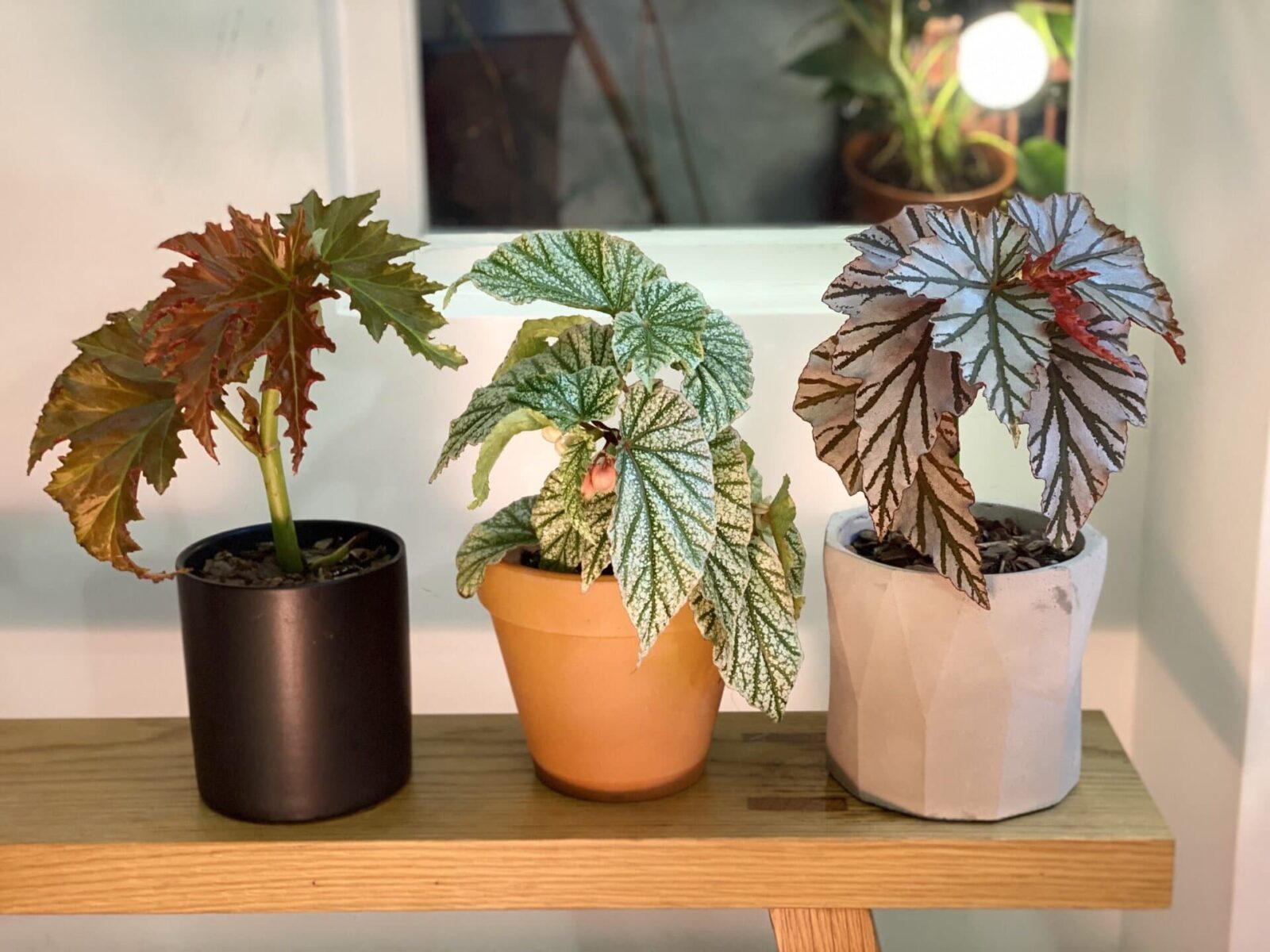
A modern ornamental hybrid within the Rex Begonia group, bred over many generations from species native to northeastern India and Southeast Asia. Don Miller is known for its dramatically contrasting leaf patterns and striking decorative appeal — thick, deeply textured leaves in interwoven shades of deep purple-red, bronze, and silver-grey-green, with a compact, full growth habit that carries real tropical rainforest mystique, making it an advanced choice for indoor plant collections.
Light
- Ideal placement: east- or north-facing windowsill, 1–2 metres from the window in a bright spot
- Light intensity: bright indirect light, tolerating slightly lower light
- Notes: strictly avoid direct sun, which easily scorches and fades the leaves; light too weak causes the leaves to lose their vivid colour contrast
Watering
- Frequency: water once the top 2–3 cm of soil has dried, roughly every 7–10 days
- Method: water along the pot's edge, avoiding splashing water on the leaves or the rhizome's crown
- Notes: the rhizome is extremely prone to rot from standing water — better slightly dry than overwatered; reduce watering significantly in winter, letting the soil dry out a bit more
Soil & pot
- Soil recipe: a light, highly aerated mix — peat moss, perlite, coco coir, and bark in a 2:1:1:1 ratio
- Pot selection: must have drainage holes; a wide, shallow pot suits the horizontally spreading rhizome best
- Repotting timing: once every 1–2 years, going up just one pot size
Temperature & humidity
- Ideal temperature: 18–26°C; growth stalls below 13°C, and cold damage may occur below 10°C
- Humidity requirement: 50–70% is ideal
- Humidification methods: use a humidifier, group with other plants, or use a pebble tray to raise surrounding humidity
- Avoid: placing near AC vents, heaters, or drafty doors and windows; don't mist directly onto the leaves
Common problems
| Issue | Likely cause | What to do |
|---|---|---|
| Dry, brittle leaf edges | Humidity too low or salt buildup | Increase surrounding humidity, periodically flush the soil with filtered water |
| Fading leaf colour, patterning dulling | Light too strong or too weak | Adjust to a proper diffused-light position |
| Rotting rhizome, wilting plant | Overwatering | Stop watering immediately, check root health, re-propagate if necessary |
| Water-soaked spots on leaves | Prolonged leaf moisture or bacterial infection | Avoid wet leaves, improve air circulation |
| Pests (whitefly, spider mites) | Poor ventilation or dry environment | Check leaf undersides regularly, use neem oil or soapy water spray if needed |
How to explain to customers
"Don Miller has such distinctive leaf patterning, like an oil painting — instant style upgrade for any living room or study. Just remember the leaves can't get wet — always water along the pot's edge. Hong Kong's humidity is usually fine, but if you run the AC a lot, a humidifier nearby — or grouping it with other plants — will keep the leaves looking their best."
Fun facts
The ancestor of Rex Begonias, Begonia rex, is native to the Assam region of India, and after being introduced to Europe in the 1850s, quickly became one of the most popular houseplants of the Victorian era. "Rex" is Latin for "king," reflecting its noble status in the world of foliage plants.
Keywords
Don Miller Begonia, Begonia, Rex Begonia, foliage plant, native to northeastern India, rhizomatous begonia, indoor plant, Hong Kong plant, toxic plant, rich-toned leaves, Plantjai
參考資料(想知來源可展開)
References
- Steve's Leaves. Begonia 'Don Miller'. https://stevesleaves.com/products/begonia-don-miller
- RHS. Begonias as Houseplants. https://www.rhs.org.uk/plants/begonias/houseplants
- Proven Winners. Begonia Growing Guide: How to Plant and Care. https://www.provenwinners.com/learn/how-plant/begonia
⚠️ Toxicity warning: Begonias contain calcium oxalate crystals throughout. Ingestion may cause oral pain and vomiting — keep out of reach of infants and pets.
In-depth care guide
Introduction
Don Miller Begonia, botanically Begonia 'Don Miller', is a shrub-type begonia hybrid bred by N. Stewart in Texas in 1991, resulting from a cross between the cane-type hybrid 'Torch' and an unidentified shrub-type begonia species designated U062. Interestingly, this cultivar is sometimes mislabelled or sold under the name Begonia "Frosty," so buyers should pay attention to variety labels and seller credibility when purchasing. Don Miller is popular for its robustness, strong branching habit, and heat tolerance with reliable flowering — performing particularly well in warm climates, making it a genuinely good fit for Hong Kong's growing conditions. The cultivar name honours a begonia enthusiast or breeder known as Don Miller.
Physical characteristics
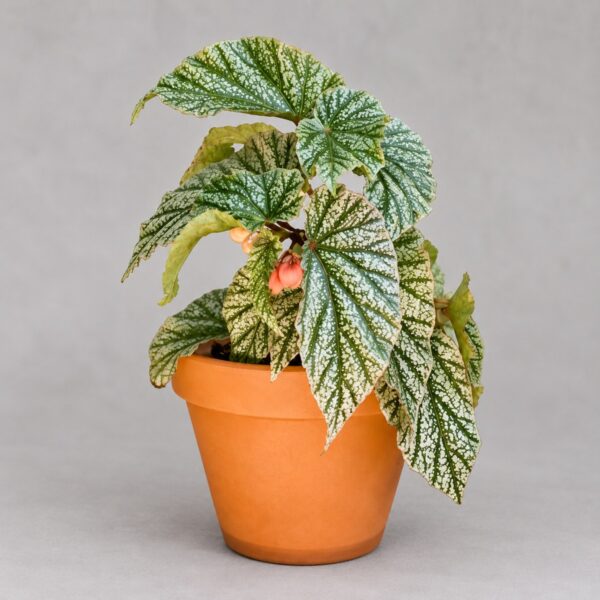
Don Miller grows as a shrub-type begonia with an upright form and excellent branching, forming a full, bushy plant without requiring much pruning. Typical mature height is around 60 cm, though it can exceed a metre with support or when grown in a larger container. Leaves are medium-large, angel-wing-shaped with wavy, serrated edges. The upper leaf surface is deep green with a fine velvety texture, showing maroon vein patterning against the light; the leaf underside displays a similarly deep reddish-brown tone. Both petioles and stems carry a deep reddish-brown colouring, adding further ornamental interest. In terms of flowering, Don Miller blooms in spring, summer, and autumn, with clusters forming at the branch tips, typically pink — though flower colour deepens to a rosy red if the plant receives more direct sunlight. Bloom quantity is moderate, but the extended flowering period adds considerable colour to the plant over time.
Light requirements
Don Miller needs ample light to perform at its best. Ideally, it should receive at least six hours of bright light daily, including some direct sun or bright diffused light. East- or west-facing window positions are usually ideal, providing gentle morning or afternoon sun. Under brighter conditions, growth stays more compact, leaf colour deepens, and flowering increases both in quantity and vibrancy. If light is too weak, growth becomes leggy with weak stems, leaf colour fades, and both leaf patterning and underside red colouring diminish. Note that while this variety can tolerate some direct sun, leaves remain at risk of sunburn under the intense midday sun of Hong Kong summers, so providing some shade during the hottest part of the day is wise. If grown on a balcony or in a garden, a spot with morning sun and afternoon shade is ideal.
Temperature requirements
Don Miller has a remarkably wide temperature tolerance, surviving between 7°C and 38°C, demonstrating strong heat tolerance. The ideal growing range is 18–27°C, which aligns well with Hong Kong's climate for most of the year. Spring, summer, and autumn generally pose no issues, but if winter temperatures are expected to drop below 10°C, the plant should be moved indoors or into a greenhouse. Sustained exposure below 10°C stalls growth and may cause cold-damage spotting on the leaves. Hong Kong winters generally aren't too severe, but during cold snaps when nighttime temperatures drop into single digits, extra protection is worthwhile. Also avoid placing the plant near AC vents or doorways and windows, since sudden cold drafts or significant temperature swings put stress on the plant.
Humidity management
Don Miller isn't particularly demanding about humidity — typical indoor relative humidity of 50–60% generally supports good growth. Hong Kong's natural humidity is usually sufficient, but during autumn and winter when heating or dehumidifying AC modes are running, humidity may drop below 40%, causing leaf edges to dry out. If this happens, place a tray of water near the plant, use a humidifier, or group several plants together to raise local humidity. While begonias generally dislike prolonged leaf wetness, Don Miller is relatively tolerant, and occasional misting shouldn't cause major issues as long as ventilation is good enough for the leaves to dry within a few hours. Avoid placing the plant in a permanently unventilated, enclosed space, since high humidity combined with no airflow easily triggers powdery mildew and other fungal diseases.
Watering technique
Don Miller's watering principle is "evenly moist, never waterlogged." During the growing season (spring, summer, autumn), water once the top 5 cm of soil has dried. Water thoroughly each time, letting excess drain from the pot's bottom, then empty the saucer. Begonias' fleshy roots are very sensitive to standing water, and prolonged moisture easily leads to root rot. In winter, as growth slows, reduce watering frequency, waiting until the topsoil is fully dry before watering again. For water quality, room-temperature filtered water or rainwater is best, avoiding cold tap water straight from the source. A practical check is inserting a finger two to three knuckles deep into the soil — if it feels dry, water; if still moist, wait a few more days. Remember, it's better to err slightly dry than overwatered for begonias — the damage from brief drought is far less than that from waterlogged roots.
Soil recipe
Don Miller needs a light, well-draining, yet moderately moisture-retentive growing medium. A high-quality soilless general potting mix works well, combined with roughly 20–30% perlite or coarse sand to improve drainage. A good recipe is: quality peat moss or coco coir at 50%, perlite at 25%, and compost or leaf mould at 25%. In more humid environments, increase perlite to 30%; in drier climates, reduce to 20%. For pH, begonias prefer slightly acidic to neutral soil, around pH 5.5 to 6.5. Ensure the pot has adequate drainage holes, and never plant directly into a hole-less decorative pot. If you must use a decorative pot without holes, place the begonia in a pot with holes and set that inside the decorative pot as a cachepot.
Feeding
Don Miller needs regular feeding during the growing season to maintain vigorous growth and flowering. From roughly March to October, apply a diluted balanced liquid fertiliser (such as NPK 10-10-10 or 20-20-20) every two to three weeks, diluted to half the recommended strength. Since begonias flower fairly abundantly, alternating with a higher phosphorus-potassium bloom fertiliser (such as NPK 15-30-15) every other feeding promotes bud formation and richer flower colour. For organic options, diluted liquid seaweed extract or fish emulsion fertiliser work well, applied monthly. Slow-release fertiliser like Osmocote can be applied once each in spring and summer. From October onward, gradually reduce feeding, stopping entirely by winter (November to February). Always ensure the soil is moist before fertilising — never apply fertiliser to dry soil, which risks root burn. If you notice browning leaf edges, this may indicate over-fertilising or fertiliser concentration too high, requiring an immediate flush with clean water.
Repotting timing
Don Miller grows at a medium-to-fast pace, ideally repotted once a year or every 18 months. The best time is spring (March–April), as new growth begins. Signs it's time to repot include roots emerging from drainage holes, water draining unusually quickly after watering, or the plant clearly outgrowing its pot. The new pot should be 5–7 cm larger in diameter than the old one — avoid jumping to an oversized pot in one step. When repotting, gently loosen the old root ball, inspect the roots, and trim away any rotten or overly long sections. After potting into fresh soil, firm gently and water thoroughly. Keep the plant in a cool, ventilated spot for a week or two afterward to help it adjust. If you'd rather not repot into a larger container, an annual spring top-dressing — removing roughly 3 cm of old surface soil and replacing it with fresh potting mix and a little slow-release fertiliser — achieves a similar refreshing effect.
Pruning and shaping
Don Miller branches well naturally and generally doesn't need much pruning to maintain a full form. However, if you want to control height or encourage further branching, pinch back growing tips at any point during the growing season using clean fingers or sterilised scissors, which encourages side shoots and denser growth. If stems become overly long or sparse, trim them back to a desired length — the trimmed cuttings can be used for propagation. Also regularly remove yellowing lower leaves and spent flowers to keep the plant tidy and reduce pest and disease pressure. In winter, when growth slows, a more substantial shaping prune can remove overly dense, weak, or diseased stems, improving airflow and light penetration for a stronger start when spring arrives.
Propagation
Don Miller propagates very easily via stem cuttings. The best time is late spring through summer (May to August), when the plant is actively growing. Select healthy, sturdy stems and cut 10–15 cm lengths from the tips, ensuring each cutting has at least two or three nodes and several leaves. Remove the lower leaves, keeping only the top one or two pairs. Cuttings can be inserted directly into prepared propagation medium (a 50/50 mix of perlite and peat moss, or pure perlite), planted roughly 3–5 cm deep. Keep the soil moist and humidity high (using a clear plastic bag cover or a propagation box), and place in bright, diffused light at 20–25°C. Rooting typically takes two to four weeks, indicated by new leaf growth. Additionally, if the plant produces side shoots at the base, these can be separated with roots intact during repotting to create new plants.
Common problems in detail
Yellowing or browning leaf edges most often results from improper watering — too much causes lower leaves to yellow and rot, while too little causes dry leaf margins. Check soil moisture and adjust watering frequency. Low humidity, over-fertilising, or hard water can also cause similar symptoms.
Leggy stems with sparse leaves results mainly from insufficient light — move the plant closer to a bright spot, or increase daily light exposure.
Powdery mildew is the most common fungal disease affecting begonias, appearing as white powdery patches on leaves, caused by high humidity combined with poor ventilation. Immediately remove severely affected leaves, improve airflow, and spray with diluted baking soda solution (1 teaspoon baking soda per litre of water).
Root rot occurs when the plant suddenly wilts with a soft, blackened base. Remove from the pot immediately, trim away all rotten roots, soak healthy roots in fungicide, repot into fresh soil, and reduce subsequent watering.
Pests commonly include whitefly (small white flying insects), aphids (clustering on tender shoots and leaf undersides), spider mites (fine red dots and webbing on leaf undersides in dry conditions), and scale insects. Spray with diluted neem oil or soapy water every five days for three consecutive treatments. For prevention, keep leaves clean, maintain good ventilation, and quarantine newly purchased plants for two weeks before introducing them to your main collection.
Toxicity information
All begonias contain calcium oxalate crystals, mildly toxic if ingested by pets or humans, causing oral irritation, drooling, and gastrointestinal upset. Keep out of reach of children and pets.
References
- Steve's Leaves. Begonia 'Don Miller'. https://stevesleaves.com/products/begonia-don-miller
- Bhoomi Garden Centre. Begonia Don Miller. https://bhoomigardencentre.com/product/begonia-don-miller/
- Begin With Plants. Begonia 'Don Miller'. https://beginwithplants.com/products/begonia-don-miller
- The Belmont Rooster. Begonia 'Don Miller' (aka. 'Frosty'). https://thebelmontrooster.com/families-of-familiar-plants/begoniaceae-family/begonia-frosty/
- Proven Winners. Begonia Growing Guide: How to Plant and Care. https://www.provenwinners.com/learn/how-plant/begonia
- RHS. Begonias as Houseplants. https://www.rhs.org.uk/plants/begonias/houseplants
Plantjai shop · In stock online
Begonia 'Don Miller'
Begonia 'Don Miller'
HK$288.00
Hong Kong delivery · Causeway Bay pickup
For Hong Kong homes and offices. Stock and pricing follow the product page.
IN STORE NOW
Plants for this guide
Related plants in stock now — live prices, delivery or Causeway Bay pickup.
FREE PLANT ADVICE
Send us a photo before you change anything
WhatsApp a photo of the plant and your window light. Our Causeway Bay team will suggest care steps or plants that suit your space.
STORE · CAUSEWAY BAY
4/F, 39 Yiu Wa Street, Causeway Bay
Daily 12:30–8:00pm · ~3 min walk from Times Square
Map & directionsPlant Care