
How to Care for Begonia Chlorosticta in Hong Kong | Plantjai

Plantjai 植仔 · Care Encyclopedia
Begonia Chlorosticta
Hong Kong care guide — useful before you buy and after it arrives.
Shop this plantRare Bornean velvet leaves dotted with green bubbles — a gemstone-grade foliage plant for high-humidity setups.
Origin & characteristics
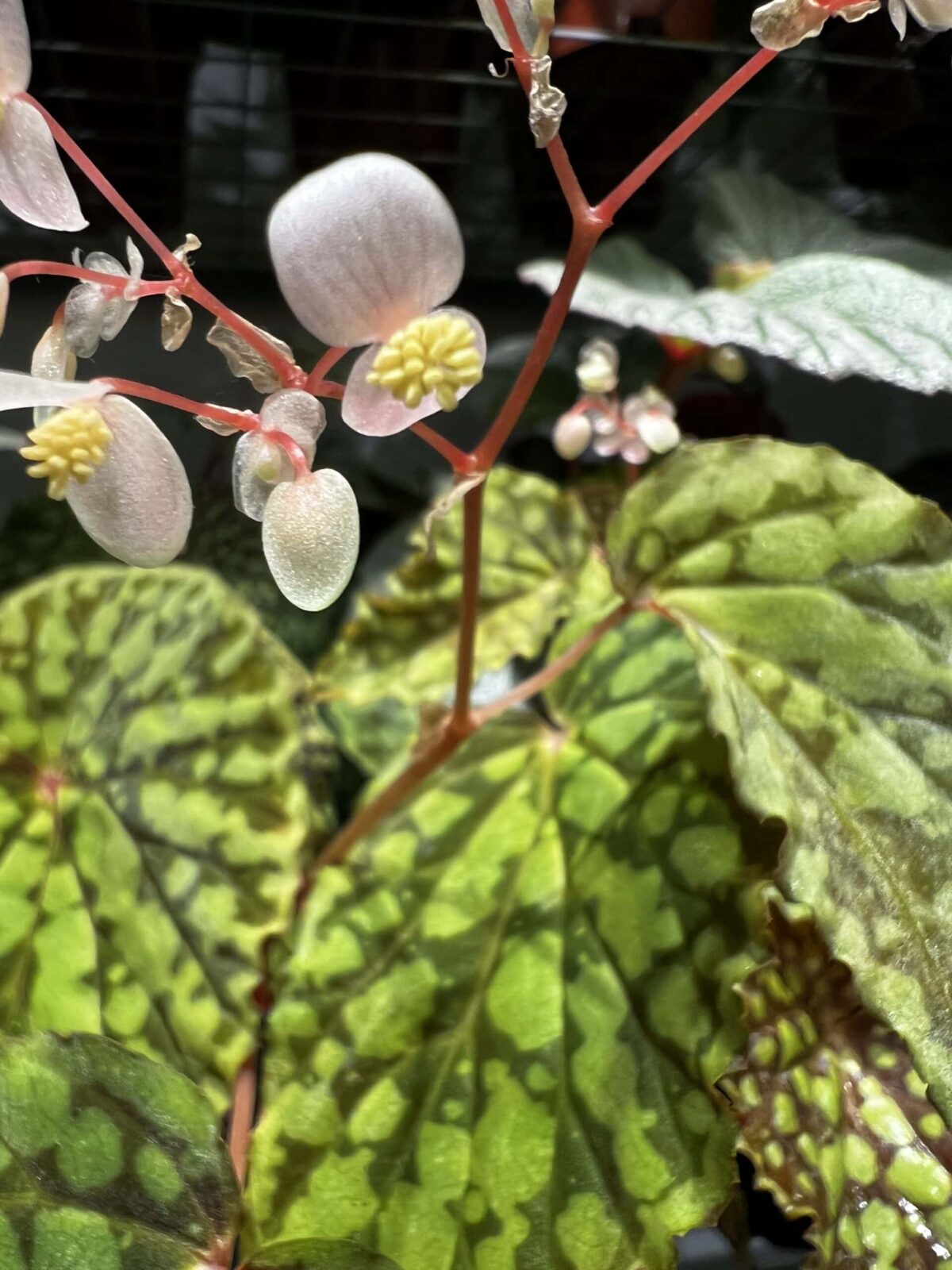
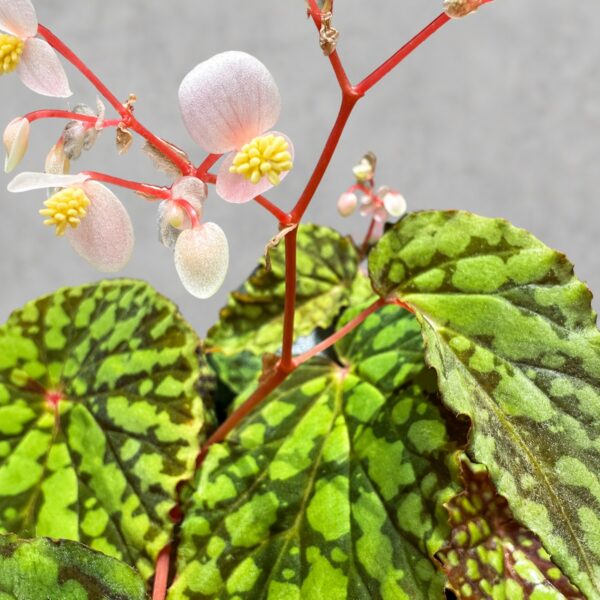
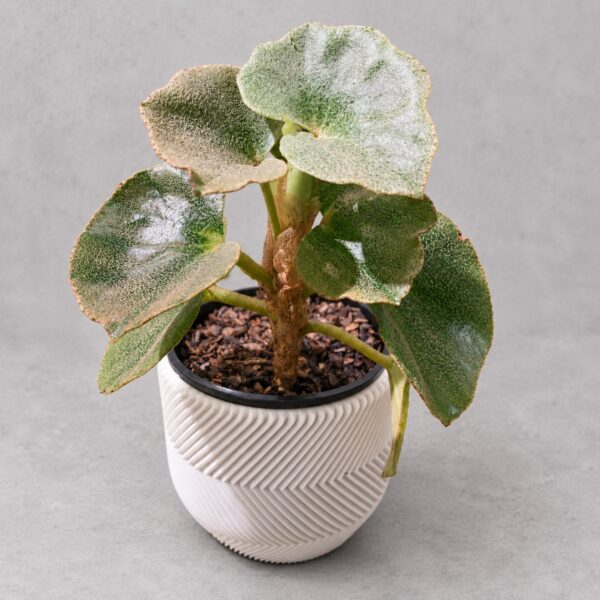
Green Bubble Begonia (Begonia chlorosticta) is native to the tropical rainforests of Borneo and is a highly ornamental, rare rhizomatous begonia. Leaves are deep emerald green covered in pale green circular "bubble" spots, with a delicate pale green velvety edge — the overall effect looks like a velvet cloth studded with bubbles. There are commonly seen green (Green Form) and red (Red Form) variants, with the red form showing a more striking reddish-brown leaf colour. Native to extremely high humidity environments, this is a collector's-grade species best suited to advanced growers.
Light
- Ideal light: bright but soft, diffused light — partial shade is best
- Placement: an indoor spot 1.5–2 metres from a window, or an environment with 50–60% shade
- Avoid: strong direct sun causes fading, blurred spotting, or leaf scorch
- Signs of too much light: the dark background fades, green spot contrast decreases, leaf edges scorch
- Signs of insufficient light: growth stalls, new leaves are small, leaf colour dull
- Tip: proper light enhances the contrast between the dark background and green spots, giving the "bubbles" a more three-dimensional look
Watering
- Frequency: keep the soil evenly moist, never letting it dry out completely — roughly 1–2 times a week
- Method: water once the soil surface is slightly dry, pouring along the pot's edge until it drains from the bottom
- Important reminder: this species is extremely sensitive to drought — dry soil quickly causes leaf wilting
- Water quality: room-temperature water, or tap water left standing for 24 hours works even better
- Tip: a well-draining substrate is key — moist but never waterlogged
Soil & pot
- Soil recipe: an organic-matter-rich, well-draining, slightly acidic medium
- Recommended ratio: peat moss 50% + perlite 30% + bark or coco coir 20%
- The substrate needs to stay moist while remaining airy, never waterlogged
- Or use Plantjai's dedicated high-humidity plant soil mix
- pH: 5.5–6.5
- Pot selection: a clear or semi-transparent pot is recommended, making it easy to monitor root health and soil moisture; must have drainage holes
- Repotting timing: repot in spring once roots fill the pot; the rhizome should sit slightly proud of the soil surface
Temperature & humidity
- Ideal temperature: 18–24°C
- Tolerance range: 15–28°C; cold damage below 15°C
- Humidity requirement: above 60%, ideally 70–90%
- Humidification methods:
- Strongly recommended: grow in an enclosure — a glass terrarium, humidity box, or clear plastic container gives the most stable humidity
- A humidifier for long-term high humidity
- Pebble tray beneath the pot
- Grouping with other plants to raise humidity together
- Special note: Hong Kong indoor humidity is generally low — growing in an enclosed setup is strongly recommended
- Tip: even in high-humidity enclosures, ensure good airflow to avoid fungal issues from excess stuffiness
Common problems
| Issue | Likely cause | What to do |
|---|---|---|
| Leaves curling or drying out | Severe humidity deficiency | Immediately switch to an enclosed growing setup, or use a humidifier |
| Leaves becoming thin and soft | Overwatering or poor ventilation | Check drainage, improve air circulation |
| Green bubble spots fading | Light too strong or humidity too low | Adjust light intensity, increase humidity |
| Extremely slow growth | Temperature too low or humidity insufficient | Check environmental temperature and humidity, aim for 20–24°C and above 70% humidity |
| Small, malformed new leaves | Nutrient deficiency or unsuitable environment | Apply diluted liquid fertiliser monthly during the growing season, improve growing conditions |
| Water-soaked rot spots on leaves | Fungal infection | Remove affected leaves, improve ventilation, reduce leaf moisture |
How to explain to customers
"Green Bubble Begonia is a rare species from Borneo — the deep green leaves with pale green bubble spots look just like an emerald, a real collector's-grade plant for advanced growers. It's a high-humidity plant, and Hong Kong indoor air usually isn't humid enough, so we'd recommend growing it in a terrarium setup — once the humidity is right, it grows beautifully. If you're a beginner, I'd suggest starting with an easier begonia first — Green Bubble needs a bit more attention, but the payoff of growing it well is genuinely satisfying!"
Fun facts
Green Bubble Begonia grows naturally in the understorey of Bornean rainforests, where it's exposed to extremely high humidity and warmth year-round, which is why it needs a simulated "greenhouse" environment to thrive in cultivation. Its bubble-shaped leaf spots actually function as a natural "light trap," helping the plant capture more of the limited light available in the dim forest understorey for photosynthesis.
Keywords
Green Bubble Begonia, Begonia chlorosticta, Bornean begonia, rare begonia, rhizomatous begonia, high-humidity plant, terrarium plant, bubble-spotted foliage, advanced foliage plant, Red Form, Green Form, Hong Kong plant shop, Plantjai, begonia care, pet-toxic plant
參考資料(想知來源可展開)
References
- Rare botanicals literature on Begonia chlorosticta, Borneo. American Begonia Society. https://www.begonias.org/
- Missouri Botanical Garden. Begonia species. Plant Finder. http://www.missouribotanicalgarden.org/PlantFinder/
- ASPCA. Begonia – Toxic and Non-Toxic Plants. https://www.aspca.org/pet-care/animal-poison-control/toxic-and-non-toxic-plants/begonia
⚠️ Toxicity warning: Green Bubble Begonia contains soluble calcium oxalate crystals, toxic to pets and children. Avoid ingestion.
In-depth care guide
Introduction
Green Bubble Begonia, Begonia chlorosticta, is a rare rhizomatous begonia species native to the tropical rainforests of Borneo, prized among collectors for its extraordinary leaf texture. The deep emerald green leaves are covered in pale green, rounded "bubble" spots that catch light beautifully, creating a genuinely gemstone-like appearance that sets it apart from more commonly available begonia cultivars. A delicate pale green velvety edge frames each leaf, adding further textural interest. Two forms are commonly seen in cultivation — the Green Form, with its classic emerald colouring, and the Red Form, which displays a more dramatic reddish-brown leaf tone.
This is unambiguously a species for the advanced grower rather than a beginner-friendly houseplant. Its native habitat — the consistently warm, extremely humid floor of a Bornean rainforest — sets demands that are genuinely difficult to replicate in a typical Hong Kong apartment without dedicated equipment, making success with this species a real point of pride among begonia enthusiasts.
Light requirements
Green Bubble Begonia needs bright but gentle, diffused light, with partial shade being the ideal condition. A position roughly 1.5–2 metres back from a window, or an environment providing 50–60% shade, both work well. Strong direct sun causes the vivid colouring to fade, blurs the definition of the bubble spots, and can scorch the leaf surface outright.
Getting the light level right actually enhances the visual drama of this plant — proper light increases the contrast between the dark background colour and the pale green spots, making the signature "bubble" texture appear more three-dimensional and striking. Watch for two opposite warning signs: if the dark background fades and spot contrast decreases with leaf edges scorching, light is too strong; if growth stalls with small, dull new leaves, light is insufficient.
Watering technique
This species is extremely sensitive to drought, more so than most other begonias — the soil should be kept evenly moist at all times and should never be allowed to dry out completely, since this quickly causes visible leaf wilting. Water roughly once or twice a week, whenever the soil surface feels just slightly dry, pouring along the pot's edge until water drains freely from the bottom.
Water quality matters here too — room-temperature water is fine, though tap water left standing for 24 hours (allowing chlorine to dissipate) works even better. The key balance to strike is a well-draining substrate that nonetheless stays consistently moist rather than waterlogged — this requires a soil mix specifically formulated for both moisture retention and good drainage simultaneously.
Soil and potting
An organic-matter-rich, well-draining, slightly acidic medium suits Green Bubble Begonia best: peat moss, perlite, and bark or coco coir in a 50:30:20 ratio, maintaining a pH between 5.5 and 6.5. The substrate needs to stay moist while remaining sufficiently airy that it never becomes waterlogged — a genuinely tricky balance that benefits from close observation and adjustment over the plant's first few months in your care.
A clear or semi-transparent pot is particularly useful for this species, allowing you to easily monitor root health and soil moisture levels without disturbing the plant. Drainage holes remain essential regardless of pot material. Repot in spring once roots have filled the current pot, positioning the rhizome so it sits slightly proud of the soil surface.
Temperature and humidity
Green Bubble Begonia grows best between 18°C and 24°C, tolerating a range of 15–28°C, though cold damage occurs below 15°C. Humidity requirements are notably high — above 60% at minimum, with an ideal range of 70–90%.
Given how demanding this humidity requirement is, growing the plant inside an enclosure — a glass terrarium, dedicated humidity box, or clear plastic container — is strongly recommended, since this provides the most stable, consistently high humidity the species needs to truly thrive. A humidifier can maintain long-term high humidity for plants grown outside an enclosure, while a pebble tray or grouping with other humidity-loving plants offer supplementary options. Hong Kong's typical indoor humidity levels are generally too low for this species without additional intervention, making an enclosed growing setup a genuinely worthwhile investment for anyone serious about keeping this plant long-term. Even within an enclosure, ensure some airflow to prevent the excess stuffiness that can trigger fungal problems.
Common problems in detail
Curling or drying leaves point directly to a severe humidity deficiency, requiring an immediate switch to an enclosed growing setup or the addition of a humidifier.
Thin, soft leaves suggest overwatering or poor ventilation — check that drainage is adequate and improve air circulation around the plant.
Fading green bubble spots can result from either light that's too strong or humidity that's too low — adjust light intensity first, then address humidity if the problem persists.
Extremely slow growth typically indicates temperatures too low or humidity insufficient for the plant's needs — verify that conditions fall within the ideal 20–24°C and above 70% humidity range.
Small, malformed new leaves signal either a nutrient deficiency or generally unsuitable growing conditions — apply a diluted liquid fertiliser monthly during the growing season and reassess the overall environment.
Water-soaked rot spots on leaves indicate fungal infection — remove affected leaves promptly, improve ventilation, and reduce leaf surface moisture going forward.
Toxicity information
Green Bubble Begonia contains soluble calcium oxalate crystals, toxic to pets and children if ingested. Keep the plant out of reach, particularly given its placement is often within an accessible terrarium or display setup.
References
- American Begonia Society. Rhizomatous and species Begonias. https://www.begonias.org/
- Missouri Botanical Garden. Begonia species. Plant Finder. http://www.missouribotanicalgarden.org/PlantFinder/
- ASPCA. Begonia – Toxic and Non-Toxic Plants. https://www.aspca.org/pet-care/animal-poison-control/toxic-and-non-toxic-plants/begonia
- RHS. Begonias as Houseplants. https://www.rhs.org.uk/plants/begonias/houseplants
Plantjai shop · In stock online
Begonia chlorosticta
Begonia chlorosticta
HK$168.00
Hong Kong delivery · Causeway Bay pickup
For Hong Kong homes and offices. Stock and pricing follow the product page.
IN STORE NOW
Plants for this guide
Related plants in stock now — live prices, delivery or Causeway Bay pickup.
FREE PLANT ADVICE
Send us a photo before you change anything
WhatsApp a photo of the plant and your window light. Our Causeway Bay team will suggest care steps or plants that suit your space.
STORE · CAUSEWAY BAY
4/F, 39 Yiu Wa Street, Causeway Bay
Daily 12:30–8:00pm · ~3 min walk from Times Square
Map & directionsPlant Care