
How to Care for Begonia Bowerae Tiger in Hong Kong | Plantjai

Hong Kong care guide for Begonia Bowerae Tiger.
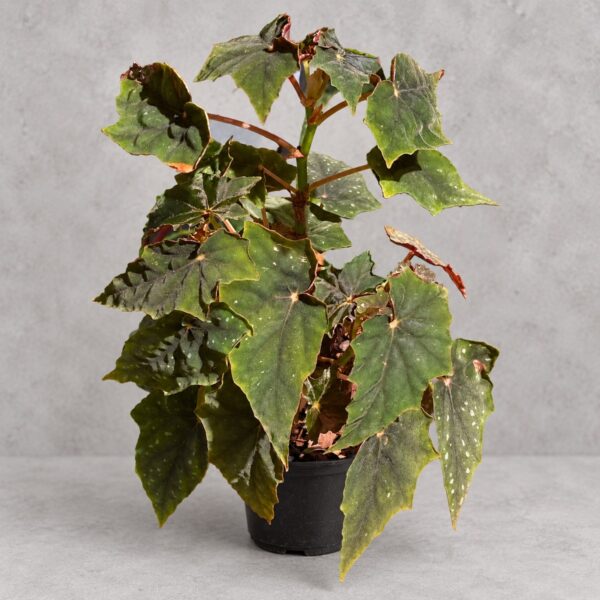
Dark red leaves with green tiger stripes — a classic among miniature rhizomatous begonias.
Origin & characteristics
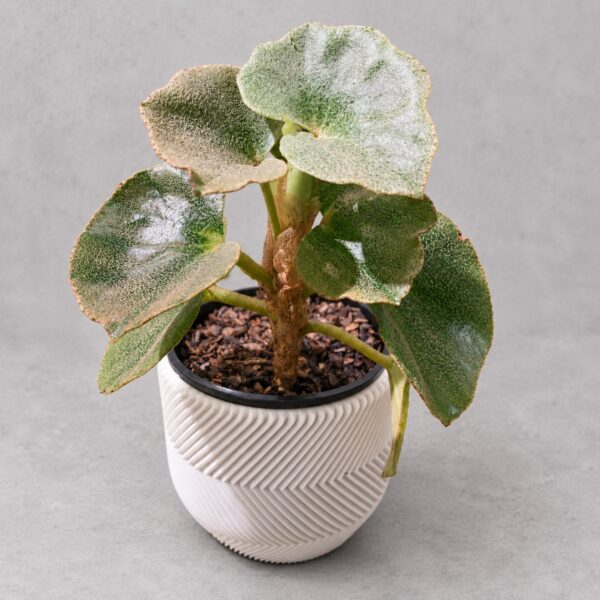
Tiger Begonia, also known as "Miniature Spider Begonia," is native to Mexico and belongs to the rhizomatous, evergreen perennial group of begonias. The plant is small and compact, with a thick, fleshy rhizome that creeps along the soil surface. Leaves are oval, dark reddish-brown with irregular green patches resembling tiger stripes; the leaf margins carry fine white hairs, and the petioles are speckled with reddish-brown dots. The flowers are inconspicuous, pale white — this is primarily a foliage plant, and an excellent choice for a miniature potted display.
Light
- Ideal light: partial shade to bright, diffused light, avoiding any direct sun
- Placement: a north-facing windowsill, 1–2 metres from an indoor window, or an environment with 50–60% shade
- Avoid: direct sun exposure causes leaves to shrink and thicken, with dry edges; strong light also fades the green stripe pattern
- Signs of insufficient light: leaf colour fading, reduced pattern contrast, sparse growth
- Tip: this variety naturally grows in forest understorey, and does best indoors in a spot with gentle, natural light
Watering
- Frequency: keep the soil moist but never waterlogged — water once the topsoil is just slightly dry; roughly 3–4 times a week in summer, 1–2 times in winter
- Method: water slowly along the pot's edge, stopping once water drips from the drainage holes — avoid letting the soil go half-wet, half-dry
- Important reminder: never let the soil dry out completely before watering — this can be fatal for rhizomatous begonias
- Avoid standing water: prolonged waterlogging causes rhizome rot; ensure no standing water remains in the saucer after watering
- Tip: move indoors during the rainy season — prolonged rain exposure easily causes root and leaf rot
Soil & pot
- Soil recipe: a loose, fertile, organic-matter-rich, well-draining medium
- Recommended ratio: peat moss or coco coir 40% + leaf mould 30% + perlite 15% + coarse river sand or vermiculite 15%
- A small amount of well-rotted organic fertiliser can be added as a base
- Or use Plantjai's dedicated begonia soil mix
- pH: 6.0–6.5
- Pot selection: a shallow pot suits the rhizome's growth better; terracotta or plastic both work, must have drainage holes
- Repotting timing: once a year in spring; when planting, the rhizome should sit 1/3 to 1/2 above the soil surface — don't plant too deep
Temperature & humidity
- Ideal temperature: 15–25°C
- Tolerance range: 10–28°C; not cold-hardy, prone to cold damage below 10°C
- Humidity requirement: above 60%, preferring higher ambient humidity
- Humidification methods:
- Regular misting of the plant and surrounding area (leaf misting is fine, provided ventilation is good)
- Pebble tray beneath the pot
- Growing in a glass terrarium gives the best results
- Summer note: high heat and stuffiness easily cause rot — keep in a cool, well-ventilated spot, protected from rain and harsh sun
- Winter note: reduce watering, keep above 10°C to overwinter safely, place in a bright indoor spot
Common problems
| Issue | Likely cause | What to do |
|---|---|---|
| Leaves shrinking, thickening, dry edges | Air too dry | Immediately increase surrounding humidity, mist more often or use a humidifier |
| Difficulty unfurling new leaves | Severe humidity deficiency | Urgently increase humidity, consider a terrarium enclosure |
| Rhizome rotting and blackening | Overwatering or waterlogging | Reduce watering, check drainage, trim away rotten parts and replant if necessary |
| Dull, lacklustre leaf colour | Light too strong or too weak | Adjust to a partial-shade position |
| Grey-brown mould spots on leaves | Botrytis (grey mould) | Remove affected leaves, improve ventilation, reduce leaf moisture |
| Whole plant wilting | Prolonged drought or rhizome rot | Check soil moisture and root health |
How to explain to customers
"Tiger Begonia is such a cute little plant — dark red leaves with green tiger stripes, like a miniature work of art on your desk! It's a rhizomatous begonia, so the most important thing is never to let the soil dry out completely before watering — a little extra moisture is fine, but drying out is what causes trouble. If your home is on the dry side, try putting it in the bathroom or kitchen window — the extra humidity will help it thrive."
Fun facts
Tiger Begonia's fleshy rhizome stores water and nutrients, giving it slightly more drought tolerance than other begonias — though prolonged drought is still fatal. In its native Mexico, it grows in the humid, shaded forest understorey, spreading via its thick rhizome to form beautiful clumps of foliage.
Keywords
Tiger Begonia, Begonia bowerae Tiger, miniature spider begonia, rhizomatous begonia, miniature begonia, Mexican begonia, tiger-striped foliage plant, high-humidity plant, partial-shade plant, indoor potted plant, Hong Kong plant shop, Plantjai, begonia care, terrarium plant, pet-toxic plant
參考資料(想知來源可展開)
References
- Missouri Botanical Garden. Begonia bowerae. Plant Finder. http://www.missouribotanicalgarden.org/PlantFinder/
- American Begonia Society. Rhizomatous Begonias. https://www.begonias.org/
- ASPCA. Begonia – Toxic and Non-Toxic Plants. https://www.aspca.org/pet-care/animal-poison-control/toxic-and-non-toxic-plants/begonia
⚠️ Toxicity warning: Tiger Begonia contains calcium oxalate crystals, toxic to pets and children. Avoid ingestion.
In-depth care guide
Introduction
Tiger Begonia, Begonia bowerae 'Tiger', is a compact rhizomatous begonia native to Mexico, where it grows along the humid, shaded floor of tropical and subtropical forests. Sometimes called "Miniature Spider Begonia" due to its diminutive size and creeping habit, this cultivar is prized for its striking foliage pattern — dark reddish-brown leaves patterned with irregular splashes of bright green, resembling the stripes of a tiger. The fine white hairs along the leaf margins and the speckled reddish-brown petioles add further textural interest, making this a genuine miniature work of art for a desk, shelf, or terrarium.
Unlike Rex begonias, which grow much larger and more dramatically, Tiger Begonia stays compact and low-growing throughout its life, spreading slowly via its thick, fleshy rhizome rather than reaching upward. This makes it an excellent choice for small spaces, terrariums, or as part of a mixed dish garden alongside other humidity-loving miniature plants.
Light requirements
Tiger Begonia thrives in partial shade to bright, diffused light, and should never be exposed to direct sun. A north-facing windowsill, or a position 1–2 metres back from an indoor window, both work well, as does any spot offering roughly 50–60% shade. Direct sun exposure causes the leaves to shrink, thicken unnaturally, and develop dry, crisp edges, while also fading the vivid green stripe pattern that makes this cultivar so attractive.
If light is insufficient, you'll notice the leaf colour becoming duller, the contrast between the dark background and green stripes diminishing, and overall growth becoming sparse and stretched. Since this variety naturally grows beneath the forest canopy in its native habitat, it's genuinely well suited to typical indoor light levels — a spot that would feel comfortably bright for reading, without ever receiving direct sun, is usually ideal.
Watering technique
The single most important rule for Tiger Begonia is to never let the soil dry out completely before watering — unlike many other houseplants that tolerate occasional drought, this can be genuinely harmful for rhizomatous begonias. Water once the topsoil feels just slightly dry, roughly three to four times a week in summer and once or twice a week in winter, adjusting based on your specific conditions.
When watering, pour slowly along the pot's edge and stop once water begins dripping from the drainage holes, aiming for evenly moist soil rather than the alternating wet-then-bone-dry cycle that stresses many other plants. That said, standing water is just as dangerous as drought — prolonged waterlogging causes the rhizome to rot, so always ensure no water remains sitting in the saucer after watering. During Hong Kong's rainy season, it's worth moving the plant indoors or under cover, since prolonged exposure to heavy rain easily leads to rotting roots and leaves.
Soil and potting
A loose, fertile, well-draining medium rich in organic matter suits Tiger Begonia best: peat moss or coco coir, leaf mould, perlite, and coarse river sand or vermiculite in a 40:30:15:15 ratio, with a small amount of well-rotted organic fertiliser mixed in as a base nutrient source. Aim for a soil pH between 6.0 and 6.5.
A shallow pot suits the rhizome's horizontal growth habit better than a deep one, and either terracotta or plastic works fine as long as there are drainage holes. Repot once a year in spring; when planting, position the rhizome so that roughly one-third to one-half sits above the soil surface rather than being fully buried, which helps prevent rot at the growing point.
Temperature and humidity
Tiger Begonia grows best between 15°C and 25°C, tolerating a range of 10–28°C, though it isn't cold-hardy and is prone to cold damage below 10°C. Humidity requirements are on the higher side, ideally above 60%.
Useful humidification methods include regularly misting the plant and surrounding area (misting the leaves directly is fine as long as ventilation is good), placing the pot on a pebble tray, or — for the best possible results — growing the plant inside a glass terrarium, which naturally maintains the stable, high humidity this variety loves. In summer, heat combined with stagnant air easily causes rot, so keep the plant in a cool, well-ventilated spot protected from both harsh sun and heavy rain. In winter, reduce watering and keep the plant above 10°C in a bright indoor location to overwinter safely.
Common problems in detail
Shrinking, thickening leaves with dry edges point directly to air that's too dry — increase surrounding humidity immediately through more frequent misting or a humidifier.
New leaves struggling to unfurl properly signal a severe humidity deficiency requiring urgent action, potentially including moving the plant into an enclosed terrarium setup.
Blackening, rotting rhizome almost always results from overwatering or standing water — reduce watering frequency, check that drainage is adequate, and if rot has set in, trim away the affected portions and replant the healthy remainder in fresh soil.
Dull, lacklustre leaf colour can result from either too much or too little light — adjust the plant's position to a properly balanced partial-shade spot and observe how new growth responds.
Grey-brown mould spots on leaves indicate botrytis (grey mould), usually triggered by poor ventilation combined with prolonged leaf moisture — remove affected leaves promptly and improve airflow around the plant.
Whole-plant wilting is a serious warning sign requiring immediate investigation of both soil moisture levels and root health, since it can result from either prolonged drought or advanced rhizome rot.
Toxicity information
Like other begonias, Tiger Begonia contains calcium oxalate crystals throughout its tissues, toxic to cats, dogs, and children if ingested. Keep the plant out of reach of curious pets and small children, and take care when handling cuttings or repotting.
References
- Missouri Botanical Garden. Begonia bowerae. Plant Finder. http://www.missouribotanicalgarden.org/PlantFinder/
- American Begonia Society. Rhizomatous Begonias. https://www.begonias.org/
- ASPCA. Begonia – Toxic and Non-Toxic Plants. https://www.aspca.org/pet-care/animal-poison-control/toxic-and-non-toxic-plants/begonia
- RHS. Begonias as Houseplants. https://www.rhs.org.uk/plants/begonias/houseplants
For Hong Kong homes and offices. Stock and pricing follow the product page.
IN STORE NOW
Plants for this guide
Related plants in stock now — live prices, delivery or Causeway Bay pickup.
FREE PLANT ADVICE
Send us a photo before you change anything
WhatsApp a photo of the plant and your window light. Our Causeway Bay team will suggest care steps or plants that suit your space.
STORE · CAUSEWAY BAY
4/F, 39 Yiu Wa Street, Causeway Bay
Daily 12:30–8:00pm · ~3 min walk from Times Square
Map & directionsPlant Care