
How to Care for Begonia Autumn Ember in Hong Kong | Plantjai

Plantjai 植仔 · Care Encyclopedia
Begonia Autumn Ember
Hong Kong care guide — useful before you buy and after it arrives.
Shop this plantOrange-red leaves that glow like autumn embers — a warm splash of colour for any indoor space.
Origin & characteristics
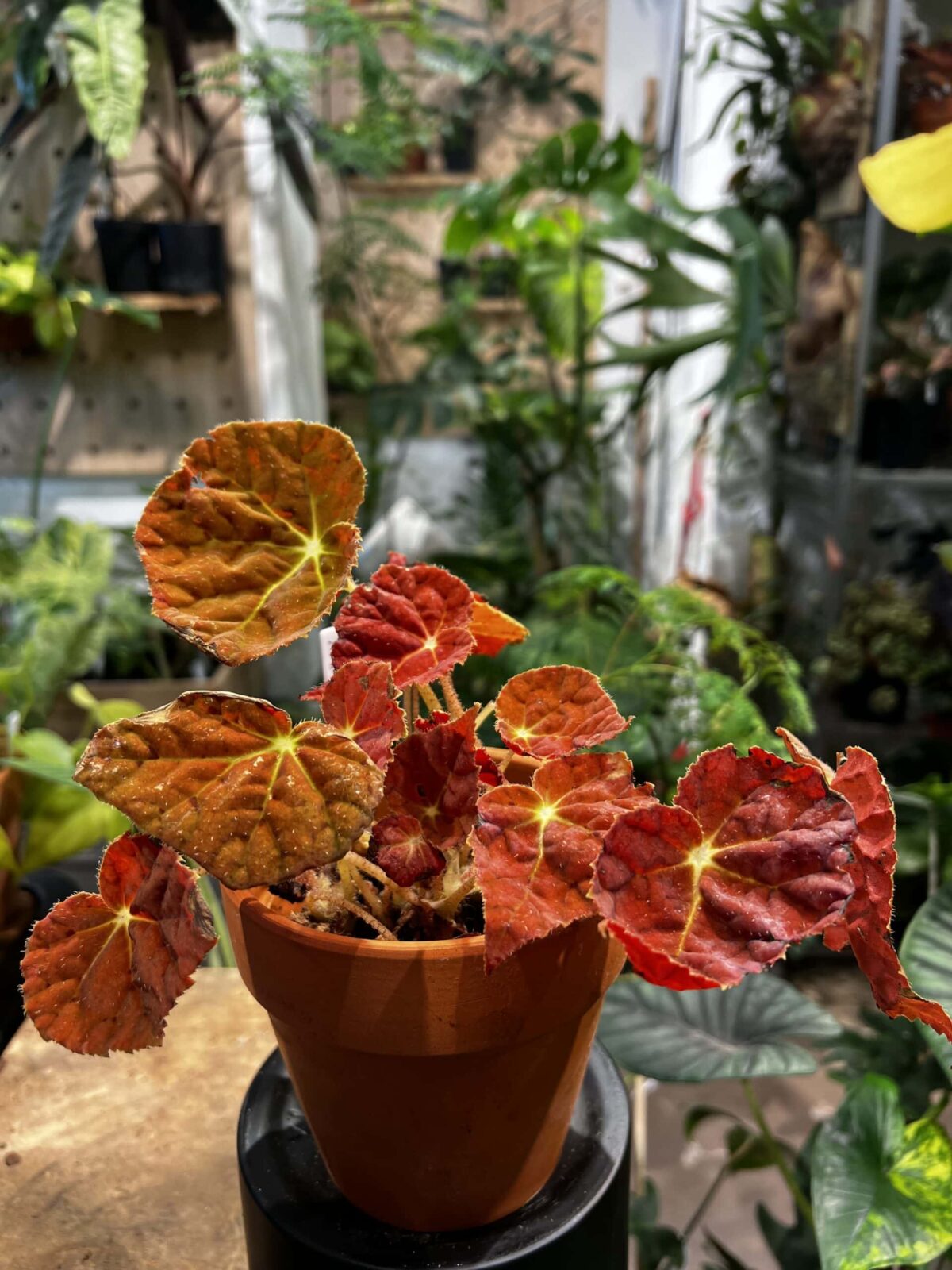
Autumn Ember Begonia belongs to the Rex Begonia group, bred from Begonia rex as its foundation. Its most captivating feature is foliage in a warm orange-red to coppery-red tone reminiscent of falling autumn leaves — from a distance, it genuinely looks like a glowing cluster of embers. The leaves have a thick, velvety texture with fine detail, and the plant grows in a compact form, reaching roughly 25–35 cm tall at maturity. Rex begonias are known for their spectacular leaf colours, and Autumn Ember stands out among them for its distinctively warm colour palette.
Light
Autumn Ember needs bright, filtered light — plenty of soft, diffused light. Rex begonias are fairly demanding about light — too little causes the colour to fade and lose its vivid orange-red tone; too much scorches the leaf surface.
- Ideal placement: east- or north-facing windowsill works best; south-facing windows need a sheer curtain or a distance of 1–2 metres from the glass
- Light check: if new leaves appear pale or trend toward plain green, this signals insufficient light
- Rotate the pot every week or two so all sides of the plant receive even light, keeping the form well-balanced
Watering
Rex begonias are fairly sensitive to watering, so aim for a balance of "moist but never waterlogged."
- Testing method: insert a finger about 2–3 cm into the soil; water once it feels dry
- Growing season (spring–summer): roughly every 5–7 days, emptying standing water after a thorough soak
- Dormant season (autumn–winter): roughly every 10–14 days, keeping the soil just barely moist
⚠️ Avoid:
- Standing water in the saucer (the main cause of root rot)
- Wetting the leaf surface when watering (easily causes fungal disease and leaf spot)
- Using cold water (water temperature should be close to room temperature)
💡 On water quality, Rex begonias are sensitive to chlorine and minerals — filtered water, rainwater, or water left standing overnight works best.
Soil & pot
Soil recipe
Rex begonias need an extremely well-draining, airy medium:
- Coco coir or peat moss 40%
- Coarse perlite 30%
- Bark chips (roughly 6 mm) 20%
- Horticultural charcoal 10%
Standard indoor potting soil is too heavy for Rex begonias and easily causes waterlogging and root rot. The soil should feel loose, light, and quick to drain.
Pot selection
- Shallow pots preferred: Rex begonias have shallow, horizontally spreading root systems, so a shallow, wide pot suits them better than a deep one
- Must have drainage holes; terracotta is the top choice (fast drainage, good aeration)
- Repot once a year in spring; the new pot should be only 2–3 cm larger in diameter than the old one
- Important: when repotting, the rhizome should sit slightly proud of the soil surface — don't bury it too deep, or it will rot
Temperature & humidity
| Factor | Ideal range | Notes |
|---|---|---|
| Temperature | 21–27°C | Growth stalls below 15°C; ventilate well above 30°C |
| Humidity | 50–70% | Higher humidity improves leaf appearance, but must be paired with good airflow |
- Rex begonias like a stable, warm environment — avoid placing near AC vents, doorways, or windows where temperatures fluctuate
- Below 50% humidity, leaf edges easily dry out. Recommended humidification methods:
- Pebble tray (pot base not touching the water)
- Grouping with other plants for a shared microclimate
- A small humidifier (positioned roughly 1 metre from the plant)
- Direct leaf misting is not recommended — Rex begonias' velvety leaf surface easily develops fungal issues when wet
Common problems
| Issue | Likely cause | What to do |
|---|---|---|
| Dry, browning leaf edges | Humidity too low or water too hard | Increase humidity, switch to rainwater or filtered water |
| Fading colour, shifting toward green | Insufficient light | Move closer to a window, increase diffused light |
| Leaves yellowing and going soft | Overwatering causing root rot | Reduce watering, check drainage, trim roots and repot if needed |
| White powdery coating on leaves | Powdery mildew | Trim affected leaves, improve ventilation, avoid leaf moisture |
| Winter leaf drop, growth stalling | Entering dormancy | Reduce watering and stop fertilising; growth resumes when spring warms up |
| Brown spots on new leaves | Sunburn from strong light | Move away from direct light, filter with a sheer curtain |
How to explain to customers
"Autumn Ember is such a fitting name — the leaves really do look like glowing autumn leaves on fire! With this Rex Begonia, remember two things: enough light to keep the colour vivid, but never direct sun, and high humidity while keeping the leaf surface dry. Water once the soil is dry, don't overwater — actually, a bathroom with a window works surprisingly well for this one!"
Fun facts
The "Rex" in Rex Begonia comes from the Latin word for "king," a nod to the regal, showy quality of these leaves. Autumn Ember's orange-red tones actually come from anthocyanin pigments in the leaves, which become more active in cooler conditions — so the colour deepens even more beautifully as autumn temperatures drop.
Keywords
Begonia, Rex Begonia, Autumn Ember, orange-red leaves, foliage plant, warm-tone plant, bright diffused light, high humidity, well-draining soil, shallow pot planting, Plantjai
參考資料(想知來源可展開)
References
- Missouri Botanical Garden. Begonia rex – Rex Begonia. Plant Finder. http://www.missouribotanicalgarden.org/PlantFinder/
- RHS. Begonias as Houseplants. https://www.rhs.org.uk/plants/begonias/houseplants
- Logee's. Rex Begonia Propagation & Care Guide. https://www.logees.com/blogs/growing-tips/grow-rex-begonias
⚠️ Toxicity warning: Autumn Ember Begonia contains soluble calcium oxalate crystals, toxic to cats, dogs, and children. Ingestion may cause oral irritation, drooling, vomiting, and difficulty swallowing — keep it out of reach of pets and children.
In-depth care guide
Introduction
Autumn Ember Begonia belongs to the Rex Begonia group — hybrids bred from Begonia rex and prized above all for their extraordinary leaf colours. What sets Autumn Ember apart within this already colourful group is its distinctly warm palette: rather than the cool silvers, purples, or greens common to many Rex cultivars, Autumn Ember's leaves glow in shades of orange-red and coppery red, evoking the look of fallen autumn leaves or smouldering embers. The thick, velvety leaf texture adds further visual richness, with fine surface detail that catches light beautifully from different angles.
Like all Rex begonias, Autumn Ember grows from a horizontally spreading rhizome rather than a true upright stem, giving mature plants a compact, low, clumping form that typically reaches 25–35 cm in height. This growth habit, combined with its striking colouring, makes it a natural centrepiece for a shelf, desk, or windowsill display.
Light requirements
Autumn Ember needs bright, filtered light to display its signature colouring properly. Rex begonias as a group are notably more demanding about light than many other houseplants — too little light causes the vivid orange-red tones to fade toward a duller, greener shade, while too much direct light scorches the delicate leaf surface. An east- or north-facing windowsill provides the ideal balance of brightness without harshness; south-facing windows require a sheer curtain or positioning the plant 1–2 metres back from the glass.
A useful early warning sign to watch for is new leaf colour: if newly emerging leaves look pale or trend toward plain green rather than the expected warm tones, this signals that light levels need to increase. Rotating the pot every week or two ensures even light exposure on all sides of the plant, helping it maintain a balanced, symmetrical form rather than leaning or growing lopsided toward a single light source.
Watering technique
Rex begonias are notably sensitive to watering practices, and Autumn Ember is no exception — the goal is a careful balance of "moist but never waterlogged." Test by inserting a finger about 2–3 cm into the soil, watering only once it feels dry at that depth. During the growing season in spring and summer, this typically means watering roughly every 5–7 days, always emptying any standing water from the saucer after a thorough soak. In the dormant autumn–winter period, stretch this to roughly every 10–14 days, keeping the soil just barely moist rather than fully drying out or staying consistently wet.
Three things to strictly avoid: letting water pool in the saucer (the leading cause of root rot in this group), wetting the leaf surface when watering (which easily triggers fungal disease and leaf spot given the leaves' velvety texture), and using cold water straight from the tap (water temperature should be close to room temperature to avoid shocking the roots). On water quality, Rex begonias are sensitive to chlorine and dissolved minerals — filtered water, rainwater, or tap water left to stand overnight all work well.
Soil and potting
Rex begonias need an unusually well-draining, airy soil mix compared with many other houseplants: coco coir or peat moss, coarse perlite, bark chips (roughly 6 mm), and horticultural charcoal in a 40:30:20:10 ratio. Standard indoor potting soil is simply too heavy and dense for this group, easily leading to waterlogging and root rot — the ideal mix should feel distinctly loose, light, and quick-draining when you handle it.
Given the plant's shallow, horizontally spreading root system, a shallow, wide pot suits it far better than a deep one. Drainage holes are essential, and terracotta is the top pot material choice for its fast drainage and good aeration. Repot once a year in spring, choosing a new pot only 2–3 cm larger in diameter than the current one. One particularly important detail when repotting: the rhizome should sit slightly proud of the soil surface rather than buried — burying it too deep is a common cause of rot at the growing point.
Temperature and humidity
Autumn Ember grows best between 21°C and 27°C; growth stalls noticeably below 15°C, and ventilation should be increased above 30°C to prevent stagnant, overly warm conditions. Humidity should ideally sit between 50% and 70%, with higher humidity generally producing better leaf appearance — though this must always be paired with good airflow to avoid encouraging fungal problems.
Rex begonias prefer a stable, consistently warm environment, so avoid placing the plant near AC vents, frequently opened doorways, or windows where temperature fluctuations are common. If humidity drops below roughly 50%, leaf edges easily begin to dry out. Recommended humidification methods include a pebble tray (keeping the pot base above the waterline rather than touching it), grouping the plant with others to create a shared, more humid microclimate, or running a small humidifier positioned roughly a metre from the plant. Direct leaf misting is specifically not recommended for this variety — the velvety leaf surface characteristic of Rex begonias easily develops fungal issues when kept consistently wet.
Common problems in detail
Dry, browning leaf edges typically point to humidity that's too low or water that's too hard — increasing ambient humidity and switching to rainwater or filtered water usually resolves this over a few weeks.
Fading colour that shifts toward plain green almost always indicates insufficient light — moving the plant closer to a window or increasing diffused light exposure should restore the signature orange-red tones in new growth.
Yellowing, softening leaves signal overwatering and developing root rot — cut back on watering immediately, check that drainage is adequate, and trim away affected roots before repotting into fresh soil if needed.
White powdery coating on leaves indicates powdery mildew, typically triggered by poor ventilation combined with humid conditions — trim affected leaves, improve airflow, and avoid letting water sit on the leaf surface going forward.
Winter leaf drop with stalled growth is a completely normal sign of dormancy — reduce watering and stop fertilising, and the plant will resume active growth once temperatures warm up in spring.
Brown spots on new leaves point to sunburn from light that's too strong — move the plant away from direct light exposure and filter it with a sheer curtain if needed.
Toxicity information
Autumn Ember Begonia contains soluble calcium oxalate crystals, toxic to cats, dogs, and children. Ingestion may cause oral irritation, drooling, vomiting, and difficulty swallowing. Keep the plant well out of reach of pets and small children.
References
- Missouri Botanical Garden. Begonia rex – Rex Begonia. Plant Finder. http://www.missouribotanicalgarden.org/PlantFinder/
- RHS. Begonias as Houseplants. https://www.rhs.org.uk/plants/begonias/houseplants
- Logee's. Rex Begonia Propagation & Care Guide – Easy Methods. https://www.logees.com/blogs/growing-tips/grow-rex-begonias
- University of Connecticut. Rex Begonia. https://homegarden.cahnr.uconn.edu/factsheets/rex-begonia/
Plantjai shop · In stock online
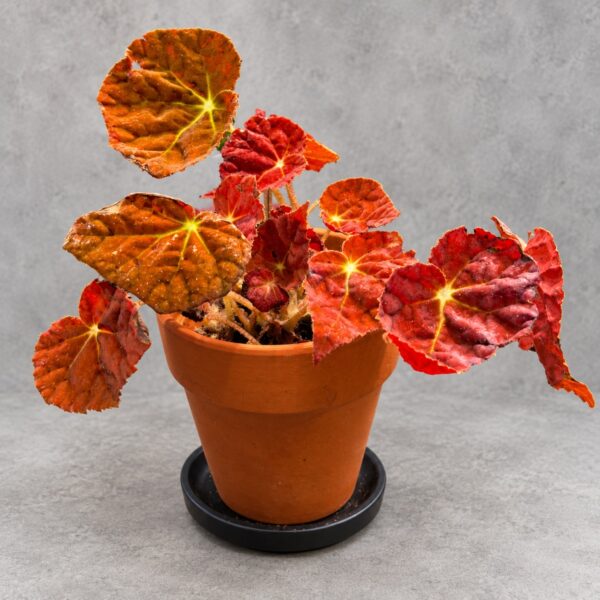
Begonia 'Autumn Ember'
Begonia 'Autumn Ember'
HK$288.00
Hong Kong delivery · Causeway Bay pickup
For Hong Kong homes and offices. Stock and pricing follow the product page.
IN STORE NOW
Plants for this guide
Related plants in stock now — live prices, delivery or Causeway Bay pickup.
FREE PLANT ADVICE
Send us a photo before you change anything
WhatsApp a photo of the plant and your window light. Our Causeway Bay team will suggest care steps or plants that suit your space.
STORE · CAUSEWAY BAY
4/F, 39 Yiu Wa Street, Causeway Bay
Daily 12:30–8:00pm · ~3 min walk from Times Square
Map & directionsPlant Care