
How to Care for Begonia Arabian Sunset in Hong Kong | Plantjai

Plantjai 植仔 · Care Encyclopedia
Begonia Arabian Sunset
Begonia 'Arabian Sunset' 阿拉伯落日秋海棠
Hong Kong care guide — useful before you buy and after it arrives.
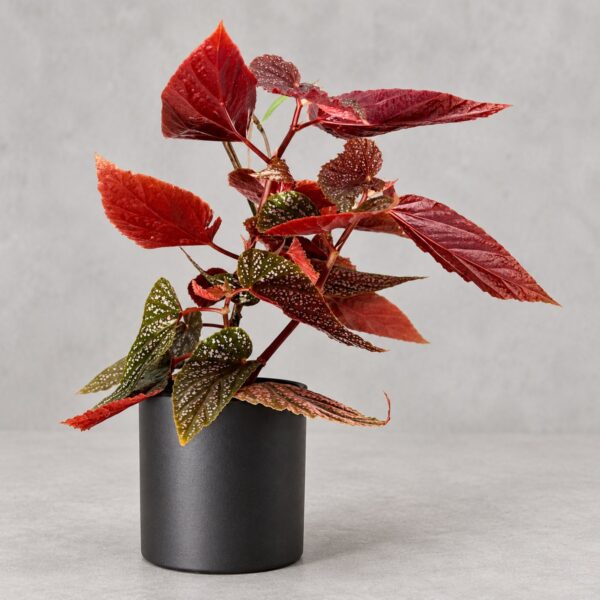
Shop this plantDark green and wine-red bicolour leaves with pink blooms — a miniature shrub that captures a desert sunset.
Origin & characteristics
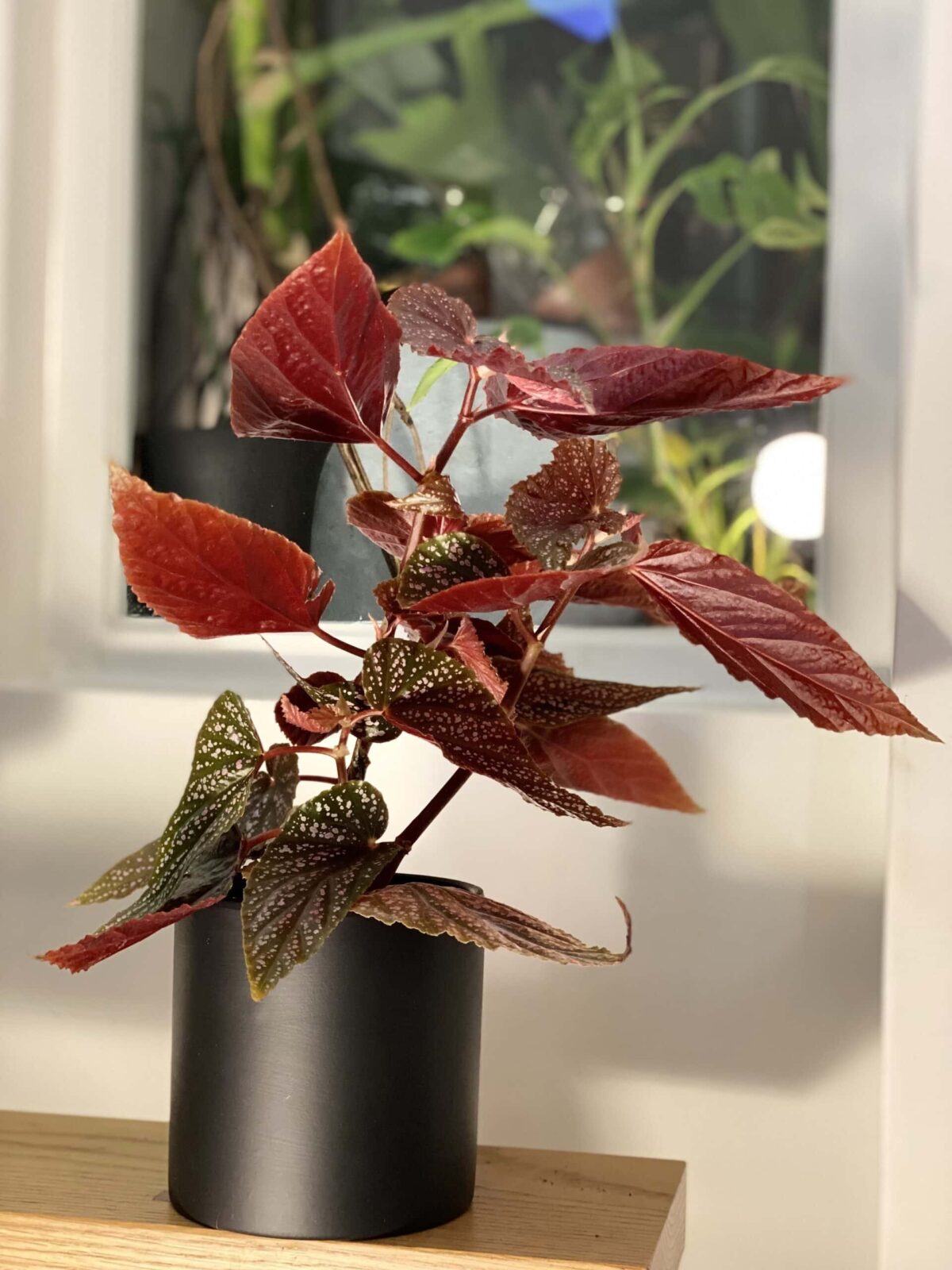
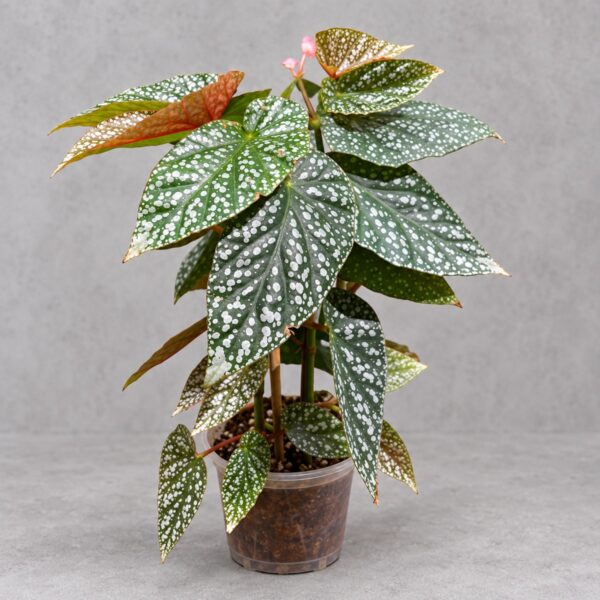
Arabian Sunset Begonia is a hybrid bred in 1992, belonging to the "mallet-type" branch of cane begonias. It grows in a miniature shrub form, with asymmetrical leaves that are deep blue-green to olive on top with a dark wine-red halo along the edges, while the underside is fully wine-red, and the leaf margins curl gently in a slight wave. Its most eye-catching feature is the clusters of bright pink flowers that form a striking contrast against the dark foliage — the overall colour palette evokes the dusky sky of an Arabian desert sunset.
Light
Arabian Sunset needs partial shade to bright, diffused light. Gentle direct morning light (from an east-facing window) is acceptable, but harsh midday sun must always be avoided.
- Ideal placement: east- or north-facing windowsill; south-facing windows need a sheer curtain or a distance of 1–2 metres from the window
- Adequate light: deep leaf colour, prominent wine-red halo, frequent flowering
- Too much light: leaf edges scorch and become brittle, colour fades; too little light: the plant becomes loose and leggy, leaf colour shifts toward plain green, flowering decreases
💡 If leaf edges start drying out, this can signal either excess light or humidity that's too low — adjust the plant's position accordingly.
Watering
Follow a "let it dry through, then water" strategy: wait until the soil is dry roughly 3–5 cm down before watering, then empty any standing water after a thorough soak.
- Growing season (spring–summer): roughly every 5–7 days, depending on weather
- Dormant season (autumn–winter): roughly every 7–10 days, watering once the soil surface is slightly dry
⚠️ Note: Arabian Sunset's stems are relatively slender and delicate, and excess moisture easily leads to root rot. Always ensure the growing medium drains well, and never let water sit in the saucer. Water along the pot's edge as much as possible, avoiding prolonged leaf wetness.
Soil & pot
Soil recipe
Needs a well-draining, organic-matter-rich medium:
- Coco coir or peat moss 50%
- Coarse sand or perlite 25%
- Quality potting soil 25%
Adding a small amount of bark chip (about 10%) improves aeration. Maintain pH between 6.0 and 7.5.
Pot selection
- Must have drainage holes; terracotta or plastic both work
- Plants typically reach 30–40 cm tall, suiting small to medium pots
- Given its somewhat shrub-like growth habit, a wide-mouthed pot allows it to spread naturally
- Repot once a year in spring, going up one pot size
Temperature & humidity
| Factor | Ideal range | Notes |
|---|---|---|
| Temperature | 15–27°C | Tolerates 4–27°C; growth stalls below 10°C |
| Humidity | 50–70% | Higher humidity produces richer leaf colour |
- Hong Kong's climate generally suits this plant well; watch for ventilation in summer, and keep away from AC vents in winter
- Below 50% humidity, leaf edges easily dry out. Occasional misting (in the morning, allowing leaves to dry during the day) or a pebble tray both help
- Grouping plants together helps raise local humidity, but ensure good airflow
Common problems
| Issue | Likely cause | What to do |
|---|---|---|
| Dry, brittle leaf edges | Humidity too low or light too strong | Increase humidity, move to a more shaded spot |
| Soft stems, blackened roots | Overwatering causing root rot | Reduce watering, check drainage, trim roots and repot if needed |
| Faded leaf colour, wine-red halo disappearing | Insufficient light | Move closer to a window, increase diffused light |
| Growth stalling, leaves shrinking | Temperature too low or nutrients insufficient | Move to a warmer spot, apply diluted liquid fertiliser every two weeks during the growing season |
| White powdery coating on leaves | Powdery mildew | Trim affected leaves, improve ventilation, avoid leaf moisture |
How to explain to customers
"Arabian Sunset has such a beautiful name — the leaves really do capture that sunset feeling, dark green with a wine-red edge, and then those pink flowers on top give it real exotic flair! Just remember not to overwater this one — the stems are quite delicate, and root rot is a real risk. Let the soil dry out before watering. A partial-shade spot with diffused light is perfect."
Fun facts
Arabian Sunset is often confused with another variety called "Burning Bush Begonia," but Arabian Sunset is noticeably smaller — almost like a miniature version. Some enthusiasts note that its delicate stem structure even bears a resemblance to certain native Bornean begonia species.
Keywords
Begonia, cane begonia, mallet-type begonia, Arabian Sunset, dark green leaves, wine-red edge, pink flowers, partial shade, well-draining soil, moderate humidity, miniature shrub, Plantjai
參考資料(想知來源可展開)
References
- American Begonia Society. Cane-like Begonias. https://www.begonias.org/
- RHS. Begonias as Houseplants. https://www.rhs.org.uk/plants/begonias/houseplants
- ASPCA. Begonia – Toxic and Non-Toxic Plants. https://www.aspca.org/pet-care/animal-poison-control/toxic-and-non-toxic-plants/begonia
⚠️ Toxicity warning: Arabian Sunset Begonia contains soluble calcium oxalate crystals, toxic to cats, dogs, and children. Ingestion may cause oral irritation, drooling, and vomiting — keep it out of reach of pets and children.
In-depth care guide
Introduction
Arabian Sunset Begonia is a hybrid first bred in 1992, belonging to the "mallet-type" branch within the cane begonia group — a subgroup named for the mallet-like shape of their asymmetrical leaves. Unlike the tall, upright growth typical of many cane begonias, Arabian Sunset develops a distinctly compact, shrub-like form, making it feel more like a miniature ornamental bush than a typical trailing or climbing begonia. Its foliage displays a dramatic bicolour effect: the upper leaf surface ranges from deep blue-green to olive, edged with a dark wine-red halo, while the entire underside is a rich wine-red. The leaf margins curl gently, adding a subtle wave texture that catches the light attractively.
The plant's common name comes from this striking colour combination — when the dark foliage is paired with clusters of bright pink flowers, the overall effect evokes the warm, dusky tones of a desert sunset, giving the plant real presence even without its blooms.
Light requirements
Arabian Sunset does best in partial shade to bright, diffused light. It can tolerate gentle direct morning sun from an east-facing window, but harsh midday sun — particularly the intense summer sun common in Hong Kong — should always be avoided, as it will scorch the delicate foliage. An east- or north-facing windowsill provides the ideal balance; if a south-facing window is the only option, keep the plant back from the glass by 1–2 metres or use a sheer curtain to soften the light.
Under adequate light, the leaf colour stays deep and rich, the wine-red halo along the leaf edges remains prominent, and the plant flowers frequently. Too much light causes the leaf edges to scorch and turn brittle, with the overall colour fading; too little light, on the other hand, causes the plant to become loose and leggy, with the wine-red tones shifting toward plain green and flowering slowing considerably. If you notice leaf edges beginning to dry out, this can be a sign of either excess light or insufficient humidity — observe the plant closely to determine which factor needs adjusting.
Watering technique
Follow a "let it dry through, then water" approach, waiting until the soil is dry to a depth of roughly 3–5 cm before watering thoroughly, then emptying any standing water from the saucer. During the growing season in spring and summer, this typically means watering roughly every 5–7 days depending on the weather; in the dormant autumn–winter period, stretch this to roughly every 7–10 days, watering once the soil surface feels slightly dry.
Arabian Sunset's stems are relatively slender and delicate compared with sturdier cane begonia varieties, making the plant particularly vulnerable to root rot from excess moisture. Always ensure the growing medium drains freely, and never allow water to pool in the saucer for extended periods. When watering, direct the water along the pot's edge rather than over the centre of the plant, and try to avoid prolonged wetness on the leaves, which increases the risk of fungal problems.
Soil and potting
A well-draining, organic-matter-rich medium works best: coco coir or peat moss, coarse sand or perlite, and quality potting soil in roughly a 50:25:25 ratio, with a small addition of bark chip (about 10%) for extra aeration. Maintain a pH between 6.0 and 7.5.
Any pot with drainage holes works well, whether terracotta or plastic. Given the plant's typical mature size of 30–40 cm, small to medium pots are usually sufficient. Because of its somewhat shrub-like, spreading growth habit, a wide-mouthed pot allows the plant to develop its natural form more freely than a narrow, deep container would. Repot once a year in spring, moving up just one pot size at a time.
Temperature and humidity
Arabian Sunset grows best between 15°C and 27°C, tolerating a broader range of 4–27°C, though growth stalls noticeably below 10°C. Humidity should ideally sit between 50% and 70% — richer, more vibrant leaf colour tends to develop under higher humidity conditions.
Hong Kong's climate generally suits this plant well through most of the year. In summer, pay attention to ventilation to prevent overly stagnant, humid air around the plant; in winter, keep it away from air conditioning vents, which dry out the surrounding air considerably. If humidity drops below roughly 50%, leaf edges easily begin to dry out — occasional misting (ideally in the morning, so leaves have time to dry during the day) or a pebble tray can help. Grouping the plant with others creates a beneficial shared microclimate, but always maintain good airflow to prevent fungal issues from taking hold.
Common problems in detail
Dry, brittle leaf edges usually point to either low humidity or excessive light exposure — increasing humidity and moving the plant to a slightly more shaded position typically resolves this.
Soft stems with blackened roots are a clear sign of overwatering and developing root rot — cut back on watering immediately, check that the pot drains properly, and trim away affected roots before repotting into fresh soil if the damage is significant.
Fading leaf colour with the wine-red halo disappearing almost always indicates insufficient light — moving the plant closer to a window or increasing its exposure to diffused light should restore the vibrant colouring over subsequent new growth.
Stalled growth with shrinking leaves suggests either temperatures too low for comfortable growth or a nutrient deficiency — move the plant to a warmer spot and apply a diluted liquid fertiliser every two weeks during the active growing season.
White powdery coating on leaves signals powdery mildew, typically triggered by poor ventilation — trim away affected leaves, improve airflow around the plant, and avoid letting water pool on the foliage.
Toxicity information
Arabian Sunset Begonia contains soluble calcium oxalate crystals throughout its tissues, toxic to cats, dogs, and children. Ingestion may cause oral irritation, drooling, and vomiting. Keep the plant well out of reach of pets and small children.
References
- American Begonia Society. Cane-like Begonias. https://www.begonias.org/
- RHS. Begonias as Houseplants. https://www.rhs.org.uk/plants/begonias/houseplants
- ASPCA. Begonia – Toxic and Non-Toxic Plants. https://www.aspca.org/pet-care/animal-poison-control/toxic-and-non-toxic-plants/begonia
- Missouri Botanical Garden. Begonia – Cane Begonia Group. Plant Finder. http://www.missouribotanicalgarden.org/PlantFinder/
Plantjai shop · In stock online
Begonia 'Arabian Sunset'
Begonia 'Arabian Sunset'
HK$298.00
Hong Kong delivery · Causeway Bay pickup
For Hong Kong homes and offices. Stock and pricing follow the product page.
IN STORE NOW
Plants for this guide
Related plants in stock now — live prices, delivery or Causeway Bay pickup.
FREE PLANT ADVICE
Send us a photo before you change anything
WhatsApp a photo of the plant and your window light. Our Causeway Bay team will suggest care steps or plants that suit your space.
STORE · CAUSEWAY BAY
4/F, 39 Yiu Wa Street, Causeway Bay
Daily 12:30–8:00pm · ~3 min walk from Times Square
Map & directionsPlant Care