
How to Care for Begonia Amelia in Hong Kong | Plantjai


Plantjai 植仔 · Care Encyclopedia
Begonia Amelia
Hong Kong care guide — useful before you buy and after it arrives.
Shop this plantSilver-flecked leaves and a cascading pink waterfall of blooms — pure magic in a hanging basket.
Origin & characteristics
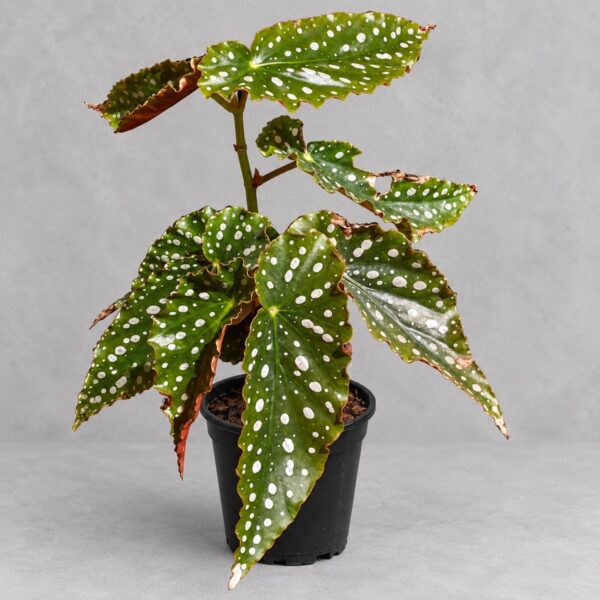
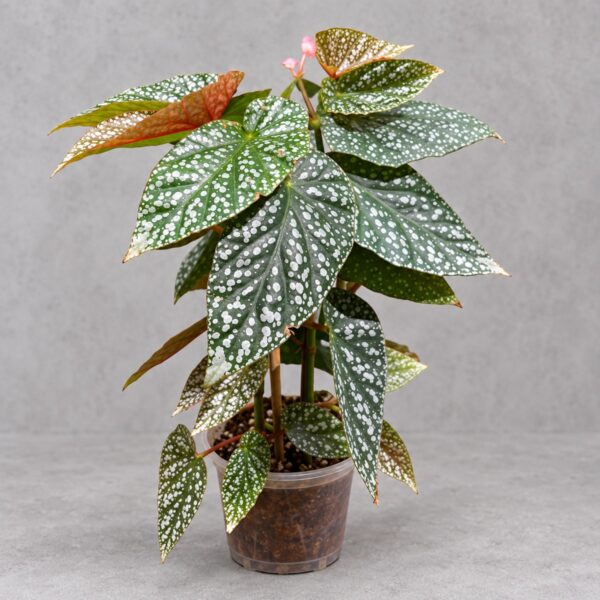
Amelia Begonia is a cane begonia hybrid bred in California in 1986. It features deep green, medium-sized leaves densely dusted with shimmering silver spots, with a long, elegant leaf shape. What makes it truly special is its trailing, spreading growth habit, making it ideal for hanging baskets — combined with continuous clusters of soft pink to white flowers, it looks like a cascading pink waterfall from a distance, making it a favourite for both foliage and floral appeal.
Light
Amelia needs bright, diffused light to keep its leaf colour vivid and encourage continuous flowering. An east- or north-facing window is ideal; if near a south-facing window, keep it within about 1 metre and use a sheer curtain to filter the light.
- Adequate light: distinct silver spots, vibrant flower colour, frequent blooming
- Insufficient light: dull leaf colour, fewer silver spots, sparse flowering, leggy stems
⚠️ Avoid harsh midday direct sun, which will scorch the leaf surface and fade the spots. If you notice persistent lower-leaf drop, this can be a sign of insufficient light.
Watering
Follow the "half-dry, then water" rule: insert a finger about 5 cm into the soil, and water once it feels dry. After watering thoroughly, empty any standing water from the saucer.
- Growing season (spring–summer): check roughly every 5–7 days, watering once dry
- Dormant season (autumn–winter): roughly every 7–10 days, keeping the soil on the slightly dry side
💡 Tip: cane begonias are somewhat more drought-tolerant than Rex begonias — brief dry spells won't kill them, but prolonged drought will cause brittle leaf tips and leaf drop. Better slightly dry than constantly wet.
Soil & pot
Soil recipe
Needs a well-draining yet moisture-retentive balanced medium:
- Quality indoor potting soil 50%
- Perlite or pumice 25%
- Coco coir or sphagnum moss 25%
Adding a little bark chip improves aeration. Keep soil pH between 6.0 and 6.5.
Pot selection
- Hanging basket: Amelia's spreading habit suits hanging baskets beautifully, with stems naturally trailing to create a waterfall effect
- Upright growing: if you prefer an upright form, use a regular pot but pinch back occasionally to encourage branching
- Must have drainage holes; plastic or terracotta both work
- Repot once a year in spring, going up only one pot size at a time
Temperature & humidity
| Factor | Ideal range | Notes |
|---|---|---|
| Temperature | 18–29°C | Tolerates 7–35°C; below 10°C risks cold damage |
| Humidity | 40–60% | Generally sufficient indoors in Hong Kong |
- Hong Kong summers are generally fine; in winter, when AC or heating is on, keep away from vents
- Below 40% humidity, leaf tips may dry out slightly — place on a pebble tray or group with other plants
- Higher humidity improves leaf appearance, but ensure good airflow to avoid fungal disease
Common problems
| Issue | Likely cause | What to do |
|---|---|---|
| Leggy stems, sparse leaves | Insufficient light or lack of pruning | Move closer to a window, pinch back to encourage branching |
| Dry, brittle leaf tips | Humidity too low or hard water | Increase humidity, switch to rainwater or filtered water |
| Few or no flowers | Insufficient light or excess nitrogen | Increase light, switch to a higher phosphorus-potassium fertiliser |
| Leaves yellowing, roots blackening | Overwatering causing root rot | Reduce watering, check drainage, repot and trim roots if needed |
| White powdery coating on leaves | Powdery mildew | Trim affected leaves, improve ventilation, use a fungicide if needed |
How to explain to customers
"What's lovely about Amelia is all the pink flowers she produces, along with those silver-flecked leaves — gorgeous hanging by a window! Just remember to water once the soil is dry, not every day — these begonias hate soggy roots. A hanging basket suits her perfectly, with the stems cascading down like a waterfall!"
Fun facts
Amelia Begonia was bred in 1986 by Californian horticulturist Tsamtsis — its flower language is said to be "caution," a gentle reminder that it carries mild toxicity, so care for it thoughtfully and place it out of reach.
Keywords
Begonia, cane begonia, Amelia Begonia, silver-spotted begonia, hanging basket plant, flowering begonia, foliage plant, bright diffused light, well-draining soil, moderate humidity, Plantjai
參考資料(想知來源可展開)
References
- American Begonia Society. Cane-like Begonias. https://www.begonias.org/
- Missouri Botanical Garden. Begonia – Cane Begonia Group. Plant Finder. http://www.missouribotanicalgarden.org/PlantFinder/
- ASPCA. Begonia – Toxic and Non-Toxic Plants. https://www.aspca.org/pet-care/animal-poison-control/toxic-and-non-toxic-plants/begonia
⚠️ Toxicity warning: Amelia Begonia contains soluble calcium oxalate crystals, toxic to cats, dogs, and children. Ingestion may cause oral pain, drooling, vomiting, and difficulty swallowing — keep it well out of reach of pets and children.
In-depth care guide
Introduction
Amelia Begonia is a cane begonia hybrid bred in California in 1986, prized for its combination of ornamental foliage and near-continuous flowering. Its deep green, medium-sized leaves are densely covered in shimmering silver spots, catching the light beautifully whenever the plant is disturbed or the air moves. What truly sets Amelia apart from many other cane begonias, though, is its naturally spreading, trailing growth habit — rather than growing upright like most of its relatives, Amelia arches and cascades, making it a natural fit for hanging baskets where its trailing stems can flow freely downward, dotted along their length with clusters of soft pink to white blooms.
The overall effect, when well grown, is genuinely striking: from a distance, a mature hanging specimen looks like a gentle pink waterfall pouring from its basket, softened by the silver-flecked green foliage beneath. This dual appeal — foliage interest paired with sustained flowering — has made Amelia a long-standing favourite among begonia collectors and casual plant lovers alike.
Light requirements
Amelia needs bright, diffused light to maintain both its leaf colour and its flowering performance. An east- or north-facing window provides the gentle, consistent light this variety thrives on; if a south-facing window is the only option, keep the plant within about a metre of it, or filter the light through a sheer curtain to prevent scorching.
Under adequate light, you'll see distinctly visible silver spots on the leaves, vibrant pink flower colour, and frequent, sustained blooming throughout the growing season. When light is insufficient, the leaf colour dulls, silver spots become sparse or fade almost entirely, flowering slows to a trickle, and the stems become loose and leggy rather than maintaining a tidy, cascading form. Persistent lower-leaf drop is often an early warning sign that the plant isn't receiving quite enough light, even before other symptoms appear. Strong direct midday sun, on the other hand, will scorch the leaf surface and fade the silver spotting — a filtered, bright spot is always the better choice over intense direct exposure.
Watering technique
Follow a "half-dry, then water" approach: insert a finger roughly 5 cm (about two inches) into the soil, and water only once it feels dry at that depth. Always water thoroughly, letting excess flow from the drainage holes, and empty the saucer afterward.
During the active growing season in spring and summer, check roughly every 5–7 days, adjusting based on how quickly the soil dries in your specific conditions. In the dormant autumn–winter period, stretch this out to roughly every 7–10 days, keeping the soil on the slightly dry side. Cane begonias like Amelia are somewhat more drought-tolerant than Rex begonias — a brief dry spell won't cause immediate harm, though prolonged drought will eventually cause brittle, crisp leaf tips and leaf drop. As a general rule, it's always safer to err on the side of slightly too dry rather than constantly wet, since overwatering and the resulting root rot are far more likely to kill this plant than underwatering ever would.
Soil and potting
A balanced medium that's both well-draining and reasonably moisture-retentive works best: quality indoor potting soil, perlite or pumice, and coco coir or sphagnum moss in roughly a 50:25:25 ratio, with a small amount of bark chip added for extra aeration. Aim for a soil pH between 6.0 and 6.5.
Given Amelia's naturally spreading habit, a hanging basket is the ideal display choice, allowing the stems to trail and cascade freely for maximum visual impact. If you'd prefer a more upright form instead, a standard pot works fine, but you'll need to pinch back the growing tips occasionally to encourage branching rather than letting the stems sprawl. Whichever pot style you choose, drainage holes are essential — both plastic and terracotta pots work, though terracotta will dry out somewhat faster. Repot once a year in spring, moving up only one pot size at a time to avoid excess soil volume that could retain too much moisture.
Temperature and humidity
Amelia grows comfortably between 18°C and 29°C, and can tolerate a broader range of 7–35°C for shorter periods, though sustained temperatures below 10°C risk cold damage. Humidity should ideally sit between 40% and 60%, a range that Hong Kong's indoor environments generally provide naturally through most of the year.
Hong Kong summers typically pose no humidity issues, but in winter, when air conditioning or heating is running, keep the plant away from direct airflow from either source, since both dry out the surrounding air considerably. If humidity drops below roughly 40%, leaf tips may begin to dry out slightly — placing the pot on a pebble tray or grouping it with other plants can help raise the surrounding humidity. While higher humidity generally improves leaf appearance and vibrancy, always pair it with good airflow, since stagnant, overly humid conditions can encourage fungal issues.
Common problems in detail
Leggy stems with sparse leaves almost always trace back to insufficient light or a lack of regular pinching — moving the plant closer to a light source and pinching back growing tips will restore a fuller, more compact form over time.
Dry, brittle leaf tips typically indicate low humidity or hard water; raising ambient humidity and switching to rainwater or filtered water usually resolves this within a few weeks.
Reduced or absent flowering points to either insufficient light or an imbalanced fertiliser regime too heavy in nitrogen — increasing light exposure and switching to a bloom-boosting fertiliser higher in phosphorus and potassium should bring flowering back.
Yellowing leaves with blackened roots signal overwatering and the onset of root rot — cut back on watering immediately, check that the pot drains properly, and if the problem is advanced, repot into fresh soil after trimming away any affected roots.
White powdery coating on leaves indicates powdery mildew, usually triggered by poor air circulation combined with humid conditions — trim away affected leaves, improve ventilation around the plant, and apply a fungicide if the infection persists.
Toxicity information
Amelia Begonia contains soluble calcium oxalate crystals throughout its tissues. It's toxic to cats, dogs, and children if ingested, potentially causing oral pain, excessive drooling, vomiting, and difficulty swallowing. Keep the plant well out of reach of curious pets and small children, and consider a hanging display specifically to reduce accidental access.
References
- American Begonia Society. Cane-like Begonias. https://www.begonias.org/
- Missouri Botanical Garden. Begonia – Cane Begonia Group. Plant Finder. http://www.missouribotanicalgarden.org/PlantFinder/
- ASPCA. Begonia – Toxic and Non-Toxic Plants. https://www.aspca.org/pet-care/animal-poison-control/toxic-and-non-toxic-plants/begonia
- RHS. Begonias as Houseplants. https://www.rhs.org.uk/plants/begonias/houseplants
Plantjai shop · In stock online
Begonia 'Amelia'
Begonia 'Amelia'
HK$168.00
Hong Kong delivery · Causeway Bay pickup
For Hong Kong homes and offices. Stock and pricing follow the product page.
IN STORE NOW
Plants for this guide
Related plants in stock now — live prices, delivery or Causeway Bay pickup.
FREE PLANT ADVICE
Send us a photo before you change anything
WhatsApp a photo of the plant and your window light. Our Causeway Bay team will suggest care steps or plants that suit your space.
STORE · CAUSEWAY BAY
4/F, 39 Yiu Wa Street, Causeway Bay
Daily 12:30–8:00pm · ~3 min walk from Times Square
Map & directionsPlant Care