
How to Care for Begonia Alamo Ole in Hong Kong | Plantjai


Plantjai 植仔 · Care Encyclopedia
Begonia Alamo Ole
Hong Kong care guide — useful before you buy and after it arrives.
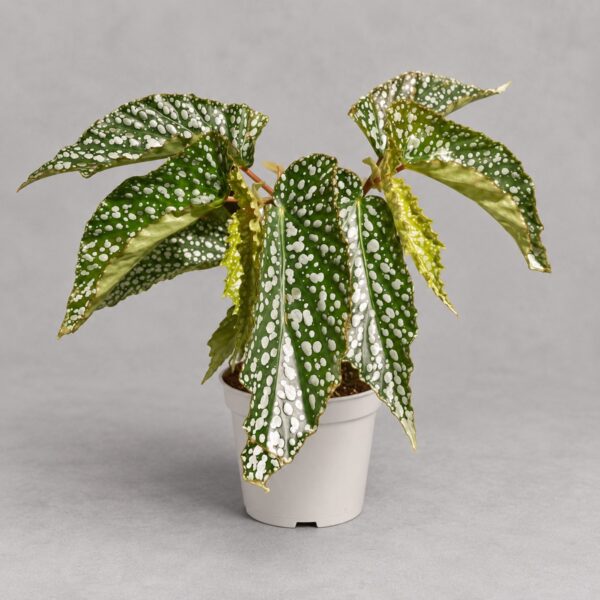
Shop this plantAngel-wing leaves scattered with shimmering silver stars — a real showpiece for your indoor jungle.
Origin & characteristics
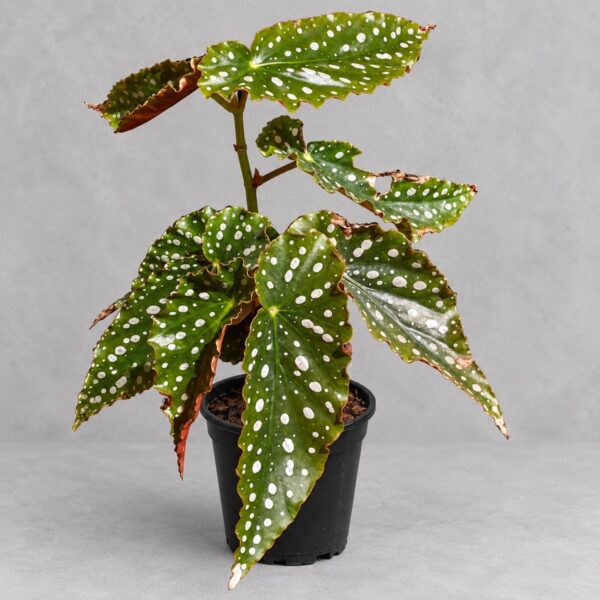
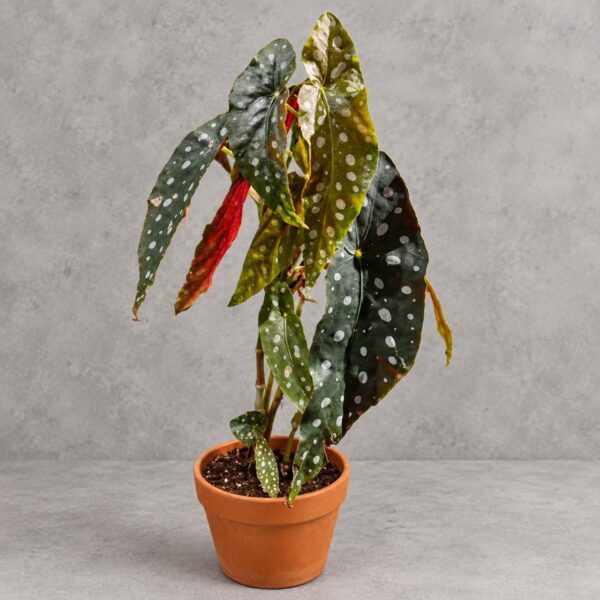
Alamo Ole Begonia is a cultivated hybrid within the cane begonia (Angel Wing Begonia) group. Its standout feature is the light green, wing-shaped leaves densely dusted with metallic silver spots — from a distance, it genuinely looks like a leaf full of scattered stars. The growth habit is compact and elegant, with mature plants reaching up to 90 cm tall; as it matures, the plant develops a fuller, more upright form, with leaves that hang slightly to give a sense of movement and layered texture, making it a fantastic centrepiece for a jungle-style indoor plant collection.
⚠️ Contains soluble calcium oxalate crystals — toxic to cats, dogs, and children.
Light
Alamo Ole Begonia likes bright, diffused light. An east- or north-facing windowsill is ideal, giving it gentle morning light without the risk of sunburn. If placed near a south-facing window, position it 1–2 metres back or use a sheer curtain to filter the light.
⚠️ Note: direct sunlight will fade the silver spots and scorch the leaf edges; light that's too weak causes leggy growth, dull leaf colour, and fewer spots. Rotate the pot every week or two so all sides of the plant receive even light.
Watering
Follow the "let it dry, then water thoroughly" principle. Insert a finger about 2–3 cm into the soil; water once it feels dry. Water thoroughly until it flows from the drainage holes, and empty any standing water from the saucer after 15 minutes.
- Spring–summer (active growth): roughly every 5–7 days, adjusting for weather and humidity
- Autumn–winter (slower growth): roughly every 7–10 days, keeping the soil on the slightly dry side
⚠️ Avoid letting water sit in the saucer — although cane begonias tolerate a bit of moisture, prolonged soggy roots easily lead to rot. Also avoid wetting the leaves when watering, to reduce the risk of fungal infection.
Soil & pot
Soil recipe
Needs a well-draining, airy medium. Recommended recipe:
- Quality indoor potting peat 50%
- Perlite or pumice 30%
- Coco coir 20%
Alternatively, use African violet potting mix with a little extra perlite added. Ideal pH is 6.0–6.5.
Pot selection
- Must have drainage holes
- Plastic or terracotta both work; terracotta dries faster and needs more frequent watering
- Repot once every 1–2 years in spring; the new pot should be only 2–3 cm larger in diameter than the old one, to avoid excess soil that can hold too much moisture
Temperature & humidity
| Factor | Ideal range | Minimum tolerance |
|---|---|---|
| Temperature | 18–27°C | 10°C |
| Humidity | 50–70% | 40% |
- Hong Kong's spring and summer are generally fine; in autumn/winter, when heating is on, keep the plant away from AC vents and heaters
- Below 40% humidity, leaf edges easily dry out and become brittle. Place the pot on a pebble tray with water (keeping the pot base above the water level), or group it with other plants to raise surrounding humidity
- Avoid spots with frequent drafts or fluctuating temperatures
Common problems
| Issue | Likely cause | What to do |
|---|---|---|
| Dry, brittle leaf edges | Humidity too low or water too hard | Increase surrounding humidity, switch to filtered water or rainwater |
| Leggy growth, sparse leaves along stem | Insufficient light | Move to a brighter spot |
| Leaves yellowing and dropping | Overwatering causing root rot | Reduce watering frequency, check drainage |
| Silver spots fading | Light too strong or too weak | Adjust placement |
| Grey mould on leaf surface | Fungal infection (botrytis) | Trim affected leaves, improve ventilation, avoid wetting leaves |
How to explain to customers
"What makes Alamo Ole so special is those silver star-like spots — it brings real rainforest vibes into your home! Just remember not to put it anywhere with harsh direct sun, or the silver spots will fade. For watering, it's better to keep it a touch on the dry side than to overwater — just water once the topsoil feels dry."
Fun facts
The asymmetrical leaves of cane begonias are a defining trait of the family — each leaf has noticeably different-sized halves on either side, an adaptation that evolved to help the plant capture more light on the rainforest floor!
Keywords
Begonia, cane begonia, Angel Wing Begonia, silver-spotted leaves, Alamo Ole, indoor plant, foliage plant, bright diffused light, well-draining soil, moderate humidity, Plantjai
參考資料(想知來源可展開)
References
- American Begonia Society. Cane-like Begonias. https://www.begonias.org/
- Missouri Botanical Garden. Begonia – Cane Begonia Group. Plant Finder. http://www.missouribotanicalgarden.org/PlantFinder/
- North Carolina State Extension. Begonia spp. Toxic Plants. https://plants.ces.ncsu.edu/plants/begonia/
⚠️ Toxicity warning: Alamo Ole Begonia contains soluble calcium oxalate crystals, toxic to cats, dogs, and children. Ingestion may cause oral irritation, drooling, and vomiting — keep it out of reach of pets and children.
In-depth care guide
Introduction
Alamo Ole Begonia is a cultivated hybrid within the cane begonia group — the same family commonly known as "angel wing begonias" for their distinctive wing-shaped, asymmetrical leaves. What sets Alamo Ole apart is its light green foliage densely dusted with metallic silver spots, giving each leaf a starry, almost otherworldly appearance that photographs beautifully and draws the eye from across a room. Combined with its naturally elegant, slightly cascading growth habit, this begonia has become a favourite among collectors building out a lush, jungle-style indoor plant display.
Cane begonias as a group get their name from their bamboo-like jointed stems, which support tall, often multi-branched growth. Alamo Ole follows this pattern, developing a compact but upright form that, with age, can reach roughly 90 cm in height. As the plant matures, individual leaves tend to hang slightly downward from the stem, creating a layered, dynamic silhouette rather than a flat, static one — a detail that makes mature specimens noticeably more striking than young starter plants.
Light requirements
Alamo Ole Begonia does best in bright, diffused light, ideally from an east- or north-facing window where it can enjoy gentle morning sun without the risk of leaf burn. If a south-facing window is the only option, position the plant 1–2 metres back from the glass, or hang a sheer curtain to soften the intensity of the light reaching it.
Getting the light balance right matters more for this variety than for many other foliage plants, because both its growth form and its signature silver spotting are directly affected by light levels. Too much direct sun causes the silver spots to fade and can scorch leaf margins, permanently damaging the plant's appearance. Too little light, on the other hand, causes leggy, stretched growth with widely spaced leaves, dull colouring, and noticeably fewer silver spots on new growth — essentially undoing the very trait that makes this cultivar special. Rotating the pot every week or two ensures all sides of the plant receive even light exposure, encouraging balanced, symmetrical growth rather than a lopsided form leaning toward the light source.
Watering technique
Follow a "let it dry, then water thoroughly" approach: check the soil by inserting a finger 2–3 cm deep, and water only once it feels dry at that depth. When you do water, do so generously, letting water flow freely from the drainage holes to flush the root zone, then empty any water that collects in the saucer within about 15 minutes to prevent the roots from sitting in standing water.
During the active growing season of spring and summer, this typically works out to watering roughly every 5–7 days, though you should adjust based on your specific conditions — a sunnier, breezier spot will dry out faster than a shaded, still corner. In the slower-growing autumn and winter months, stretch this out to roughly every 7–10 days, erring toward keeping the soil slightly on the dry side. Cane begonias have somewhat fleshy, water-storing stems, which gives them a bit more drought tolerance than many other houseplants, but this same trait makes them quite vulnerable to overwatering — soggy, waterlogged roots are one of the most common causes of decline in this group. It's also worth avoiding splashing water directly onto the leaves when watering, since wet foliage combined with poor airflow creates ideal conditions for fungal issues like botrytis (grey mould).
Soil and potting
A well-draining, airy soil mix is essential: a combination of quality indoor potting peat, perlite or pumice, and coco coir in roughly a 50:30:20 ratio works well, or you can use a commercial African violet potting mix with a bit of extra perlite mixed in for improved drainage. Aim for a slightly acidic pH between 6.0 and 6.5.
Any pot with drainage holes will work, whether plastic or terracotta — terracotta dries out somewhat faster and will require slightly more frequent watering to compensate. Repot roughly once every one to two years in spring, choosing a new pot only about 2–3 cm larger in diameter than the current one. Cane begonias generally prefer being slightly pot-bound over sitting in an oversized container, since excess soil volume retains more moisture than the roots can use, increasing the risk of rot.
Temperature and humidity
Alamo Ole Begonia grows comfortably between 18°C and 27°C, with a minimum tolerance around 10°C. Humidity should ideally sit between 50% and 70%, though it can tolerate levels as low as 40% for short periods. Hong Kong's naturally humid spring and summer generally pose no issues, but during autumn and winter, when heating or air conditioning is more likely to be running, keep the plant well away from direct airflow from either source, since both dramatically dry out the surrounding air and can cause leaf edges to crisp and brown.
If ambient humidity drops below roughly 40%, consider setting the pot on a pebble tray filled with water — keeping the pot's base elevated above the waterline rather than sitting directly in it — or grouping the plant with other humidity-loving specimens to create a small, shared microclimate. Also avoid placing the plant in spots with frequent drafts or significant temperature swings, such as near frequently opened doors or windows, since sudden fluctuations stress the plant and can trigger leaf drop.
Common problems in detail
Dry, brittle leaf edges most often point to humidity that's too low, or occasionally to hard tap water leaving mineral deposits on the leaf margins over time — increasing humidity and switching to filtered water or rainwater usually resolves this.
Leggy growth with sparse leaves is a classic sign of insufficient light; moving the plant to a brighter (but still indirect) location will encourage more compact, densely leaved growth going forward.
Yellowing and dropping leaves typically indicates overwatering and the early stages of root rot — cut back on watering frequency immediately and check that the pot is draining properly, without any blocked or insufficient drainage holes.
Fading silver spots can result from either too much or too little light, so this symptom requires a bit of observation to diagnose correctly — check whether the plant has been recently moved, and adjust placement accordingly.
Grey mould on leaves signals fungal infection, usually botrytis, favoured by poor air circulation and prolonged leaf moisture. Trim away affected leaves promptly, improve airflow around the plant, and be more careful to keep water off the foliage during future waterings.
Toxicity information
Alamo Ole Begonia, like most begonias, contains soluble calcium oxalate crystals throughout its tissues, particularly concentrated in the stems and roots. These crystals are toxic to cats, dogs, and children if chewed or ingested, causing oral irritation, excessive drooling, and vomiting. Keep the plant well out of reach of curious pets and small children, and consider a hanging or elevated display if pets are prone to nibbling on houseplants.
References
- American Begonia Society. Cane-like Begonias. https://www.begonias.org/
- Missouri Botanical Garden. Begonia – Cane Begonia Group. Plant Finder. http://www.missouribotanicalgarden.org/PlantFinder/
- North Carolina State Extension. Begonia spp. Toxic Plants. https://plants.ces.ncsu.edu/plants/begonia/
- ASPCA. Begonia – Toxic and Non-Toxic Plants. https://www.aspca.org/pet-care/animal-poison-control/toxic-and-non-toxic-plants/begonia
Plantjai shop · In stock online
Begonia 'Alamo Ole'
Begonia 'Alamo Ole'
HK$298.00
Hong Kong delivery · Causeway Bay pickup
For Hong Kong homes and offices. Stock and pricing follow the product page.
IN STORE NOW
Plants for this guide
Related plants in stock now — live prices, delivery or Causeway Bay pickup.
FREE PLANT ADVICE
Send us a photo before you change anything
WhatsApp a photo of the plant and your window light. Our Causeway Bay team will suggest care steps or plants that suit your space.
STORE · CAUSEWAY BAY
4/F, 39 Yiu Wa Street, Causeway Bay
Daily 12:30–8:00pm · ~3 min walk from Times Square
Map & directionsPlant Care