
How to Care for Adiantum capillus-veneris in Hong Kong | Plantjai


Plantjai 植仔 · Care Encyclopedia
Adiantum Capillus Veneris
Adiantum capillus-veneris 黑骨芒/鐵綫蕨
Hong Kong care guide — useful before you buy and after it arrives.
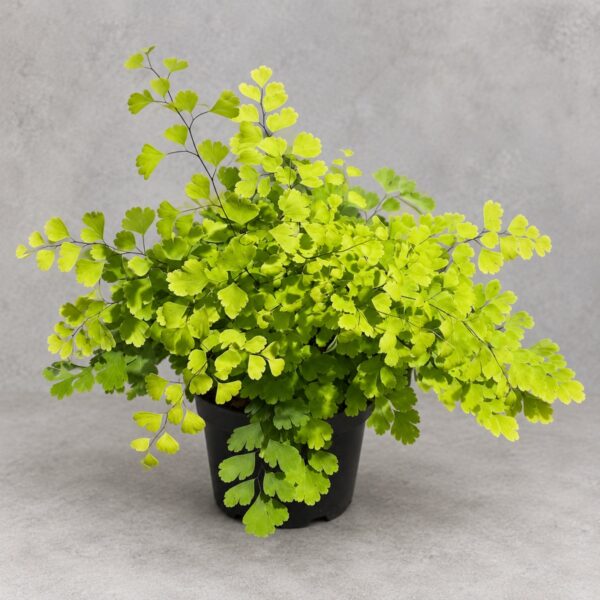
Shop this plantGlossy black petioles paired with fresh green fronds — an elegant classic fern, delicate as a maiden's hair.
Origin & characteristics
Southern Maidenhair Fern is a perennial herbaceous fern in the Pteridaceae family, native to Taiwan and widely distributed across tropical and subtropical regions worldwide. It typically grows on damp rocks along streams and valleys, and serves as an indicator plant for calcareous soil. The plant reaches 10–60 cm tall, with a short, creeping rhizome. Its most distinctive feature is the glossy black, wire-thin petiole, paired with fresh green, papery, pinnately compound fronds, giving it a delicate, flowing elegance. The black, wire-like petiole is what gives it the name "maidenhair fern" in English.
Light
Prefers bright, diffused light, avoiding direct sunlight. Light too strong causes the fronds to yellow and even die; light too weak leads to poor growth. Best placed near an east- or north-facing window, or somewhere bright indoors. Can accept supplemental artificial light, and adjust gentle light according to frond condition.
Watering
Keep the soil moist but not overly wet. Water once the soil surface starts drying out, Check the growing medium before watering rather than following a fixed schedule. In dry weather, mist the leaves and surrounding area regularly to increase humidity. Note: if the soil has dried out and the plant is showing signs of water stress, don't water heavily all at once — water gradually in smaller amounts, letting the soil absorb it progressively.
Soil & pot
Likes a well-aerated, moisture-retentive, neutral-to-alkaline, humus-rich, well-draining soil. A recommended recipe: peat moss mixed with perlite, or tree fern fibre, sphagnum moss, and peat moss combined, with added gravel or coarse sand for drainage. A small amount of crushed eggshell or lime can be added to increase calcium content. Choose a shallow pot, since the root system is shallow. Drainage holes at the base are essential.
Temperature & humidity
Ideal growing temperature is 13–25°C; shouldn't exceed 35°C in summer, and should stay above 5°C in winter. Maintain higher ambient humidity — dry air is its biggest enemy! It's recommended to use a larger saucer beneath the pot, filled with pebbles and water, to surround the plant with ambient moisture (making sure the pot's base doesn't touch the water directly). Regular misting helps maintain air humidity.
Common problems
- Yellowing, dropping fronds: the most common problem, usually caused by low humidity or dry air. Increase misting frequency, use the pebble tray humidification method.
- Browning frond tips: water too hard (too many minerals) or insufficient humidity. Switch to filtered water or rainwater.
- Stalled growth: temperature too low or insufficient light. Adjust ambient temperature, ensure adequate diffused light.
- Brown spots on fronds: watering splashed onto the leaf surface causing fungal infection. Water along the pot's edge, avoiding wetting the fronds.
How to explain to customers
"The black petioles on Southern Maidenhair Fern are so lovely — they flutter in the breeze just like a maiden's flowing hair! But it really hates dryness, so remember to mist it regularly — ideally keep it in a bathroom or kitchen where it's a bit more humid."
Fun facts
Southern Maidenhair Fern is an indicator plant for calcareous soil, favouring soil with lime content — adding a bit of crushed eggshell when planting helps it grow even better. This guide covers ornamental plant care only; it does not make medicinal claims.
Keywords
Southern Maidenhair Fern, Adiantum capillus-veneris, Pteridaceae, maiden's hair, black petiole, high humidity, diffused light, calcareous soil, fern, shade-tolerant plant
參考資料(想知來源可展開)
References
- Royal Botanic Gardens, Kew. Adiantum capillus-veneris L. Plants of the World Online (POWO). https://powo.science.kew.org
- Missouri Botanical Garden. Adiantum capillus-veneris. Plant Finder. https://www.missouribotanicalgarden.org
- University of Florida IFAS Extension. Maidenhair Ferns. ENH1148. https://edis.ifas.ufl.edu
In-depth care guide
One-line pitch
A stem so black it gleams paired with fresh green pinnate fronds — happy to thrive as long as humidity stays up, making it a genuinely perfect match for a Hong Kong bathroom.
Origin & characteristics
Southern Maidenhair Fern (also known as Venus's hair fern), scientifically Adiantum capillus-veneris, belongs to the Pteridaceae family, genus Adiantum. This species occurs across temperate and tropical regions worldwide.
A. capillus-veneris is widely distributed across subtropical and tropical regions globally, including the Mediterranean coast, the Middle East, India, Southeast Asia, southern China, Japan, and Central America. Its ecological niche is quite distinctive — it favours growing in damp rock crevices, cave entrances, well edges, and moist rock walls along streams, often forming green curtains on vertical limestone cliffs. This "rock-dwelling" characteristic has led it to evolve an extremely fine root system, able to cling to shallow moss layers or rock crevices to absorb water and nutrients.
The species epithet capillus-veneris comes from Latin, meaning "Venus's hair," describing the delicate, soft pinnae that resemble the goddess's flowing locks. Its Chinese common name comes from its glossy black petiole and rachis.
Physical characteristics
The rhizome is short and creeping, densely covered in small scales. Fronds are clustered, with slender, tough petioles in a deep brown to nearly black colour, glossy, reaching 15–30 cm in length. Fronds are three-to-four-pinnate compound, with the ultimate pinnae fan-shaped or kidney-shaped, edges finely toothed, texture thin and nearly translucent. New fronds emerge pale green initially, maturing to deep green. Sori are arranged in long strips along the pinnae edges, protected by an indusium.
Light
Southern Maidenhair Fern is native to shaded forest rock crevices, extremely sensitive to strong light, but still needs adequate light to maintain its fresh green frond colour.
Practical recommendations
- Ideal light level: bright, diffused light, roughly 400–800 FC (foot-candles). An east- or north-facing window is ideal.
- Avoid direct light: west- or south-facing windows need at least 1 metre of distance, or should be filtered with a sheer curtain. Direct sunlight will yellow the fronds within just a few hours.
- Low-light tolerance: it can survive in lower light, but growth will slow noticeably, with new fronds becoming thin, weak, and paler in colour.
- Hong Kong practicalities: Hong Kong summer sun is intense — recommend placing indoors 1–2 metres from a window, or near a window with a light-filtering curtain. A bathroom with a window is ideal — gentle light plus high humidity, the perfect combination.
Watering
Southern Maidenhair Fern's extremely fine root system has almost no drought tolerance. Once the soil dries out completely, the pinnae will curl and yellow within hours, and wilted fronds won't recover — they must be trimmed off and replaced by new growth.
Practical recommendations
- Core principle: keep the soil continuously lightly moist — never let it dry out completely.
- Finger test method: insert your index finger into the soil surface roughly 1–1.5 cm daily. If it feels slightly moist, no watering needed; if it feels close to dry, water immediately.
- Seasonal adjustment: in spring/summer active growth, check every 2–3 days, watering roughly every 3–4 days. In autumn/winter, growth slows, so watering every 4–5 days is fine, but check surface moisture daily.
- Soak method: if you find the soil has dried out completely and the pinnae are starting to curl, immediately submerge the whole pot in room-temperature water for 10–15 minutes, letting the soil fully absorb water, then drain the standing water from the saucer.
- Water quality: use filtered water, rainwater, or tap water left to stand overnight where possible. High-hardness tap water (TDS > 75 ppm) will gradually brown the leaf edges. A TDS meter can help test water quality.
- Hong Kong specific note: in summer if running AC, the air becomes quite dry, and soil dries out faster — check more frequently.
Soil & pot
Southern Maidenhair Fern's root system is shallow and spreads horizontally, needing a loose, aerated soil that retains moisture without waterlogging.
Recommended soil mix
- Recipe A (self-mixed): coco coir 40% + fine pine bark (¼ inch chips) 30% + worm castings 20% + coarse perlite 10%. Coco coir is more decay-resistant than peat moss and won't compact over time.
- Recipe B (high-humidity version): if you're prone to forgetting to water, increase coco coir to 50% and reduce perlite, giving the soil better long-term moisture retention.
- Recipe C (simple version): buy a ready-made fern-specific soil, and mix in an additional 20% perlite for aeration.
Pot selection
- Shallow, wide pot: Southern Maidenhair Fern's roots spread horizontally, and a deep pot can leave the lower soil layer wet for too long, causing root rot. Choose a pot that's wide in diameter but shallow in depth (such as 15 cm diameter, 10 cm depth).
- Drainage holes essential: even with drainage holes, it's recommended to line the pot's base with a layer of clay pebbles or lava rock as an additional drainage layer.
- Material: terracotta pots are breathable but dry out faster, suiting those who check moisture regularly; plastic pots retain moisture better but need more careful watering control to avoid root suffocation.
Temperature & humidity
Southern Maidenhair Fern has among the highest humidity requirements of common indoor ferns. Hong Kong's naturally high humidity is actually an inherent advantage for growing this species.
Temperature
- Ideal range: 16–24°C, completely compatible with typical Hong Kong indoor temperatures.
- Minimum tolerance: roughly 10°C; below this, growth stalls, and fronds may develop cold-damage spots.
- Maximum tolerance: roughly 30°C, but high temperatures must be paired with high humidity, or fronds will quickly dehydrate and curl.
- Hong Kong practicalities: summer AC use is fine, but absolutely avoid placing it directly in the path of an AC vent or fan. Winter indoor temperatures are generally adequate, but keep it away from heaters and radiators.
Humidity
- Ideal humidity: 60–80% RH.
- Hong Kong practicalities: Hong Kong's annual average humidity exceeds 70%, reaching as high as 90% in summer — no additional humidification needed at all. Instead, focus on ensuring good air circulation to avoid fungal issues from excessive humidity combined with stuffiness.
- When running heating in winter: humidity may drop below 40%. Recommended methods:
- Grouping plants: placing Southern Maidenhair Fern alongside other humidity-loving plants — combined transpiration can raise local humidity by 10–18%.
- Pebble tray: use a saucer larger than the pot, filled with pebbles, adding water to 1 cm below the pebble surface, placing the pot on top of the stones (the pot's base shouldn't touch the water).
- Humidifier: an ultrasonic humidifier placed 1 metre from the plant, maintaining indoor humidity at 60–70%.
- Avoid misting the fronds directly: misting only briefly raises humidity for a few minutes, and prolonged leaf moisture increases the risk of fungal infection.
Feeding
Southern Maidenhair Fern needs very little fertiliser — overfeeding will burn its delicate roots, causing yellowing leaves and stalled growth.
- Growing season (March–September): apply a balanced liquid fertiliser (such as 10-10-10) every 3–4 weeks, diluted to ¼ strength (i.e., a quarter of the recommended dose).
- Feeding method: always feed when the soil is already lightly moist — feeding into dry soil can damage the roots.
- Dormant season (October–February): stop feeding completely.
- Organic options: diluted seaweed extract (1 teaspoon per litre of water) applied monthly, or diluted compost tea (1:10 ratio).
- Dealing with salt accumulation: if leaf tips brown despite adequate humidity, this may indicate fertiliser salt accumulation in the soil. Flush the pot soil thoroughly with distilled water (using 3 times the pot's volume in water), letting salts drain out through the holes.
Pruning & propagation
Pruning
- Regularly remove dead fronds: Southern Maidenhair Fern's old fronds naturally age, turning yellow then brown. Once you see a dead frond, trim it from the base immediately — don't leave it in the pot, since dead fronds drain the plant's energy and increase disease risk.
- Don't prune green fronds: even if a frond has some minor damage, as long as it's still green it can continue photosynthesising, supporting new growth.
Propagation
Southern Maidenhair Fern propagates mainly through rhizome division, with the best timing being spring (March–April) when new shoots begin emerging:
- Water thoroughly to soak the soil, then remove the plant from its pot 2 hours later.
- Gently separate the roots, dividing the rhizome along with 3–4 groups of healthy pinnae.
- Each division must retain part of the rhizome along with healthy roots.
- Plant divisions immediately into fresh soil, maintaining high humidity (cover with a clear plastic bag or glass cloche for 7–10 days), ventilating for 30 minutes daily during this period.
- New fronds typically begin emerging within 2–3 weeks.
Common problems
| Issue | Likely cause | What to do |
|---|---|---|
| Pinnae yellowing, curling, drying out | Soil dried out completely or air too dry | Soak the pot immediately, move to a higher-humidity environment, trim off dead fronds |
| Browning frond tips | Humidity too low, water too hard, or fertiliser salt accumulation | Switch to filtered water, increase humidity, flush pot soil with distilled water to remove salts |
| Overall yellowing fronds | Overwatering causing root rot, or light too weak | Check root health — repot with root trimming if rotten; or move to a brighter spot |
| Weak, pale new fronds | Insufficient light | Move to a brighter spot, but avoid direct light |
| Brown spots on fronds | Fungal infection, usually from prolonged leaf moisture or poor ventilation | Trim affected fronds, improve air circulation, avoid misting the leaves |
| Whole plant suddenly wilting | Soil completely dried out (most common) or rhizome rot | Gently dig to check the rhizome: healthy rhizome is white/pale green and firm; rotten rhizome is brown and soft |
How to explain to customers
"The most important things for Southern Maidenhair Fern are humidity and watering — never let it dry out! Keeping it in a bathroom with a window is the perfect spot — good humidity and gentle light. Its black stems are so lovely paired with the green fronds — really elegant. Remember to poke the soil with your finger every day, and water as soon as the surface feels a bit dry — don't let it dry out completely."
Fun facts
Ancient Romans believed it was Venus's hair
The genus name Adiantum comes from Greek for “unwetted,” referring to the water-repellent fronds. The epithet capillus-veneris means “Venus’s hair.”
One of the world's most widely distributed ferns
A. capillus-veneris is one of the few ferns able to survive across multiple continents and climate zones, with a range extending from the Mediterranean coast in Europe, the Middle East, the Himalayan foothills, southern China, Japan, Southeast Asia, all the way to Mexico and Guatemala in the Americas. This wide distribution is thanks to its adaptability to limestone environments — it can effectively absorb nutrients in alkaline-leaning soil (higher pH), while many other ferns struggle with iron deficiency in such conditions.
Keywords
Adiantum capillus-veneris, Southern Maidenhair Fern, Venus's hair fern, Hong Kong ferns, indoor ferns, bathroom plant, high-humidity plant, ornamental fern, black-stemmed fern, Plantjai maidenhair fern
References
- The New York Botanical Garden. Maidenhair fern (Adiantum ssp.) care guide. NYBG Plant Information. https://libguides.nybg.org/maidenhair
- Royal Botanic Gardens, Kew. Adiantum capillus-veneris L. Plants of the World Online (POWO). https://powo.science.kew.org
- Missouri Botanical Garden. Adiantum capillus-veneris. Plant Finder. https://www.missouribotanicalgarden.org
- University of Florida IFAS Extension. Maidenhair Ferns. ENH1148. https://edis.ifas.ufl.edu
If you have pets, prevent them from chewing houseplants. This guide does not make a species-verified toxicity claim.
Plantjai shop · In stock online
Adiantum capillus-veneris
Adiantum capillus-veneris
HK$168.00
Hong Kong delivery · Causeway Bay pickup
For Hong Kong homes and offices. Stock and pricing follow the product page.
IN STORE NOW
Plants for this guide
Related plants in stock now — live prices, delivery or Causeway Bay pickup.
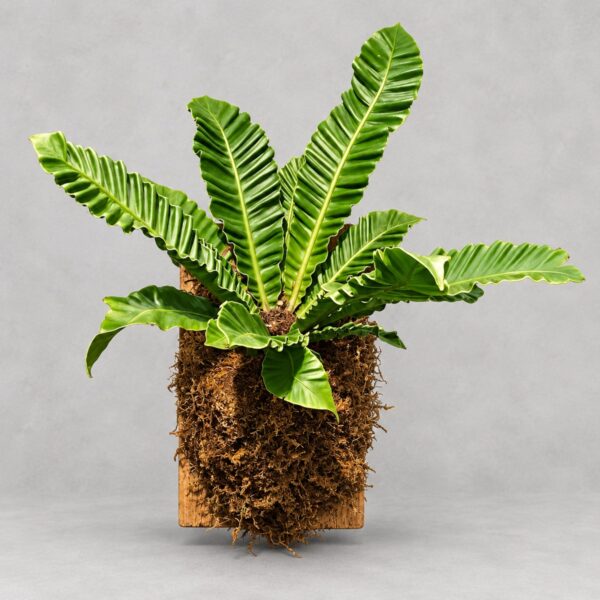
Asplenium nidus var plicatum
Original price was: HK$428.00.HK$180.00Current price is: HK$180.00.
In stock · store pickup
View plant
FREE PLANT ADVICE
Send us a photo before you change anything
WhatsApp a photo of the plant and your window light. Our Causeway Bay team will suggest care steps or plants that suit your space.
STORE · CAUSEWAY BAY
4/F, 39 Yiu Wa Street, Causeway Bay
Daily 12:30–8:00pm · ~3 min walk from Times Square
Map & directionsPlant Care