
How to Care for Anthurium Polyschistum in Hong Kong | Plantjai

Plantjai 植仔 · Care Encyclopedia
Anthurium Polyschistum
Hong Kong care guide — useful before you buy and after it arrives.
Shop this plantThousands of fine divisions forming a linen-like texture — a delicate choice among the miniature Anthuriums.
Origin & characteristics
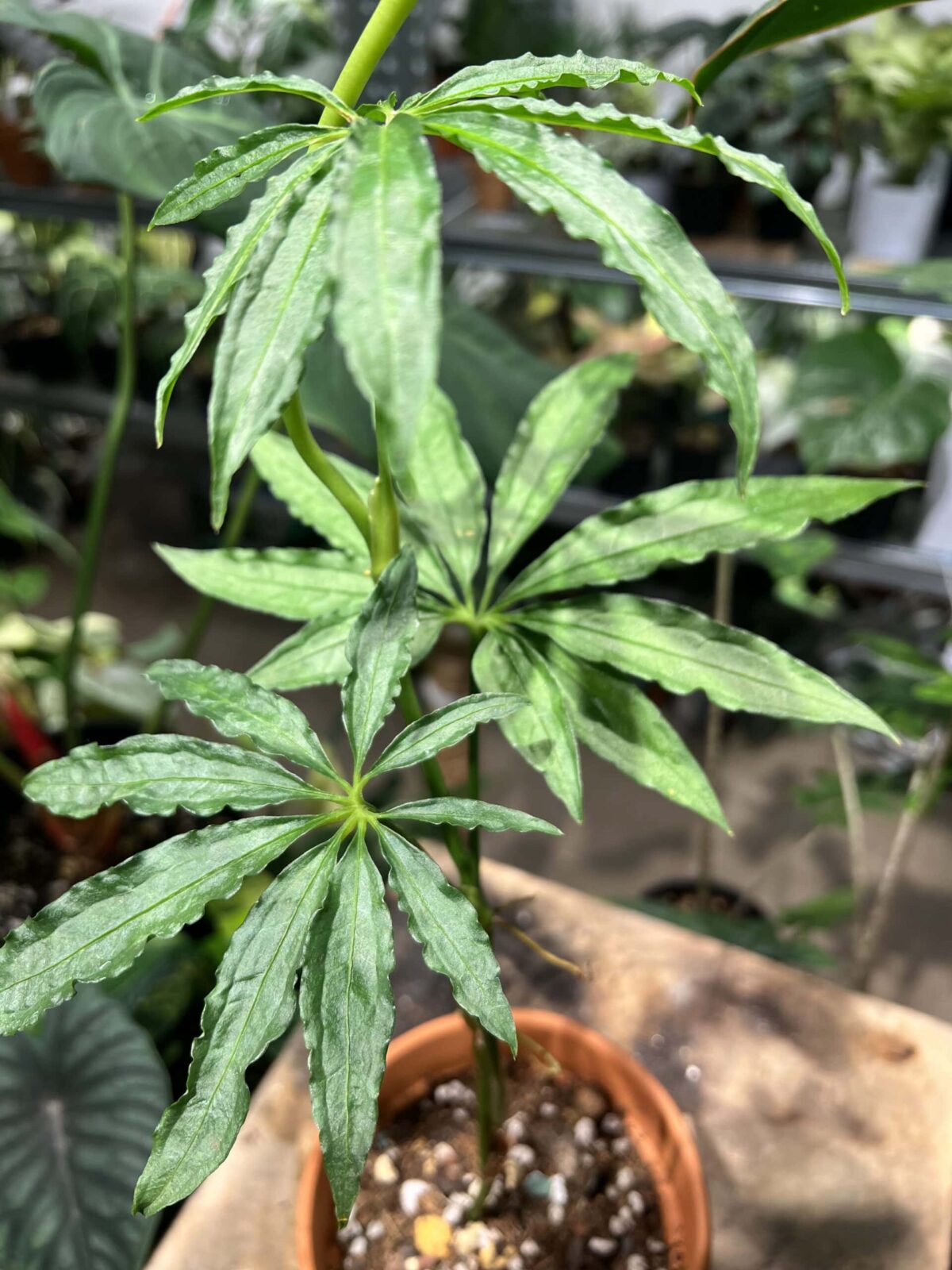
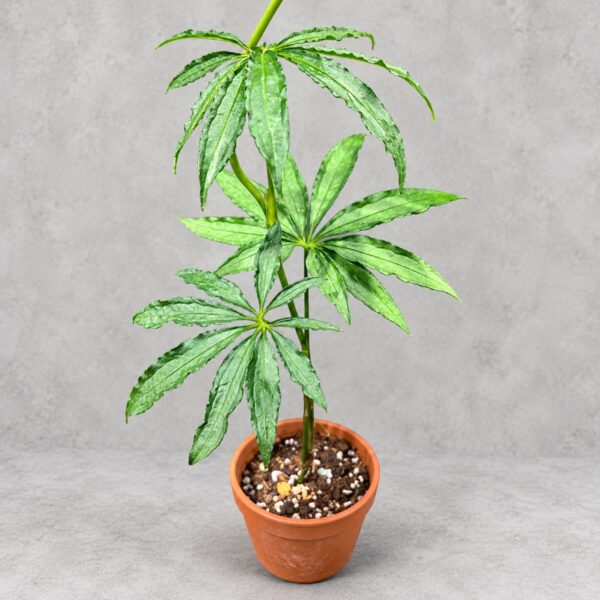
Also known as "split-leaf Anthurium," this species is native to Central and South American tropical rainforest. The species name "polyschistum" comes from Greek, meaning "many divided," describing the distinctive form of its leaf, which splits into countless fine, feather-like segments. Mature plants have a leaf form resembling a piece of woven linen, with a rough, textured surface — one of the few Anthurium species that wins admirers purely through the beauty of its "split-leaf" form. Its relatively compact size doesn't take up much space, making it very well suited to Hong Kong indoor environments — a distinctive Anthurium worth owning for both advanced hobbyists and beginners alike.
Light
- Ideal placement: bright, diffused light, near an east-facing window or somewhere well-lit indoors
- Light intensity: 8,000–15,000 lux (medium-to-bright diffused light)
- Note: avoid direct strong light, which easily dries out the finely divided leaf segments; light too weak causes the leaves to look sparse and lose their layered quality
- Tip: if growing in an office, pairing with a grow light for 8–10 hours daily gives better results
Watering
- Frequency: water once the top 1–2 cm has dried — roughly every 5–7 days in summer, every 10–14 days in winter
- Method: water gently and thoroughly, avoiding standing water at the pot's base
- Water quality: room-temperature plain water, rainwater, or distilled water
- Note: the fine root system is particularly sensitive to waterlogging — better to underwater than overwater
Soil & pot
- Medium: a lightweight, aerated aroid-specific mix — 2 parts coco coir + 1 part perlite + 1 part orchid bark + a little sphagnum moss
- pH: 5.5–6.5
- Pot: either a shallow or standard pot works, as long as it has drainage holes at the base; ceramic is best
- Repotting: roughly every 1–2 years, in spring; doesn't need a large pot — slight snugness actually helps manage moisture
Temperature & humidity
- Temperature: ideal at 18–26°C; growth slows below 15°C; avoid cold drafts
- Humidity: 60–75% is ideal — with adequate humidity, the leaves stay a vivid, healthy green
- Humidification methods: humidifier, grouping plants together, occasional misting into the surrounding air
- Note: while it likes humidity, prolonged standing water on the leaf surface can trigger disease — good air circulation matters
Common problems
| Issue | Likely cause | What to do |
|---|---|---|
| Finely divided leaf segments drying out | Humidity too low or air too dry | Increase environmental humidity, keep away from AC vents |
| Yellowing leaves that drop | Overwatering leading to root rot | Reduce watering, check root health |
| New leaves not unfurling | Insufficient humidity or temperature too low | Raise humidity above 70%, keep the plant warm |
| Stalled growth | Insufficient light or nutrient deficiency | Move closer to light, apply diluted liquid fertiliser during the growing season |
| Loss of the linen-like leaf texture | Light too weak | Increase diffused light exposure |
⚠️ Toxicity note: Anthuriums contain calcium oxalate crystals; ingestion can cause oral burning, drooling, and vomiting, and sap contact may irritate skin. Keep out of reach of children and pets; wearing gloves during pruning is recommended.
How to explain to customers
"Deeply-Lobed Anthurium has such a special leaf shape — small but beautifully divided, genuinely like a piece of linen fabric. It's perfect for a study or desk. It won't get too big, and it's simple to care for — just don't let the roots sit in water."
Fun facts
The botanical name "polyschistum" comes from ancient Greek — "poly" meaning "many" and "schistum" meaning "divided" — together meaning "many divided," a perfect description of this plant's intricately fine, thread-like leaf form.
Keywords
Deeply-Lobed Anthurium, split-leaf Anthurium, miniature Anthurium, finely divided leaf, linen-textured leaf, foliage plant, indoor plant, high humidity, aerated medium, delicate potted plant
In-depth care guide
Introduction
Deeply-Lobed Anthurium, scientifically Anthurium polyschistum, is a relatively uncommon but highly distinctive foliage plant within the Anthurium genus of the Araceae family. What sets it apart most is its leaf form — the leaf splits into numerous fine, radiating divisions from a central vein, with the whole leaf resembling a palm or open fan, remarkably elegant.
Unlike the typical heart-shaped or shield-shaped leaves common in the Anthurium genus, A. polyschistum's leaf form is lighter and more airy, with thin, soft leaf segments that have a particularly lively quality as they move in the breeze. Its leaf colour is typically deep green, with a papery rather than velvety texture, giving an overall fresh, natural feel. Although it lacks the dramatic vein patterns of Crystal Anthurium or Regale Anthurium, its distinctive leaf shape sets it apart from the crowd among the many Anthurium species.
Native environment
Anthurium polyschistum is native to the tropical rainforests of Central and South America, with a distribution range including Costa Rica, Panama, and Colombia. In the wild, it grows as a semi-epiphytic or terrestrial plant, from the forest floor up to the mid-canopy layer, adapted to high humidity, warmth, and diffused light.
Like many other Anthuriums, it grows natively beneath a dense canopy, long adapted to low-light, high-humidity growing conditions. This native characteristic means it has relatively high humidity requirements when grown indoors, but a comparatively wide tolerance range for light.
Light requirements
Ideal light
Deeply-Lobed Anthurium thrives in bright to medium diffused light. It can adapt to lower-light positions, but growth will slow. The best spot is 1–2 metres from a window, or in front of a windowsill filtered by a sheer curtain.
Light too strong
Direct sunlight will cause sunburn spots on its thin leaves, yellowing, or even scorched edges. Especially in summer's strong midday sun, direct exposure should always be avoided. If you notice fading leaf colour or brown spots appearing, move it to a spot with softer light.
Light too weak
Prolonged exposure to dim conditions causes the plant to become sparse, with elongated gaps between leaf divisions (etiolation), and new leaves growing progressively smaller. Although Deeply-Lobed Anthurium is reasonably shade-tolerant, adequate diffused light is essential if you want it to stay robust and lush.
Supplemental lighting
If your home doesn't have enough light, an LED grow light works well, providing 10–12 hours of daily illumination. Position the light roughly 30–45 cm from the leaf surface, adjusting based on light intensity.
Humidity management
Humidity requirements
Deeply-Lobed Anthurium has fairly high humidity requirements, with an ideal range of 60–80%. Native to an extremely humid rainforest environment, dry air causes the leaves to lose their sheen, with the edges of the finely divided segments starting to dry out.
Signs of low humidity
- Dry, browning leaf edges
- New leaves struggling to unfurl
- Leaves losing their sheen
- Overall stalled growth
Humidification methods
- Humidifier: the most effective method, stably maintaining above 60%
- Glass cabinet/enclosure: highly effective for species with high humidity requirements
- Water tray: raises local humidity through evaporation
- Grouping plants: placing multiple plants together to mutually raise humidity
- Regular misting: morning misting can briefly raise humidity, but avoid misting at night
Watering technique
Watering principles
Deeply-Lobed Anthurium prefers consistently lightly moist soil. Water once the top 2–3 cm of soil has dried. It doesn't like being too dry either — if the soil dries out completely for too long, the leaves wilt quickly.
Checking method
Insert a finger about 2–3 cm into the soil — water if it feels dry. In summer's active growing period, this might mean watering every 3–5 days; in winter, every 7–10 days.
Water quality
Use rainwater, filtered water, or tap water left to stand. Like all Anthuriums, it's fairly sensitive to chlorine and fluoride.
Water thoroughly
Water each time until it flows from the pot's base, ensuring the whole root system gets moisture, then empty any standing water from the saucer.
Common watering issues
- Wilting leaves, dry soil: underwatering — water immediately
- Yellowing leaves, wet soil: overwatering — possible root rot
- Malformed new leaves: insufficient humidity — not necessarily a watering issue
Soil recipe
Soil requirements
Deeply-Lobed Anthurium needs a loose, well-aerated, well-draining slightly acidic soil, with a pH of roughly 5.5–6.5. Its roots need plenty of airflow, and heavy soil will suffocate them.
Recommended recipe
- Orchid bark/pine bark: 30%
- Perlite: 25%
- Coco coir: 25%
- Peat moss: 10%
- Sphagnum moss: 10%
This recipe balances moisture retention with aeration, suiting Deeply-Lobed Anthurium's root growth.
Pot selection
Use a pot with drainage holes — plastic or ceramic both work. Never use a decorative pot without holes.
Repotting
Repot roughly every 1–2 years, ideally in spring. Don't go too large — 1–2 inches bigger is sufficient.
Temperature requirements
Ideal temperature
Deeply-Lobed Anthurium's ideal temperature is 18–27°C, like most tropical foliage plants, it prefers warm, stable conditions.
Minimum temperature
15°C is the warning line — growth slows noticeably below this, and cold damage becomes possible below 10°C. Keep it away from AC vents and cold window drafts in winter.
Temperature stability
Compared to absolute temperature, Deeply-Lobed Anthurium cares more about temperature stability. Frequent fluctuations hinder growth and can even cause leaf drop.
Feeding method
Feeding schedule
During the active growing period in spring and summer (March–September), feed once every 2–4 weeks.
Fertiliser choice
Use a balanced liquid fertiliser (20-20-20), diluted to half the concentration recommended on the packaging. Anthuriums are moderate feeders — no need for very concentrated fertiliser.
Stop feeding in winter
When growth slows or stalls in autumn/winter, stop feeding to avoid fertiliser salt accumulation damaging the roots.
Pruning and care
Pruning
Deeply-Lobed Anthurium doesn't need much pruning — mainly remove yellowing or withered old leaves to keep it tidy. The leaf segments are thin, so handle them gently when cleaning.
Leaf cleaning
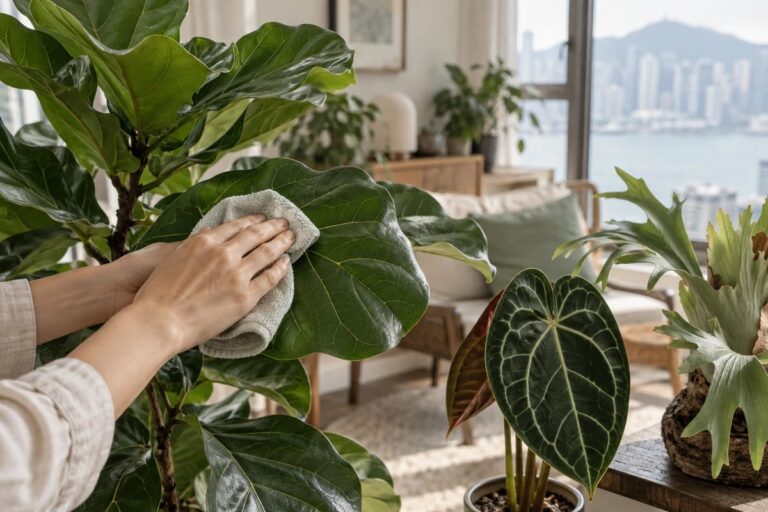
Use a slightly damp soft cloth to gently wipe dust from the leaves — avoid chemical cleaners. Clean leaves photosynthesise more effectively.
Propagation methods
Division
Deeply-Lobed Anthurium produces new shoots at the base as it grows, which can be divided during repotting. Ensure each division has a healthy root system and growth point.
Rhizome cutting
Mature plants develop a rhizome that can be cut into sections for propagation, each section retaining at least one growth node.
Common problems
Leaves drying out and turning yellow
Mostly caused by humidity too low or improper watering. Check environmental and soil moisture, and adjust care accordingly.
Malformed new leaves
New leaves are prone to malformation when unfurling in low humidity. Increasing humidity is the solution.
Mealybugs and spider mites
Check leaf undersides regularly; treat pests promptly with alcohol-dipped cotton swabs or neem oil.
Beginner care tips
For those new to Deeply-Lobed Anthurium, the most important thing to remember is the principle of "humidity first." Many people assume all Anthuriums are cared for the same way, but A. polyschistum, with its thinner leaves, actually tolerates dry air less well than Crystal Anthurium. It's recommended that beginners place it in a bathroom (if light is adequate) or a glass cabinet, where humidity is much easier to control.
Additionally, since the leaf segments of Deeply-Lobed Anthurium are extremely fine, be gentle when cleaning — best to use a spray bottle to mist a light water fog and let dust naturally slide off. If you notice dust accumulated between leaf segments, gently brush it away with a soft brush.
Comparison with other Anthurium species
Compared to Crystal Anthurium and Regale Anthurium, Deeply-Lobed Anthurium has several notable differences:
- Its leaves are much lighter and more airy, without the "heaviness" of thicker-leaved species
- It adapts better to lower light conditions and can be placed in dimmer spots
- Higher humidity requirements, but can tolerate slightly lower watering frequency
- Moderate growth speed, won't quickly fill up your space
- Thinner leaf texture means it doesn't accumulate water spots as easily, resulting in relatively fewer bacterial leaf spot problems
Seasonal care adjustments
Spring: the start of the growing season — resume normal watering and feeding. If roots are visible at the pot's base, consider repotting.
Summer: high heat and humidity suit its growth best, but watch ventilation to avoid stuffy conditions triggering disease. If temperatures exceed 30°C, ensure adequate air circulation.
Autumn: as temperatures drop, gradually reduce watering frequency. If heating starts running indoors, watch for a sharp drop in humidity and turn on a humidifier.
Winter: growth nearly stalls — significantly reduce watering and stop feeding. Keep temperatures above 15°C and avoid cold drafts.
Like all Anthurium species, Deeply-Lobed Anthurium contains calcium oxalate crystals, toxic to both humans and pets. Ingestion causes oral discomfort.
參考資料(想知來源可展開)
References
- International Aroid Society. Anthurium polyschistum species profile. https://www.aroids.org
- Missouri Botanical Garden. Anthurium genus – Indoor cultivation guidelines. https://www.missouribotanicalgarden.org
- World of Flowering Plants. Anthurium polyschistum – Rare Aroid Care. https://worldoffloweringplants.com
Plantjai shop · In stock online
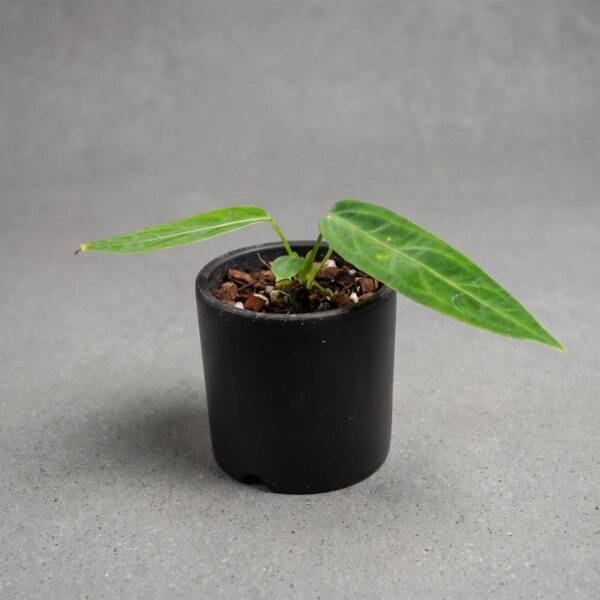
Anthurium polyschistum
Anthurium polyschistum
HK$288.00
Hong Kong delivery · Causeway Bay pickup
For Hong Kong homes and offices. Stock and pricing follow the product page.
IN STORE NOW
Plants for this guide
Related plants in stock now — live prices, delivery or Causeway Bay pickup.
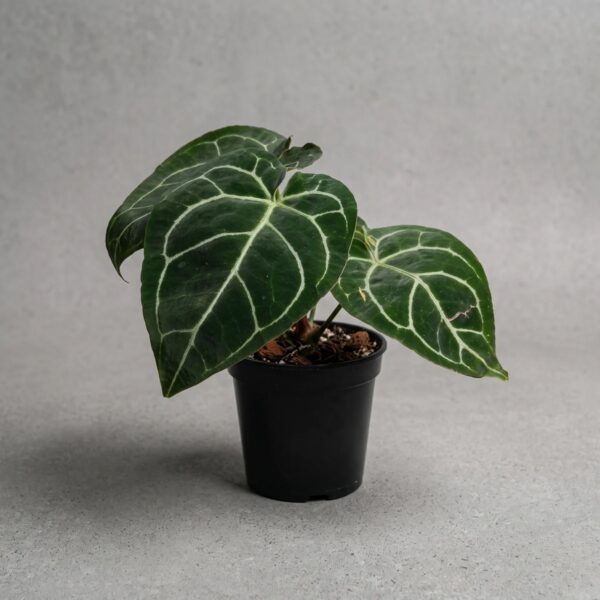
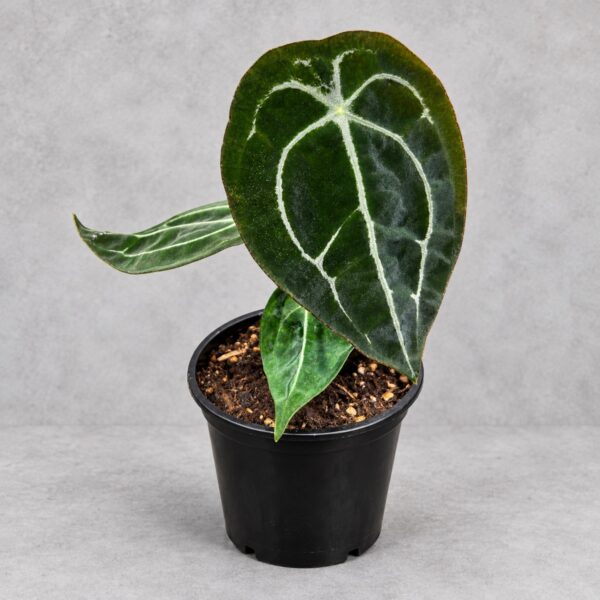
Anthurium crystallinum
Anthurium crystallinum
Original price was: HK$780.00.HK$380.00Current price is: HK$380.00.
In stock · store pickup
View plant
FREE PLANT ADVICE
Send us a photo before you change anything
WhatsApp a photo of the plant and your window light. Our Causeway Bay team will suggest care steps or plants that suit your space.
STORE · CAUSEWAY BAY
4/F, 39 Yiu Wa Street, Causeway Bay
Daily 12:30–8:00pm · ~3 min walk from Times Square
Map & directionsPlant Care