
How to Care for Anthurium Forgetii Crystallinum in Hong Kong | Plantjai

Plantjai 植仔 · Care Encyclopedia
Anthurium Forgetii Crystallinum
Anthurium forgetii x crystallinum 盾葉x水晶花燭
Hong Kong care guide — useful before you buy and after it arrives.
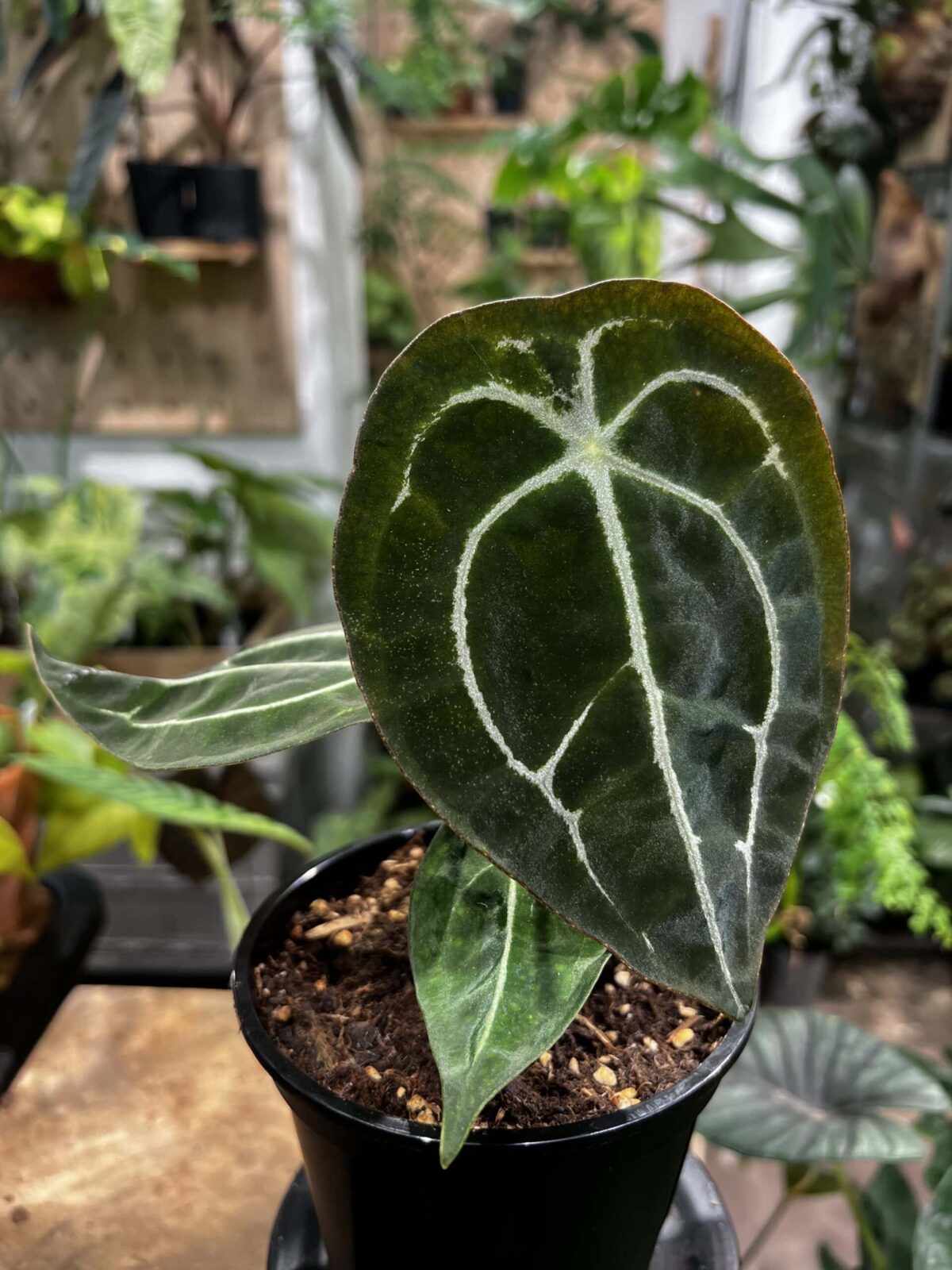
Shop this plantRound shield-shaped leaves paired with silvery crystal veining — like bringing a piece of the night sky into your home.
Origin & characteristics
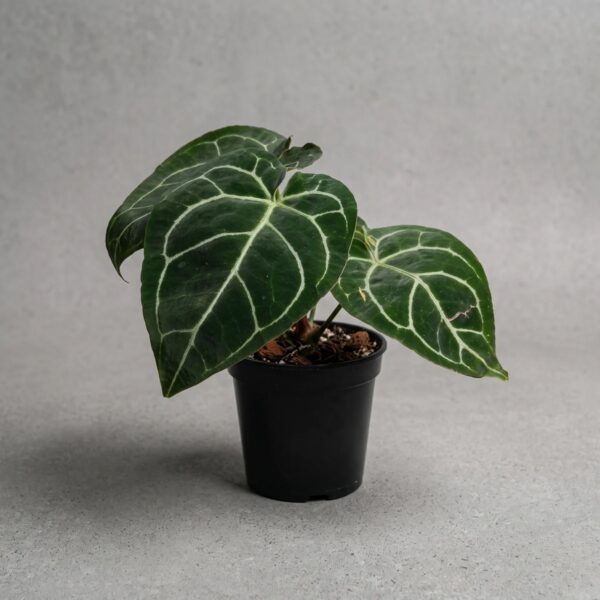
Shield x Crystal Anthurium is a hybrid between Anthurium forgetii and Anthurium crystallinum, combining the most charming traits of both parents. It inherits the rounded, unlobed leaf shape of Shield Anthurium while carrying the signature silvery-white venation of Crystal Anthurium, with a velvety leaf surface that gives it exceptional ornamental value. As the leaves mature, the veining becomes increasingly pronounced, making this a must-have hybrid for Anthurium collectors.
Light
- Ideal light: bright, diffused light, roughly 10,000–20,000 lux
- Placement: near an east- or north-facing window; a south-facing spot filtered by a sheer curtain also works
- Avoid: direct sunlight, which easily causes yellow scorch spots on the leaf surface
- Tip: with sufficient light, the silver veining becomes more prominent; in low light, new leaves come in smaller with fainter veining
Watering
- Frequency: water once the top 2–3 cm has dried, roughly every 7–10 days depending on the season
- Method: pour slowly along the pot's edge until water flows from the base, empty the saucer after 30 minutes
- Water quality: room-temperature settled water is best, avoid cold water straight from the tap
- Seasonal adjustment: slightly more frequent in spring/summer growth, reduce frequency in autumn/winter
- Note: the roots are very sensitive to waterlogging — better to err on the dry side than risk root rot
Soil & pot
- Medium recipe: a well-draining, aerated orchid mix — pine bark (medium grade) + perlite + sphagnum moss, roughly 5:3:2
- pH: 5.5–6.5, slightly acidic, ideally
- Pot recommendation: ceramic pot or a plastic pot with holes, drainage holes at the base are essential
- Repotting: consider repotting when roots start emerging from the base, or growth clearly slows — usually once a year in spring
Temperature & humidity
- Ideal temperature: 18–26°C, with a day-night temperature swing of 3–5°C beneficial for growth
- Minimum temperature: don't let it drop below 15°C — cold temperatures easily cause root rot and leaf spotting
- Humidity: 60%–80% is ideal
- Humidification methods: place on a pebble tray, run a humidifier, or group with other plants
- Note: when humidity is high, ensure good ventilation to avoid stuffy conditions triggering disease
Common problems
| Issue | Likely cause | What to do |
|---|---|---|
| Yellowing leaf tips | Overwatering / humidity too low | Check soil moisture, adjust watering frequency, raise surrounding humidity |
| Small new leaves | Insufficient light / inadequate nutrients | Move closer to light and apply a small amount of balanced liquid fertiliser |
| Faded silver venation | Light too weak | Gradually move to a brighter spot |
| Brown spots on leaves | Sunburn / fungal infection | Avoid direct light, check ventilation, use fungicide if necessary |
| Stalled growth | Roots have filled the pot / temperature too low | Consider repotting or check ambient temperature |
How to explain to customers
"This Shield x Crystal hybrid is a personal favourite of ours — the round leaves paired with silvery-white veins are genuinely eye-catching in any home! Just remember not to overwater it — let the soil dry out a bit first, and it'll gradually grow into something really special."
Fun facts
Anthurium crystallinum is native to the tropical rainforests of Central America, and the silvery-white veining on its leaves is actually a special structure called "leaf surface bullae," which reflects strong light to protect the leaf from sudden bursts of sunlight breaking through the forest canopy.
Keywords
Shield Anthurium, Crystal Anthurium, Anthurium hybrid, silver venation, velvet leaf, foliage plant, tropical plant, rainforest plant, indoor plant, Anthurium hybrid
參考資料(想知來源可展開)
References
- Anthurium Care — General Anthurium Hybrid Care Guide. https://anthuriumcare.com
- Royal Horticultural Society (RHS) — How to grow anthuriums. https://www.rhs.org.uk/plants/anthuriums/how-to-grow-anthuriums
- Epic Gardening — How to Plant, Grow, and Care For Anthurium Crystallinum. https://www.epicgardening.com/anthurium-crystallinum/
⚠️ Pet / toxicity note: Anthuriums contain calcium oxalate crystals, toxic to pets and children. Ingestion may cause oral pain, drooling, and vomiting. Keep out of reach of pets and small children. If accidental ingestion occurs, rinse the mouth immediately and seek medical advice.
In-depth care guide
Introduction
Shield x Crystal Anthurium (Anthurium forgetii x crystallinum) is a garden hybrid combining two of the most beloved parent species in the Anthurium world. A. forgetii contributes its distinctive rounded, unlobed shield-shaped leaf, prized for its compact, tidy form that fits neatly into smaller indoor spaces. A. crystallinum, meanwhile, is famous for its dramatic silvery-white venation set against velvety dark green leaves — arguably the most iconic "crystal vein" look in the entire genus.
The resulting hybrid typically shows a leaf shape closer to A. forgetii's rounded silhouette, but with venation contrast and sheen inherited from the crystallinum side, making each new leaf a genuine visual event as it unfurls and darkens over the following weeks. Because both parent species are already popular in their own right, hybrids combining them are highly sought after in the collector community, and no two plants are ever quite identical — variation in leaf shape, vein density, and overall vigour between individual seedlings is part of the appeal.
Native environment
Both parent species come from South American tropical rainforests — A. forgetii from Colombia's Andean foothills, and A. crystallinum more broadly from Central and South American lowland rainforest. In both cases, the plants grow beneath a dense forest canopy, in conditions of high ambient humidity, gentle filtered light, and good air movement around the root zone. This hybrid inherits a genuine need for these same conditions — indoor growers should aim to replicate a humid, shaded, well-ventilated microclimate as closely as possible.
Light requirements
This hybrid prefers bright, indirect light, roughly in the 10,000–20,000 lux range. An east-facing window offering gentle morning sun, or a spot a metre or two back from a south-facing window with a sheer curtain, both work well. Direct sun — even brief exposure at midday — will scorch the velvety leaf surface, leaving permanent yellow or brown marks. On the other end, if light is too weak, new leaves come in noticeably smaller, and the prized silver venation becomes faint and hard to see. As a rule of thumb, if the plant's shadow on a wall is soft and diffuse rather than sharply defined, the light level is about right.
Watering technique
Keep the growing medium evenly and lightly moist, watering once the top 2–3 cm has dried. Always water thoroughly, letting excess drain fully from the base, and never allow the pot to sit in a wet saucer. This hybrid's root system — inherited in part from the more waterlogging-sensitive A. forgetii parent — genuinely prefers to run on the drier side between waterings rather than staying constantly damp. Use rainwater, filtered water, or tap water left to stand overnight to avoid mineral and chlorine build-up, which shows up over time as leaf-tip browning.
Humidity requirements
Aim for 60–80% relative humidity. Below 50%, you'll start to see crispy brown leaf edges and difficulty with new leaves unfurling properly. A humidifier is the most reliable fix, especially in Hong Kong's drier autumn and winter months when air conditioning or heating is running. Grouping this plant with other tropical foliage plants, or growing it in a glass cabinet, are both effective supplementary approaches. Avoid relying on misting alone, since the humidity boost only lasts a few minutes and can encourage fungal problems if the leaves stay wet without good airflow.
Soil and potting
A chunky, fast-draining aroid mix is essential. A reliable recipe is medium-grade pine bark, perlite, and sphagnum moss in roughly a 5:3:2 ratio, giving a pH of around 5.5–6.5. Choose a ceramic pot or a well-perforated plastic pot — never a pot without drainage holes. Repot roughly once a year, ideally in spring, sizing up only modestly (an inch or two in diameter) to avoid oversized pots holding excess moisture around the roots for too long.
Temperature
The comfortable range is 18–26°C, and a modest day-to-night temperature drop of 3–5°C actually seems to benefit overall vigour and leaf colour development, mimicking the natural swing found in tropical forest understories. Don't let the plant experience sustained temperatures below 15°C, which increases the risk of root rot and dark leaf spotting. Keep it well away from air conditioning vents and draughty doorways in both summer and winter.
Feeding
During the active growing months (spring through early autumn), feed with a diluted balanced liquid fertiliser (such as 20-20-20) every three to four weeks, at half the label-recommended strength. Always water the plant first so the fertiliser doesn't contact dry roots directly. Reduce or stop feeding entirely once temperatures cool in late autumn and through winter, since the plant's uptake slows dramatically and excess fertiliser salts can accumulate in the soil, showing up as leaf-tip burn.
Propagation
Division at repotting time is the most reliable method — separate any rooted side shoots from the main clump, ensuring each division retains healthy roots and at least one to two leaves. Keep divisions warm and humid for the first few weeks while they establish. Stem cuttings with an attached node can also be rooted in moist sphagnum moss under high humidity, though this takes patience and a stable warm environment.
Common problems
Yellowing leaf tips: most often caused by overwatering or humidity that's too low — check the soil first, then your hygrometer.
Small new leaves with faint venation: almost always a light issue — move the plant to a brighter (but still indirect) spot.
Faded silver veining over time: usually related to insufficient light as the plant matures; increasing light gradually restores vein contrast in newer leaves.
Brown, crusty spots on the leaf: check for sunburn first, then fungal infection if the plant has been in a humid but poorly ventilated spot.
Stalled growth with no new leaves for months: check whether the pot has become root-bound, and consider repotting into fresh medium.
Toxicity information
Like all Anthurium hybrids, Shield x Crystal Anthurium contains calcium oxalate crystals throughout the plant, which are toxic to both humans and pets. Ingestion causes burning pain in the mouth and throat, drooling, and swelling. Keep the plant well out of reach of children and pets, and wear gloves when pruning or repotting to avoid skin irritation from the sap.
References
- Anthurium Care. General Anthurium Hybrid Care Guide. https://anthuriumcare.com
- Royal Horticultural Society (RHS). How to grow anthuriums. https://www.rhs.org.uk/plants/anthuriums/how-to-grow-anthuriums
- Epic Gardening. How to Plant, Grow, and Care For Anthurium Crystallinum. https://www.epicgardening.com/anthurium-crystallinum/
- Anthurium Care. Anthurium forgetii Care: Why This Shield-Leaf Anthurium Is More Rewarding Than It Looks. https://anthuriumcare.com/varieties/anthurium-forgetii-care/
Plantjai shop · In stock online
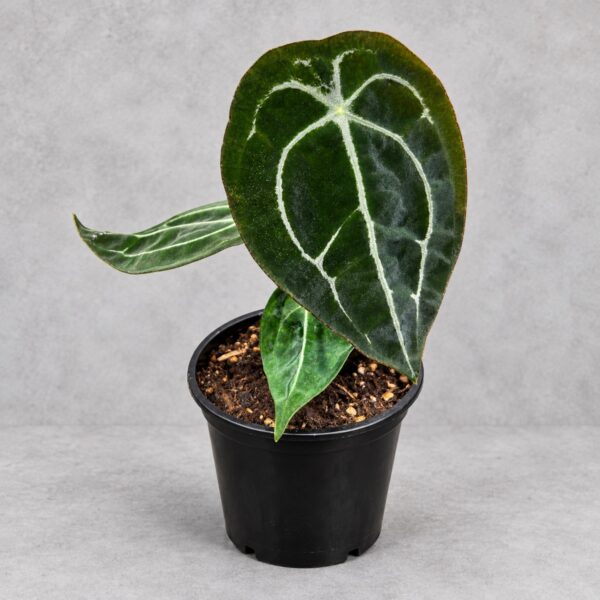
Anthurium forgetii x crystallinum
HK$380.00
Hong Kong delivery · Causeway Bay pickup
For Hong Kong homes and offices. Stock and pricing follow the product page.
IN STORE NOW
Plants for this guide
Related plants in stock now — live prices, delivery or Causeway Bay pickup.
Anthurium crystallinum
Anthurium crystallinum
Original price was: HK$780.00.HK$380.00Current price is: HK$380.00.
In stock · store pickup
View plant
FREE PLANT ADVICE
Send us a photo before you change anything
WhatsApp a photo of the plant and your window light. Our Causeway Bay team will suggest care steps or plants that suit your space.
STORE · CAUSEWAY BAY
4/F, 39 Yiu Wa Street, Causeway Bay
Daily 12:30–8:00pm · ~3 min walk from Times Square
Map & directionsPlant Care