
How to Care for Anthurium Clarinervium in Hong Kong | Plantjai

Hong Kong care guide for Anthurium Clarinervium.
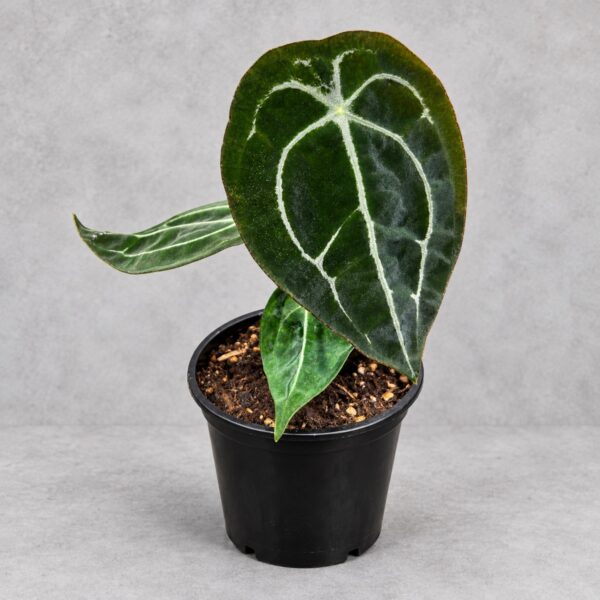
Heart-shaped velvet leaves with bright silver veining — the perfect beginner's introduction to velvet Anthuriums.
Origin & characteristics
Clarinervium Anthurium is native to the rainforest floor in limestone regions of Chiapas, southern Mexico. Its defining feature is a network of silver-white veins across a deep green velvety leaf, in a rounded heart shape with softly curved edges — hence its alternate common name, "round-leaf Anthurium." Compared with other velvet Anthuriums, it's noticeably more forgiving of humidity and watering fluctuations, making it the best entry point for anyone new to this group.
Light
Adapts to low to bright diffused light, with east- or north-facing windows ideal. It's one of the more shade-tolerant Anthuriums, though too little light will dull the silver veining and shrink the leaves. Avoid direct midday sun, which easily burns the velvet leaves and causes white spotting. If placed near a south-facing window, keep it 1–2 m back or use a sheer curtain. About 5–7 hours of gentle daily light is enough.
Watering
Keep the soil lightly moist but never waterlogged, watering once the surface has fully dried — roughly every 7–10 days. Testing with a finger two knuckles deep is the most reliable method: water only once it feels dry. Use room-temperature filtered or settled water, and reduce watering to every 10–14 days in winter. Better slightly dry than wet — while Clarinervium is somewhat more drought-tolerant than other velvet Anthuriums, prolonged wet soil will still cause root rot.
Soil & pot
Needs a well-draining, coarse-grained mix: orchid bark 35% + perlite 25% + coco coir 20% + sphagnum moss 15% + bamboo charcoal 5%. An orchid mix combined with perlite works as an alternative. Drainage holes are essential — plastic or ceramic pots both work, but avoid oversized pots. Clear pots make it easy to spot healthy white roots versus mushy, blackened rot.
Temperature & humidity
Ideal temperature 18–25°C, tolerating a minimum of 12°C, though growth slows below 15°C. Humidity should be at least 50%, ideally 60–70% — notably lower than most velvet Anthuriums, and typically achievable with a standard indoor humidifier. Pay extra attention when running heaters in winter, since dropping humidity is usually the cause of yellowing leaf edges. Maintain good airflow to avoid stuffy, disease-prone conditions.
Common problems
| Issue | Likely cause | What to do |
|---|---|---|
| Yellow, curling leaf edges | Usually low humidity or salt buildup from fertiliser | Raise humidity first, then flush the soil with plain water |
| Faint silver veining | Light may be too dim | Move to a brighter spot, avoiding direct sun |
| Thin, soft leaves | Overwatering leading to root rot | Stop watering and check the roots |
| Spider mites or scale insects | Common in dry conditions | Raise humidity and check leaf undersides regularly |
Pet and child safety
⚠️ Anthuriums contain calcium oxalate crystals and are toxic! Ingestion causes burning of the mouth and throat, heavy drooling, vomiting, and in severe cases, difficulty swallowing. Keep out of reach of pets and children, wash hands after handling, and avoid touching your face, especially your eyes and mouth.
How to explain to customers
"Clarinervium is one of the easiest velvet Anthuriums to grow — it's the one I'd recommend for anyone wanting to try the velvety texture for the first time. Its heart-shaped leaves are lovely, just remember to keep it out of direct sun and give it diffused light instead."
Fun facts
Clarinervium Anthurium is native to limestone regions of Mexico, which is part of why it adapts more readily to slightly alkaline soil than most Anthuriums — one of the reasons it's comparatively easy to grow. Its silver-white leaf veins are actually reflective tissue that helps the plant capture light more efficiently in the dim rainforest understorey.
Keywords
Clarinervium Anthurium, round-leaf Anthurium, Anthurium clarinervium, velvet Anthurium, silver-veined foliage, heart-shaped leaf plant, beginner Anthurium, crystal-vein Anthurium, Mexican native species, indoor foliage plant, Plantjai
參考資料(想知來源可展開)
References
- Ohio Tropics — Anthurium Clarinervium: 1 Secret to Growing Them. https://www.ohiotropics.com/2019/12/28/anthurium-clarinervium/
- Grow Tropicals — Foliage Anthurium Care Guide. https://growtropicals.com/blogs/houseplant-care-a-z/foliage-anthurium-care-guide
- Happy Houseplants — Anthurium clarinervium Care Guide. https://www.happyhouseplants.co.uk/blogs/plant-care/anthurium-clarinervium-care-guide
In-depth care guide
Introduction
Clarinervium Anthurium (Anthurium clarinervium) is a classic member of the Araceae family's Anthurium genus, native to the tropical rainforests of southern Mexico. Its greatest charm lies in its thick, heart-shaped leaves and dazzling silver-white veining — the deep green velvet leaf surface is crossed by clearly defined white veins that catch the light almost like they're glowing, making it a much-sought-after plant among collectors.
Unlike many other Anthurium species, Clarinervium stays relatively compact, with leaves generally reaching only 15–20 cm indoors — a comfortable fit for most typical Hong Kong homes. In the wild, it grows as an epiphyte on rocks or tree trunks, giving it a particularly strong need for a well-aerated soil.
Light requirements
Clarinervium Anthurium is best suited to bright, indirect light, mimicking the diffused light that filters through the canopy in its native habitat.
Ideal placement:
- An east-facing window, enjoying gentle morning light
- 1.5–2 m from a south- or west-facing window
- A bright spot filtered through a sheer curtain
Ohio Tropics' experience shows that a Clarinervium kept near an east-facing window, moved outdoors to full shade in summer, grew exceptionally well. If you live somewhere with shorter, dimmer winter days, giving it a little direct light can actually help maintain vigour.
Reading the light signals:
| Condition | Cause | Fix |
|---|---|---|
| Small new leaves, stretched petioles | Insufficient light | Move closer to a light source or add a grow light |
| Faded leaf colour, scorched edges | Light too strong | Move away from strong light or add a sheer curtain |
| Loss of velvety sheen, brittle leaves | Excessive light | Reduce direct light exposure immediately |
Grow Tropicals specifically notes: "Always judge your growing conditions by the newest leaf — that leaf is the truest reflection of whether your current environment suits the plant."
Temperature requirements
As a native of Mexico's tropical rainforest, Clarinervium likes a warm, stable environment.
Ideal temperature range:
- Daytime: 21–32°C (70–90°F)
- Nighttime: not below 18°C (65°F)
- Absolute minimum: sustained exposure below 16°C will cause damage
Temperature management tips:
- Keep away from AC vents, draughty doors/windows, and heaters
- Be careful in summer that AC doesn't cause a sudden temperature drop
- Avoid placing near window glass on winter nights, since glass-side temperatures run several degrees colder than room temperature
- Sudden temperature changes can stall growth and cause water-soaked spotting on the leaves
According to Grow Tropicals, cold draughts do more damage to Anthurium-type plants than many people realise — a window spot that's perfectly fine in summer can genuinely harm the plant come January.
Humidity management
Clarinervium is native to a high-humidity rainforest environment, and while it's more adaptable than commonly assumed, humidity management still matters for producing its best foliage.
Ideal humidity:
- Best range: 60% to 80% relative humidity
- Acceptable minimum: 40%, though prolonged low humidity will affect leaf quality
- 50–60%: achievable in most homes with minor adjustments
Practical ways to raise humidity:
- Humidifier: place near the plant during AC or heating season, about 1 m away
- Plant grouping: cluster several tropical plants together to form a humid microclimate
- Pebble tray: a tray lined with pebbles and topped with water below the surface, with the pot sitting on top
- Bathroom growing: if your bathroom has a window and natural light, it's a naturally humid spot
Signs of insufficient humidity:
- Dry, browning leaf tips
- New leaves tearing easily as they unfurl
- Loss of velvety sheen
Ohio Tropics recommends that if your home gets dry from winter heating, a humidifier is strongly worth investing in — she runs hers from October right through to April.
Watering technique
Although Clarinervium is native to a humid environment, because it's epiphytic, its roots need plenty of oxygen, so watering requires some technique.
Correct watering method:
- Insert a finger or wooden skewer 2–3 cm into the soil; water only once it feels dry
- Water thoroughly until it runs from the pot's base
- Empty the saucer within 15 minutes
- Never let the pot sit in standing water for extended periods
Seasonal adjustment:
| Season | Watering frequency | Notes |
|---|---|---|
| Spring/summer (growing season) | Water once the topsoil dries | Keep moist but never waterlogged |
| Autumn/winter (slower growth) | Extend the interval | Wait until more than half the soil has dried |
Water quality:
- Best: rainwater, distilled water, filtered water
- Acceptable: tap water rested 24 hours
- Avoid: hard, high-mineral water, which causes brown salt deposits on leaf tips over time
Happy Houseplants notes that Clarinervium doesn't actually need a complicated watering schedule — a simple "dry thoroughly, then water thoroughly" cycle suits it best.
Soil and medium
Because Clarinervium is an epiphytic species, its need for soil aeration is considerably higher than that of a typical potted plant. Standard potting soil compacts too easily, suffocating the roots.
Recommended medium recipe:
- 40% quality potting soil (peat or coco coir based)
- 30% coarse perlite (3–5 mm)
- 20% orchid bark (0.6–1.2 cm chunks)
- 10% horticultural charcoal (helps regulate pH)
This recipe keeps the medium loose over the long term, avoiding compaction from repeated watering. Orchid bark provides structural support and a habitat for beneficial microbes, while perlite ensures drainage and aeration.
Semi-hydroponic growing: experienced growers can try growing Clarinervium semi-hydroponically, using leca as the medium. This method allows precise control over water and nutrient supply, though beginners are advised to get familiar with the plant's habits using traditional soil first.
Repotting timing:
- Every 2–3 years
- When roots begin emerging from the drainage holes
- Best done just before spring new growth
- Size up by just one pot size each time — Anthurium species prefer being a little snug
Feeding
Clarinervium is a light-to-moderate feeder, and the guiding principle is "less is more."
Feeding recommendations:
- Use a balanced liquid fertiliser (NPK 20-20-20 or similar)
- Diluted to half strength
- Growing season (spring/summer): once a month
- Autumn/winter: reduce frequency or stop entirely
- Water once before feeding to avoid concentrated fertiliser contacting dry roots and causing fertiliser burn
Feeding notes:
- Don't apply fertiliser as a foliar spray — the velvety leaf surface blocks absorption
- If you notice a white salt crust on the soil surface, flush with distilled water
- Excess nitrogen causes oversized leaves with fainter veining, losing the cultivar's characteristic look
Air circulation
Because Clarinervium is epiphytic, it enjoys good airflow in its native habitat, so indoor growing should account for this too.
Ventilation tips:
- Run a ceiling fan on low for gentle air circulation
- Open windows for ventilation on mild days
- Move outdoors to a shaded spot in summer to enjoy natural breeze and rain
- Avoid cold draughts, especially in winter
Grow Tropicals points out that air circulation is particularly important for epiphytic plants, but it's worth distinguishing "air circulation" from "cold draughts" — the former is beneficial, the latter harmful.
Propagation methods
Division is the most reliable propagation method for Clarinervium.
Division:
- Carry out at spring repotting
- Gently loosen the root ball to find offsets with independent growth points and roots
- Ensure each division has at least one to two leaves and healthy roots
- Use a sharp, sterilised knife to minimise root damage
- Pot divisions into fresh soil, keeping moist and warm
Ohio Tropics recommends gently loosening the roots during division, carefully separating new growth points, and making sure each section has its own roots and leaves.
Seed propagation:
Although Clarinervium does flower, seed propagation is slower and more complex. Anthurium seeds must be sown fresh, as they quickly lose viability once dried. Germination requires high humidity and 24–26°C, and may take several weeks.
Pruning and maintenance
Pruning tips:
- Mainly remove aged, yellowed, or damaged leaves
- Cut at the base of the petiole, without leaving a stub
- Clarinervium naturally cycles through leaves, and old leaf drop is normal
- If it flowers, the flower spike is usually small and unremarkable and can be cut off to let the plant focus energy on leaf growth
Leaf cleaning:
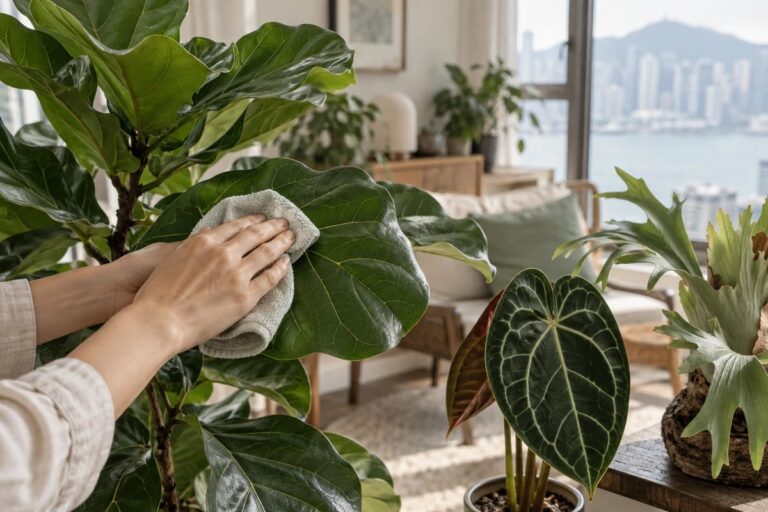
- Wipe the leaf surface gently once a month with a soft, slightly damp cloth
- Removing dust improves photosynthesis efficiency
- Avoid leaf-shine products on velvety leaves, which can clog the stomata
Frequently asked questions
Q: Clarinervium is hard to find — where can I get one?
A: It's a genuinely in-demand plant, and many online shops show it as sold out. Follow specialty tropical plant retailers, or join local plant-swapping groups. Ohio Tropics also offers buying tips.
Q: What causes brown leaf tips?
A: Most commonly low humidity or fertiliser salt buildup. First check your humidity meter — if below 50%, increase humidity; then flush the soil with distilled water to remove excess salts.
Q: Why are the leaves turning yellow?
A: Most commonly overwatering, poor drainage, or low humidity. First check whether the soil stays wet for extended periods and whether the pot's drainage holes are clear. If the soil dries quickly but leaves still yellow, check humidity instead.
Q: New leaves are growing but the veining isn't clear?
A: This is usually related to light. Although Clarinervium can't tolerate strong direct sun, if light is too weak, the white veining will fade. Try moving it slightly closer to a light source, but use a sheer curtain or keep it further from the window to avoid direct exposure.
Q: Is Clarinervium toxic?
A: Yes. Like all Anthurium species, it contains calcium oxalate crystals, and ingestion causes oral pain and digestive upset. Keep it out of reach of pets and children.
Q: Should I keep the flower if it blooms?
A: Clarinervium's flowers are small and unremarkable, with the main ornamental value in its leaves. Flowering consumes energy, so it's best to cut the flower spike to let the plant focus resources on leaf growth.
References
- Raffaele Di Lallo — Anthurium Clarinervium: 1 Secret to Growing Them. Ohio Tropics. https://www.ohiotropics.com/2019/12/28/anthurium-clarinervium/
- Foliage Anthurium Care Guide. Grow Tropicals. https://growtropicals.com/blogs/houseplant-care-a-z/foliage-anthurium-care-guide
- Anthurium clarinervium Care Guide. Happy Houseplants. https://www.happyhouseplants.co.uk/blogs/plant-care/anthurium-clarinervium-care-guide
- Royal Horticultural Society (RHS) — How to grow anthuriums. https://www.rhs.org.uk/plants/anthuriums/how-to-grow-anthuriums
For Hong Kong homes and offices. Stock and pricing follow the product page.
IN STORE NOW
Plants for this guide
Related plants in stock now — live prices, delivery or Causeway Bay pickup.
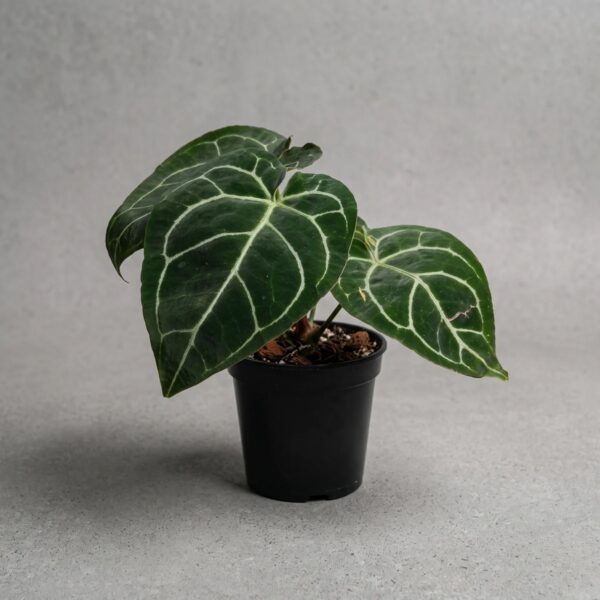
Anthurium crystallinum
Anthurium crystallinum
Original price was: HK$780.00.HK$380.00Current price is: HK$380.00.
In stock · store pickup
View plant
FREE PLANT ADVICE
Send us a photo before you change anything
WhatsApp a photo of the plant and your window light. Our Causeway Bay team will suggest care steps or plants that suit your space.
STORE · CAUSEWAY BAY
4/F, 39 Yiu Wa Street, Causeway Bay
Daily 12:30–8:00pm · ~3 min walk from Times Square
Map & directionsPlant Care