
How to Care for Anthurium Besseaeaff in Hong Kong | Plantjai

Plantjai 植仔 · Care Encyclopedia
Anthurium Besseaeaff
Hong Kong care guide — useful before you buy and after it arrives.
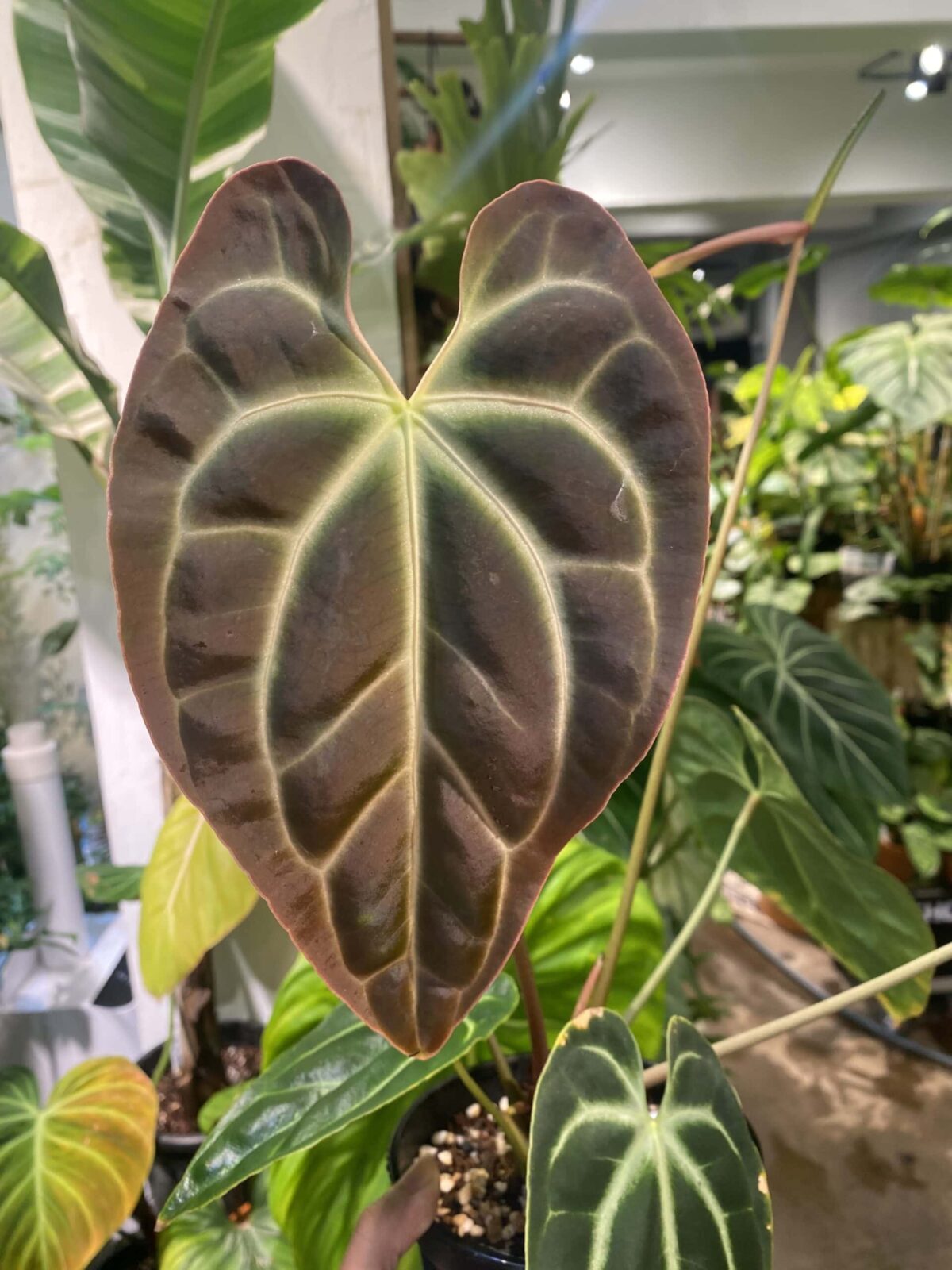
Shop this plantVelvet leaves with a red underside give this plant instant sophistication — a perfect entry point into rare Anthurium collecting.
Botanical note: "aff." is short for the Latin affinis, meaning this cultivar is closely related to Anthurium besseae but the precise botanical identification is still to be confirmed.
Origin & characteristics
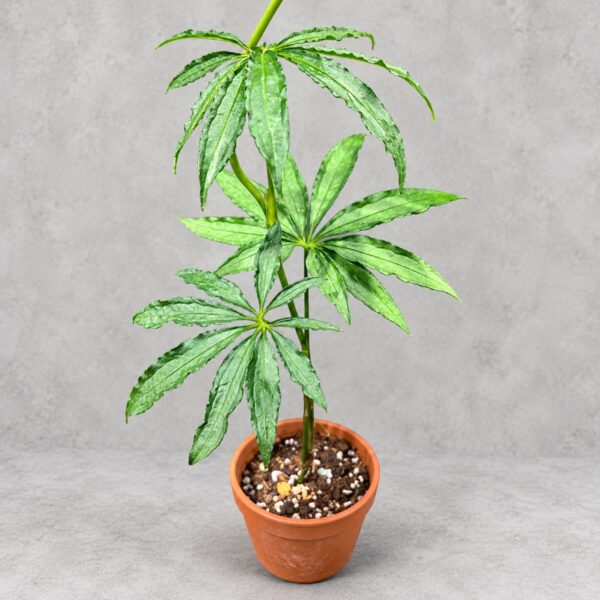
Besseae Anthurium is native to the rainforests of Ecuador and Peru in South America, growing in the humid, shaded forest understorey. Its leaves have a deep green velvet texture with a distinctive reddish-brown underside, and a rounder, softer overall leaf shape. It's a mid-generation Anthurium cultivar, growing at a moderate pace, and is generally easier to adapt to indoor conditions than many rarer Anthuriums — a regular on the wishlist of more advanced collectors.
Light
Likes bright, indirect light, never direct sun. East- or north-facing windows suit it best; a south-facing window needs a sheer curtain or the plant moved further away. Too little light causes the leaf colour to fade and the venation to become indistinct; too much light burns the velvet leaves, leaving white scorch marks along the edges. Aim for 6–8 hours of gentle daily light.
Watering
Water once the soil has dried roughly 70% of the way through — insert a finger about two knuckles deep and water once it feels dry. In spring/summer this is roughly every 5–7 days, extending to 10–14 days in autumn/winter. Room-temperature settled or filtered water is best; avoid cold water and chlorinated tap water. Always empty the saucer — Anthuriums hate wet feet more than almost anything else.
Soil & pot
Needs an extremely well-draining, coarse-grained mix. Recommended recipe: orchid bark 40% + coconut husk fibre 30% + perlite 20% + bamboo charcoal 10%. Never use ordinary garden soil, which is far too prone to causing root rot. Choose a plastic or ceramic pot with drainage holes — a clear orchid pot makes it easy to check root health. Avoid an oversized pot; this plant is happiest with its roots a little snug.
Temperature & humidity
Ideal temperature 20–28°C; below 15°C it goes dormant, and below 10°C there's frost-damage risk. Humidity should be 60% or higher, ideally 70–80% — below 50%, leaf edges scorch easily. A humidifier, a tray of moist pebbles, or grouping with other plants all help build a humid microclimate. Keep the air moving too — stuffy conditions invite mould.
Common problems
| Issue | Likely cause | What to do |
|---|---|---|
| Yellow, scorched leaf edges | Usually low humidity or salt buildup from fertiliser | Raise humidity first, then flush the soil with plain water |
| Thin, soft leaves | Sign of overwatering and incipient root rot | Stop watering and check the roots |
| Stalled growth | Temperature too low or insufficient light | Check and adjust the environment |
| Spider mites | Common in dry conditions | Raise humidity and rinse leaf undersides |
Pet and child safety
⚠️ Anthuriums contain calcium oxalate crystals and are toxic! Ingestion causes burning of the mouth and throat, drooling, and vomiting. Keep out of reach of pets and children, and wash your hands after handling — avoid touching your eyes or mouth.
How to explain to customers
"Besseae has such a lovely red underside to its leaves — put it somewhere with diffused light and it'll do just fine. Just remember, better slightly dry than too wet — root rot in Anthuriums is very hard to fix once it sets in."
Fun facts
Besseae Anthurium is named after French botanist Henri Besse, who collected a huge number of rare South American plant specimens in the late 19th century. The red leaf underside is actually a protective adaptation — in the dim rainforest understorey, it helps shield the leaf tissue from strong light damage.
Keywords
Besseae Anthurium, Anthurium besseae, velvet Anthurium, red-backed Anthurium, rare Anthurium, rainforest plant, foliage plant, coarse-grain substrate, high-humidity plant, Plantjai
參考資料(想知來源可展開)
References
- Croat, T. B. (1983). A Revision of the Genus Anthurium (Araceae) of Mexico and Central America. Annals of the Missouri Botanical Garden, 70(2), 211-417.
- Missouri Botanical Garden — Anthurium Species, Plant Finder. http://www.missouribotanicalgarden.org/PlantFinder/PlantFinderDetails.aspx?taxonid=279330
- RHS — Anthurium / Flamingo Flower growing guide. https://www.rhs.org.uk/plants/anthurium/growing-guide
- ASPCA — Anthurium spp., Toxic and Non-Toxic Plants. https://www.aspca.org/pet-care/animal-poison-control/toxic-and-non-toxic-plants/anthurium
In-depth care guide
Introduction
Besseae Anthurium, formally recorded as Anthurium besseae aff., is a striking member of the genus Anthurium. "Aff." is short for the Latin affinis, meaning "closely related to" — this cultivar closely resembles true A. besseae but may represent a related or as-yet-undescribed species. In the horticultural trade, this name is now widely used to describe this type of plant, even though its formal taxonomic status remains unsettled.
Besseae Anthurium's most defining feature is its foliage: heart-shaped to oval leaves with a thick, leathery texture, covered in a distinctive velvety or velour-like surface. Colour ranges from deep green to copper-red, with new leaves typically emerging a beautiful copper-red or purple-red before gradually maturing to deep green. The veins sit in shallow depressions, creating a distinctive three-dimensional texture that looks especially good under directional light.
Unlike many showy flowering Anthuriums, Besseae is grown primarily for its foliage rather than its blooms — its spathe is relatively small and understated, and not the main draw. For collectors who appreciate unusual texture and dramatic new-leaf colour changes, Besseae is a genuinely worthwhile addition.
This species is native to South America, specifically the low-to-mid elevation mountains of Bolivia, Ecuador, and Peru. In its native habitat, it grows in the humid, shaded understorey, typically attached to rotting logs or growing in leaf litter. This background gives us important clues for care: high humidity, warmth, good airflow, but gentle, filtered light.
Besseae is considered one of the easier Anthuriums to grow within the genus. Given the right conditions, it grows at a decent pace and propagates readily from offsets, allowing it to gradually form a satisfying, full clump.
Light requirements
Besseae Anthurium likes soft, diffused light — this is the single most important condition for growing it well. In its native habitat, it grows beneath the rainforest canopy, receiving light that's been filtered through multiple layers of foliage. Indoors, replicate this by keeping the plant a reasonable distance from windows, or using a sheer curtain to soften direct light.
Ideal placements include:
- A north-facing window (in the northern hemisphere)
- 1–2 m from an east- or west-facing window
- A south-facing window with a curtain to filter the light
- An interior spot supplemented with a plant grow light
Avoid strong direct summer midday sun, especially western exposure. The velvety leaf texture is particularly prone to sunburn, and the resulting brown scorch marks are irreversible and noticeably affect the plant's appearance. If the leaves feel warm to the touch, that's a sign the light is too strong and the plant should be moved.
In low light, Besseae's new leaves become thin, elongated, pale, and lose their velvety texture. Prolonged low light also causes legginess, with stretched internodes and an overall weak, floppy growth habit. If you notice these signs, gradually increase the light level.
For artificial lighting, a full-spectrum LED grow light works well. Choose a colour temperature of 4000K–6500K, running 10–12 hours daily, positioned 30–45 cm from the leaves. This setup allows Besseae to grow healthily even in a completely windowless room, such as an office or interior space.
Temperature requirements
Besseae Anthurium's ideal growing temperature is 20°C to 27°C. As a tropical rainforest native, it has fairly strict temperature requirements, particularly regarding cold sensitivity.
Its minimum tolerance is around 15°C, but sustained exposure below 18°C will noticeably slow growth and dull leaf colour. Below 12°C there's a real risk of frost damage, showing up as water-soaked black patches that later dry and brown. In winter, keep Besseae in a warm indoor spot, away from cold draughts and thin, uninsulated window glass.
Summer heat (above 30°C) is generally not a major issue, provided it's matched with adequate humidity and airflow. Above 32°C, make sure humidity rises in step, or the hot, dry conditions will cause rapid leaf dehydration. If the weather turns hot and dry, misting the foliage can help cool and humidify it.
Regarding day-night temperature swings, Besseae can tolerate mild fluctuations (such as 25°C by day, 20°C at night), but dislikes dramatic swings. Keep it in a spot with relatively stable temperatures rather than moving it around frequently.
Growing Besseae in an air-conditioned room is fine, but two things matter: first, don't set the AC too cold — 23–26°C is ideal; second, AC dries out the air, so you'll need to actively boost humidity with a humidifier or pebble tray.
Humidity management
High humidity is the key to growing Besseae Anthurium well. Ideal relative humidity is 70%–90%. Coming from an extremely humid rainforest environment, dry air is genuinely its biggest enemy.
In insufficiently humid conditions, Besseae shows several problems:
- Dry, browning leaf tips and edges
- Malformed or torn new leaves as they unfurl
- Loss of leaf lustre and texture
- Noticeably slower growth
The following methods are most effective for maintaining high humidity:
- Humidifier: absolutely the most effective method. Choose a higher-output ultrasonic humidifier, positioned near the plant, targeting 75%+ humidity. This matters especially during winter heating season.
- Pebble tray: a large tray filled with pebbles and water, with the pot sitting on top of the pebbles (not touching the water surface). Water evaporation continuously raises surrounding humidity. Check water levels regularly and top up as needed.
- Humidity dome: for particularly precious plants or those needing extremely high humidity, a clear plastic or glass dome creates a high-humidity microenvironment. Remember to ventilate periodically to prevent mould.
- Glass cabinet / greenhouse cabinet: the ultimate solution for many Anthurium enthusiasts. Placing a humidifier and fan inside a glass cabinet allows precise control of humidity and airflow, with excellent results.
- Grouping plants: cluster multiple tropical plants together to mutually raise local humidity. Placing a dish of water in the middle of the group increases the evaporative surface area further.
Misting can briefly raise humidity on the leaf surface, but ventilation matters — if misted leaves stay wet for a long time in a poorly ventilated space, bacteria and fungi can easily take hold. Mist in the morning so leaves have time to dry during the day.
Watering method
Besseae Anthurium needs consistently moist but never waterlogged soil. Coming from a rainforest environment, its roots are accustomed to moist yet well-aerated conditions.
The basic watering principle is to water once the top 2–3 cm of soil begins to dry, but always water thoroughly until it runs from the base of the pot — don't just moisten the surface, since the roots may extend well into the lower part of the pot.
Specific frequency depends on the season:
- Spring/summer (peak growing season): roughly every 3–5 days
- Autumn/winter (slower growth): roughly every 5–7 days
- Actual frequency should be adjusted based on how quickly the soil dries
Ways to judge soil moisture:
- Insert a finger 2–3 cm into the soil; water if it feels dry
- Use a soil moisture meter
- Lift the pot to gauge weight — a lighter pot suggests it's time to water
Besseae has certain water quality preferences. Ideally use:
- Rainwater (best)
- Filtered or distilled water
- Tap water rested overnight (to let chlorine evaporate)
Avoid prolonged use of untreated hard water, since mineral buildup affects soil structure and root health. If you notice white deposits on the soil surface or pot rim, that's a sign the water is too hard, and you should switch to filtered water.
Be especially careful with winter watering — in cold weather, soil dries more slowly, and overwatering easily leads to root rot. Also avoid watering with cold water; water temperature should be close to room temperature.
Soil recipe
Besseae Anthurium needs a well-draining, organically rich soil. Its roots need plenty of airflow, yet the plant also likes consistent moisture, so the soil mix needs to balance both needs carefully.
Recommended potting mix options:
- Option one (recommended): coco coir 30% + perlite 25% + bark chips 20% + sphagnum moss 15% + charcoal chips 10%
- Option two (well-draining): peat moss 35% + coarse perlite 30% + bark 20% + coconut husk chips 10% + vermiculite 5%
- Option three (simple): commercial Anthurium/Philodendron mix 60% + perlite 25% + bark chips 15%
Perlite, bark, and charcoal chips provide drainage and aeration, preventing waterlogging. Coco coir and peat moss provide water retention and organic matter. Charcoal chips also help purify water and prevent fungal growth, which benefits Anthurium species specifically.
Some advanced growers use pure sphagnum moss to grow Besseae, which works reasonably well, but requires closer humidity monitoring since moss dries out quickly. Another option is semi-hydroponic growing, using inert media like perlite or leca combined with regular liquid nutrient feeding — this can also produce great results.
Regarding pH, Besseae prefers slightly acidic to neutral conditions, with 5.5–6.5 being the ideal range.
Feeding recommendations
Besseae Anthurium has moderate fertiliser needs. Feeding with a diluted liquid fertiliser every 2–3 weeks during the growing season (spring/summer) is sufficient.
For fertiliser choice, a balanced formula (NPK 20-20-20) is a safe option. However, if you want thicker leaf texture and deeper colour, consider a formula slightly higher in potassium (such as NPK 15-15-30) — potassium helps strengthen leaf tissue and supports repair.
Dilute to half the recommended package concentration — err on the side of too weak rather than too strong. Anthurium species are relatively sensitive to excess fertiliser, which can easily cause browning leaf tips and root damage. Liquid fertiliser can be applied along with regular watering.
Beyond basic N-P-K, Besseae also benefits from trace elements. Choose a fertiliser with a complete trace-element formula, or apply diluted seaweed extract or humic acid every one to two months to supplement micronutrients and organic matter.
For organic options, diluted fish emulsion and seaweed extract are both gentle choices unlikely to burn roots. Slow-release granular fertiliser can also be used, but sparingly, to avoid excessive nutrient release over an extended period.
In autumn and winter, as growth slows, reduce feeding to once a month, or stop entirely. Resume normal feeding once new shoots emerge in spring.
Repotting guide
Besseae Anthurium typically needs repotting every 1–2 years, ideally timed to when new shoots begin emerging in spring. If you see roots emerging from the pot base, soil noticeably sunken, or water draining unusually fast after watering, it's time to repot.
Choose a well-draining ceramic pot or an orchid mesh pot. Besseae's roots need airflow, and an overly sealed environment easily leads to root rot. A new pot 3–5 cm larger in diameter than the current one is sufficient — Anthurium species generally prefer being slightly snug in their pot.
Repotting steps:
- Water thoroughly the day before, making the soil easier to work with
- Gently remove the plant from its old pot, preserving as much of the root ball as possible
- Check root health, trimming any rotten, blackened, or withered roots
- Add a drainage layer (leca or gravel) to the base of the new pot
- Add fresh soil, position the plant centrally, and gradually fill in around it
- Firm gently and water in
After repotting, keep the plant in a shaded, well-ventilated spot for one to two weeks to recover, maintaining higher humidity and avoiding direct light. A newly repotted Besseae may go through a brief adjustment period — avoid feeding during this time.
Propagation methods
1. Offset division
This is the simplest and most reliable propagation method. As Besseae Anthurium matures, it naturally produces offsets at the base. During spring repotting, carefully separate offsets, ensuring each one has its own independent root system. Pot the divisions separately, maintain high humidity, and keep them in a shaded spot to recover. Success rates from offset division are extremely high, and new plants tend to grow quickly.
2. Stem cuttings
If Besseae develops a longer above-ground stem (which some specimens do), it can be cut into several sections, each retaining one or two nodes. Let the cut ends air-dry for a day or two, then insert into moist propagation medium or sphagnum moss, keeping warm and humid. New roots and shoots typically appear within a few weeks.
3. Seed propagation
While theoretically possible, Besseae seeds are difficult to obtain, germination rates are low, and subsequent growth is slow, so this method isn't generally recommended for home growers. Commercial propagation typically relies on tissue culture for mass production.
Common problems and solutions
Dry, browning leaf tips
This is the most common issue with Besseae Anthurium, usually caused by low humidity or hard water. First check whether ambient humidity is above 70%, then switch to filtered water or rainwater. Already-browned tips won't recover, but can be trimmed for appearance.
Malformed or incompletely unfurled new leaves
Almost always caused by insufficient humidity. New leaves need especially high humidity while unfurling — if the air is too dry, the delicate leaf margins dry out, causing deformity once fully open. Strengthen humidity management, particularly during periods of new leaf growth.
Loss of velvety texture, leaves becoming smooth
Possibly caused by light that's too strong or humidity that's too low. Besseae's velvety texture depends on soft light and high humidity to maintain itself. Once conditions are adjusted, new leaves should regain their normal texture.
Yellow spots on leaves
Could be sunburn (spots appear brown, dry, and hard) or fungal infection (spots appear yellow and gradually spread). Sunburn requires moving to a shadier spot; fungal infection requires improved ventilation and fungicide if necessary.
Root rot
Caused by overwatering or poorly aerated soil. Once discovered, repot immediately, trim away all rotten roots, and replant in fresh soil in a well-ventilated, shaded spot to recover. Afterward, strictly control watering frequency.
Pests
Common pests include spider mites (dry conditions), scale insects, and aphids. Regularly check leaf undersides and stems, and treat early infestations with soapy water, neem oil, or a suitable insecticide.
Toxicity note
Like all Anthurium species, Besseae contains calcium oxalate crystals, toxic to both humans and pets. Ingestion causes burning of the mouth and throat, drooling, vomiting, and difficulty swallowing. People with sensitive skin may experience allergic reactions from contact with the plant's sap.
Keep the plant away from children and pets. Wear gloves when handling, and wash your hands thoroughly afterward. While generally not life-threatening, the discomfort it causes is significant enough that prevention is always better than dealing with the aftermath.
References
- Croat, T. B. (1983). A Revision of the Genus Anthurium (Araceae) of Mexico and Central America. Part 1: Mexico and Middle America. Annals of the Missouri Botanical Garden, 70(2), 211-417.
- Sakuragui, C. M., Calazans, C. L. B., & Morais, E. R. (2018). Anthurium in Brazil: Taxonomy and Diversity. Rodriguésia, 69(3), 403-428.
- Missouri Botanical Garden — Anthurium Species, Plant Finder. http://www.missouribotanicalgarden.org/PlantFinder/PlantFinderDetails.aspx?taxonid=279330
- Royal Horticultural Society — Anthurium / Flamingo Flower, RHS Plants Database. https://www.rhs.org.uk/plants/anthurium/growing-guide
- American Society for the Prevention of Cruelty to Animals (ASPCA) — Anthurium spp., Toxic and Non-Toxic Plants. https://www.aspca.org/pet-care/animal-poison-control/toxic-and-non-toxic-plants/anthurium
- International Aroid Society — Anthurium Care and Cultivation. https://www.aroid.org/anthurium-care/
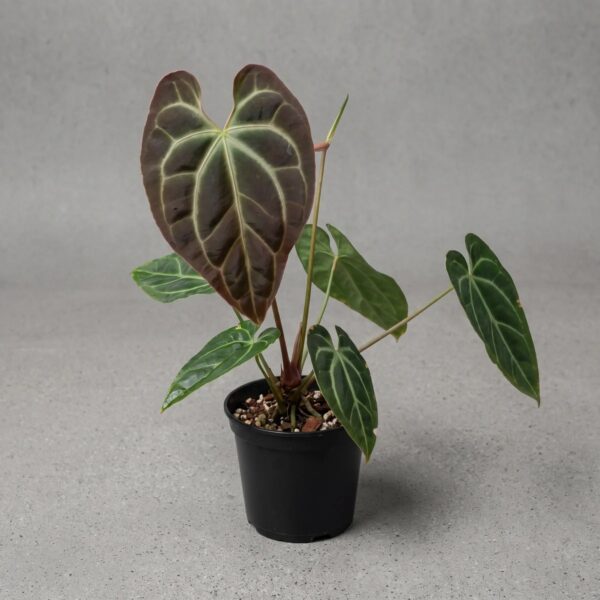
Plantjai shop · In stock online
Anthurium besseae aff.
Original price was: HK$1,080.00.HK$380.00Current price is: HK$380.00.
Hong Kong delivery · Causeway Bay pickup
For Hong Kong homes and offices. Stock and pricing follow the product page.
IN STORE NOW
Plants for this guide
Related plants in stock now — live prices, delivery or Causeway Bay pickup.
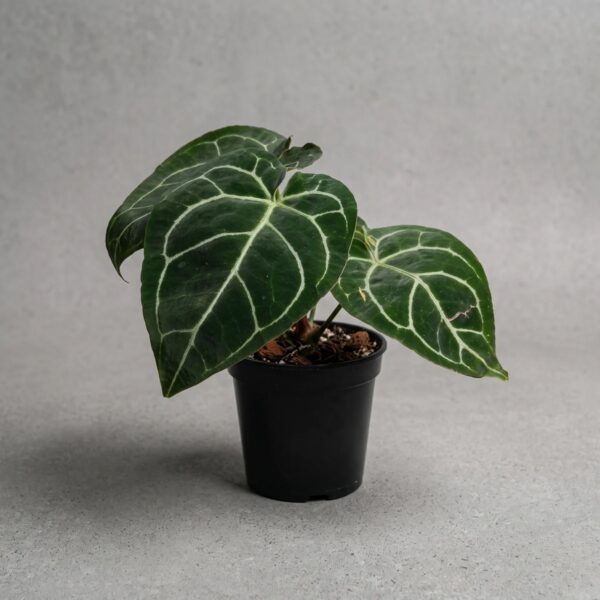
Anthurium crystallinum
Anthurium crystallinum
Original price was: HK$780.00.HK$380.00Current price is: HK$380.00.
In stock · store pickup
View plant
FREE PLANT ADVICE
Send us a photo before you change anything
WhatsApp a photo of the plant and your window light. Our Causeway Bay team will suggest care steps or plants that suit your space.
STORE · CAUSEWAY BAY
4/F, 39 Yiu Wa Street, Causeway Bay
Daily 12:30–8:00pm · ~3 min walk from Times Square
Map & directionsPlant Care