
How to Care for Amydrium Zippelianum in Hong Kong | Plantjai

Hong Kong care guide for Amydrium Zippelianum.
Deeply divided, claw-like leaves with an air of rainforest mystery — a collector's plant for the more experienced grower.
Origin & characteristics
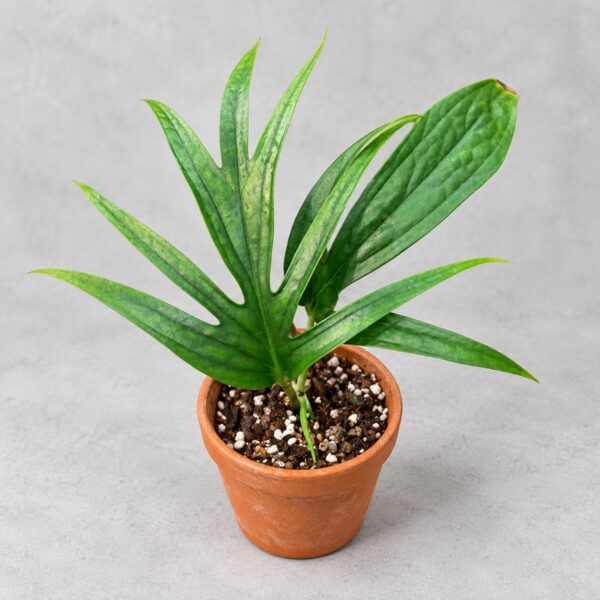
An evergreen, large-growing climbing vine in the Araceae family, native to the rainforests of New Guinea, the Solomon Islands, and eastern Indonesia. Its leaves have a highly distinctive form: mature leaves split into multiple narrow, pinnate leaflets that genuinely resemble a chicken's claw, hence the common name. Leaf surfaces are deep green and glossy, while the undersides carry a purple-red to bronze tone, creating a striking contrast. In the wild it grows into a large climbing plant, though indoor cultivation makes its size much easier to manage. Aerial roots are extremely well developed with strong climbing ability, making it a favourite among more advanced plant collectors.
Light
- Ideal light: medium to bright, indirect light; east- or west-facing windowsills suit it well.
- Placement suggestion: 1.5–2 m from a south-facing window, or a north-facing sill with supplemental lighting.
- How it responds: with enough light, the purple-red leaf underside becomes more pronounced and the whole plant grows more sturdy and compact.
- Avoid: direct midday summer sun — prolonged strong light causes fading and scorched edges.
- Signs of insufficient light: elongated internodes, thinner and softer leaves, reduced splitting in new leaves.
Watering
- Frequency: every 5–7 days during the peak growing season (spring/summer), every 7–10 days in autumn/winter.
- How to judge: water once the soil is dry 2–3 cm below the surface; test with a finger or moisture meter.
- Method: water slowly around the pot until it drains from the base, ensuring the entire root ball is thoroughly moistened.
- Water quality: room-temperature settled water, filtered water, or rainwater; avoid prolonged use of hard, mineral-heavy water.
- Winter note: reduce watering when temperatures fall below 18°C, keeping the medium just lightly moist to prevent root rot.
- Drainage: empty the saucer within 30 minutes of watering.
Soil & pot
- Medium requirements: highly aerated and well-draining, while retaining a degree of moisture.
- Recommended recipe:
- Sphagnum moss + perlite + coco chips + bark, in a 4:2:2:2 ratio
- Or peat + perlite + coco coir + bark chunks, in a 3:2:2:3 ratio
- pH: 5.5–6.5 (slightly acidic to neutral).
- Pot choice: a well-draining ceramic pot or quality plastic pot with drainage holes.
- Climbing support: set up a sturdy moss pole or wooden stake — mature plants have well-developed aerial roots and need solid support.
- Repotting: roots filling the pot or emerging from the drainage holes, typically every 1–2 years in spring.
Temperature & humidity
- Ideal temperature: 22–29°C.
- Acceptable range: 18–32°C.
- Minimum: not below 15°C; sustained cold causes leaf yellowing and drop.
- Ideal humidity: 70–85%, a genuinely high-humidity-demanding cultivar.
- Signs of insufficient humidity: browning leaf tips, slow leaf unfurling, dried-out aerial roots.
- Raising humidity:
- A humidifier for stable, reliable humidity (most dependable option)
- Grouping with other tropical plants
- A tray of moist pebbles beneath the pot
- Ventilation: maintain good airflow to prevent disease in stuffy, high-humidity conditions.
Common problems
| Issue | Likely cause | What to do |
|---|---|---|
| Incomplete leaf splitting | Plant not yet mature, insufficient light, or humidity too low | Check all three environmental factors |
| Fading purple-red leaf underside | Usually insufficient light | Gradually increase diffused light exposure |
| Dry, withered aerial roots | Environment too dry | Raise humidity and keep the moss pole moist |
| Yellowing, dropping leaves | Overwatering leading to root rot, cold temperatures, or natural ageing | Rule out each cause in turn |
| Spider mites | Common in dry conditions | Raise humidity and treat promptly |
| Scale insects | Common on stem nodes and leaf undersides | Wipe with alcohol on a cotton swab, or spray with neem oil |
| Slow growth | Normal in winter cold; check for nutrient deficiency in the growing season | Feed monthly with diluted liquid fertiliser |
How to explain to customers
"Chicken-Foot Amydrium is really a plant for more experienced growers to appreciate — once the leaves split, they genuinely look like a chicken's claw, which gives it a lot of character!"
"It comes from Pacific island rainforests originally, so it likes things warm and humid — if you run the AC a lot at home, it'll need extra humidity."
"This isn't the easiest beginner plant, but if you put in the care, it looks absolutely stunning in a living room once it matures — visitors will definitely ask where you got it!"
Fun facts
The purple-red colour on the underside of Chicken-Foot Amydrium's leaves comes from a rich concentration of anthocyanins, a pigment that protects the leaf from strong light damage while also helping absorb diffuse light to improve photosynthesis efficiency — a clever adaptation for a rainforest understorey plant.
Keywords
Chicken-Foot Amydrium, Amydrium zippelianum, Araceae, deeply lobed leaf, purple-red underside, climbing plant, moss pole, high humidity, advanced cultivar, rainforest plant, foliage plant
參考資料(想知來源可展開)
References
- Plants of the World Online (Kew) — Amydrium zippelianum. https://powo.science.kew.org
- Foliage Factory — Amydrium Plants | Shingling Aroid Vines. https://foliage-factory.com/collections/amydrium
- PLNTS.com — How to Care for Amydrium: Expert Tips for Thriving Plants. https://plnts.com/en/care/houseplants-family/amydrium
⚠️ Pet / toxicity note: Like other Araceae members, contains calcium oxalate crystals; ingestion can cause oral and digestive irritation. Keep away from pets and small children.
In-depth care guide
Introduction
Chicken-Foot Amydrium (Amydrium zippelianum) is a large, evergreen climbing vine in the Araceae family, native to the rainforests of New Guinea, the Solomon Islands, and eastern Indonesia. Its most distinctive feature is the deeply divided, claw-like form of its mature leaves, which split into multiple narrow, pinnate leaflets that genuinely resemble a chicken's foot — hence its common name. The glossy deep-green upper leaf surface contrasts sharply with a purple-red to bronze underside, creating a striking two-tone effect that's part of the plant's appeal among more advanced collectors.
In the wild, this species can grow into a substantial climbing plant, using its extremely well-developed aerial roots to grip tree trunks as it ascends toward the canopy. Indoor cultivation keeps its ultimate size far more manageable, though it still rewards patient, experienced growers who can provide the warm, humid, and well-lit conditions it needs to reach its full, dramatically lobed mature form.
Native habitat and growth pattern
Like other Amydrium species, Chicken-Foot Amydrium is a hemi-epiphyte, beginning life rooted in the forest floor before transitioning to a climbing habit as it matures. Its native range across New Guinea, the Solomon Islands, and eastern Indonesia places it firmly within the humid, warm, stable conditions of equatorial Pacific rainforests — conditions that are considerably more consistent than what most Hong Kong homes naturally offer, which is part of why this species is generally recommended to growers with some prior aroid experience.
The dramatic transformation from simple juvenile leaves to the deeply lobed, "chicken-foot" mature form depends on the plant both ageing sufficiently and being given a vertical support to climb. Without a climbing structure, expect the plant to remain in a less spectacular, less divided juvenile state indefinitely.
Light requirements
Chicken-Foot Amydrium needs medium to bright, indirect light. East- or west-facing windowsills work well, or a spot roughly 1.5–2 m from a south-facing window, or a north-facing sill supplemented with grow lighting.
With sufficient light, the purple-red leaf underside becomes noticeably more pronounced, and the whole plant develops a sturdier, more compact growth habit overall. Avoid direct midday sun in summer, since prolonged strong light exposure causes fading of the leaf colour and scorching along the edges.
Signs of insufficient light include elongated internodes (the stem stretching out between leaves), leaves that feel thinner and softer than they should, and reduced splitting in new leaf growth — all indications that the plant needs to move somewhere brighter.
Watering technique
During the peak growing season (spring and summer), water Chicken-Foot Amydrium roughly every 5–7 days; extend this to every 7–10 days in autumn and winter. Judge timing by checking whether the soil is dry 2–3 cm below the surface, using either a finger test or a moisture meter.
Water slowly around the base of the plant until it drains freely from the pot's drainage holes, making sure the entire root ball gets thoroughly moistened rather than just the top layer. Use room-temperature settled water, filtered water, or rainwater, and avoid prolonged use of hard, mineral-heavy tap water, which can build up in the soil over time and affect root health.
Once winter temperatures drop below 18°C, reduce watering further, keeping the medium just lightly moist to prevent root rot during the plant's slower growth phase. Always empty the saucer within 30 minutes of watering to avoid the pot sitting in standing water.
Soil and potting
Chicken-Foot Amydrium needs a growing medium that's both highly aerated and well-draining, while still retaining a reasonable amount of moisture to support its more vigorous growth habit.
Recommended recipes:
- Sphagnum moss + perlite + coco chips + bark, in a 4:2:2:2 ratio
- Or peat + perlite + coco coir + bark chunks, in a 3:2:2:3 ratio
Maintain a slightly acidic to neutral pH of 5.5–6.5, and choose a well-draining ceramic or quality plastic pot with drainage holes. Given the plant's extremely well-developed aerial roots once mature, set up a sturdy moss pole or wooden stake early on — a flimsy support won't hold up as the plant grows larger and heavier.
Repot roughly every 1–2 years in spring, once roots have filled the current pot or begin emerging from the drainage holes.
Temperature and humidity
Chicken-Foot Amydrium's ideal temperature range is 22–29°C, with an acceptable range of 18–32°C. Keep it above 15°C at all times — sustained cold below this will cause leaf yellowing and drop.
Humidity requirements are genuinely high for this species, ideally 70–85%. Signs of insufficient humidity include browning leaf tips, slow or difficult leaf unfurling, and dried-out aerial roots. A humidifier offers the most stable and reliable way to maintain adequate humidity; grouping the plant with other tropical specimens and using a tray of moist pebbles beneath the pot both serve as helpful secondary measures. As always with high-humidity plants, good ventilation is essential to prevent stuffy conditions from encouraging disease.
Feeding
Feed during the growing season with a diluted balanced liquid fertiliser roughly once a month, supporting the plant's more vigorous growth and larger mature leaves. Reduce or stop feeding in autumn and winter as growth slows naturally. If growth stalls unexpectedly during the growing season, check first for nutrient deficiency before assuming an environmental problem.
Common problems in detail
Incomplete leaf splitting: the plant may not yet be mature enough, or light and humidity may be insufficient — check all three factors together rather than assuming just one cause, since they interact.
Fading purple-red leaf underside: usually a sign of insufficient light. Gradually increase diffused light exposure rather than making a sudden change, which could shock the plant.
Dry, withered aerial roots: indicates the environment is too dry overall. Raise ambient humidity and keep the moss pole itself consistently moist, since aerial roots draw moisture directly from a damp support.
Yellowing, dropping leaves: work through the possible causes systematically — overwatering leading to root rot, temperatures that have dropped too low, or simply natural ageing of older leaves, which is normal and not a cause for concern on its own.
Spider mites: common in dry conditions; raise humidity as the primary defence and treat active infestations promptly.
Scale insects: typically found on stem nodes and leaf undersides; remove with an alcohol-dipped cotton swab, or treat more widespread infestations with neem oil spray.
Toxicity information
Like other members of the Araceae family, Chicken-Foot Amydrium contains calcium oxalate crystals throughout the plant, which can cause oral and digestive irritation if ingested. Keep it out of reach of pets and small children, and wash your hands thoroughly after handling the plant.
References
- Plants of the World Online (Kew) — Amydrium zippelianum. https://powo.science.kew.org
- Foliage Factory — Amydrium Plants | Shingling Aroid Vines. https://foliage-factory.com/collections/amydrium
- PLNTS.com — How to Care for Amydrium: Expert Tips for Thriving Plants. https://plnts.com/en/care/houseplants-family/amydrium
- Missouri Botanical Garden — Plant Finder. https://www.missouribotanicalgarden.org/PlantFinder/PlantFinderDetails.aspx
For Hong Kong homes and offices. Stock and pricing follow the product page.
IN STORE NOW
Plants for this guide
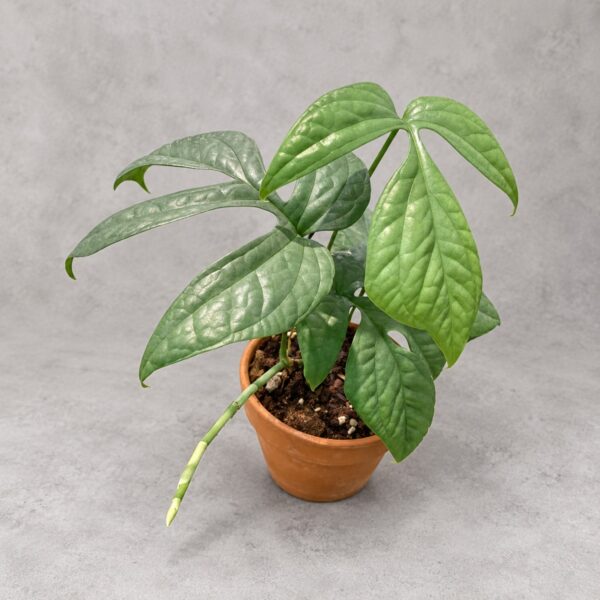
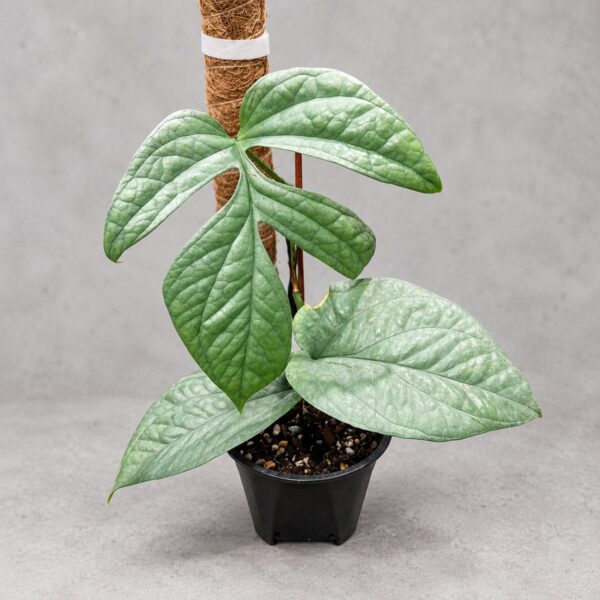
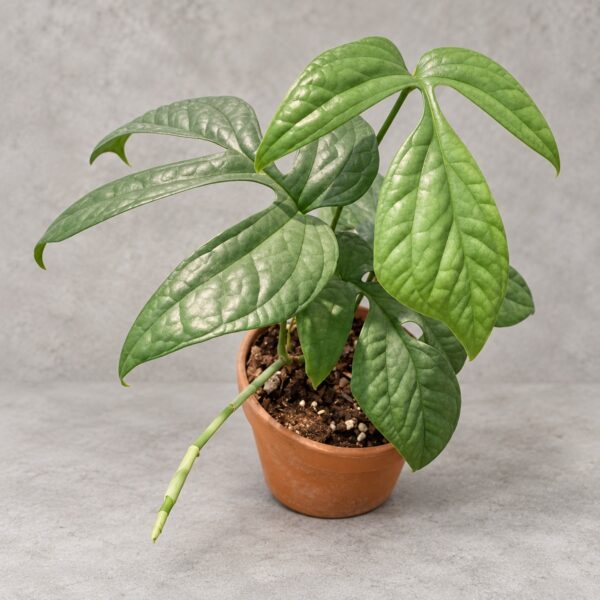
Related plants in stock now — live prices, delivery or Causeway Bay pickup.
FREE PLANT ADVICE
Send us a photo before you change anything
WhatsApp a photo of the plant and your window light. Our Causeway Bay team will suggest care steps or plants that suit your space.
STORE · CAUSEWAY BAY
4/F, 39 Yiu Wa Street, Causeway Bay
Daily 12:30–8:00pm · ~3 min walk from Times Square
Map & directionsPlant Care