
How to Care for Alocasia Silver Dragon Variegated in Hong Kong | Plantjai

Plantjai 植仔 · Care Encyclopedia
Alocasia Silver Dragon Variegated
Alocasia silver dragon variegated 白犀牛錦海芋
Hong Kong care guide — useful before you buy and after it arrives.
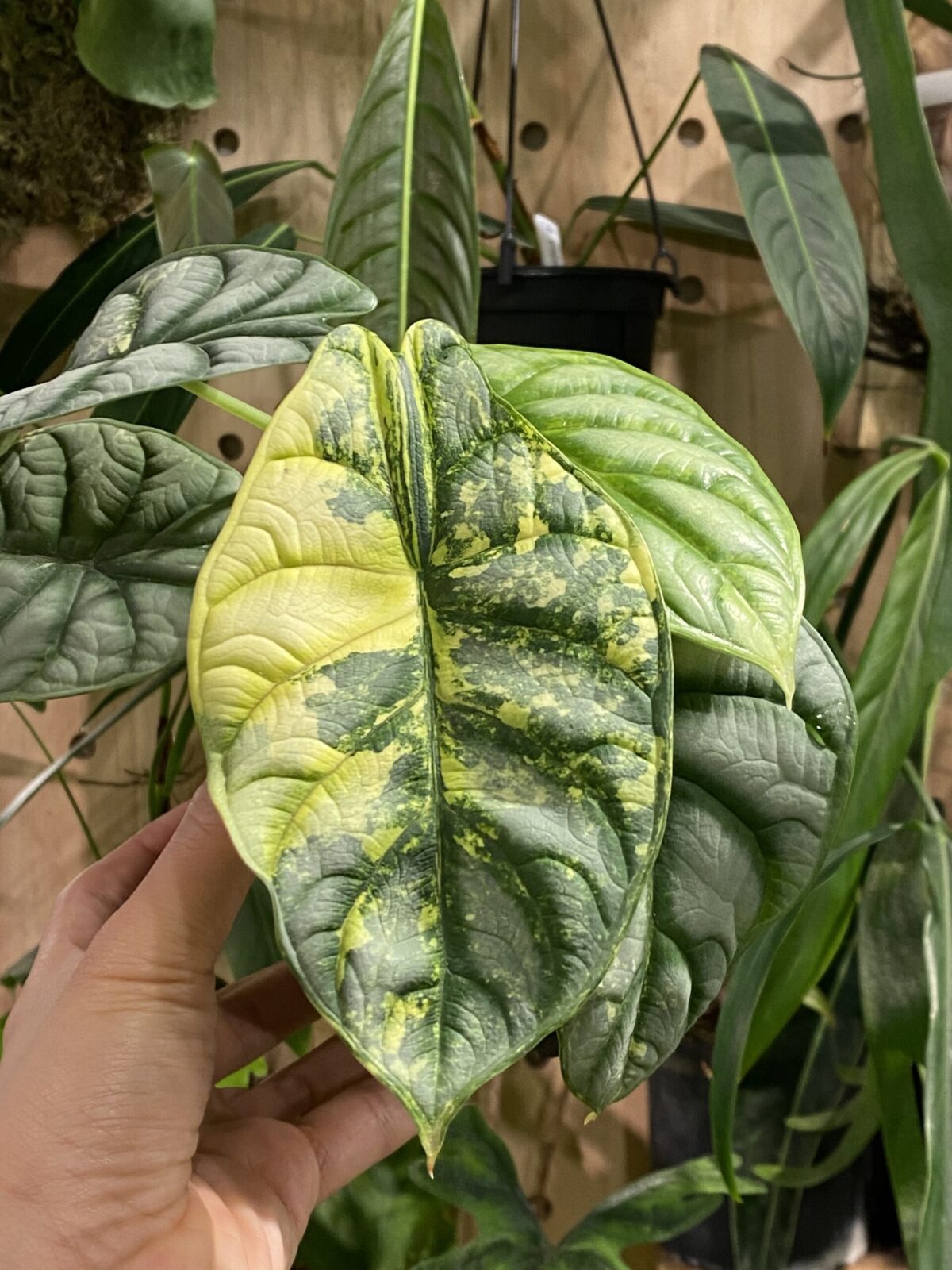
Shop this plantSilver-grey dragon scales draped in cream — understated luxury at the very top of the foliage-collecting ladder.
Botanical name unconfirmed: commonly listed in the trade as "Alocasia silver dragon variegated," though its formal taxonomic placement remains debated — likely a variegated cultivar within the Alocasia baginda group.
Origin & characteristics
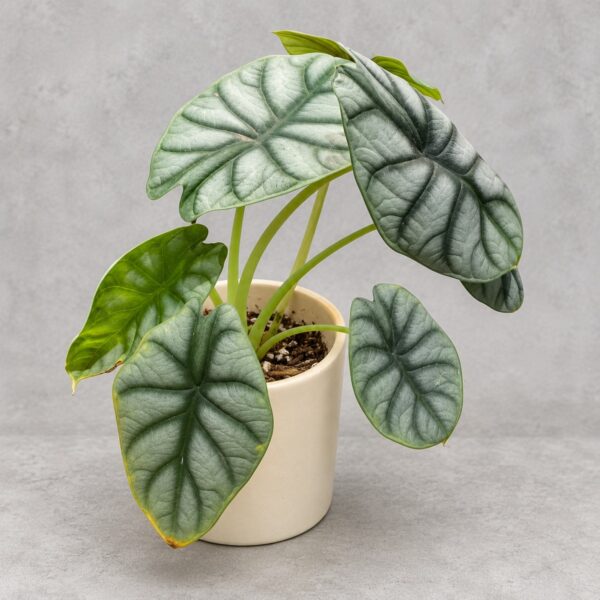
The variegated Silver Dragon is a rare variegated sport of Silver Dragon Alocasia, with the parent species presumed native to lowland rainforest in Borneo, Southeast Asia. Leaves carry a distinctive silver-grey base with a dragon-scale bumpy texture and a leathery, thick feel. The variegated form adds irregular creamy-white to pale yellow patches over the silver-grey base, giving it even more visual depth. Plants stay compact, reaching only 30–50 cm at maturity, and while growth is slow, the ornamental value is exceptional — a genuine holy grail plant for Alocasia enthusiasts.
Light
- Ideal light: soft, bright, indirect light, roughly 800–1,500 lux.
- Placement: an east-facing window, or an indoor spot filtered through a sheer curtain.
- A note on variegation: the variegated patches lack chlorophyll — never expose them to strong direct sun, which will scorch the variegation brown.
- Signs of insufficient light: the silver-grey colour dulls, variegation becomes less distinct, and new leaves stay small.
Watering
- Frequency: water once the top 2–3 cm of soil has dried, roughly every 5–7 days.
- Method: water slowly until it drains from the base; empty the saucer after 30 minutes.
- Water quality: room-temperature settled or filtered water is best.
- Dormant season: in autumn/winter, growth slows considerably — extend the interval to 7–10 days.
- Tip: the thick leaves give this cultivar some drought tolerance — better slightly dry than waterlogged, since standing water leads quickly to root rot.
Soil & pot
- Soil recipe: peat 35% + perlite 35% + coco coir 20% + pine bark 10%, or a ready-made aroid mix that prioritises drainage and aeration.
- pH: slightly acidic, 5.5–6.5.
- Pot choice: a breathable terracotta pot or a plastic pot with plenty of drainage holes — don't go too large.
- Repotting: only once the roots have filled the pot, roughly every 1–2 years; size up by no more than one pot size at a time.
Temperature & humidity
- Ideal temperature: 20–28°C, best at 22–26°C.
- Minimum: growth stops below 15°C; frost-damage risk with prolonged exposure below 12°C.
- Humidity: 70–85% is ideal — this is a genuinely high-humidity-demanding cultivar.
- Raising humidity: a humidifier or pebble tray is essential; grouping with other plants helps build a stable microclimate.
- Note: usually fine during Hong Kong summers, but pay close attention to humidity when running heaters in winter.
Common problems
| Issue | Likely cause | What to do |
|---|---|---|
| Variegation reverting to solid green or solid white | Light or nutrient imbalance | Adjust light intensity; feed lightly with diluted liquid fertiliser |
| Yellowing, soft leaves | Overwatering leading to root rot | Check roots immediately, trim rot, and repot into fresh soil |
| New leaves failing to unfurl or tearing | Insufficient humidity | Maintain especially high humidity while new leaves are developing |
| Very slow growth | Normal for variegated cultivars | Be patient — this is expected, not a problem |
| Spider mites | Hot, dry conditions | Wipe leaves with a damp cloth and raise humidity |
How to explain to customers
"Variegated Silver Dragon is really a plant for more experienced growers — it grows slowly and is a bit more delicate, but when it's grown well, it's absolutely stunning. Just remember never to put it in direct sun — those silver-grey variegated patches burn very easily — and keep the humidity nice and high."
Fun facts
Silver Dragon gets its name from the bumpy, scale-like texture across its silver-grey leaf surface, which genuinely resembles dragon scales; the variegated form's irregular patches make every single leaf one-of-a-kind, and in plant-collecting circles it's regarded as a "living work of art," commanding prices well above the standard, non-variegated form.
Keywords
Plantjai, Variegated Silver Dragon Alocasia, Alocasia silver dragon variegated, Alocasia baginda, variegated Alocasia, silver-grey leaf, dragon-scale texture, high humidity, indirect light, rare cultivar, toxic to pets, Hong Kong gardening
參考資料(想知來源可展開)
References
- Plants of the World Online (Kew) — Alocasia baginda. https://powo.science.kew.org
- RHS — Alocasia care. https://www.rhs.org.uk/plants/alocasia
- Proven Winners — How to Grow Alocasia Indoors and Outdoors. https://www.provenwinners.com/learn/houseplants/alocasia
⚠️ Pet / toxicity note: Contains calcium oxalate crystals throughout the plant; ingestion causes oral pain, drooling and vomiting. Keep away from pets 🐕🐈 and small children 👶, and wash hands after handling.
In-depth care guide
Introduction
The variegated Silver Dragon is one of the rarest and most sought-after forms in the Alocasia collecting world — a variegated sport of the already-prized Silver Dragon Alocasia (Alocasia baginda 'Silver Dragon'). Where the standard Silver Dragon already draws attention with its metallic silver-grey, dragon-scale-textured leaves, the variegated form takes things a step further, adding irregular splashes of creamy white to soft yellow across the silvery base. No two leaves are ever alike, which is precisely why collectors treat every specimen as a unique piece.
Like its parent, this cultivar belongs to the lithophytic ("jewel") Alocasia group, native to the rocky rainforest floors of Borneo in Southeast Asia. It stays genuinely compact, typically 30–50 cm at maturity, which makes it an excellent fit for a Hong Kong apartment despite its advanced care requirements. Growth is notably slower than the non-variegated form, since the white and cream portions of each leaf lack chlorophyll and can't contribute to photosynthesis — but the visual reward, for those willing to put in the care, is considerable.
Growth habit and rarity
Variegated forms of already-rare species are, almost by definition, extremely uncommon, and the variegated Silver Dragon is no exception. It typically arises as a spontaneous genetic mutation (a "sport") from standard Silver Dragon stock, and because variegated tissue grows more slowly and is harder to propagate reliably, availability in the trade remains limited and prices considerably higher than the standard form.
This scarcity also means the plant tends to change hands among more experienced collectors, who are generally better equipped to provide the stable, high-humidity environment it needs. If you're relatively new to Alocasias, it's worth building experience with the standard Silver Dragon, Dragon Scale, or another jewel Alocasia first before taking on the variegated form.
Light requirements
The variegated Silver Dragon needs soft, bright, indirect light — a genuinely delicate balance, since the white and cream variegated portions burn far more easily than the silver-grey or green tissue.
Ideal placement:
- An east-facing window, receiving gentle morning light
- A spot filtered through a sheer curtain if placed near a south- or west-facing window
- A well-lit interior room without direct sun exposure
The variegation trade-off: because the variegated tissue can't photosynthesise, the plant technically needs more overall light to sustain healthy growth than a solid-green Alocasia would — yet that same lack of chlorophyll makes the white areas far more vulnerable to sunburn, with essentially no protective pigment to dissipate the sun's energy. This means bright but strictly indirect light, for a good number of hours a day, is the target — never direct midday sun.
Reading the signals: if new leaves come in mostly silver-grey or green with little variegation, this can point to genetics as much as light — variegation levels vary between individual leaves regardless of environment. But if the whole plant looks consistently dull and the variegation seems muddier than before, insufficient light is the likely cause.
Watering technique
This cultivar's roots are just as sensitive to overwatering as the standard Silver Dragon's — arguably more so, since the slower-growing variegated tissue takes up less water overall, making it easier to accidentally keep the soil too wet for too long.
Watering principles:
- Wait until the top 2–3 cm of soil has dried before watering
- Water thoroughly until it runs from the drainage holes, then empty the saucer promptly
- Never let the pot sit in standing water
- Use room-temperature filtered water or rested tap water to avoid mineral staining on the leaf surface
Seasonal adjustment:
- Spring/summer growing season: roughly every 5–7 days
- Autumn/winter: extend to every 7–10 days, erring on the dry side
A note on patience: because this cultivar grows so slowly, it's easy to assume something is wrong when in fact the plant is simply behaving normally. Resist the urge to water more frequently "to help it grow" — this is one of the fastest ways to lose a variegated Silver Dragon to root rot.
Soil and potting
Like all lithophytic Alocasias, the variegated Silver Dragon needs an extremely well-draining, highly aerated growing medium, since its roots evolved to grow in rocky crevices rather than dense soil.
Recommended soil mix:
- 35% peat
- 35% perlite
- 20% coco coir
- 10% pine bark
Alternatively, a ready-made aroid mix works well provided it prioritises drainage and airflow above moisture retention.
Pot selection:
- A breathable terracotta pot is ideal, though a well-drained plastic pot also works
- Avoid oversized pots — this cultivar prefers being slightly root-bound, and excess soil volume around the roots increases the risk of prolonged dampness
- Repot only once the roots have genuinely filled the pot, roughly every 1–2 years, sizing up by no more than one pot size at a time
Humidity and temperature
Humidity: this is a genuinely high-humidity-demanding cultivar, needing 70–85% to look and grow its best. A humidifier or pebble tray is essentially non-negotiable rather than optional, and grouping it with other humidity-loving plants helps create a stable, shared microclimate. Hong Kong's summer humidity is usually more than adequate, but winter heating can drop indoor humidity sharply, so extra vigilance is needed during that season.
Temperature: ideal range is 20–28°C, with 22–26°C being the sweet spot. Growth stops below 15°C, and prolonged exposure below 12°C risks frost damage. Keep the plant away from AC vents, draughty doors and windows, and any source of sudden temperature swings — stability matters more than chasing a perfect number.
Feeding
Because variegated tissue grows more slowly and has less capacity to process nutrients, this cultivar needs a lighter feeding hand than most Alocasias.
Feeding recommendations:
- Use a balanced liquid fertiliser, diluted to a quarter or half strength
- Feed only during the growing season (spring through early autumn), roughly every 4–6 weeks
- Always water before feeding to avoid burning dry roots
- Stop feeding entirely once temperatures drop in autumn/winter
Signs of overfeeding: distorted new leaves, scorched leaf edges, or a white salt crust on the soil surface all suggest it's time to flush the soil with plain water and ease off on fertiliser.
Common problems in detail
Variegation reverting to solid green or solid white: an imbalance in light or nutrients is the usual cause. Solid-green reversion typically means the plant needs brighter light; leaves reverting to solid white (and therefore unable to photosynthesise) will eventually die back — if this happens repeatedly, it may indicate the plant is genetically unstable, which unfortunately can happen with some variegated sports.
Yellowing, soft leaves: almost always a sign of overwatering and incipient root rot. Stop watering immediately, unpot the plant, trim away any soft or blackened roots, and repot into fresh, dry mix.
New leaves failing to unfurl properly, or tearing as they open: points to insufficient humidity during the vulnerable unfurling stage. Keep humidity especially high — above 75% if possible — whenever you see a new leaf beginning to emerge.
Very slow overall growth: this is largely expected behaviour for a variegated cultivar and isn't necessarily a sign of a problem, provided the plant otherwise looks healthy. Patience is part of growing variegated Alocasias.
Spider mites: thrive in hot, dry conditions. Check the leaf undersides regularly, wipe with a damp cloth if you spot early signs, and raise humidity as the best long-term prevention.
Toxicity information
Like all Alocasia species, the variegated Silver Dragon contains calcium oxalate crystals throughout the plant, toxic to both humans and pets. Ingestion causes oral pain, drooling, swelling, and vomiting. Keep it well out of reach of children and pets, and wash your hands thoroughly after handling the plant, particularly after pruning or repotting when sap contact is more likely.
References
- Plants of the World Online (Kew) — Alocasia baginda. https://powo.science.kew.org
- RHS — Alocasia care. https://www.rhs.org.uk/plants/alocasia
- Proven Winners — How to Grow Alocasia Indoors and Outdoors. https://www.provenwinners.com/learn/houseplants/alocasia
- Ohio Tropics — Alocasia Silver Dragon: 7 Tips to Grow this Stunning Beauty. https://www.ohiotropics.com/2022/10/11/alocasia-silver-dragon/
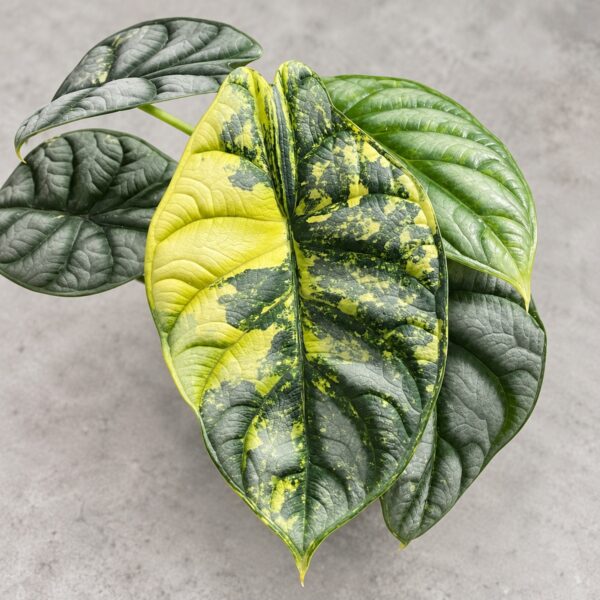
Plantjai shop · In stock online
Alocasia silver dragon variegated
HK$580.00
Hong Kong delivery · Causeway Bay pickup
For Hong Kong homes and offices. Stock and pricing follow the product page.
IN STORE NOW
Plants for this guide
Related plants in stock now — live prices, delivery or Causeway Bay pickup.
FREE PLANT ADVICE
Send us a photo before you change anything
WhatsApp a photo of the plant and your window light. Our Causeway Bay team will suggest care steps or plants that suit your space.
STORE · CAUSEWAY BAY
4/F, 39 Yiu Wa Street, Causeway Bay
Daily 12:30–8:00pm · ~3 min walk from Times Square
Map & directionsPlant Care