
How to Care for Alocasia Scalprum in Hong Kong | Plantjai

Plantjai 植仔 · Care Encyclopedia
Alocasia Scalprum
Hong Kong care guide — useful before you buy and after it arrives.
Shop this plantNarrow, dagger-like leaves with hard, sculptural lines — like a piece of living modern art.
Origin & characteristics
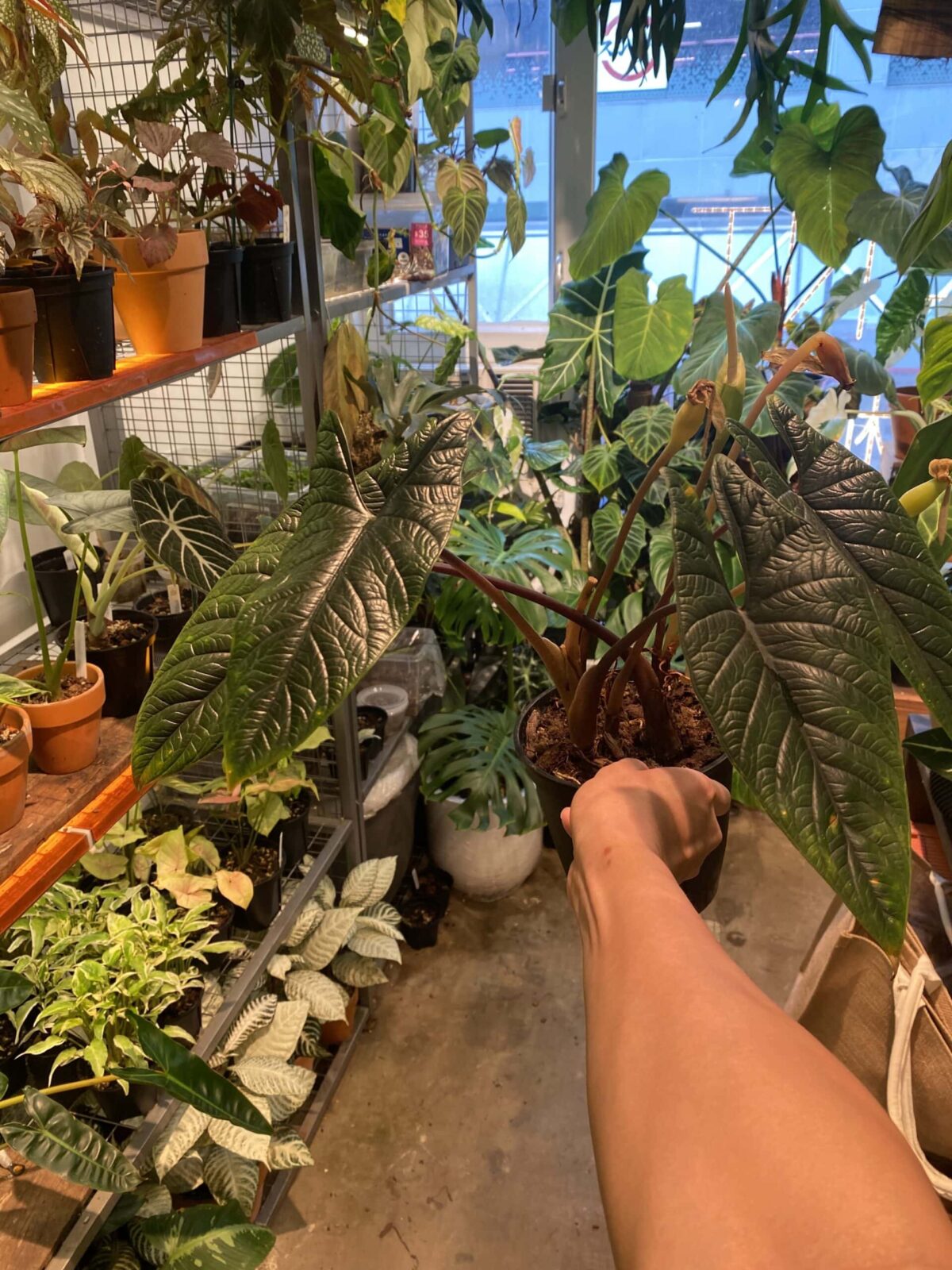
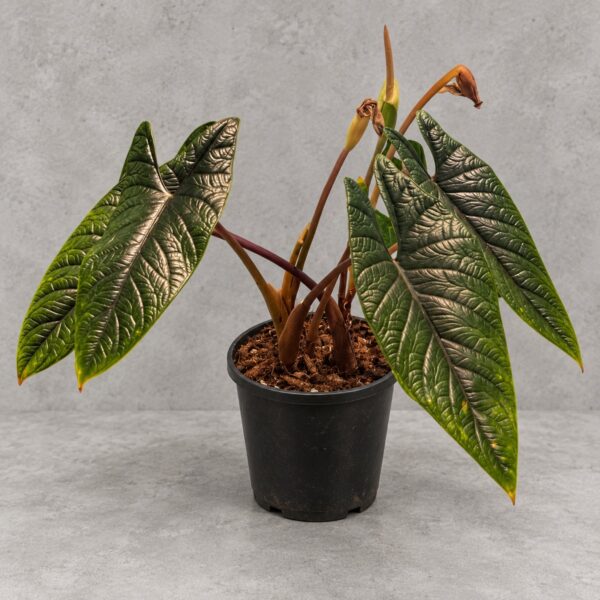
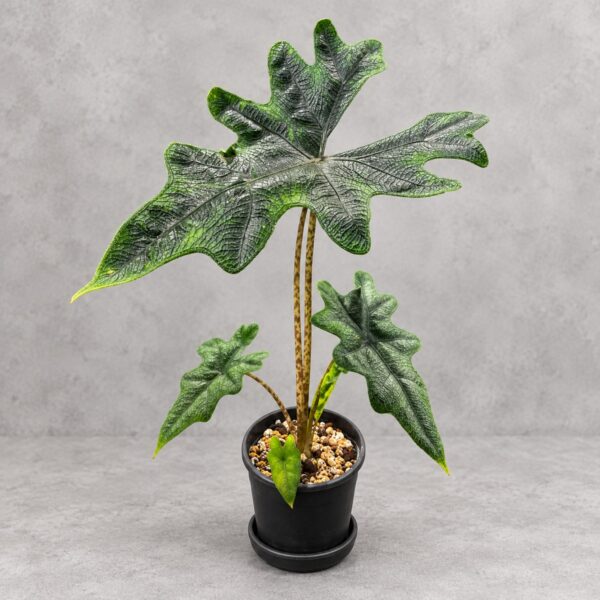
Scalprum Alocasia, also known as Samar Lance, is native to the tropical rainforests of Samar Island in the Philippines. Its defining feature is a narrow, lance-shaped leaf with a gently wavy edge, thick and glossy in texture, resembling an ancient carving blade — hence the species epithet. Leaves are deep green with clearly raised veining and a clean, streamlined silhouette. Plants stay compact, reaching roughly 60–90 cm at maturity, making it a great fit for a modern, minimalist interior.
Light
- Ideal light: bright, indirect light, roughly 1,000–2,000 lux.
- Placement: 1–2 m from an east- or west-facing window; filtered morning or afternoon light works best.
- Avoid: strong midday direct sun, which scorches the leaves and causes brown patches.
- Signs of insufficient light: thinner leaves, fading colour, small, dull new leaves.
Watering
- Frequency: water once the top 2–3 cm of soil has dried, roughly every 5–7 days.
- Method: water slowly and thoroughly until it drains from the base — avoid leaving the soil half-wet.
- Water quality: room-temperature settled water is best; avoid cold water shocking the roots.
- Dormant season: in autumn/winter when growth slows, extend the interval to 7–10 days.
- Tip: its thick leaves store some moisture, making it fairly drought-tolerant — better slightly dry than waterlogged.
Soil & pot
- Soil recipe: peat 40% + perlite 30% + coco coir 20% + charcoal granules 10%; needs to be loose, airy, and fast-draining.
- pH: slightly acidic to neutral, 6.0–7.0.
- Pot choice: a breathable terracotta pot or a plastic pot with ample drainage holes.
- Repotting: once roots fill the pot or emerge from the drainage holes (usually once a year in spring); size up by one pot size each time.
Temperature & humidity
- Ideal temperature: 20–30°C, best at 22–28°C.
- Minimum: growth stops below 15°C; frost-damage risk with prolonged exposure below 12°C.
- Humidity: 60% or higher, ideally 70–80%.
- Raising humidity: a nearby humidifier, a pebble tray, or grouping with other plants.
- Note: Hong Kong summer humidity is usually adequate; pay extra attention when running heaters in winter.
Common problems
| Issue | Likely cause | What to do |
|---|---|---|
| Drooping, soft leaves | Underwatering or root rot | Check soil moisture and root colour |
| Browning leaf tips | Humidity too low or hard water | Switch to filtered or settled water |
| Stalled growth | Possible nutrient deficiency or root-bound pot | Consider repotting or a light feed |
| Spider mites | Hot, dry conditions | Wipe leaves with a damp cloth and raise humidity |
How to explain to customers
"Scalprum's best feature is really its leaf shape — those clean, sculptural lines instantly elevate a room, like having a piece of art on display. It's actually fairly easy to keep too — the main thing is just not drowning the roots."
Fun facts
The species name scalprum comes from Latin for "small knife" or "carving tool," describing its slender, pointed leaf shape, while its other common name, Samar Lance, references both its home island (Samar, Philippines) and its lance-like leaves.
Keywords
Plantjai, Scalprum Alocasia, Alocasia scalprum, Samar Lance, thick-leaved Alocasia, indoor plant, indirect light, high humidity, toxic to pets, sculptural foliage, Hong Kong gardening
參考資料(想知來源可展開)
References
- Plants of the World Online (Kew) — Alocasia scalprum. https://powo.science.kew.org
- RHS — Alocasia care. https://www.rhs.org.uk/plants/alocasia
- Proven Winners — How to Grow Alocasia Indoors and Outdoors. https://www.provenwinners.com/learn/houseplants/alocasia
⚠️ Pet / toxicity note: Contains calcium oxalate crystals throughout the plant; ingestion causes oral discomfort. Wear gloves when handling, and keep away from pets 🐕🐈 and small children 👶.
In-depth care guide
Introduction
Scalprum Alocasia (Alocasia scalprum), also known as Samar Lance, is a comparatively rare foliage plant within the Araceae family. Its defining feature is a narrow, elongated leaf, sword-like in profile, with a noticeably ridged, textured dark green surface that looks almost as if it's been carved — inspiring its Chinese common name, which translates to "Oracle Bone Script Alocasia," a nod to ancient carved inscriptions.
A. scalprum's leaves are thick and firm with a modest sheen, and the underside is often tinged with a soft purple-red or pink, contrasting beautifully with the deep green upper surface. It's a small-to-medium Alocasia, typically reaching 30–60 cm at maturity, making it perfectly suited to indoor spaces without taking up much room.
This species is relatively uncommon in Alocasia collecting circles, but its distinctive leaf shape and texture have made it increasingly popular with tropical plant enthusiasts in recent years.
Native habitat
Scalprum Alocasia is native to the tropical regions of the Philippines, growing in the warm, humid environment of rainforest floors. As an understorey plant, it's adapted to high humidity, filtered light, and consistently warm conditions.
Like other Alocasias, it grows on the forest floor in the wild, with roots accustomed to spreading through loose, organically rich soil. This native background explains its relatively demanding humidity requirements indoors, along with its need for a well-aerated growing medium.
Light requirements
Ideal light
Scalprum Alocasia needs bright, indirect light to grow well. It prefers stable, gentle diffused light rather than direct sun exposure.
Recommended placement:
- East- or west-facing windows (with a sheer curtain to filter light)
- 1–2 m from a south-facing window
- Under a grow light for 12–14 hours daily
Too much light
Direct sun will scorch the leaves, causing brown spots or crispy edges. Strong midday summer sun in particular should always be avoided.
Too little light
Prolonged low light causes the plant to become sparse, with thinner leaves and significantly slower growth. Insufficient light also makes the leaf texture less pronounced.
Rotate regularly
Turn the pot every few weeks to ensure even light exposure on all sides, preventing lopsided growth.
Humidity management
Ideal humidity
Scalprum Alocasia prefers higher humidity, ideally 60–80%. High humidity keeps the leaves looking their best and reduces the risk of leaf-edge browning.
Problems from low humidity
Dry air can cause:
- Dry, browning leaf edges
- Curling leaves
- Stalled growth
- Increased susceptibility to spider mites
Ways to raise humidity
- Humidifier: the most effective option, reliably maintaining 60%+ humidity
- Wet tray: place moist perlite in the saucer beneath the pot
- Grouping plants together
- Regular misting: mist in the morning (with good ventilation)
Watering technique
Watering principle
Scalprum Alocasia prefers consistently moist but never waterlogged soil. Water once the top 1–2 inches (roughly 3–5 cm) of soil has dried.
Checking method
Insert a finger about 3–5 cm into the soil; if it feels dry, it's time to water. This typically works out to every 5–7 days in summer and every 10–14 days in winter.
Water quality
Scalprum Alocasia is somewhat sensitive to water quality; use:
- Rainwater (best)
- Filtered or distilled water
- Tap water rested for at least 24 hours
Prolonged use of hard water (high in dissolved minerals) can cause leaf-tip yellowing.
Water thoroughly
Each watering should be thorough enough that water runs from the drainage holes, then empty the saucer to avoid "wet feet" root rot.
Seasonal adjustment
- Spring/summer (growing season): water when the soil is half-dry, roughly every 5–7 days
- Autumn/winter (slower growth): reduce watering, letting the soil dry out more before watering again
- Below 15°C: cut back watering substantially, nearly to a stop
Common issues
- Yellow leaves, wet soil: overwatering, possibly root rot
- Drooping leaves, dry soil: underwatering — water immediately
- Dry leaf edges: insufficient humidity or hard water
Soil recipe
Soil requirements
Scalprum Alocasia needs a loose, airy, well-draining aroid mix. Standard potting soil is too dense and prone to waterlogging, risking root rot.
Recommended recipe
- Orchid bark / pine bark: 30%
- Perlite: 25%
- Coco coir / coconut husk fibre: 25%
- Peat: 10%
- Sphagnum moss: 5%
- Activated charcoal: 5%
This recipe retains moderate moisture while allowing the roots to breathe freely.
Pot selection
- Drainage holes: absolutely essential
- Terracotta pots: good breathability
- Clear plastic pots: convenient for monitoring roots
- Air pots: improve ventilation
Repotting
Roughly every 1–2 years, best in spring. Repot once roots emerge from the drainage holes, sizing up by just 1–2 inches each time.
Temperature requirements
Ideal temperature
Scalprum Alocasia grows best at 18–27°C (65–80°F).
Minimum temperature
15°C is the warning line — growth slows noticeably below this. Sustained exposure below 10°C risks frost damage.
High-temperature care
Above 30°C, increase both watering and humidity, since the soil dries out faster.
Stability matters
Keeping temperature stable matters more than chasing an ideal number. Avoid placing near AC vents, heaters, or doors/windows.
Feeding
Timing
Feed once every 4–6 weeks during the growing season (spring/summer).
Fertiliser choice
Use a balanced liquid fertiliser (such as 10-10-10 or 20-20-20), diluted to half the recommended package strength.
Winter pause
Stop feeding in cooler autumn/winter months to avoid salt buildup damaging the roots.
Pruning and general care
Pruning
Trim away yellowed or withered old leaves to keep the plant tidy. Use clean, sharp scissors, cutting at the base of the petiole.
Leaf cleaning
Regularly wipe leaves with a soft, slightly damp cloth to remove dust. Avoid chemical leaf-shine products.
New leaf care
Keep the environment stable while new leaves are unfurling, and avoid moving the plant around too much.
Propagation
Division
At repotting, separate offsets growing from the base and pot them individually.
Corm propagation
Scalprum Alocasia has underground corms; small corms can be collected and potted separately.
Common problems
Yellow leaves
- Lower leaves yellowing: natural ageing
- Widespread yellowing: overwatering, root rot, cold temperatures, or insufficient light
- Yellow leaf tips: hard water or low humidity
Spider mites
Common in dry conditions. Raising humidity is the best prevention. If detected, rinse leaf undersides with water; use a miticide for severe infestations.
Dry leaf edges
A classic sign of low humidity. Increase ambient humidity or use a humidifier.
Beginner tips
Although Scalprum Alocasia is a relatively uncommon species, its care is broadly similar to other Alocasias. The single most important thing for beginners to remember is "better dry than wet" — slightly under-watered soil is always safer than overwatered, since root rot is an Alocasia's biggest enemy.
Beginners are encouraged to start with a smaller pot, since smaller pots dry and rewet faster, making it easier to develop a feel for watering rhythm. Don't be tempted to use an oversized pot for aesthetic reasons — more soil holds more water and dries more slowly, making root rot much more likely. Size up only once the plant has grown and the roots have filled the current pot.
Also worth noting: Scalprum Alocasia can be somewhat sensitive to change, and a newly purchased plant may drop a leaf or two as it settles in — this is a normal adjustment response, not a cause for alarm. Given a stable environment, it will gradually acclimate and produce new leaves.
What makes it distinctive
Scalprum Alocasia has a few standout traits:
- Leaf underside colour: many specimens show a soft purple-red or pink underside, contrasting beautifully with the deep green upper surface
- Leaf texture: thick and firm with a modest sheen, unlike the softer leaves of many other Alocasias
- Growth habit: leaves grow upright, giving the whole plant an elegant overall form
- Space requirements: a small-to-medium plant that doesn't take up much room, well suited to a typical Hong Kong home
Seasonal care adjustments
Spring: growth resumes; gradually increase watering and begin feeding. New shoots signal the start of the growing season.
Summer: the most vigorous growth period — ensure adequate water and humidity. If temperatures stay above 30°C, increase ventilation to avoid stuffy conditions.
Autumn: as temperatures drop, gradually reduce watering. If running a heater indoors, remember to use a humidifier to maintain humidity.
Winter: most Alocasias slow down or enter partial dormancy. Keep the soil on the drier side, stop feeding, and ensure temperatures don't fall below 15°C.
Toxicity information
Scalprum Alocasia contains calcium oxalate crystals, toxic to both humans and pets. Ingestion causes oral discomfort. Gloves are recommended when handling the plant.
References
- Runo Plants — Alocasia Scalprum Plant Care Guide. https://runoplants.com/blogs/plant-care-guides/how-to-care-for-alocasia-scalprum
- Plant Proper — Alocasia Scalprum Care Guide. https://plantproper.com/blogs/plant-care-guides/alocasia-scalprum-care
- Happy Houseplants — Alocasia Scalprum 'Elephant Ear'. https://www.happyhouseplants.co.uk/products/alocasia-scalprum
- Foliage Factory — Alocasia Care Guide: Water, Light & Dormancy. https://foliage-factory.com/blogs/plant-care/alocasia-indoor-care-guide
- Grow Tropicals — Alocasia Care Guide: Light, Water & Soil. https://growtropicals.com/blogs/houseplant-care-a-z/alocasia-houseplant-care-guide
Plantjai shop · In stock online
Alocasia scalprum
Alocasia scalprum
from HK$280.00
Hong Kong delivery · Causeway Bay pickup
For Hong Kong homes and offices. Stock and pricing follow the product page.
IN STORE NOW
Plants for this guide
Related plants in stock now — live prices, delivery or Causeway Bay pickup.
FREE PLANT ADVICE
Send us a photo before you change anything
WhatsApp a photo of the plant and your window light. Our Causeway Bay team will suggest care steps or plants that suit your space.
STORE · CAUSEWAY BAY
4/F, 39 Yiu Wa Street, Causeway Bay
Daily 12:30–8:00pm · ~3 min walk from Times Square
Map & directionsPlant Care