
How to Care for Alocasia Okinawa Silver in Hong Kong | Plantjai

Plantjai 植仔 · Care Encyclopedia
Alocasia Okinawa Silver
Alocasia odora 'Orkinawa Silver' 沖繩銀海芋
Hong Kong care guide — useful before you buy and after it arrives.
Shop this plantHuge silver-splashed leaves discovered in Okinawa — an instant focal point for any room.
Origin & characteristics
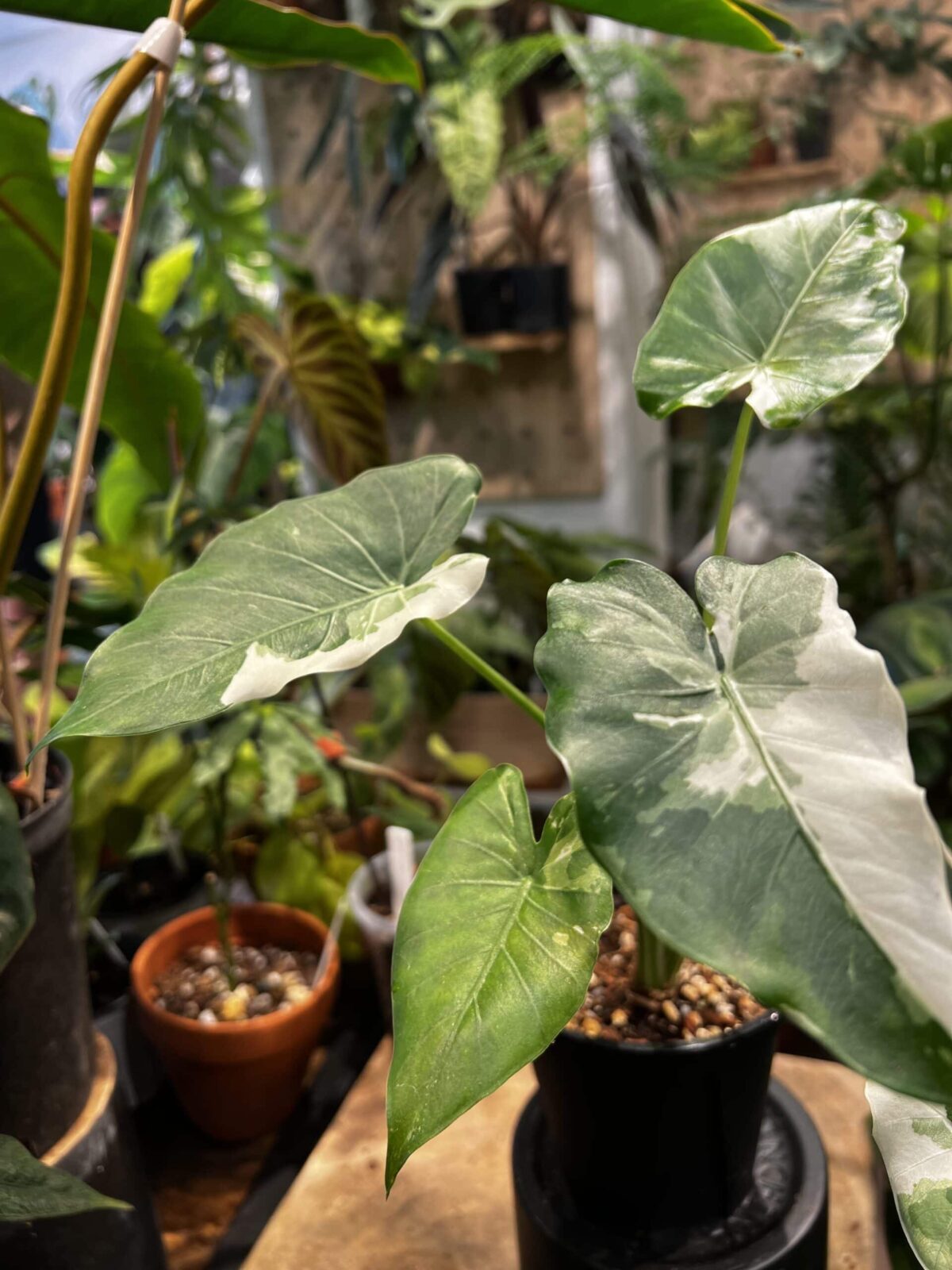
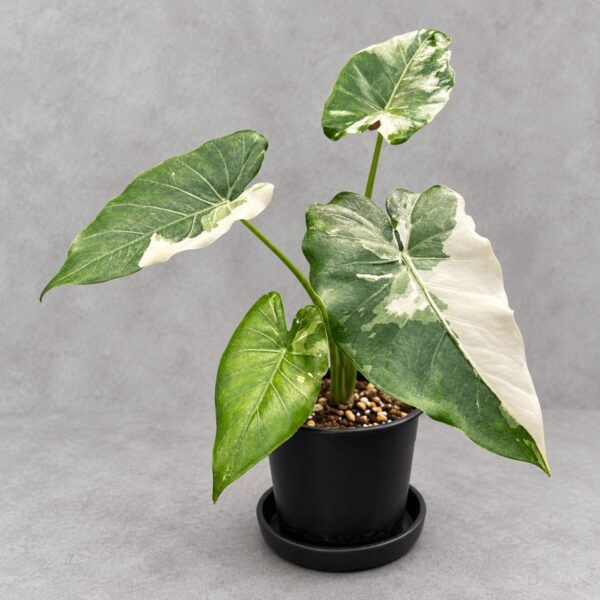
Okinawa Silver is a silver-variegated form of Alocasia odora, discovered and introduced by Japanese botanist Dr. Masato Yokoi in Okinawa. Unlike typical white-variegated odora, 'Okinawa Silver' carries a distinctive silvery cast to its variegation, caused by a different layer of pigment-deficient cells. Mature plants reach several feet tall, with enormous heart-shaped leaves splashed with silvery-white to creamy variegation — each leaf genuinely looks like a piece of natural art. It's arguably one of the most eye-catching large variegated Alocasias available.
Light
- Needs bright, diffused light to maintain the silvery-white variegation; weak light causes new leaves to revert to solid green.
- East- or north-facing windows suit it best; it can tolerate gentle morning sun.
- Avoid strong midday sun — the silvery-white portions scorch easily.
- Because the variegated area is so extensive, it needs longer daily light exposure than plain green cultivars.
Watering
- Water once the top 2–3 cm of soil has dried; keep evenly moist through the growing season.
- Slightly more drought-tolerant than other Alocasias, but never let it dry out completely.
- Never let the pot sit in standing water — empty the saucer immediately.
- Cut back watering substantially in winter as growth slows, but don't let it dry out fully, which can trigger dormancy and leaf drop.
- Reduce watering frequency during dormancy; it will resume growth once spring warmth arrives.
Soil & pot
- A well-draining aroid mix: coco coir, perlite, and orchid bark in roughly equal thirds.
- Slightly acidic to neutral pH (5.5–7.0).
- Given its large size, use a heavy, stable pot (ceramic or concrete).
- Drainage holes are essential; a layer of orchid bark at the base improves drainage further.
- Repot every 1–2 years in spring.
Temperature & humidity
- Ideal temperature 18–29°C; keep it above 15°C.
- Sustained temperatures below 15°C can trigger dormancy or even frost damage.
- Humidity of 60–80% is ideal; low humidity causes the variegated edges to crisp up.
- Use a humidifier in Hong Kong's air-conditioned rooms, or group with other plants to raise humidity.
- Keep away from AC vents and heaters.
Common problems
| Issue | Likely cause | What to do |
|---|---|---|
| Winter leaf drop and dormancy | Normal seasonal response | Reduce watering, keep warm — new leaves return in spring |
| Variegation fading to green | Insufficient light | Move closer to a window |
| Silvery-white portions scorching | Humidity too low or light too strong | Adjust both factors |
| Yellow, mushy leaves | Overwatering leading to root rot | Check drainage, reduce watering |
| Spider mites | Hot, dry conditions | Check leaf undersides regularly |
How to explain to customers
"Okinawa Silver is a large variegated Alocasia with a genuinely metallic sheen to the silvery patches — it makes a real statement in a living room. It might drop leaves and go dormant in winter, but don't worry, as long as the roots stay healthy it'll flush out new leaves again once it warms up."
Fun facts
Okinawa Silver's discoverer, Dr. Masato Yokoi, is a well-known Japanese botanist credited with discovering numerous variegated plant cultivars and holding many related patents. The difference between silver and white variegation comes down to which layer of cells lacks pigment — a similar distinction to that between Thai Constellation and Albo forms of Monstera.
Keywords
Okinawa Silver Alocasia, Alocasia odora, Okinawa Silver, variegated Alocasia, silver variegation, large Alocasia, variegated giant taro, foliage plant, advanced houseplant, toxic to pets, toxic to children
參考資料(想知來源可展開)
References
- Plants of the World Online (Kew) — Alocasia odora. https://powo.science.kew.org
- RHS — Alocasia care. https://www.rhs.org.uk/plants/alocasia
- Proven Winners — How to Grow Alocasia Indoors and Outdoors. https://www.provenwinners.com/learn/houseplants/alocasia
⚠️ Pet / toxicity note: Contains calcium oxalate crystals throughout the plant; ingestion causes oral pain, drooling and vomiting. Keep away from pets and small children, and wash hands after handling.
In-depth care guide
Introduction
Okinawa Silver Alocasia (Alocasia odora 'Okinawa Silver') is a rare variegated cultivar in the Araceae family — a silvery-white variegated selection of Alocasia odora (also known as "night-scented lily" or "fragrant giant taro"), originating in Okinawa, Japan. Its most distinctive trait is the way huge, upright leaves are covered in silvery-white to creamy variegation that catches the light like it's wearing a thin veil of silver — genuinely striking to see in person.
Alocasia odora itself is native to tropical and subtropical East Asia, sometimes called "fragrant taro" because its flowers release a subtle jasmine-like scent, particularly noticeable at night. Compared to Alocasia macrorrhizos, Alocasia odora tends to be a somewhat smaller plant with thinner leaf tissue and a higher humidity requirement. The Okinawa Silver variegated form inherits the parent's elegant upright growth habit, with sturdy petioles holding huge leaves aloft in an architecturally striking display.
Indoors, Okinawa Silver can reach 1–1.5 m, making it a genuinely imposing medium-to-large foliage plant. Because the variegated tissue lacks chlorophyll, growth is slower than the plain green form, and its care requirements are somewhat more demanding — this is an intermediate-to-advanced plant rather than a true beginner's choice.
Light requirements
Okinawa Silver needs more light than the plain green form of the species, since the silvery-white variegated tissue can't photosynthesise.
Ideal light conditions:
- Bright, indirect light, ideally near an east- or west-facing window
- 1.5–2 m from a south-facing window, filtered through a sheer curtain
- Avoid direct midday sun, especially in summer
A note on the variegated areas: the silvery-white variegated zones are especially delicate and prone to sunburn under direct light, yet too little light causes the variegation to fade and new leaves to revert to solid green. Maintaining vivid variegation genuinely requires stronger light than most other foliage plants need.
Reading the signals:
| Sign | Cause | Fix |
|---|---|---|
| New leaves almost entirely green | Light too weak | Move closer to a light source or add a grow light |
| Scorch marks on variegated areas | Light too strong | Add a sheer curtain or move further away |
| Stretched petioles, thinner leaves | Prolonged low light | Gradually increase light exposure |
Temperature requirements
Okinawa Silver likes a warm, stable environment and is fairly sensitive to cold.
Ideal ranges:
- Growing season: 20–29°C
- Minimum tolerance: 10°C, though sustained temperatures below 15°C will stall growth
- Ideal temperature: 21–27°C
Management tips:
- Keep away from AC vents, drafty doors/windows, and heaters
- Avoid placing near cold window glass at night in winter
- Sustained cold combined with wet soil is the leading cause of root rot
- Alocasia odora is more cold-sensitive than Alocasia macrorrhizos — below 10°C the entire plant can die
Humidity management
Okinawa Silver needs relatively high humidity, ideally 60% to 80% — even higher than Alocasia macrorrhizos typically requires.
Signs of insufficient humidity:
- Yellow or brown, dried-out leaf margins
- Malformed or torn new leaves as they unfurl
- Stalled growth, dull leaf surface
Practical ways to raise humidity:
- Humidifier — placed near the plant, especially during AC or heating season
- Pebble tray — a large tray of pebbles topped with water below the surface
- Grouping plants together
- Glass cabinet growing — creates a stable, high-humidity microclimate if space allows
Alocasia odora is notably less tolerant of dry air than Alocasia macrorrhizos, and leaf-edge browning appears faster under low humidity.
Watering technique
Watering Okinawa Silver requires particular care, since the variegated form grows more slowly and has a weaker capacity to take up water.
Important principle: don't water a variegated cultivar on the same schedule as a plain green one! With less chlorophyll and a slower metabolism, it's genuinely more prone to root rot from overwatering.
Correct watering method:
- Insert a finger 3–5 cm into the soil; water only once it feels dry
- For larger pots, wait until more than half the soil has dried
- Water thoroughly until it runs from the drainage holes
- Empty the saucer within 15 minutes
- Reduce watering frequency substantially in autumn/winter as growth slows
Water quality:
- Best: rainwater, distilled water, filtered water
- Acceptable: tap water rested 24 hours
- Avoid: hard, high-mineral water, which leaves stains on the silvery-white leaf surface
Overwatering warning signs: a softening stem base, yellowing and wilting leaves, a musty smell from the soil. If you notice these signs, stop watering immediately and check the root system.
Soil recipe
Okinawa Silver needs good drainage and aeration.
Recommended mix:
- 30% quality potting soil
- 25% coco coir
- 20% coarse perlite (3–5 mm)
- 15% orchid bark
- 10% coarse sand or pumice
This recipe ensures good drainage while retaining appropriate moisture.
Pot choice:
- Needs to be deep and heavy enough to support a tall plant
- Terracotta or concrete pots offer good breathability and enough weight for stability
- Drainage holes are essential
- Avoid oversized pots
Feeding
Okinawa Silver is a moderate feeder.
Recommendations:
- Use a balanced liquid fertiliser (NPK 20-20-20)
- Diluted to half strength
- Growing season (spring/summer): every 2–4 weeks
- Autumn/winter: reduce or stop
- Water before feeding
Signs of overfeeding:
- Unusually dark leaf colour
- Slow new leaf growth
- White salt crust on the soil surface
Common pests and diseases
Spider mites
The most common pest, especially in dry conditions.
Treatment: wipe leaves regularly, maintain humidity, use insecticidal soap for heavier infestations.
Scale insects
Found on petioles and leaf undersides.
Treatment: remove with an alcohol-dipped cotton swab.
Root rot
Caused by overwatering or poor drainage.
Treatment: unpot, trim rotten roots, and repot into fresh, free-draining mix.
Propagation
Division and corm propagation are the most reliable methods.
Division:
- Carry out at spring repotting
- Gently loosen roots and separate offsets with an independent growth point
- Each division should retain several roots
- Pot into fresh soil, keeping warm and moist
Corm propagation:
- Collect small corms at repotting
- Let them dry 1–2 days to callous
- Plant in free-draining mix or sphagnum moss, kept lightly moist
- Maintain 25–28°C; sprouting typically takes 2–4 weeks
Repotting guide
Timing:
- Every 2–3 years
- Roots emerging from drainage holes
- Best in spring
Steps:
- Water thoroughly the day before
- Gently loosen old soil and check roots
- Trim any rotten or withered roots
- Choose a pot 2–3 cm larger in diameter
- Plant in fresh, free-draining mix
- Water in and place somewhere bright and well-ventilated
Frequently asked questions
Q: What if the variegation disappears?
A: The most common cause is insufficient light. Move the plant closer to a light source, using a sheer curtain to protect the variegated portions from strong direct sun. A grow light can help too.
Q: Why do the leaves lack a silvery sheen?
A: This could be a water quality issue (hard water dulls the leaf surface) or low humidity. Switch to filtered water and periodically wipe leaves with a soft, slightly damp cloth.
Q: Can it handle direct sun?
A: It can tolerate gentle morning or evening light, but avoid strong midday sun — the silvery-white variegated portions are especially prone to sunburn.
Q: Is it toxic?
A: Yes. It contains calcium oxalate crystals; ingestion causes oral pain, drooling and vomiting. Keep it away from pets and small children.
Q: Will it flower?
A: Alocasia odora occasionally flowers with a subtle jasmine-like fragrance, but indoor specimens rarely flower, and the flower isn't the main draw anyway.
Q: What does dripping from the leaves mean?
A: This is guttation, a normal release of excess water. If it happens frequently, it may indicate slightly too much watering.
References
- Plants of the World Online (Kew) — Alocasia odora. https://powo.science.kew.org
- RHS — Alocasia care. https://www.rhs.org.uk/plants/alocasia
- Proven Winners — How to Grow Alocasia Indoors and Outdoors. https://www.provenwinners.com/learn/houseplants/alocasia
- Missouri Botanical Garden — Plant Finder, Alocasia odora. https://www.missouribotanicalgarden.org/PlantFinder/PlantFinderDetails.aspx?taxonid=285730
Plantjai shop · In stock online
Alocasia odora 'Orkinawa Silver'
Alocasia odora 'Orkinawa Silver'
Original price was: HK$680.00.HK$380.00Current price is: HK$380.00.
Hong Kong delivery · Causeway Bay pickup
For Hong Kong homes and offices. Stock and pricing follow the product page.
IN STORE NOW
Plants for this guide
Related plants in stock now — live prices, delivery or Causeway Bay pickup.
FREE PLANT ADVICE
Send us a photo before you change anything
WhatsApp a photo of the plant and your window light. Our Causeway Bay team will suggest care steps or plants that suit your space.
STORE · CAUSEWAY BAY
4/F, 39 Yiu Wa Street, Causeway Bay
Daily 12:30–8:00pm · ~3 min walk from Times Square
Map & directionsPlant Care