
How to Care for Alocasia Odora Variegata in Hong Kong | Plantjai

Plantjai 植仔 · Care Encyclopedia
Alocasia Odora Variegata
Hong Kong care guide — useful before you buy and after it arrives.
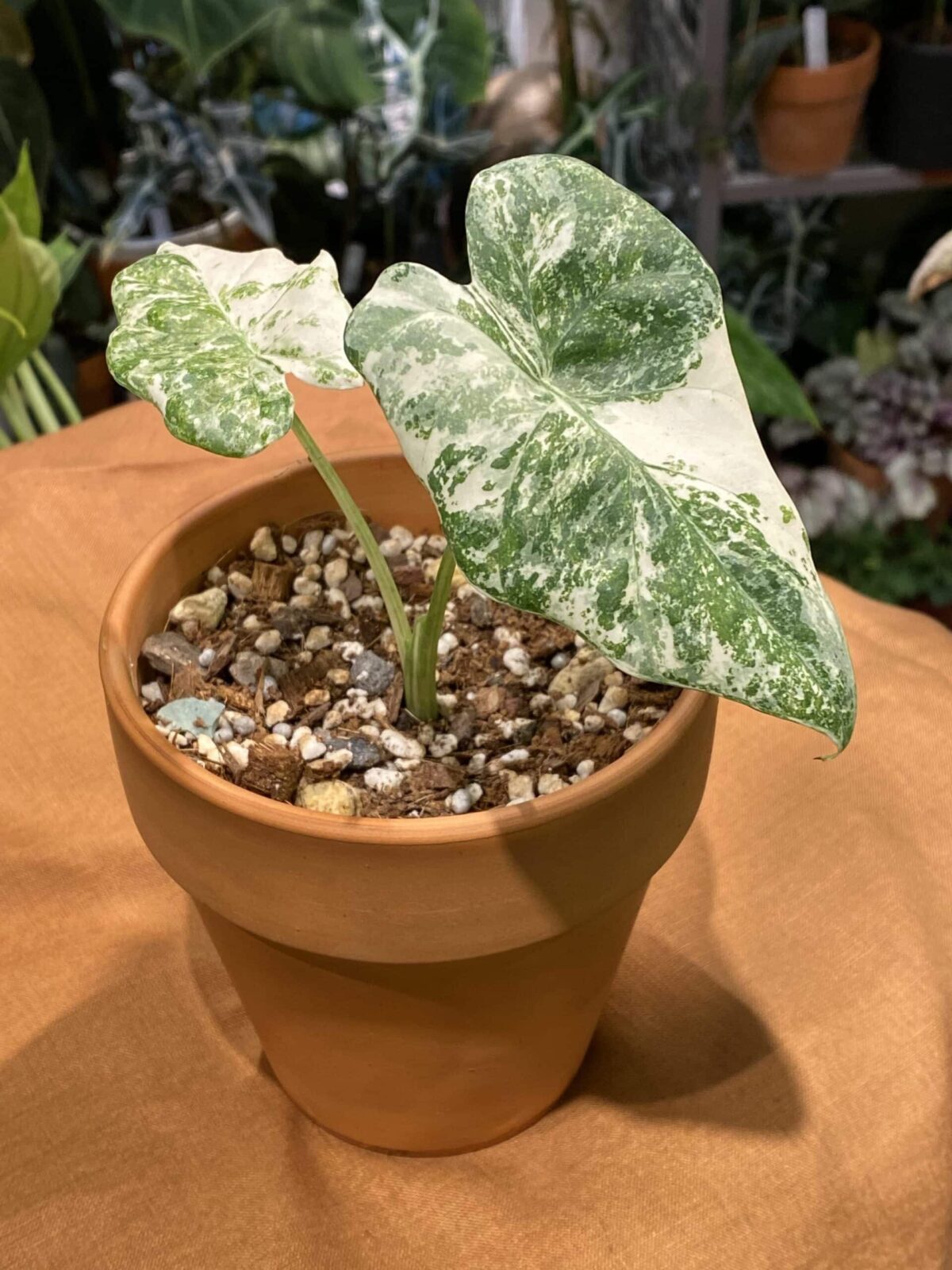
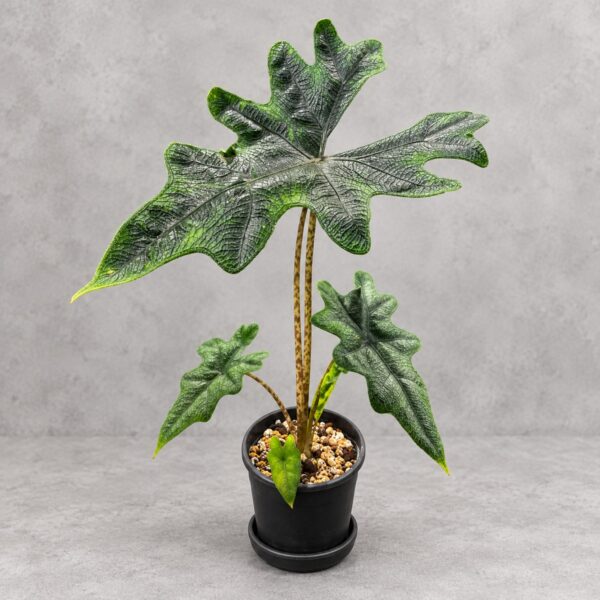
Shop this plantHuge splashed leaves that look like ink spilled across pine smoke — a single specimen becomes the whole room's view.
Origin & characteristics
This variegated form of Alocasia odora is a naturally occurring sport of the species, native to tropical Southeast Asia. Its defining feature is enormous, egg-shaped leaves splashed with creamy white to pale yellow variegation — no two leaves share the same pattern. Mature plants can reach 1.5 m, with thick, sturdy petioles capable of supporting the huge leaf blades. It's also a fast grower, which suits anyone who wants to see quick results. The variegated tissue is more delicate than the green portions and needs some shade to avoid scorching.
Light
- Ideal light: bright, indirect light, around 800–1,500 lux.
- Placement: near a window but out of direct sun; east- or north-facing windows suit it best.
- A note on variegation: the white patches lack chlorophyll and burn easily in strong midday sun, turning brown.
- Signs of insufficient light: fading variegation, smaller new leaves, weak, elongated petioles.
Watering
- Frequency: water once the top 2–3 cm of soil has dried, roughly every 5–7 days.
- Method: water slowly until it drains from the base; empty the saucer after 30 minutes.
- Water quality: room-temperature, settled water is best; avoid cold water.
- Dormant season: in autumn/winter when growth slows, extend the interval to 7–10 days — better slightly dry than soggy.
- Overwatering warning signs: yellowing leaves, soft, foul-smelling roots.
Soil & pot
- Soil recipe: peat 40% + perlite 30% + coco coir 20% + pine bark 10%, or a ready-made aroid mix.
- pH: slightly acidic, 5.5–6.5.
- Pot choice: a breathable terracotta or unglazed clay pot, 3–5 cm larger in diameter than the current one.
- Repotting: when roots emerge from the drainage holes, or growth clearly stalls — usually once a year in spring.
Temperature & humidity
- Ideal temperature: 18–28°C, best at 20–25°C.
- Minimum: growth stops below 15°C; frost-damage risk below 10°C.
- Humidity: 60–80% is ideal.
- Raising humidity: a nearby humidifier, a pebble tray, or grouping with other plants.
- Signs of dryness: browning, curling leaf edges, spider mite infestations.
Common problems
| Issue | Likely cause | What to do |
|---|---|---|
| Variegation fading to green | Insufficient light | Gradually move to a brighter spot |
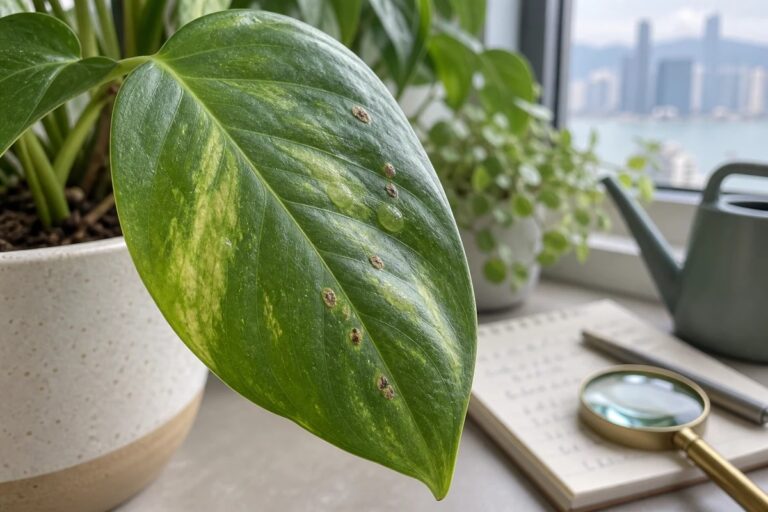
| Droplets forming on leaves | Normal guttation | No action needed — a sign of adequate water |
| Sudden drooping | Underwatering or root problems | Check soil moisture |
| Holes in new leaves | Low humidity or damage while unfurling | Raise humidity |
| Yellowing, dropping leaves | Overwatering leading to root rot | Check root health |
How to explain to customers
"The variegation on this one is completely random, so every plant you take home is genuinely one-of-a-kind. Just keep the variegated parts out of direct sun — those white patches burn quite easily, so bright but indirect light works best for it."
Fun facts
In Japan, Alocasia odora is known as "obake imo" or "aunt taro," with old folklore claiming the yokai known as ubume would shelter beneath its huge leaves from the rain. In horticultural circles, the irregular splashed variegation of this cultivar is often described as looking like an ink-wash painting made by nature itself.
Keywords
Plantjai, Variegated Night-Scented Alocasia, Alocasia odora variegata, variegated Alocasia, large foliage plant, indoor plant, indirect light, high humidity, toxic to pets, Hong Kong gardening
參考資料(想知來源可展開)
References
- Plants of the World Online (Kew) — Alocasia odora. https://powo.science.kew.org
- RHS — Alocasia care. https://www.rhs.org.uk/plants/alocasia
- Proven Winners — How to Grow Alocasia Indoors and Outdoors. https://www.provenwinners.com/learn/houseplants/alocasia
⚠️ Pet / toxicity note: Like all Alocasia, contains calcium oxalate crystals; ingestion causes severe oral pain, drooling, and vomiting. Keep away from pets 🐕🐈 and small children 👶, and wash your hands after handling.
In-depth care guide
Introduction
The variegated form of Alocasia odora, sometimes traded as 'Variegata' or 'Batik', is a prized ornamental sport within the Araceae family. The species name odora means "fragrant" in Latin, referring to the plant's flowers, which release a subtle scent, most noticeable on warm evenings. The variegation itself, splashed unevenly in creamy white, pale yellow, and even golden tones across a deep green base, has been compared by growers to an ink-wash painting — natural, flowing, and never quite the same twice.
What makes this cultivar so appealing is precisely that unpredictability — every leaf carries its own unique pattern of splashes and streaks across the surface, so no two plants ever look identical. Mature specimens grow impressively large, with broad, arrow-shaped leaves held upright on sturdy petioles, giving the whole plant a genuinely tropical, statement-making presence indoors.
Alocasia odora itself is native to tropical and subtropical parts of East and Southeast Asia, including southern Japan, southern China, Thailand, and Vietnam. The variegated cultivar is a garden-origin sport of the plain green species, prized in cultivation for its striking, one-of-a-kind foliage.
Native habitat
The parent species, Alocasia odora, is widely distributed across tropical to subtropical East and Southeast Asia, ranging from southern Japan and southern China down through Thailand, Myanmar, Vietnam, and Malaysia. It typically grows in ravines, along stream banks, or in the semi-shaded understorey beneath forest canopy — a genuinely moisture-loving species that thrives in warm, humid conditions.
In its native range, Alocasia odora can grow into an imposing plant two to three metres tall, forming dense, jungle-like stands. Like other Alocasias, it belongs to the Araceae family and has a fleshy rhizome that stores nutrients and moisture, helping it survive less favourable seasons.
Light requirements
The variegated form needs plenty of bright, diffused light — arguably more than the plain green species, since the white and yellow patches lack chlorophyll and need stronger light to maintain their vivid colour; otherwise new leaves gradually revert to solid green, losing the variegated character that makes this cultivar special. Position it near an east- or north-facing window where it can enjoy soft, consistent, indirect light.
According to grower experience shared on Alocasia-focused sites, this cultivar can actually tolerate more light than you might expect, and stronger light tends to keep the plant compact and upright with more vivid leaf colour. That said, harsh midday summer sun — especially when magnified through glass — still needs some filtering, since the variegated portions (particularly the white areas) are more prone to sunburn.
If you notice new leaves emerging almost entirely green, that's a clear signal the plant needs more light. Move it closer to a light source or add supplemental lighting, and the next new leaf should typically show variegation again.
Watering technique
The watering strategy for this cultivar is best described as "half-dry, half-moist." Wait until roughly the top half of the pot's soil depth has dried before watering again. In an average home, that generally works out to about every five to seven days in summer, extending to every seven to ten days in winter.
To judge timing, use the finger test: insert a finger about 5–7 cm into the soil, and if it feels dry, it's time to water. Water thoroughly in one go, letting excess drain fully from the base, then empty any standing water from the saucer. Alocasias are highly sensitive to waterlogging, and prolonged soggy conditions quickly lead to rhizome rot.
In terms of water quality, filtered water, rainwater, or tap water left to stand overnight are all good choices. Alocasias are somewhat sensitive to dissolved minerals, and long-term use of hard water can cause yellow-brown leaf-tip burn. When watering, try to avoid pouring directly into the central crown of the plant, since standing water there can encourage bacterial rot.
Humidity requirements
This variegated Alocasia likes high humidity, ideally maintained above 60%. If humidity stays below 50% for extended periods, leaf edges are prone to drying out, becoming brittle, or turning yellow.
Ways to raise humidity include running a humidifier (the most direct and effective option), grouping plants together, placing a pebble tray with water beneath the pot, or situating the plant in a naturally humid space like a bathroom or kitchen. Good air circulation is also important — avoid stuffy, airless conditions that can encourage disease.
Growers commonly note that the white portions of variegated Alocasia leaves are especially prone to drying out in low humidity, so maintaining stable humidity is genuinely important for keeping the foliage looking its best.
Temperature control
The ideal growing temperature range for this cultivar is 18–28°C. It doesn't tolerate cold well — growth slows noticeably below 15°C, and prolonged exposure below 10°C can cause frost damage. Take extra care to keep it warm in winter, away from window drafts and AC vents.
Alocasias may enter semi-dormancy during cold winter spells, showing stalled growth and yellowing of older leaves. This is entirely normal and no cause for alarm. As long as the rhizome remains healthy, the plant will resume growth once temperatures rise again in spring. During winter, reduce watering, remove any fully withered leaves, and simply wait for warmer weather.
Growing medium
This plant needs a well-draining, highly aerated growing medium. A recommended mix is 40% quality potting soil + 30% perlite + 20% orchid bark + 10% coco coir. This combination ensures excess water drains quickly while retaining enough moisture for the roots to access.
Growers note that using a coarse, fast-draining medium is essential for Alocasia root health, particularly after repotting or a media change, helping the plant recover more smoothly. Avoid using standard garden soil, which tends to be too dense and prone to waterlogging.
For pots, choose one with drainage holes — a breathable option like an orchid net pot or a plastic pot with side ventilation holes works well. These reduce the risk of rhizome rot, especially in higher-humidity conditions.
Feeding recommendations
During the growing season (spring through autumn), feed once a month with a balanced liquid fertiliser (such as NPK 20-20-20) diluted to half strength. Because variegated leaves contain less chlorophyll, growth may be somewhat slower than the plain green species, so there's no need to overfeed.
Make sure the soil is already moist before feeding to avoid concentrated fertiliser contacting dry roots. Pause feeding entirely once growth slows in winter. If new leaves look pale and growth is sluggish, that may indicate a nutrient deficiency; conversely, scorched leaf tips or white salt crust on the soil surface point to overfeeding.
Repotting timing
This cultivar generally needs repotting every one to two years, ideally in spring as new growth begins. Alocasias actually prefer being slightly root-bound, so frequent repotting isn't necessary. Once roots have filled the pot or are visibly emerging from the drainage holes, it's time to move up a pot size.
At repotting, gently loosen any tangled roots and trim away rotten or blackened sections before planting into fresh medium. Afterward, keep the plant in bright, indirect light and avoid direct sun for the first few days while it adjusts. Hold off on fertilising for the first two weeks after repotting.
Propagation
This variegated Alocasia is propagated mainly by division. At repotting, you'll often find smaller offsets growing beside the mother plant, usually already with their own independent root systems. Carefully separate these from the parent, ensuring each division retains healthy roots, then pot them individually.
It can also be propagated from rhizome sections. Cut a sturdy rhizome into several pieces, ensuring each section includes at least one growth point, then bury them in fresh medium and keep warm and moist — new shoots typically emerge within three to four weeks.
Common problems in detail
Variegation fading, new leaves emerging solid green: the most common issue, almost always caused by insufficient light. Move the plant to a brighter location, and the next new leaf should typically show variegation again.
Dry, brittle leaf edges: usually caused by low humidity or underwatering. Check the ambient humidity level and consider adding a humidifier.
Yellowing leaves in winter: Alocasias may enter semi-dormancy in cold weather, and older leaves naturally yellow and drop. As long as the rhizome stays firm and rot-free, growth will resume once temperatures rise.
Rhizome rot: overwatering is the leading cause. Alocasia rhizomes already store substantial water reserves and don't need frequent watering. If the rhizome turns soft and black, repot immediately, cut away the rotten portions, and replant in fresh, dry medium.
Spider mites: these thrive in hot, dry conditions. Regularly wipe the leaf surface (especially the underside) with a damp cloth, and maintain humidity to help prevent infestations.
Toxicity information
Like all Alocasia species, this variegated cultivar contains calcium oxalate crystals throughout the plant, toxic to both humans and pets. Ingestion can cause severe burning of the mouth, tongue and throat, excessive drooling, vomiting, and difficulty swallowing. Skin contact with the sap may also cause irritation or an allergic reaction — gloves are recommended when handling the plant. Keep it well out of reach of children and pets.
References
- Plants of the World Online (Kew) — Alocasia odora. https://powo.science.kew.org
- RHS — Alocasia care. https://www.rhs.org.uk/plants/alocasia
- Proven Winners — How to Grow Alocasia Indoors and Outdoors. https://www.provenwinners.com/learn/houseplants/alocasia
- Missouri Botanical Garden — Plant Finder, Alocasia odora. https://www.missouribotanicalgarden.org/PlantFinder/PlantFinderDetails.aspx?taxonid=285730
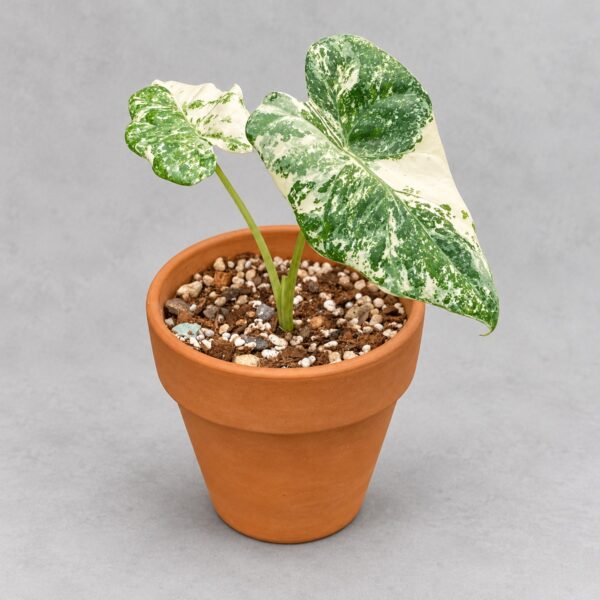
Plantjai shop · In stock online
Alocasia odora variegata
HK$680.00
Hong Kong delivery · Causeway Bay pickup
For Hong Kong homes and offices. Stock and pricing follow the product page.
IN STORE NOW
Plants for this guide
Related plants in stock now — live prices, delivery or Causeway Bay pickup.
FREE PLANT ADVICE
Send us a photo before you change anything
WhatsApp a photo of the plant and your window light. Our Causeway Bay team will suggest care steps or plants that suit your space.
STORE · CAUSEWAY BAY
4/F, 39 Yiu Wa Street, Causeway Bay
Daily 12:30–8:00pm · ~3 min walk from Times Square
Map & directionsPlant Care