
How to Care for Alocasia Nobilis in Hong Kong | Plantjai

Plantjai 植仔 · Care Encyclopedia
Alocasia Nobilis
Hong Kong care guide — useful before you buy and after it arrives.
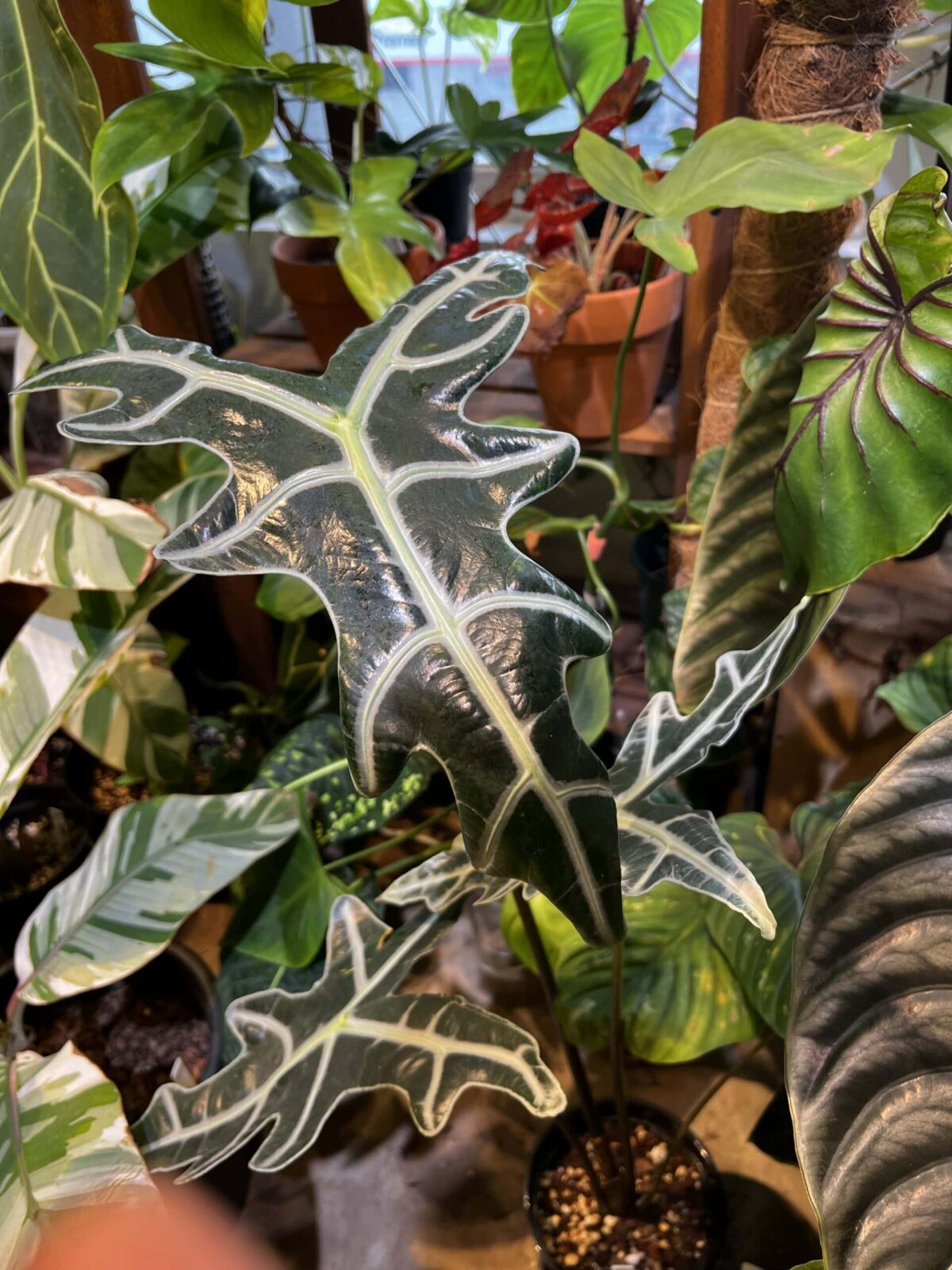
Shop this plantDeeply lobed, wavy-edged leaves like a kris dagger, black leaf and white vein delivering serious drama.
Origin & characteristics
Nobilis Alocasia (Alocasia sanderiana 'Nobilis') is a distinctive form of Alocasia sanderiana, native to lowland rainforest in northern Mindanao, the Philippines. Wild Alocasia sanderiana is now critically endangered due to severe habitat loss, and 'Nobilis' — a cultivar name recorded as far back as 1893 — describes individuals with an even more deeply lobed, architectural leaf margin. Leaves are dark green to near-black with a signature deeply cut, wavy edge reminiscent of a Filipino kris dagger, contrasted against striking white or pale green primary veins. Mature plants reach roughly 30–90 cm, and it's also one of the parent species behind the popular Alocasia × amazonica.
Light
- Bright, indirect light, tolerating some gentle direct sun such as soft morning rays.
- East- or west-facing windows suit it best.
- Weak light fades the white veining and produces poorly developed wavy margins.
- Avoid strong midday sun — the dark leaf surface absorbs heat and scorches easily.
Watering
- Keep soil evenly moist; water once the top inch has dried.
- It needs more water than a desert plant but must never sit in standing water.
- Its native habitat is consistently humid, and the roots are used to a steady water supply.
- Ease off slightly in winter as growth slows, but never let it dry out completely.
- Cold water shocks the roots — use room-temperature water.
Soil & pot
- A well-draining aroid mix: coco coir, perlite, and orchid bark in roughly a 3:2:2 ratio.
- A little compost can be added for extra organic matter.
- Choose a pot with drainage holes — ceramic or terracotta both work.
- The roots need airflow; overly dense garden soil invites root rot.
- Repot every 1–2 years in spring, watching root growth rate.
Temperature & humidity
- Ideal temperature 20–27°C; keep it above 16°C.
- Fairly sensitive to temperature swings — keep away from AC vents and doorways.
- Humidity of 60–80% is ideal; run a humidifier alongside AC in Hong Kong interiors.
- Low humidity dries out leaf edges and stalls growth.
- Grouping with other tropical plants helps raise local humidity.
Common problems
| Issue | Likely cause | What to do |
|---|---|---|
| Smaller leaves, wavy edge disappearing | Insufficient light or low humidity | Improve both conditions |
| Dry leaf edges | Humidity too low | Run a humidifier |
| Yellowing leaves | Overwatering, cold damage, or root issues | Check the root system |
| Stalled growth or dormancy | Unsuitable environment | Check temperature and humidity stability |
| Spider mites or aphids | — | Check leaf undersides regularly; humidity helps prevent |
How to explain to customers
"Nobilis has such a distinctive leaf shape — that deeply lobed, wavy edge really does look like a kris dagger, and the black leaf against white veining is a genuine showstopper wherever you put it. It's descended from an endangered species though, so it's worth treating with a bit of extra care — keep it warm and humid and it'll do just fine."
Fun facts
Alocasia sanderiana was named after Victorian horticulturist Henry Frederick Conrad Sander, one of the first people to introduce the species to Europe. Nobilis's deeply lobed leaf margin is thought to be an evolutionary form of camouflage — mimicking a leaf that's already been eaten, deterring real herbivores from bothering with it.
Keywords
Nobilis Alocasia, Alocasia nobilis, Alocasia sanderiana, Nobilis, kris plant leaf, wavy leaf margin, jewel Alocasia, endangered species, collector grade, foliage plant, toxic to pets, toxic to children
參考資料(想知來源可展開)
References
- Plants of the World Online (Kew) — Alocasia sanderiana. https://powo.science.kew.org
- RHS — Alocasia care. https://www.rhs.org.uk/plants/alocasia
- Proven Winners — How to Grow Alocasia Indoors and Outdoors. https://www.provenwinners.com/learn/houseplants/alocasia
⚠️ Pet / toxicity note: Contains calcium oxalate crystals throughout the plant; ingestion causes oral pain, drooling and vomiting. Keep away from pets and small children, and wash hands after handling.
In-depth care guide
Introduction
Nobilis Alocasia (Alocasia sanderiana 'Nobilis') is a striking and historically significant cultivar within the Araceae family. Its parent species, Alocasia sanderiana — also known as the "Kris Plant" or "African Mask" — is native to the Philippines and listed among the country's endangered species, with wild populations now genuinely scarce. 'Nobilis' is a select cultivar of sanderiana, distinguished above all by its deeply lobed, wavy-margined leaves, which give it an even more dramatic, sculptural silhouette than the standard species.
The species name sanderiana honours German-born horticulturist Heinrich (Henry Frederick Conrad) Sander, who introduced the species to European horticulture in the late 19th century, while 'Nobilis' comes from the Latin for "noble," fitting for a plant with such an elegant, distinctive bearing. The key difference from standard sanderiana lies in leaf form — 'Nobilis' leaves are more deeply cut with a jagged, wave-like margin, giving an overall more three-dimensional, dramatic effect with more pronounced venation.
Mature plants can reach 90 cm to 1.8 m in ideal conditions (typically 60–90 cm indoors), with glossy dark green leaves and a network of silvery-white to pale green veins tracing a jagged pattern across each leaf, making every leaf look like a carefully carved dagger. Its vase-shaped growth habit, with leaves fanning upward and outward, gives it real sculptural presence and makes it a genuine prize among indoor plant collections.
Worth noting: another distinguishing trait between 'Nobilis' and standard sanderiana is leaf texture and shape — 'Nobilis' leaves are thicker and more triangular, with more pronounced lobing and waviness, while standard sanderiana, though also wavy-edged, shows a milder degree of lobing.
Native habitat and growth habit
Alocasia sanderiana is native to the tropical rainforests of the Philippines, growing in the humid, warm, filtered-light conditions of the forest floor beneath a dense canopy. As a cultivated selection, 'Nobilis' retains its parent's strong preference for high humidity, warmth, and good drainage, despite generations of selective breeding.
Growth rate is moderate, typically producing 4–6 new leaves per year under ideal conditions. Like other Alocasias, 'Nobilis' has a tuberous root system that stores nutrients to support growth and reproduction. It may enter dormancy or semi-dormancy in cooler, dimmer autumn and winter months, showing leaf drop or stalled growth — this is entirely normal.
Historically, 'Nobilis' has been an extremely rare and sought-after collector's plant, occasionally disappearing from the market for extended periods before resurfacing. In many cases it appears for a season or two and then vanishes again for years, so collectors who get the chance to acquire one shouldn't hesitate.
Light requirements
'Nobilis' needs bright, indirect light, and can tolerate a little direct sun — particularly gentle morning light — though harsh midday sun will scorch the leaves.
Ideal placement:
- East- or west-facing windows for plenty of indirect light
- A south-facing window with filtering (such as a sheer curtain) to soften midday sun
- A well-lit interior space with consistent daily light
Signs of insufficient light:
- Faded leaf colour, dulled white venation
- Stretched internodes, a leggy, loose growth habit
- Thinner new leaves, slower growth
- Loss of the plant's characteristically compact form
Signs of too much light:
- Yellow-brown scorch marks on the leaf surface
- Damaged glossy texture, dry-feeling leaves
- Curled, brittle leaf edges
Rotate the pot roughly 90 degrees every two weeks to ensure even light exposure on all sides and maintain that elegant, symmetrical vase shape.
Watering technique
'Nobilis' prefers evenly moist soil that's never waterlogged. Its tuberous roots can store some water, so mild underwatering is easier to recover from than overwatering.
Watering principles:
- Wait until the top 5–8 cm of soil has dried before watering; test with a finger or a moisture meter.
- Use room-temperature rainwater, distilled water, or filtered water.
- Water thoroughly — slowly until it runs freely from the drainage holes — then immediately empty any water collected in the saucer.
- Never let the pot sit in standing water for an extended period.
Seasonal adjustment:
- Spring/summer growing season: roughly every 7–10 days, depending on ambient humidity and temperature.
- Autumn/winter dormancy: extend to every 10–14 days or longer. Keep the soil lightly moist through dormancy, but never let it dry out completely.
Overwatering warning signs: lower leaves yellowing, a soft, blackened stem base, a musty smell from the soil, tuber rot.
Underwatering warning signs: drooping leaves, brittle brown leaf edges, an overall wilted appearance.
Soil and potting
'Nobilis' needs exceptionally well-draining, highly aerated soil, since its tuberous roots are especially prone to rot in waterlogged conditions.
Recommended soil mix:
- 35% quality peat-free potting soil
- 30% perlite (improves drainage and aeration)
- 20% coco coir or peat moss (moisture retention and organic matter)
- 10% orchid bark (added aeration)
- 5% horticultural charcoal (natural antibacterial properties)
A simpler alternative mixes potting soil, peat moss, and perlite in equal thirds — this classic recipe offers good drainage with reasonable moisture retention.
Pot selection:
- Drainage holes are essential.
- Terracotta is ideal — its breathability helps prevent overly wet soil and supports healthy roots.
- Choose a pot only 2.5–5 cm larger in diameter than the root ball. 'Nobilis' prefers a slightly snug root environment, so the pot may look small relative to the plant — that's normal.
- As the plant grows, size up gradually rather than jumping to a much larger pot at once.
Repotting: once every 1–2 years in spring, or when roots emerge from the drainage holes or the soil dries unusually fast. Check tuber health at repotting, trimming away any rotten or damaged portions.
Humidity and temperature
Humidity: 'Nobilis' needs at least 50% relative humidity, ideally 60–80%. High humidity helps leaves keep their glossy texture and vivid venation, while also reducing leaf-edge browning and pest problems.
- A humidifier is the most direct and effective method.
- Light, occasional misting can help, but watch for signs of fungal issues — if leaves stay damp for extended periods or you notice mould, switch to a room humidifier or pebble tray instead.
- Placing the plant in a naturally humid space like a bathroom or kitchen works well (provided there's enough light).
- Grouping plants together raises local humidity.
Below 40% humidity, you may start seeing brittle, browning leaf tips — a clear signal to increase humidity.
Temperature: ideal range is 16–30°C, best kept above 19°C. Sustained temperatures below 10°C can cause serious damage.
- Avoid placing near AC vents, heaters, or doors/windows where temperature fluctuates.
- Avoid sudden temperature changes — 'Nobilis' is fairly sensitive to swings.
- Keep the room stable in winter, never letting it drop below 16°C.
Feeding
'Nobilis' is a light-to-moderate feeder, and overfeeding can genuinely harm it.
Feeding recommendations:
- Use a balanced fertiliser (such as 15-15-15 or 7-9-5), diluted to a quarter strength.
- During the growing season (spring and summer), feed once every two months.
- Ensure the soil is already moist before feeding, to avoid burning dry roots.
- Stop feeding entirely from autumn through winter.
Notes:
- Overfeeding causes salt buildup, showing as scorched leaf tips or white crystals on the soil surface.
- If you notice salt buildup, flush the soil thoroughly with plenty of water.
- Avoid feeding for at least three months after repotting.
Dormancy management
'Nobilis' may enter dormancy or semi-dormancy in cooler, dimmer autumn and winter months:
Signs of dormancy:
- Growth clearly slows or stops entirely
- Some lower leaves yellow and drop
- Soil dries more slowly than usual
Dormancy care:
- Reduce watering frequency, keeping soil lightly moist but not wet
- Stop fertilising entirely
- Maintain stable temperature, never below 16°C
- Don't panic over leaf drop — it's a normal physiological response
- If the plant has formed a tuber, it can be dug up after any cold snap, dried, and stored for replanting the following spring
- Gradually resume normal watering and feeding once new shoots appear in spring
Propagation
'Nobilis' is propagated mainly through tuber division or offset separation:
Tuber division:
- Carry out during the growing season (spring or summer).
- Gently remove the plant from its pot and rinse soil from the roots with clean water.
- Using a sterilised sharp blade, cut the tuber into sections, each with at least one growth point (eye).
- Let the cut surfaces air-dry for a day before planting each section into fresh soil.
- Keep soil lightly moist, humidity high, and temperature warm (around 20–25°C).
- New shoots typically emerge within a few weeks.
Offset division:
At repotting, if you see side offsets with their own independent roots, gently separate them from the mother plant and pot individually.
Seed propagation (less common): possible but slow, with inconsistent germination rates.
Common problems in detail
Yellowing leaves: most often overwatering leading to tuber rot. Check soil moisture, and pause watering if it's wet. Low humidity, nutrient imbalance, or natural ageing can also cause yellow leaves.
Brown leaf tips or edges: usually low humidity, underwatering, or fertiliser burn. Check humidity levels and adjust watering frequency.
Slow new growth: could be insufficient light, temperatures too low, or a weakened tuber. Increase light intensity and check tuber health.
Spider mites: the most common pest in dry conditions. Check leaf undersides regularly for fine webbing. Treat promptly with soapy water and raise humidity.
Fungal infection: if leaves stay damp for long periods or the environment is overly humid without airflow, fungal leaf spot or grey mould can develop. Improve ventilation, avoid wetting leaf surfaces, and use a fungicide if needed.
Root rot: most often triggered by overwatering combined with cold temperatures. If detected, dig up the tuber immediately, trim away rotten sections, treat with fungicide, and replant in dry, fresh soil.
Toxicity information
Like all Alocasia species, 'Nobilis' contains calcium oxalate crystals throughout the plant, toxic to both pets and humans. Ingestion causes irritation and swelling of the mouth and throat, and can trigger vomiting and difficulty swallowing. Keep the plant well out of reach of pets and children. Gloves are recommended when handling it, to avoid sap contact with skin.
References
- Plants of the World Online (Kew) — Alocasia sanderiana. https://powo.science.kew.org
- RHS — Alocasia care. https://www.rhs.org.uk/plants/alocasia
- Proven Winners — How to Grow Alocasia Indoors and Outdoors. https://www.provenwinners.com/learn/houseplants/alocasia
- Missouri Botanical Garden — Plant Finder, Alocasia. https://www.missouribotanicalgarden.org/PlantFinder/PlantFinderDetails.aspx?taxonid=285730
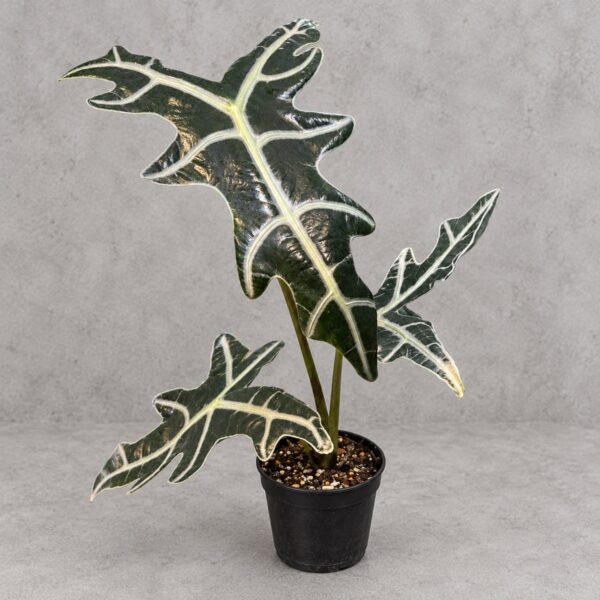
Plantjai shop · In stock online
Alocasia nobilis
Alocasia nobilis
Original price was: HK$468.00.HK$180.00Current price is: HK$180.00.
Hong Kong delivery · Causeway Bay pickup
For Hong Kong homes and offices. Stock and pricing follow the product page.
IN STORE NOW
Plants for this guide
Related plants in stock now — live prices, delivery or Causeway Bay pickup.
FREE PLANT ADVICE
Send us a photo before you change anything
WhatsApp a photo of the plant and your window light. Our Causeway Bay team will suggest care steps or plants that suit your space.
STORE · CAUSEWAY BAY
4/F, 39 Yiu Wa Street, Causeway Bay
Daily 12:30–8:00pm · ~3 min walk from Times Square
Map & directionsPlant Care