
How to Care for Alocasia Melo in Hong Kong | Plantjai

Plantjai 植仔 · Care Encyclopedia
Alocasia Melo
Hong Kong care guide — useful before you buy and after it arrives.
Shop this plantThick, rock-hard leaves with a texture like a cantaloupe rind — the most sculptural of all the jewel Alocasias.
Origin & characteristics
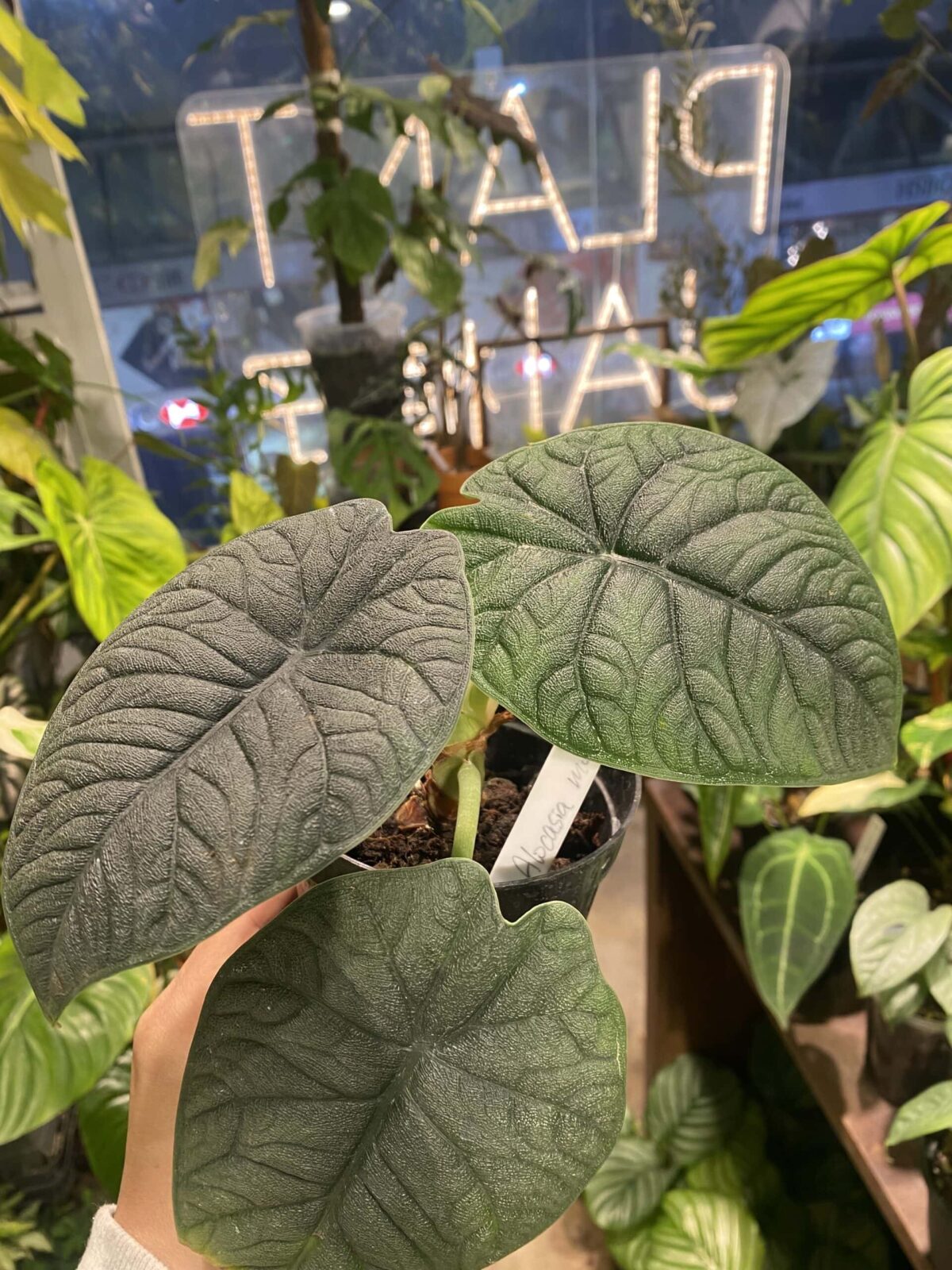
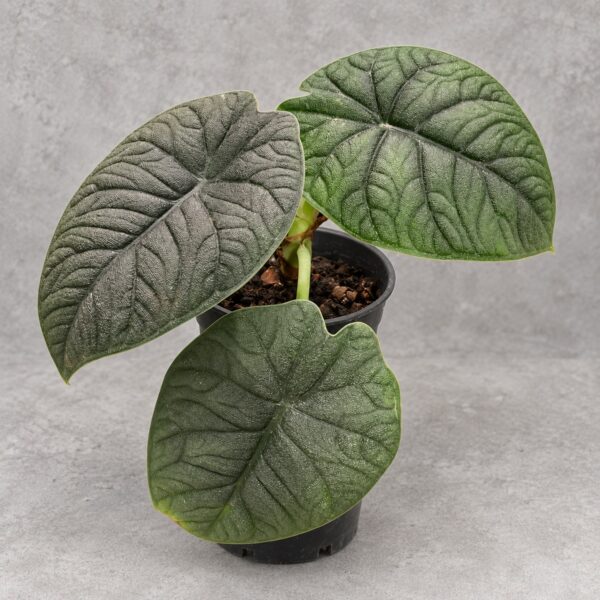
Alocasia melo is native to the lowland rainforest of Sabah, Borneo, growing on the thin soils of steep stream-side cliffs at roughly 120–400 m elevation. It's part of the jewel Alocasia group but stays remarkably compact, only 25–35 cm tall — well suited to a Hong Kong flat. Its defining trait is extremely thick, rigid, rounded leaves with a strongly bumpy, textured surface, colouring that deepens from pale green to almost black-green with maturity, and a texture so firm it genuinely feels like plastic. The heavily textured surface resembles the rind of a cantaloupe melon (hence the common name), and it's also occasionally sold as Alocasia rugosa.
Light
- Mostly bright, indirect light; tolerates 2–3 hours of gentle morning direct sun.
- An east-facing window is ideal; if using a north-facing window, place it closer to the glass.
- Too little light produces smaller new leaves and slower growth.
- Avoid strong midday sun — even though the thick leaves are somewhat more sun-tolerant, prolonged direct exposure will still scorch them.
Watering
- In the wild it grows on rock faces, so the roots need excellent airflow and are more rot-prone than most Alocasias.
- Water once the top quarter to half of the soil has dried — never let it dry out completely.
- Letting the soil fully dry can trigger dormancy, with leaves yellowing and dropping from the bottom up.
- Water thoroughly, but the pot must never sit in standing water.
- Reduce watering frequency in winter, but keep the soil lightly moist throughout.
Soil & pot
- Prioritises drainage above all: use a chunky aroid mix with a high proportion of orchid bark and perlite.
- Suggested recipe: coco coir, perlite, and orchid bark in equal thirds.
- The rhizome is shallow-rooted — avoid deep pots; a wide, shallow pot suits it better.
- Match pot size closely to the root system; oversized pots invite waterlogging and rot.
- Terracotta's breathability helps with humidity regulation.
Temperature & humidity
- Ideal range 18–29°C; keep it above 15°C.
- Native humidity is 60–70%; aim to keep indoor humidity above 60%.
- In Hong Kong air-conditioned rooms, a humidifier is far more effective than misting.
- Sensitive to cold drafts — keep it away from AC vents and doorways.
Common problems
| Issue | Likely cause | What to do |
|---|---|---|
| Yellowing, dropping leaves | Overwatering, underwatering, or cold stress | Check soil moisture and room temperature |
| Small new leaves | Insufficient light or nutrients | Move closer to a window and lightly feed during the growing season |
| Brown spots on leaf surface | Sunburn | Move away from direct light |
| Spider mites | Hot, dry conditions | Check leaf undersides regularly and maintain humidity |
| Growth stalled | Possible dormancy | Keep warm and lightly moist; new leaves resume in spring |
How to explain to customers
"Melo Alocasia is the most sculptural jewel Alocasia out there — pick it up and the leaf genuinely feels like a solid plastic model, that's how thick it is. Even though the leaves look tough, it's still sensitive to overwatering, so please don't overdo it out of love — let the soil dry out a bit before watering again."
Fun facts
The thick leaves and deep surface texture of Alocasia melo are an evolutionary adaptation to its high-humidity habitat — dense epidermal cells and a waxy cuticle help reduce water loss. When it flowers, it produces an ivory-white spathe that contrasts beautifully with its dark, thick foliage.
Keywords
Melo Alocasia, Alocasia melo, rugosa Alocasia, jewel Alocasia, thick leaf, compact Alocasia, beginner-suitable jewel Alocasia, houseplant, toxic to pets
參考資料(想知來源可展開)
References
- Plants of the World Online (Kew) — Alocasia melo. https://powo.science.kew.org
- RHS — Alocasia care. https://www.rhs.org.uk/plants/alocasia
- Proven Winners — How to Grow Alocasia Indoors and Outdoors. https://www.provenwinners.com/learn/houseplants/alocasia
⚠️ Pet / toxicity note: Contains calcium oxalate crystals throughout the plant; ingestion causes oral pain, drooling and vomiting. Keep away from pets and small children, and wash hands after handling.
In-depth care guide
Introduction
Alocasia melo, sometimes called Rugosa Melo, is a rare and beloved species within the Araceae family, native to the rainforests of Borneo. Its most distinctive trait is a leaf texture unlike almost any other houseplant — thick, rough, and heavily creased, feeling remarkably like the rind of a cantaloupe or honeydew melon when you run a hand across it, which is exactly where its common name comes from. Leaf colour ranges from deep green to a somewhat greyish tone, and the combination of colour and texture makes it a genuine favourite among Alocasia collectors.
Alocasia melo is a small-to-medium sized species, typically maintaining a height of 30–50 cm indoors and a compact, tidy growth habit that doesn't demand much floor space. While its appearance is undeniably distinctive, its care requirements are not especially difficult once you understand a few key points — this is genuinely one of the more approachable jewel Alocasias for someone stepping up from easier houseplants.
1. Light requirements
Alocasia melo is native to the rainforest understorey, where it's adapted to soft, filtered light — bright, indirect light is what it wants indoors.
Ideal placement
- East- or west-facing windows, catching gentle morning or evening light
- 1.5–2 m from a south-facing window, or filtered through a sheer curtain
- Supplemental grow lighting works well in a dim interior space
Reading the signals
If the plant becomes floppy or growth stalls, that generally signals insufficient light; conversely, yellow-brown scorch marks on the leaf surface indicate too much direct light exposure. Rotating the pot every few weeks helps ensure even light exposure on all sides and prevents the plant from leaning toward one direction.
A note on the waxy surface
Alocasia melo's leaf surface has a distinctive waxy coating that offers some resistance to strong light, but prolonged direct exposure — particularly the harsh midday sun common in Hong Kong summers — will still cause burning, so it's worth avoiding regardless.
2. Temperature requirements
As a native of Borneo's rainforest, Alocasia melo likes warm, stable conditions.
Ideal ranges
- Growing season: 20–28°C
- Minimum tolerance: 15°C, below which the plant enters dormancy
- Ideal root-zone temperature: 20–25°C
Management tips
- Keep away from AC vents, drafty doors/windows, and heaters
- Avoid placing near cold window glass at night in winter
- The root system is particularly sensitive to temperature — always use room-temperature water, never cold water straight from the tap
- Sustained cold stalls growth and can eventually lead to root rot
3. Humidity management
Alocasia melo needs relatively high humidity, ideally 60% to 80%.
Signs of insufficient humidity
- Yellowing or browning leaf margins
- Malformed or torn new leaves as they unfurl
- Dull, lacklustre leaf surface
Practical ways to raise humidity
- Humidifier — an ultrasonic model placed near the plant
- Pebble tray — a tray of pebbles topped with water below the pot base
- Grouping plants together
- Glass cabinet growing — a good option in particularly dry homes
Regularly monitoring humidity with a hygrometer helps you stay within the ideal range and catch drops before they show up as leaf damage.
4. Watering technique
Watering is the single most important skill for keeping this species healthy. It likes soil that's evenly moist but never waterlogged.
Correct method
- Insert a finger 3–4 cm into the soil; water only once it feels dry
- Water thoroughly until it runs from the drainage holes
- Empty the saucer within 15 minutes
- In winter, when growth slows, wait until more than half the soil has dried before watering again
Water quality
- Best: rainwater, distilled water, filtered water
- Acceptable: tap water rested 24 hours
- Avoid: hard, high-mineral water, which leaves white salt deposits on leaf tips
Watering in the morning with room-temperature water gives leaves time to dry before evening, reducing disease risk.
Reading over- and under-watering
| Problem | Leaf symptoms | Fix |
|---|---|---|
| Overwatering | Yellowing, soft base | Stop watering, check roots |
| Underwatering | Drooping, curled edges | Gradually rehydrate, don't flood all at once |
A useful, reassuring sign: if leaves droop and then perk back up shortly after watering, that's simply the plant showing thirst — a normal and easily corrected signal, not a red flag.
5. Soil recipe
Alocasia melo needs well-draining, airy soil — ordinary garden soil retains too much water for its roots.
Recommended mix
- 35% coarse perlite (3–5 mm)
- 30% orchid bark (1–2 cm chunks)
- 25% low-salt coco coir
- 10% horticultural charcoal
This blend ensures good drainage and aeration, protecting the roots from the rot risk that comes with sitting in wet soil.
Pot choice
- A terracotta or concrete pot with drainage holes is ideal
- Avoid oversized pots, which take too long to dry
- Size up by only one pot size at each repot
6. Feeding
Alocasia melo is a light-to-moderate feeder.
Recommendations
- Use a balanced liquid fertiliser (NPK 20-20-20 or similar), diluted to half strength
- Growing season (spring/summer): every 4–6 weeks
- Autumn/winter: reduce frequency or stop
- Water before feeding to avoid burning the roots
Feeding every 4–6 weeks during active growth is generally enough to support healthy new growth without overloading the roots.
7. Common pests and diseases
Spider mites
The most common pest in dry conditions. Look for fine webbing and tiny yellow speckling on leaf undersides.
Treatment: wipe leaves regularly with a damp cloth, maintain humidity, and use insecticidal soap for heavier infestations.
Scale insects
Found on petioles and leaf undersides as brown or white bumps.
Treatment: remove individually with an alcohol-dipped cotton swab.
Root rot
Almost always caused by overwatering or poor drainage.
Treatment: unpot, trim rotten roots, and repot into fresh, free-draining mix.
8. Propagation
Division and corm propagation are the most reliable methods for Alocasia melo.
Division
- Carry out at spring repotting
- Gently loosen roots and separate offsets with an independent growth point
- Each division should retain several roots
- Pot into fresh soil, keeping warm and moist
Corm propagation
- Collect small corms near the base during repotting
- Let them dry 1–2 days to callous
- Plant in free-draining mix or sphagnum moss, kept lightly moist
- Maintain 25–28°C; sprouting typically takes 2–4 weeks
9. Repotting guide
Timing
- Every 1–2 years
- Roots emerging from drainage holes
- Soil drying unusually quickly
- Best in spring
Steps
- Water thoroughly the day before
- Gently loosen the old soil and check roots
- Choose a pot 2–3 cm larger in diameter
- Plant in fresh, free-draining mix
- Water in and place somewhere bright and well-ventilated
10. Frequently asked questions
Q: Why doesn't my leaf have the melon-rind texture?
A: New leaves are often smoother at first, with the characteristic bumpy texture developing as the leaf matures. If mature leaves still lack texture, it may be due to low humidity or insufficient light.
Q: Can I spray water on the leaves?
A: Occasional misting for cleaning is fine, but don't rely on it to raise humidity. The rough leaf surface tends to trap water, and prolonged dampness can encourage fungal issues — a humidifier is a better long-term solution.
Q: Why is growth so slow?
A: Alocasia melo is naturally a slower-growing species, especially indoors. As long as new leaves look healthy and normally coloured, slow growth isn't a problem — winter dormancy in particular is entirely normal.
Q: What does dripping from the leaves mean?
A: This is "guttation," a natural mechanism for releasing excess water. If it happens frequently, it may indicate you're watering slightly too much, and a small reduction is worth trying.
Q: Is it toxic?
A: Yes. It contains calcium oxalate crystals; ingestion causes oral pain, drooling and vomiting. Keep it away from pets and small children.
Q: What if new leaves are damaged as they unfurl?
A: Low humidity or physical obstruction during unfurling can cause tearing. Keep humidity above 70% during new growth, and give the plant enough open space to expand.
References
- Plants of the World Online (Kew) — Alocasia melo. https://powo.science.kew.org
- RHS — Alocasia care. https://www.rhs.org.uk/plants/alocasia
- Proven Winners — How to Grow Alocasia Indoors and Outdoors. https://www.provenwinners.com/learn/houseplants/alocasia
- Missouri Botanical Garden — Plant Finder, Alocasia. https://www.missouribotanicalgarden.org/PlantFinder/PlantFinderDetails.aspx?taxonid=285730
Plantjai shop · In stock online
Alocasia melo
Alocasia melo
from HK$168.00
Hong Kong delivery · Causeway Bay pickup
For Hong Kong homes and offices. Stock and pricing follow the product page.
IN STORE NOW
Plants for this guide
Related plants in stock now — live prices, delivery or Causeway Bay pickup.
FREE PLANT ADVICE
Send us a photo before you change anything
WhatsApp a photo of the plant and your window light. Our Causeway Bay team will suggest care steps or plants that suit your space.
STORE · CAUSEWAY BAY
4/F, 39 Yiu Wa Street, Causeway Bay
Daily 12:30–8:00pm · ~3 min walk from Times Square
Map & directionsPlant Care