
How to Care for Alocasia Jacklyn in Hong Kong | Plantjai

Plantjai 植仔 · Care Encyclopedia
Alocasia Jacklyn
Hong Kong care guide — useful before you buy and after it arrives.
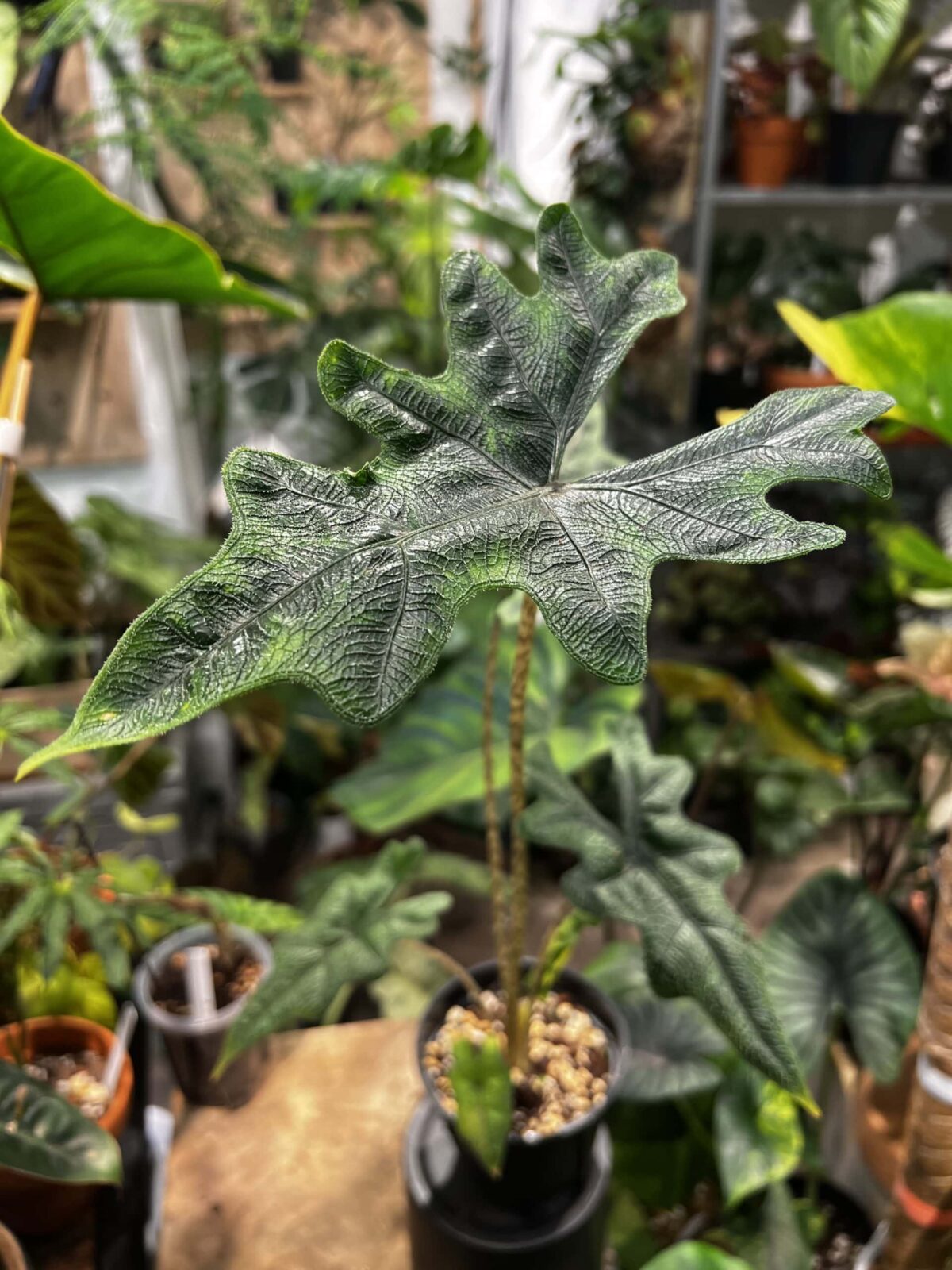
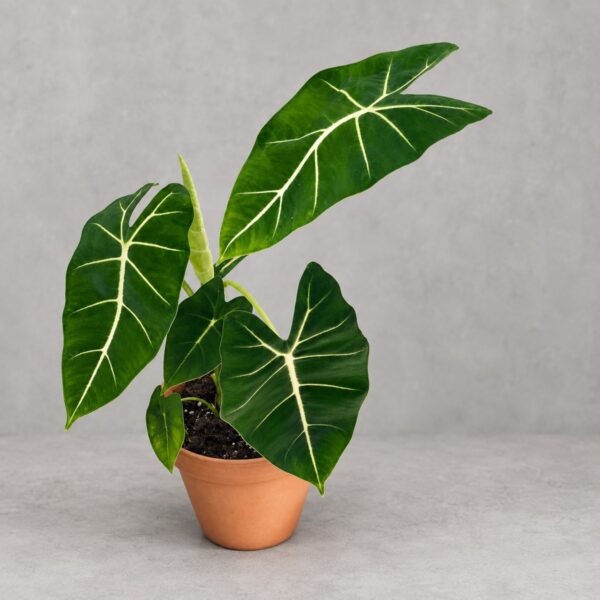
Shop this plantDeeply lobed, antler-like leaves embossed with raised white veins — a rainforest showpiece for serious collectors.
Origin & characteristics
Alocasia Jacklyn originates from the Tandurusa region of northern Sulawesi, Indonesia, entering the international houseplant trade around 2017–2018. Its arrow-shaped leaves are cut into deep, dramatic lobes, giving them a silhouette that resembles antlers or an ancient fern fossil; deep green blades are overlaid with raised, embossed white veining for striking contrast and real textural depth. Mature plants reach 1.5–2.5 m, placing it among the larger Alocasias, and every new leaf that unfurls feels like an event. Its taxonomy is still debated in horticultural circles, with names including Alocasia sulawesi, Alocasia tandurusa, and Alocasia jacklyn all in circulation.
Light
Prefers bright, indirect light — a north- or east-facing window is ideal. Keep it 1–2 m back from a south- or west-facing window, or filter with a sheer curtain. Insufficient light produces smaller new leaves and weaker vein contrast; direct sun will scorch the velvety leaf surface. Hong Kong's strong summer afternoon westerly sun needs particular attention.
Watering
Let the top 2–3 cm of soil dry before watering — this species is decidedly better dry than wet, since its roots are highly sensitive to waterlogging. Cut back further in winter as growth slows. Use room-temperature or rested tap water to avoid shocking the roots.
Soil & pot
Needs an extremely free-draining aroid mix: 40% peat or coco coir, 30% perlite, 20% orchid bark or pine bark, 10% horticultural charcoal. The pot must have drainage holes — a layer of leca at the base helps. Both plastic and terracotta pots work; beginners may find a clear nursery pot handy for monitoring root health.
Temperature & humidity
Ideal range is 18–28°C; growth stalls below 15°C, so keep it away from AC vents in Hong Kong winters. Humidity above 60% keeps the plant at its best; below 50%, leaf tips dry out. A pebble tray, humidifier, or grouping with other plants all help build a supportive microclimate.
Common problems
- Yellowing leaves: usually overwatering and root rot — check soil moisture and drainage.
- Crispy leaf tips: air too dry or water too hard — raise humidity and switch to filtered water.
- Small new leaves with faint veining: insufficient light — move closer to a window or add a grow light.
- Winter leaf drop: possible dormancy — reduce watering and keep the soil just barely moist until spring.
How to explain to customers
"Jacklyn comes from Sulawesi and has this amazing deeply-lobed leaf with raised white veins — once you've seen it, you'll always recognise it. It needs well-draining soil and decent humidity, so if you're running AC at home, pop a humidifier or a pebble tray nearby to keep the leaves looking their best."
Fun facts
The deeply cut leaf shape has earned Alocasia Jacklyn the playful nickname "Stag's Head Alocasia" among plant enthusiasts, since it genuinely resembles a deer's antlers. It only appeared on the international market around 2017, making it one of the more recently introduced rare Alocasia species.
Keywords
Alocasia Jacklyn, Alocasia sulawesi, Alocasia tandurusa, stag's head Alocasia, large Alocasia, rainforest plant, collector plant, toxic plant, Sulawesi, bright indirect light, high humidity, well-draining soil
參考資料(想知來源可展開)
References
- Plants of the World Online (Kew) — Alocasia. https://powo.science.kew.org
- The Spruce — How to Grow and Care for Alocasia Jacklyn. https://www.thespruce.com/alocasia-jacklyn-7185414
- RHS — Alocasia care. https://www.rhs.org.uk/plants/alocasia
⚠️ Pet / toxicity note: Alocasia species contain calcium oxalate crystals throughout the plant; ingestion causes oral pain, swelling and digestive upset. Keep away from pets and small children, and wash hands after handling.
In-depth care guide
Introduction and background
Alocasia Jacklyn is one of the most distinctive and, in recent years, most sought-after additions to the Araceae family among serious foliage collectors. It was first formally described in 2017 by botanist Dr. Alistair Hay and colleagues, with the type specimen collected from the limestone karst forests of Palawan Island in the Philippines. The cultivar name "Jacklyn" honours Australian horticulturist Jackie Groom, a key figure in collecting the original material that brought the plant into cultivation.
It's worth noting some genuine taxonomic uncertainty around this plant: the "Alocasia Jacklyn" commonly sold in the trade may not be identical to the formally described Alocasia jacklyn, and some botanists suspect the trade plant could represent an as-yet-undescribed species, informally labelled Alocasia sp. 'Jacklyn'. Some horticultural sources have referred to it as Alocasia sulawesi sp., though this classification is now considered inaccurate. Regardless of the taxonomic dust still settling, the plant circulates under the names Alocasia 'Jacklyn' or Alocasia sp. 'Jacklyn'.
The plant's defining trait is its dramatically lobed, texture-rich foliage. Each leaf is arrow-shaped, 20–35 cm long and 10–18 cm wide, with deeply incised, network-like veining that gives the surface real dimensionality — you can feel the ridges when you run a finger across it. Mature leaves develop a glossy waxy cuticle, giving them a subtle sheen and considerably more durability than the delicate Black Velvet Alocasia; leaf undersides are typically deep wine-red or purple, contrasting sharply with the dark green upper surface. Sturdy petioles up to 8 mm in diameter support an upright growth habit.
Indoors, Jacklyn typically reaches 60–90 cm, occasionally more in ideal conditions. It's genetically and morphologically distinct from Black Velvet (A. reginula) and Frydek (A. micholitziana) — features like its thicker petiole, waxier leaf surface, and rhizomatous (rather than tuberous) storage organ all set it apart. Notably, it doesn't go fully dormant in winter the way Black Velvet does — growth simply slows, making it a year-round display plant.
Light requirements
Jacklyn needs bright, indirect light to perform at its best. While more shade-tolerant than many jewel Alocasias, insufficient light will progressively shrink new leaves, blur their deep-cut vein pattern, and eventually thin the whole plant out until it loses its signature dramatic silhouette.
The ideal placement is an east- or west-facing window, 3–5 feet back; if you only have a bright south-facing window, add a sheer curtain or move the plant 5–8 feet away. Gentle morning sun is beneficial, intensifying leaf colour and vein definition, but midday to afternoon direct sun will cause lasting scorch damage.
A useful diagnostic: if you notice several consecutive new leaves coming in progressively smaller, or with less distinct veining, that's a strong signal to move the plant closer to a light source or add supplemental lighting. A rough target is 10,000–15,000 lux. If natural light is limited, a full-spectrum LED grow light (3,000–4,000K), hung 12–18 inches above the plant and run 10–12 hours daily, works well.
Watering method
The guiding principle is "let the topsoil dry before watering." Check moisture about 2 inches (5 cm) down; in a typical Hong Kong home this usually translates to watering every 5–7 days in summer and 7–10 days in winter — though always confirm with a finger test rather than a fixed calendar.
Water thoroughly until it runs from the drainage holes, then empty the saucer within 5–10 minutes. Jacklyn enjoys consistent moisture but cannot tolerate standing water, and prolonged wet feet will rot the rhizome quickly.
A few practical notes: this species is somewhat sensitive to high-mineral water, so if your tap water's TDS exceeds roughly 100 ppm, consider rainwater, distilled water, or reverse osmosis water, or simply let tap water stand overnight to let chlorine dissipate. Morning watering is preferable to evening, giving the soil time to dry slightly through the day and reducing overnight fungal risk. In winter, as growth slows, extend the interval between waterings further, waiting until the upper half of the soil has dried.
Soil, pot & repotting
Jacklyn needs a well-draining, slightly acidic growing medium. A proven mix:
- 40% coarse perlite or pumice
- 30% quality orchid bark (½-inch chunks)
- 20% coco coir, pre-rinsed to remove salts
- 10% worm castings, for slow-release nutrition and beneficial microbes
Target a soil pH of 5.8–6.5. Avoid ordinary garden soil or peat-heavy mixes, which compact too easily and suffocate the rhizome. If buying a ready-made "aroid mix," look for a coarser, more porous blend.
For pots, terracotta or breathable fabric pots are excellent choices, promoting both evaporation and root aeration; whatever material you choose, drainage holes are essential. Jacklyn is a medium-sized grower, so it doesn't need an oversized pot — experienced growers often recommend a wide, shallow pot, since the root system tends to spread laterally rather than deeply.
Repot roughly every 18–24 months, ideally in late spring (May to early June). Signs it's time include roots visibly circling the pot wall, the plant being pushed upward by its own roots, or noticeably slower growth. Size up by only 1–2 inches — an oversized pot increases rot risk. When repotting, gently loosen the outer roots but avoid disturbing or washing the rhizome crown, which should sit roughly ½ inch below the soil surface — not buried too deep, which invites rot.
Humidity requirements
As a rainforest native, Jacklyn appreciates fairly high humidity, ideally 60% to 80%. When ambient humidity stays below 50% for more than about 48 hours, leaf margins begin browning, starting with the oldest leaves; prolonged dry conditions will gradually weaken the whole plant and stall growth.
Effective ways to maintain humidity include a humidifier with a hygrostat set to 65–75%, placed 3–5 feet from the plant; grouping Jacklyn with other humidity-loving species (such as Calathea ornata, Maranta leuconeura, or Peperomia obtusifolia) to build a shared microclimate through collective transpiration; a pebble tray beneath the pot (keeping the base above the waterline); or placing it in a well-lit bathroom, where daily shower steam naturally raises humidity. Avoid long-term use of a humidity dome or plastic bag cover, since trapped ethylene gas accelerates leaf ageing and encourages fungal growth.
Temperature requirements
The ideal growing range is 18–27°C. Jacklyn can briefly tolerate temperatures as low as 13°C, but sustained exposure below 15°C stalls growth and increases susceptibility to bacterial soft rot (Erwinia). On the hot end, sustained temperatures above 31°C cause heat stress — scorched leaf margins and slowed growth — and fertilising should pause during any such heatwave.
Stability matters more than any single number: avoid placing the plant near AC vents or heaters, frequently opened doors or windows, lift lobbies, or kitchen stoves. In Hong Kong, summer is rarely a problem provided you avoid direct AC airflow, but winter requires attention — if temperatures are forecast to stay below 16°C for an extended period, move the plant to a warmer interior spot, reduce watering, and pause fertilising. A digital hygrometer/thermometer placed near the plant gives far more reliable readings than a phone app estimate.
Feeding
Jacklyn isn't a heavy feeder, and overfertilising risks salt burn — browning tips and stunted root development. During active growth (April–September), apply a diluted, urea-free balanced liquid fertiliser (such as a 3-1-2 or 4-1-3 NPK ratio) every 3–4 weeks, at roughly a quarter of label strength. Always water the soil first to avoid burning dry roots, and pause feeding entirely if the environment exceeds 31°C.
Two optional extras can support long-term health: a light top-dressing of kelp meal (about half a tablespoon) every four months, watered in, provides natural cytokinins that support new leaf cell division; and a well-aerated compost tea, brewed for 24 hours, can replace one regular feeding in June and again in early August to boost beneficial soil microbes and suppress root pathogens.
Whatever fertiliser routine you follow, flush the soil monthly with a generous volume of plain water (roughly three times the pot's volume) to prevent mineral buildup, particularly if your tap water has a high TDS reading. Stop fertilising completely from October through March.
Propagation
Jacklyn can only be propagated through rhizome division — leaf or stem cuttings won't root, since the petiole has no capacity to form adventitious roots.
To divide: wait until spring (March–May) once soil temperatures are consistently above 21°C. Gently remove the plant from its pot and clear soil away from the roots. Using a sterilised, sharp blade, cut the rhizome into sections, ensuring each piece retains at least one visible growth eye (a small pink bump) and 2–3 healthy roots. Dust cut surfaces with cinnamon or sulfur powder and let them air-dry in a cool, shaded spot for about four hours to callus. Plant each division into fresh, free-draining mix with the rhizome top sitting roughly ½ inch below the surface, then keep warm (21–24°C), humid (70–80%), and in bright indirect light. New root growth typically begins within 2–4 weeks.
Occasionally the plant produces small corms, which can also be removed and started in shallow water to sprout roots within 2–3 weeks.
Common problems and solutions
Lower leaves yellowing: if it's isolated to one or two of the oldest leaves, this is natural senescence — simply trim at the base with sterilised scissors. If three or more leaves yellow simultaneously, check for overwatering or poor drainage.
Dry, browning leaf margins: almost always low humidity (sustained below 50%) or hard water. Switch to filtered or rainwater and raise humidity above 60%.
Leaves cupping or curling inward: either underwatering or overcrowded roots. Check root density first — repot if roots have circled the pot; otherwise, slightly increase watering frequency.
No new leaves for over 8 weeks: check light levels (target 10,000–15,000 lux), soil pH (ideal 5.8–6.5), and confirm night-time temperatures stay above 16°C. Working through these factors one at a time usually resolves the stall.
Soft, blackened stem: a sign of Erwinia soft rot. Isolate the plant immediately, remove all infected tissue, treat with a copper-based fungicide, and repot into fresh, sterile soil, discarding the contaminated mix.
Spider mites: the most common pest for this species, showing as small yellow flecks and fine webbing on leaf undersides. Rinse leaf undersides thoroughly with a shower head every other day, raise humidity, and use neem oil or a dedicated miticide for persistent infestations.
Thrips: identifiable by silvery streaks and tiny black droppings on leaves. Monitor with yellow sticky traps and treat with insecticidal soap or neem oil.
Scale insects: typically clustered at the petiole base. Remove individually with alcohol-dipped cotton swabs; use a systemic insecticide for severe infestations.
Toxicity
Like all Alocasia species, Jacklyn contains calcium oxalate crystals throughout its tissue. Ingestion causes oral and gastrointestinal irritation. Keep it well out of reach of pets and children.
References
- Plants of the World Online (Kew) — Alocasia. https://powo.science.kew.org
- The Spruce — How to Grow and Care for Alocasia Jacklyn. https://www.thespruce.com/alocasia-jacklyn-7185414
- RHS — Alocasia care. https://www.rhs.org.uk/plants/alocasia
- Proven Winners — How to Grow Alocasia Indoors and Outdoors. https://www.provenwinners.com/learn/houseplants/alocasia
- Wikipedia — Alocasia. https://en.wikipedia.org/wiki/Alocasia
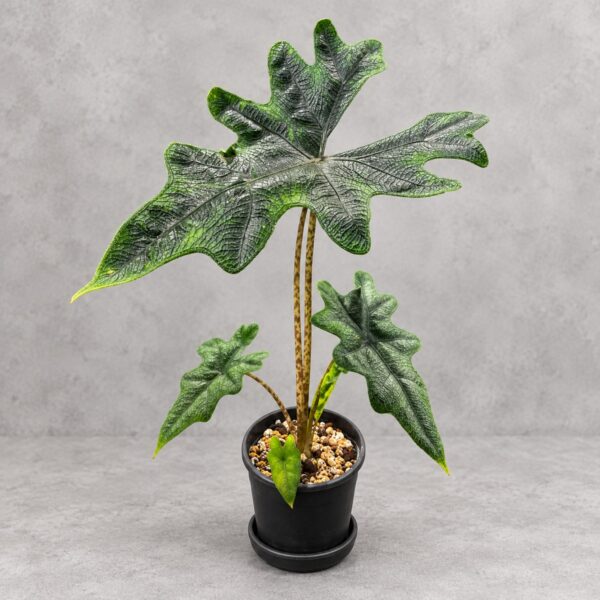
Plantjai shop · In stock online
Alocasia 'Jacklyn'
Alocasia 'Jacklyn'
HK$288.00
Hong Kong delivery · Causeway Bay pickup
For Hong Kong homes and offices. Stock and pricing follow the product page.
IN STORE NOW
Plants for this guide
Related plants in stock now — live prices, delivery or Causeway Bay pickup.
FREE PLANT ADVICE
Send us a photo before you change anything
WhatsApp a photo of the plant and your window light. Our Causeway Bay team will suggest care steps or plants that suit your space.
STORE · CAUSEWAY BAY
4/F, 39 Yiu Wa Street, Causeway Bay
Daily 12:30–8:00pm · ~3 min walk from Times Square
Map & directionsPlant Care