
How to Care for Alocasia Frydek in Hong Kong | Plantjai

Plantjai 植仔 · Care Encyclopedia
Alocasia Frydek
Hong Kong care guide — useful before you buy and after it arrives.
Shop this plantVelvety deep-green arrow leaves streaked with lightning-bolt white veins — elegant, striking, and genuinely beginner-friendly for an Alocasia.
Origin & characteristics
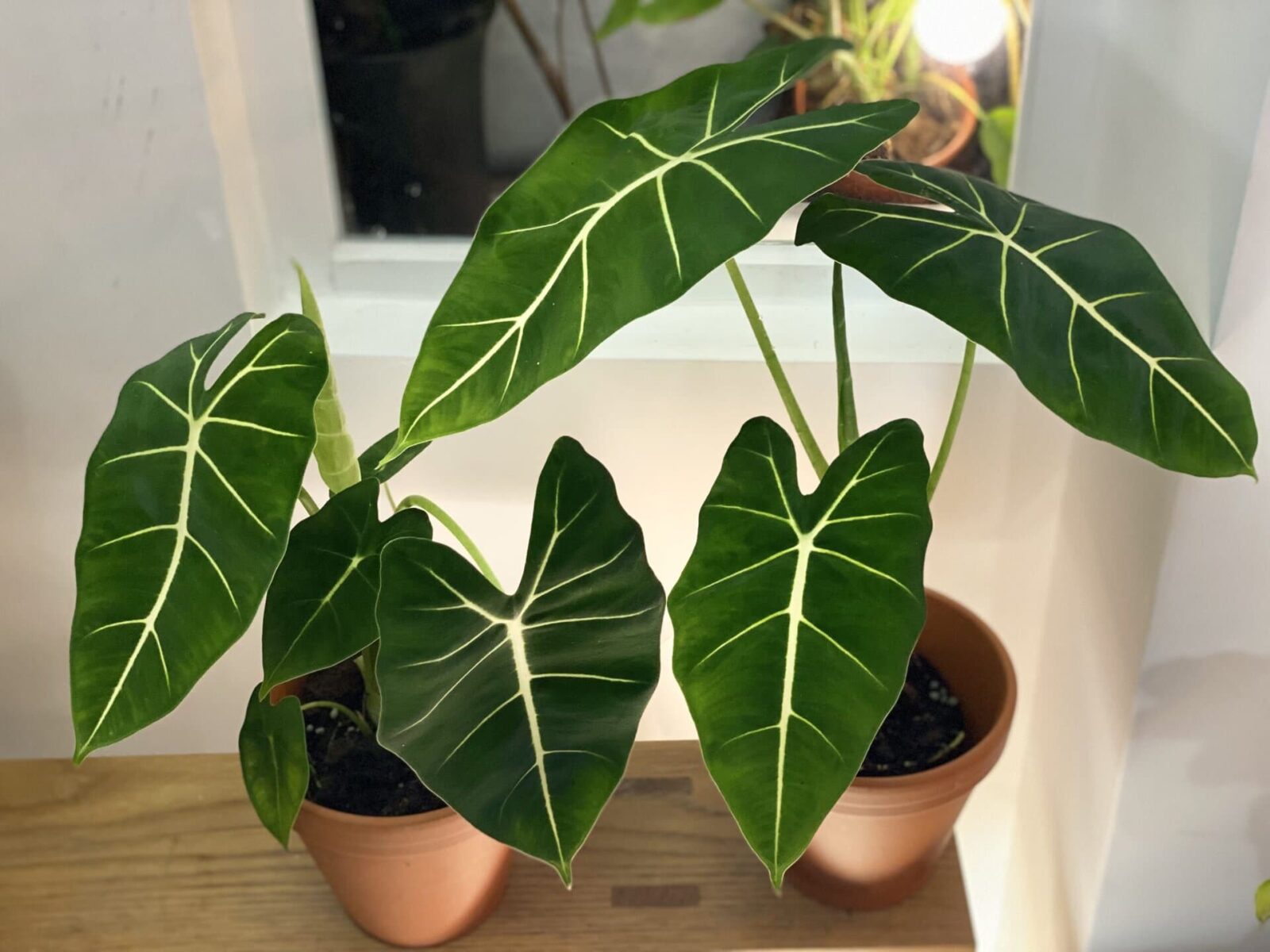
Native to the cloud forests of Luzon, Philippines, at elevations of 1,200–1,500 m, this species was introduced to Europe in 1912 by German plant collector Wilhelm Micholitz, giving it its species name micholitziana; 'Frydek' is its horticultural trade name. Belonging to the Araceae family, it's a medium-sized Alocasia with large, arrow-shaped leaves in deep, velvety green, marked with bold white or pale green veining that resembles streaks of lightning. Mature plants reach 60–90 cm, with a graceful, upright habit that makes it one of the most popular entry-level Alocasias for new collectors.
Light
- Prefers bright, indirect light — an east-facing sill or a spot 1–2 m from a south window is ideal.
- Adapts to a north-facing window too, just with somewhat slower growth.
- Avoid midday direct sun — the velvety surface scorches easily.
- Too little light thins the leaves, fades the veining, and can cause leggy growth.
Watering
- Water thoroughly once the top 2–3 cm of soil has dried, letting excess drain freely.
- Roughly every 5–7 days in summer, extending to 10–14 days in winter.
- Somewhat sensitive to water quality — filtered water or water rested overnight is best.
- Never let it sit in standing water; root rot is the most common way this plant dies.
Soil & pot
- Standard aroid recipe: 50% quality potting soil, 20% perlite, 15% bark, 10% coco coir, 5% activated charcoal.
- The mix should balance moisture retention with good aeration — overly dense soil invites rot.
- Use a pot with drainage holes; terracotta or a perforated plastic nursery pot both work.
- Repot every 1–2 years, ideally in spring.
Temperature & humidity
- Ideal range: 18–29°C — its cloud-forest origins make it slightly more cold-tolerant than many tropical Alocasias.
- Growth stalls when Hong Kong winter temperatures stay below 15°C for extended periods; avoid AC vents.
- Aim for 60–80% humidity; below 50%, leaf tips start browning.
- A humidifier, pebble tray, or grouping plants together all help maintain humidity.
Common problems
| Issue | Likely cause | What to do |
|---|---|---|
| Leaves going soft and drooping | Usually thirst — a sign to check soil moisture | Soak the pot for 10–15 minutes; it typically recovers |
| Brown leaf tips | Air too dry or water too hard | Raise humidity and switch to filtered water |
| Yellowing, dropping leaves | Overwatering causing root rot | Check drainage and soil aeration |
| Winter leaf drop | Natural dormancy response to cold | Reduce watering and feeding; new leaves return in spring |
| Spider mites | Common in dry conditions | Keep humidity up and check leaf undersides regularly |
How to explain to customers
"Green Velvet is one of the best starter Alocasias — those big velvety leaves with bright white veins have real presence in a living room or study. The main thing to get right is drainage; let the soil dry out a bit between waterings and it'll do just fine."
Fun facts
Green Velvet Alocasia is native to Philippine cloud forests above 1,200 m, which makes it noticeably more tolerant of temperature swings than most lowland tropical houseplants — part of why it's easier to grow indoors than many of its jewel Alocasia cousins. The Alocasia genus contains over 80 species, and Frydek has consistently ranked among the most popular thanks to its elegant velvety leaves and vivid veining.
Keywords
Green Velvet Alocasia, Alocasia micholitziana Frydek, velvet leaf, white vein Alocasia, beginner Alocasia, shade-tolerant, medium-to-large houseplant, toxic to pets, Philippine cloud forest
參考資料(想知來源可展開)
References
- Plants of the World Online (Kew) — Alocasia micholitziana. https://powo.science.kew.org
- RHS — Alocasia care. https://www.rhs.org.uk/plants/alocasia
- Proven Winners — How to Grow Alocasia Indoors and Outdoors. https://www.provenwinners.com/learn/houseplants/alocasia
⚠️ Pet / toxicity note: Contains calcium oxalate crystals; toxic if ingested, causing oral irritation, swelling, drooling and vomiting. Keep away from pets and small children; gloves recommended when handling.
In-depth care guide
Introduction
Green Velvet Alocasia (Alocasia micholitziana 'Frydek') is one of the most popular and instantly recognisable species in the Alocasia genus, sitting comfortably in the medium-to-large size range. Its species epithet honours German plant collector Wilhelm Micholitz, who introduced it to Europe in 1912, while the trade name 'Frydek' — often thought to derive from a Polish nickname — has become synonymous with the plant's understated elegance.
The signature feature is its enormous heart-shaped leaves, coated in a soft, velvety green that feels genuinely plush to the touch, marked with bright white or pale green primary and secondary veins that stand out in striking contrast against the dark background — each leaf looks almost hand-painted. The leaf texture is thick, with subtly wavy margins, giving the overall plant a look that's both lush and refined.
Indoors, 'Frydek' can reach 60–90 cm or more, making it an excellent choice for building an indoor jungle feel. It grows in an upright, clumping form, with new leaves continually emerging from a central stem to form a tight, elegant rosette. While it's more adaptable than most other Alocasias, it still needs a reasonably stable environment to really thrive.
Native habitat & growth habit
Alocasia micholitziana is native to the Philippines and parts of Southeast Asia, growing in the humid understorey beneath dense forest canopy. 'Frydek', as a cultivated selection, retains its parent's preference for warmth, high humidity and filtered light, but generations of cultivation have made it noticeably more adaptable and easier to grow than many other Alocasia species.
Growth speed is moderate to fast — under good conditions, expect one to two new leaves a month through spring and summer. Like other Alocasias, 'Frydek' may enter a period of dormancy or semi-dormancy in autumn/winter as light and temperature drop, with slower growth and possibly some leaf loss. This is entirely normal and no cause for alarm.
Light requirements
'Frydek' needs bright, indirect light — around 6–8 hours daily. Its dark, velvety leaves are rich in chlorophyll and use light efficiently, but still need adequate quantity to support fast growth and large leaf development.
Ideal placement:
- An east- or west-facing window, giving plenty of indirect light while avoiding harsh midday sun
- A south-facing window softened with a sheer curtain
- Any bright interior space with consistent daily light
Signs of insufficient light:
- Fading colour, losing its deep-green lustre
- Stretched internodes, giving the plant a leggy, loose appearance
- Smaller new leaves and noticeably slower growth
- White veining becoming less distinct
Signs of too much light:
- Yellow-brown scorch marks or crisping edges
- Loss of the velvety texture, leaves feeling dry and brittle
- Overall fading of leaf colour
Rotate the pot 90 degrees every couple of weeks to ensure even light exposure on all sides, keeping the plant's growth compact and symmetrical. Supplement with a full-spectrum LED grow light if natural light is insufficient.
Watering method
'Frydek' likes evenly moist soil, but absolutely cannot tolerate standing water. It's sensitive to both overwatering and underwatering, so regular observation and adjustment matter more than following a fixed schedule.
Watering principles:
- Let the top 2.5–5 cm of soil dry before watering again — check with a finger or a moisture meter
- Use room-temperature rainwater, distilled water, or filtered water; 'Frydek' is sensitive to water quality, and minerals in tap water can cause brown leaf tips
- Water thoroughly — slowly until it runs freely from the drainage holes — then immediately empty the saucer
- Never let the pot sit in standing water
Seasonal adjustments:
- Spring/summer growing season: roughly every 5–7 days, depending on humidity and temperature
- Autumn/winter dormancy: extend to every 7–10 days or longer. Soil dries more slowly in cooler weather, so be careful not to overwater; keep it lightly moist rather than letting it dry out completely.
Overwatering warning signs: yellowing lower leaves, soft/blackened stem base, musty-smelling soil.
Underwatering warning signs: drooping leaves, brittle brown edges, general wilting.
Soil & potting
'Frydek' needs a well-draining, organically rich, slightly acidic soil (pH 5.5–6.5).
Recommended soil mix:
- 40% quality peat-free potting soil
- 25% perlite (improves drainage and aeration)
- 20% coco coir or peat moss (moisture retention and organic content)
- 10% orchid bark (adds aeration)
- 5% worm castings or slow-release organic fertiliser
This lightweight, loose mix retains enough moisture for the plant's large leaves without risking waterlogged roots.
Pot selection:
- Drainage holes are essential
- Terracotta is ideal for its breathability, helping prevent overly wet soil
- Choose a pot 2.5–5 cm larger in diameter than the root ball — 'Frydek' prefers a slightly snug root environment
- As the plant matures, a deeper pot may be needed to support its expanding root system
Repotting: every 1–2 years in spring, or when roots emerge from the drainage holes or the soil dries unusually quickly. Check root health at each repot and trim away any rot or damage.
Humidity & temperature
Humidity: 'Frydek' prefers 60–80% relative humidity. Higher humidity helps maintain the velvety leaf texture and vivid veining, while also reducing tip browning.
- A humidifier is the most direct and effective method.
- Placing the plant in a naturally humid space like a bathroom or kitchen works well, provided there's enough light.
- A pebble tray or grouping plants together both help.
- Avoid misting the leaves directly — trapped moisture can encourage fungal issues.
Below 40% humidity, you may notice leaf tips becoming crisp and brown — a clear sign it's time to boost moisture in the air.
Temperature: ideal range 18–27°C, never below 15°C.
- Sustained cold below 15°C stalls growth and can cause cold damage.
- Avoid AC vents, heaters, and drafty doors/windows.
- Above 30°C, pay extra attention to humidity, since heat stress at high temperatures raises the risk of spider mites.
Feeding
'Frydek' benefits from regular light feeding during the growing season to support its fast growth and large leaves.
Feeding recommendations:
- Use a balanced, water-soluble fertiliser (such as 20-20-20), diluted to half strength
- Feed every 2–3 weeks during spring and summer
- Stop feeding entirely from autumn through winter
- Only fertilise when the soil is already moist, to avoid burning dry roots
Cautions:
- Overfeeding leads to salt buildup, showing as tip burn or white crystalline deposits on the soil surface
- If you notice salt buildup, flush the soil thoroughly with clean water
- Wait at least three months after repotting before fertilising, since fresh soil already contains adequate nutrients
Dormancy management
'Frydek' may enter dormancy or semi-dormancy during cooler, dimmer autumn and winter months.
Signs of dormancy:
- Noticeably slower or stalled growth
- Some lower leaves yellowing and dropping
- Soil taking longer to dry out
Dormancy care:
- Reduce watering frequency, keeping soil lightly moist but not wet
- Stop fertilising completely
- Maintain a stable temperature, avoiding anything below 15°C
- Don't panic over leaf drop — it's a normal physiological response
- Resume normal watering and feeding gradually once new shoots appear in spring
Propagation
'Frydek' is mainly propagated by division or rhizome sectioning:
Division (most recommended):
- Carry out at spring repotting.
- Gently remove the plant from its pot and rinse soil from the roots.
- Look for offsets or rhizome sections with their own root system and at least one growth point.
- Separate from the parent plant using a sterilised, sharp blade.
- Pot into fresh soil, keeping humidity and warmth high until new roots establish.
Rhizome sectioning: if the parent rhizome is large, it can be cut into several sections, each with at least one growth bud. Let cut surfaces air-dry for a day before planting, and keep the soil lightly moist.
Seed propagation is possible but slow and unreliable — generally reserved for dedicated breeding projects rather than casual home propagation.
Common problems
Yellowing leaves: most commonly caused by overwatering and root rot. Check soil moisture, and hold off watering if it's still wet. Low humidity, nutrient imbalance, or natural ageing can also cause yellowing.
Brown leaf tips or edges: typically low humidity, underwatering, or fertiliser burn. Check humidity levels first and adjust watering frequency.
Slow new growth: could be insufficient light, temperatures too low, or weak roots. Increase light intensity and check root health.
Spider mites: the most common pest in dry conditions. Check leaf undersides regularly for fine webbing; treat promptly with soapy water and raise humidity.
Loss of velvety texture: usually caused by light that's too intense or humidity that's too low. Adjust the environment; new leaves typically return to normal texture.
Toxicity information
Like all Alocasia species, 'Frydek' contains calcium oxalate crystals and is toxic to pets and humans. Ingestion causes oral and throat irritation and swelling, and may cause vomiting and difficulty swallowing. Keep the plant well out of reach of pets and children, and wear gloves when handling.
References
- Plants of the World Online (Kew) — Alocasia micholitziana. https://powo.science.kew.org
- RHS — Alocasia care. https://www.rhs.org.uk/plants/alocasia
- Proven Winners — How to Grow Alocasia Indoors and Outdoors. https://www.provenwinners.com/learn/houseplants/alocasia
- Missouri Botanical Garden — Plant Finder, Alocasia. https://www.missouribotanicalgarden.org/PlantFinder/PlantFinderDetails.aspx?taxonid=285730
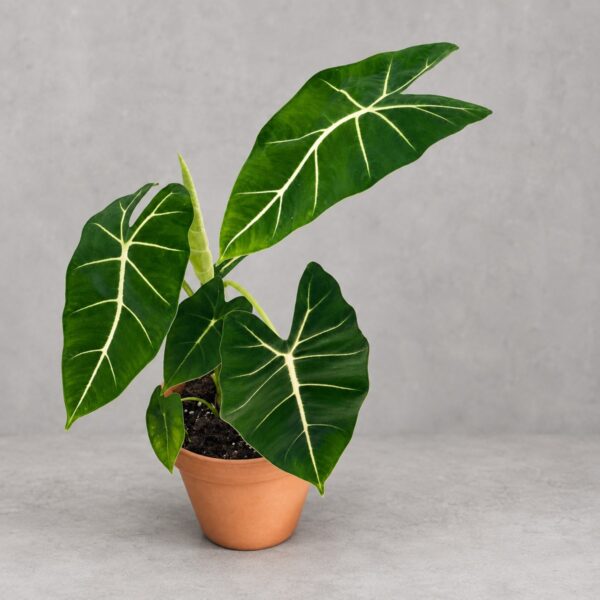
Plantjai shop · In stock online
Alocasia 'Frydek'
Alocasia 'Frydek'
from HK$168.00
Hong Kong delivery · Causeway Bay pickup
For Hong Kong homes and offices. Stock and pricing follow the product page.
IN STORE NOW
Plants for this guide
Related plants in stock now — live prices, delivery or Causeway Bay pickup.
FREE PLANT ADVICE
Send us a photo before you change anything
WhatsApp a photo of the plant and your window light. Our Causeway Bay team will suggest care steps or plants that suit your space.
STORE · CAUSEWAY BAY
4/F, 39 Yiu Wa Street, Causeway Bay
Daily 12:30–8:00pm · ~3 min walk from Times Square
Map & directionsPlant Care