How to Care for Alocasia Frydek Albo in Hong Kong | Plantjai

Hong Kong care guide for Alocasia Frydek Albo.
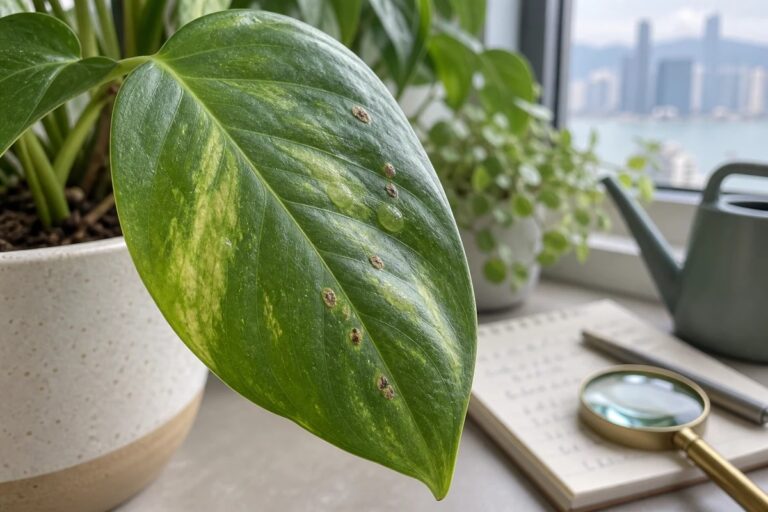
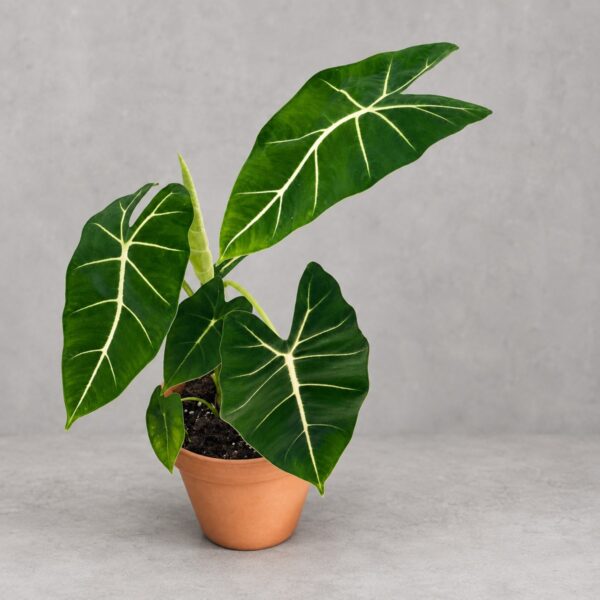
Velvet green foliage with natural white marbling — every leaf is genuinely one of a kind.
Origin & characteristics
Alocasia micholitziana, the species behind Green Velvet Alocasia, is native to Luzon and the montane cloud forests of the Philippines, introduced to European cultivation in 1912 by German plant collector Wilhelm Micholitz. The Albomarginata variegation is a natural mutation causing white or creamy patches across the leaf margin or blade, the result of uneven chlorophyll distribution. No two new leaves display quite the same pattern, which is exactly why this cultivar is so prized by collectors. Mature plants reach 50–70 cm, combining the species' signature velvet texture and white venation with an extra layer of variegated pattern.
Light
- Needs brighter light than the plain green form to sustain its variegation — an east- or south-facing window with filtered light suits it well.
- Insufficient light causes the white patches to fade or new leaves to revert to solid green.
- Avoid direct sun, especially on the variegated portions, which scorch and brown easily.
- Rotate the pot every couple of weeks for even light exposure on all sides.
Watering
- Water thoroughly once the top 2–3 cm of soil has dried, ensuring the pot drains completely.
- Roughly every 5–7 days in summer, extending to 10–14 days in winter.
- Sensitive to water quality — use filtered water, distilled water, or water rested overnight.
- Variegated plants generally have weaker roots than the plain green form, so be especially careful to avoid waterlogging.
Soil & pot
- Use a highly aerated aroid mix: 40% quality potting soil, 25% perlite, 20% bark, 10% coco coir, 5% activated charcoal.
- The mix should be chunky, giving the roots plenty of airflow.
- Use a terracotta or perforated plastic pot with drainage holes.
- Check for small corms when repotting — these can be used for propagation.
Temperature & humidity
- Ideal range: 18–27°C; growth slows noticeably below 16°C.
- Avoid large temperature swings in Hong Kong's AC-cooled winter rooms, and keep it away from cold window drafts.
- Aim for 60–75% humidity; below 50%, leaf tips start browning.
- A humidifier is especially recommended for variegated cultivars, which tend to need more consistent environmental conditions than the plain green form.
Common problems
| Issue | Likely cause | What to do |
|---|---|---|
| White patches turning brown | Sun scorch or insufficient humidity | Adjust placement and raise humidity |
| New leaves showing less variegation, or fully green | Insufficient light (most common cause) | Move gradually closer to a light source |
| Leaves turning soft and yellow | Overwatering causing root rot | Check roots immediately and switch to fresh, free-draining soil |
| Slow growth or leaf drop | Normal winter dormancy | Reduce watering and feeding; wait for warmer weather |
| Spider mites | Common on velvety leaves | Maintain humidity and check leaf undersides regularly |
How to explain to customers
"This is the variegated version of Green Velvet Alocasia — every white marking on the leaf is totally unique, so no two plants are ever quite the same. It genuinely needs brighter light than most Alocasias to keep that variegation crisp, and go easy on watering since its roots are a touch more delicate than the plain green form."
Fun facts
Variegated white patches are actually areas lacking chlorophyll, which is why variegated plants generally need more light than their solid-green counterparts to make up for reduced photosynthetic capacity. The species name micholitziana honours German plant collector Wilhelm Micholitz, who first brought this plant to Europe, while 'Frydek' became its lasting horticultural name.
Keywords
Variegated Green Velvet Alocasia, Alocasia micholitziana Frydek Albomarginata, white variegated Alocasia, velvet leaf, white vein, intermediate difficulty, collector plant, rare aroid, toxic to pets
參考資料(想知來源可展開)
References
- Plants of the World Online (Kew) — Alocasia micholitziana. https://powo.science.kew.org
- RHS — Alocasia care. https://www.rhs.org.uk/plants/alocasia
- Proven Winners — How to Grow Alocasia Indoors and Outdoors. https://www.provenwinners.com/learn/houseplants/alocasia
⚠️ Pet / toxicity note: Contains calcium oxalate crystals; toxic if ingested, causing oral irritation, swelling, drooling and vomiting. Keep away from pets and small children; gloves recommended when handling.
In-depth care guide
Introduction
Variegated Green Velvet Alocasia takes the already-beloved Alocasia micholitziana 'Frydek' and adds an extra layer of visual interest: irregular white or cream variegation scattered across the velvety green leaf blade or margin. Because this pattern arises from a naturally unstable genetic mutation, no two leaves — and no two plants — ever look quite the same, which is a large part of its appeal to serious collectors.
The species itself traces back to the montane cloud forests of Luzon in the Philippines, introduced to European horticulture in 1912 by German plant collector Wilhelm Micholitz, whose name lives on in the species epithet micholitziana. 'Frydek' became the enduring trade name for the plush, velvet-leaved form that made the species famous, and the Albomarginata variegation builds directly on that foundation.
Mature plants typically reach 50–70 cm, combining the classic Frydek traits — deep velvet texture, bold white primary veining — with unpredictable patches of white or cream variegation that make this cultivar genuinely collectible.
Why variegated Alocasias need more light
Because the white portions of the leaf lack chlorophyll, they cannot photosynthesise, which means the green tissue has to work harder to support the whole plant. In practice, this cultivar needs noticeably brighter light than a plain green Frydek to sustain both healthy growth and vivid variegation. An east-facing window offering strong morning light, or a spot close to a south-facing window with a sheer curtain, generally works best. Too little light causes new leaves to revert toward solid green — a clear signal it's time to move the plant somewhere brighter.
At the same time, direct sun is still off-limits. The white sections are particularly vulnerable to sunburn since they have no chlorophyll to help dissipate light energy; once scorched, the damage is permanent and the affected tissue will not turn green or heal. The goal is therefore "as much bright, indirect light as possible, with zero direct sun" — a genuinely narrow window that makes this plant a bit more demanding to place well than its non-variegated sibling.
Watering and root sensitivity
Variegated Alocasias in general have somewhat weaker, more rot-prone root systems than their fully green counterparts, since reduced photosynthesis means slower overall metabolism and slower water uptake. Apply the same "let the top 2–3 cm dry, then water thoroughly" principle as for standard Frydek, but err on the side of caution — when unsure whether the soil has dried enough, it's safer to wait a day longer than to add water prematurely.
Water quality matters more here too. This cultivar is noted to be sensitive to chlorine and mineral content, so filtered water, rainwater, or tap water rested overnight is genuinely worth the extra effort, particularly if you've noticed tip browning in the past.
Soil, humidity and temperature
The soil and humidity requirements mirror the plain green Frydek fairly closely — a chunky, well-aerated aroid mix, and humidity in the 60–75% range. Because variegated tissue is more sensitive to environmental swings generally, however, this cultivar benefits from slightly more consistent conditions: avoid moving it between very different light or humidity levels, and consider a small humidifier if your home runs dry, especially in winter with heating or air conditioning running.
Temperature preferences also match the species norm — a comfortable 18–27°C, never below 15°C for extended periods, and always kept clear of AC vents and cold drafts.
Propagation and corms
Like other Alocasias, this cultivar produces small corms near the base of the plant, which are often revealed at repotting time. These can be removed, allowed to callus for a day or two, and started in a small pot of moist, free-draining mix to produce genetically identical offsets — though note that variegation levels in offsets can vary from the parent plant, another reason each specimen ends up feeling unique.
Common problems in more detail
Variegation fading or reverting to green is overwhelmingly a light issue — gradually increase light exposure (never abruptly, to avoid shocking the plant) and watch subsequent new leaves for improvement.
Browning on white patches usually means either direct sun exposure or humidity that's dropped too low for too long; check both factors together, since they often compound each other.
Root rot, showing as soft yellowing leaves and a foul smell from the soil, calls for immediate action: unpot, trim away any mushy roots, and repot into fresh, drier mix, then dial back your watering frequency going forward.
Toxicity
As with all Alocasia species, this plant contains calcium oxalate crystals throughout its tissue. Ingestion causes oral pain, drooling, and potential vomiting in pets and children. Keep it safely out of reach, and wash your hands after handling or pruning.
References
- Plants of the World Online (Kew) — Alocasia micholitziana. https://powo.science.kew.org
- RHS — Alocasia care. https://www.rhs.org.uk/plants/alocasia
- Proven Winners — How to Grow Alocasia Indoors and Outdoors. https://www.provenwinners.com/learn/houseplants/alocasia
- Missouri Botanical Garden — Plant Finder, Alocasia. https://www.missouribotanicalgarden.org/PlantFinder/PlantFinderDetails.aspx?taxonid=285730
For Hong Kong homes and offices. Stock and pricing follow the product page.
IN STORE NOW
Plants for this guide
Related plants in stock now — live prices, delivery or Causeway Bay pickup.
FREE PLANT ADVICE
Send us a photo before you change anything
WhatsApp a photo of the plant and your window light. Our Causeway Bay team will suggest care steps or plants that suit your space.
STORE · CAUSEWAY BAY
4/F, 39 Yiu Wa Street, Causeway Bay
Daily 12:30–8:00pm · ~3 min walk from Times Square
Map & directionsPlant Care