
How to Care for Alocasia Amazonica Polly in Hong Kong | Plantjai

Hong Kong care guide for Alocasia Amazonica Polly.
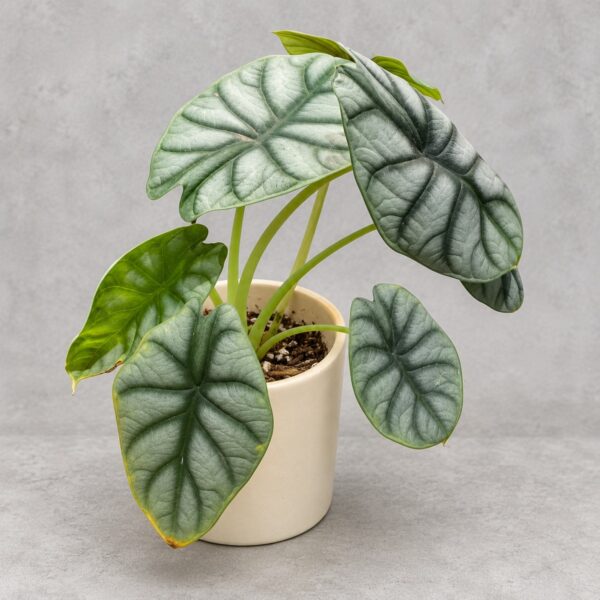
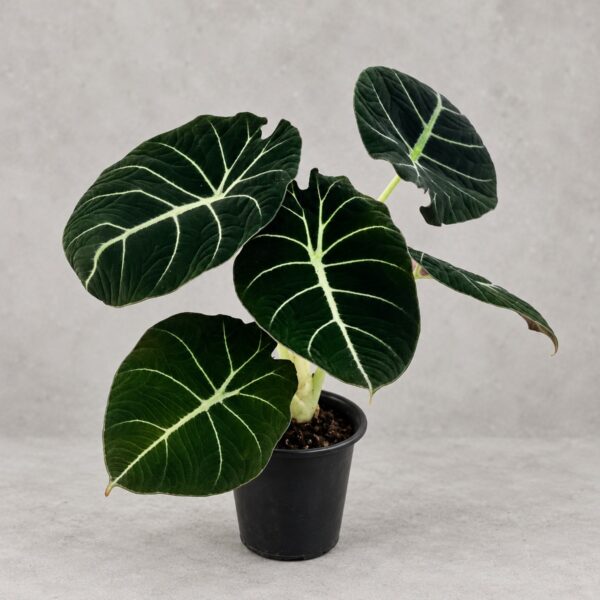
Glossy dark-green leaves veined in silver like tributaries of a river — the classic entry point into serious Alocasia collecting.
Origin & characteristics
Despite the name, Alocasia × amazonica 'Polly' has nothing to do with the Amazon — it's a hybrid of Asian species, bred for the houseplant trade rather than found in the wild. Its deep green, arrow-shaped leaves carry bold silvery-white to pale green veining with gently wavy margins, giving each leaf a sculptural, almost lacquered look. 'Polly' is a compact cultivar of the amazonica hybrid, staying smaller and tidier than the original cross, typically reaching 30–50 cm — a manageable size for a typical Hong Kong flat and a genuinely good starting point for anyone new to Alocasia.
Light
- Ideal light: bright, indirect light, roughly 1,000–2,000 lux.
- Placement: an east- or north-facing window, or 2–3 m back from a south-facing one.
- Avoid: direct midday summer sun — it scorches leaves, causing brown patches or curled edges.
- Signs of too little light: pale colouring, faded silver veins, small and weak new growth.
Watering
- Water once the top 2–3 cm of soil has dried, roughly every 5–7 days.
- Water slowly until it runs from the drainage holes; empty the saucer within 30 minutes.
- Room-temperature or filtered water is best — avoid cold water straight from the tap.
- The plant may drop leaves and go semi-dormant in autumn/winter; cut back to every 10–14 days during that period.
- 'Polly' has fairly low tolerance for wet feet — when in doubt, err dry.
Soil & pot
- Recommended mix: 40% peat, 30% perlite, 20% coco coir, 10% pine bark — or a good-quality aroid mix straight off the shelf.
- Slightly acidic to neutral, pH 6.0–7.0.
- A breathable terracotta pot or a plastic pot with several drainage holes both work well.
- Repot once roots fill the pot or start emerging from the base (typically each spring) — size up only slightly.
Temperature & humidity
- Ideal range: 18–28°C, with 20–26°C being the sweet spot.
- Growth slows below 15°C; prolonged exposure under 10°C risks cold damage.
- Aim for 60–80% humidity.
- Boost humidity with a humidifier, a pebble tray, or by grouping it with other plants.
- Hong Kong summers usually supply enough ambient humidity; watch levels drop when AC or heating runs in winter.
Common problems
| Issue | Likely cause | What to do |
|---|---|---|
| Yellowing, dropping leaves | Overwatering/root rot, or natural dormancy | Check root colour to tell the two apart |
| Brown, crispy leaf tips | Humidity too low or water too hard | Switch to filtered water and raise humidity |
| Spider mites | Common in hot, dry conditions — fine red dots and webbing on leaf undersides | Wipe leaves with a damp cloth and increase humidity |
| Winter leaf drop / dormancy | Normal seasonal response | Reduce watering, keep soil barely moist; new leaves return in spring |
| Holes or tears in new leaves | Humidity too low during unfurling, or physical knocks | Maintain stable high humidity around the plant |
How to explain to customers
"'Polly' is the classic Alocasia — almost every plant collector has owned one at some point, and it's gorgeous without being overly demanding. The number one thing to remember is not to overwater; root rot is the most common way people lose this plant, so when unsure, always lean dry rather than wet."
Fun facts
Despite its name suggesting Amazonian origins, Alocasia × amazonica is actually a hybrid bred from two Asian species, Alocasia sanderiana and Alocasia watsoniana. 'Polly' is a later-selected dwarf, more compact form of that original cross, bred specifically to suit indoor growing.
Keywords
African mask plant, Alocasia amazonica Polly, Alocasia × amazonica, classic Alocasia, beginner Alocasia, dark green silver vein, indirect light, indoor plant, toxic to pets, Hong Kong gardening
參考資料(想知來源可展開)
References
- Missouri Botanical Garden — Plant Finder, Alocasia. https://www.missouribotanicalgarden.org/PlantFinder/PlantFinderDetails.aspx?taxonid=285730
- RHS — Alocasia care. https://www.rhs.org.uk/plants/alocasia
- Plants of the World Online (Kew) — Alocasia. https://powo.science.kew.org
⚠️ Pet / toxicity note: Contains calcium oxalate crystals; toxic if ingested by pets or children, causing oral pain, drooling, and vomiting. Wash hands after handling sap.
In-depth care guide
Introduction
Alocasia × amazonica 'Polly' is, for many collectors, the plant that started it all. Despite its evocative name, this hybrid was never found growing wild along the Amazon — it originated in cultivation, most likely a cross between Alocasia sanderiana and Alocasia watsoniana, two Asian aroids, first popularised by the Miami-based Alocasia hybridiser credited with the original 'Amazonica' cross in the mid-20th century. 'Polly' emerged later as a more compact, houseplant-friendly selection of that hybrid, and it's now the version most commonly sold worldwide, including here in Hong Kong.
Its appeal lies in the striking contrast between deep, glossy green foliage and crisp silvery-white venation, arranged over arrow-shaped (sagittate) leaves with subtly rippled edges. It's a genuinely eye-catching plant without the extreme fragility of some of its jewel Alocasia cousins, which is exactly why it's such a popular entry point into the genus.
Native habitat & growth habit
Because 'Polly' is a cultivated hybrid rather than a wild species, it doesn't have a "native habitat" in the strict sense — but its parent species come from tropical Southeast Asia, and it retains the growth preferences typical of that heritage: warm temperatures, high humidity, and bright but filtered light reminiscent of a forest understorey.
Indoors, 'Polly' typically reaches 30–50 cm tall and wide, forming a dense clump of upright leaves on sturdy petioles. Growth is moderate — expect a handful of new leaves through spring and summer, slowing markedly in cooler months. Like many Alocasias, it stores energy in an underground rhizome, which allows it to survive a period of leaf drop and dormancy without dying, provided the rhizome itself stays healthy.
Light requirements
'Polly' wants bright, indirect light — around 1,000–2,000 lux is a reasonable target, though it will tolerate a bit more or less. An east-facing window, offering gentle morning sun, is close to ideal; a north-facing window works too, just with slightly slower growth. If a south- or west-facing window is your only option, keep the plant 2–3 m back from the glass, or filter the light with a sheer curtain.
Watch the newest leaves for feedback: pale colour, faded veining, and small, weak growth all signal insufficient light. On the other end, leaves that develop brown, crisp patches or curled edges have likely been exposed to direct sun, particularly the harsh late-morning to early-afternoon sun common in Hong Kong flats with unobstructed south or west exposure.
Watering method
Consistency, not frequency, is the goal. Water when the top 2–3 cm of soil has dried — check with a finger rather than working to a fixed calendar. In the growing season this usually falls every 5–7 days; in cooler months, especially if the plant drops leaves and goes semi-dormant, stretch this out to every 10–14 days, keeping the soil just barely damp rather than fully drying it out.
Always water slowly and thoroughly until liquid runs from the drainage holes, then empty the saucer within half an hour — 'Polly' has notably low tolerance for sitting in water, and root rot is by far the most common way this plant is lost. When genuinely unsure whether to water, it's safer to wait another day or two than to add more water "just in case."
Room-temperature water is ideal; if your tap water is heavily chlorinated or very hard, let it stand overnight before use, or switch to filtered water if you notice tip browning developing over time.
Soil, pot & repotting
A well-aerated aroid mix is essential. A dependable recipe: 40% peat or coco coir, 30% perlite, 20% additional coco coir, and 10% pine bark, aiming for a slightly acidic to neutral pH of 6.0–7.0. If you'd rather not mix your own, a commercial aroid or "chunky" houseplant mix works well.
Choose a pot with generous drainage — terracotta is a great choice because its porous walls help excess moisture evaporate, reducing rot risk, though a well-drained plastic pot is also fine. Repot roughly once a year, or whenever roots visibly fill the pot or start poking through the drainage holes; size up gradually rather than jumping to a much larger pot, which holds excess moisture the roots can't yet use.
Temperature, humidity & feeding
Temperature: 'Polly' grows best between 18–28°C, with 20–26°C being the sweet spot for active growth. Growth slows noticeably below 15°C, and prolonged exposure under 10°C risks lasting cold damage. Keep it away from window drafts in winter and direct AC airflow in summer.
Humidity: Aim for 60–80%. Hong Kong's naturally humid climate usually covers this in the warmer months, but air conditioning and winter heating both dry the air significantly — that's when a humidifier, pebble tray, or grouping plants together earns its keep. Watch for crispy leaf edges as an early sign that humidity has dropped too far.
Feeding: Apply a balanced liquid fertiliser at half strength roughly once a month during the growing season (spring–summer), and suspend feeding entirely once growth slows in autumn and winter. Over-fertilising shows up as leaf tip burn or a crust of white mineral salts on the soil surface — if you see either, flush the pot thoroughly with plain water.
Dormancy
One of the most common sources of new-owner panic with 'Polly' is autumn/winter leaf drop. As temperatures and light levels fall, the plant may shed most or even all of its leaves, appearing to "die." In most cases this is simple dormancy: the rhizome is conserving energy underground. Reduce watering significantly, keep the plant warm, stop fertilising, and resist the urge to repot or disturb the roots. New growth typically resumes in spring as temperatures rise and daylight lengthens.
Common problems (detailed)
Yellowing, dropping leaves: if it's isolated to older, lower leaves and the roots look healthy when checked, this is likely normal dormancy or natural ageing. If several leaves yellow at once and the soil feels consistently wet, suspect root rot — unpot, trim away any brown or mushy roots, and repot into fresh, dry mix.
Brown, crispy tips: almost always a humidity or water-quality issue. Raise ambient humidity and switch to filtered or rain water if your tap water is hard.
Spider mites: thrive in hot, dry indoor air. Look for fine webbing and tiny red or yellow specks on leaf undersides. Wipe leaves down regularly and raise humidity as prevention; treat active infestations with insecticidal soap.
Slow or stalled growth: check that light and temperature are both adequate before assuming a pest or disease problem — 'Polly' naturally slows down in low light or cool conditions.
Toxicity
Like all Alocasias, 'Polly' contains calcium oxalate crystals throughout its tissue. Chewing or ingesting any part of the plant causes immediate oral pain, drooling, swelling, and potential vomiting in pets, and similar irritation in children. Keep it out of reach of curious cats, dogs, and toddlers, and wash your hands after pruning or repotting.
References
- Missouri Botanical Garden — Plant Finder, Alocasia. https://www.missouribotanicalgarden.org/PlantFinder/PlantFinderDetails.aspx?taxonid=285730
- RHS — Alocasia care. https://www.rhs.org.uk/plants/alocasia
- Plants of the World Online (Kew) — Alocasia. https://powo.science.kew.org
- Proven Winners — How to Grow Alocasia Indoors and Outdoors. https://www.provenwinners.com/learn/houseplants/alocasia
For Hong Kong homes and offices. Stock and pricing follow the product page.
IN STORE NOW
Plants for this guide
Related plants in stock now — live prices, delivery or Causeway Bay pickup.
FREE PLANT ADVICE
Send us a photo before you change anything
WhatsApp a photo of the plant and your window light. Our Causeway Bay team will suggest care steps or plants that suit your space.
STORE · CAUSEWAY BAY
4/F, 39 Yiu Wa Street, Causeway Bay
Daily 12:30–8:00pm · ~3 min walk from Times Square
Map & directionsPlant Care