How to Care for Hoya Sulawesiana in Hong Kong | Plantjai

Plantjai 植仔 · Care Encyclopedia
Hoya Sulawesiana
Hong Kong care guide — useful before you buy and after it arrives.
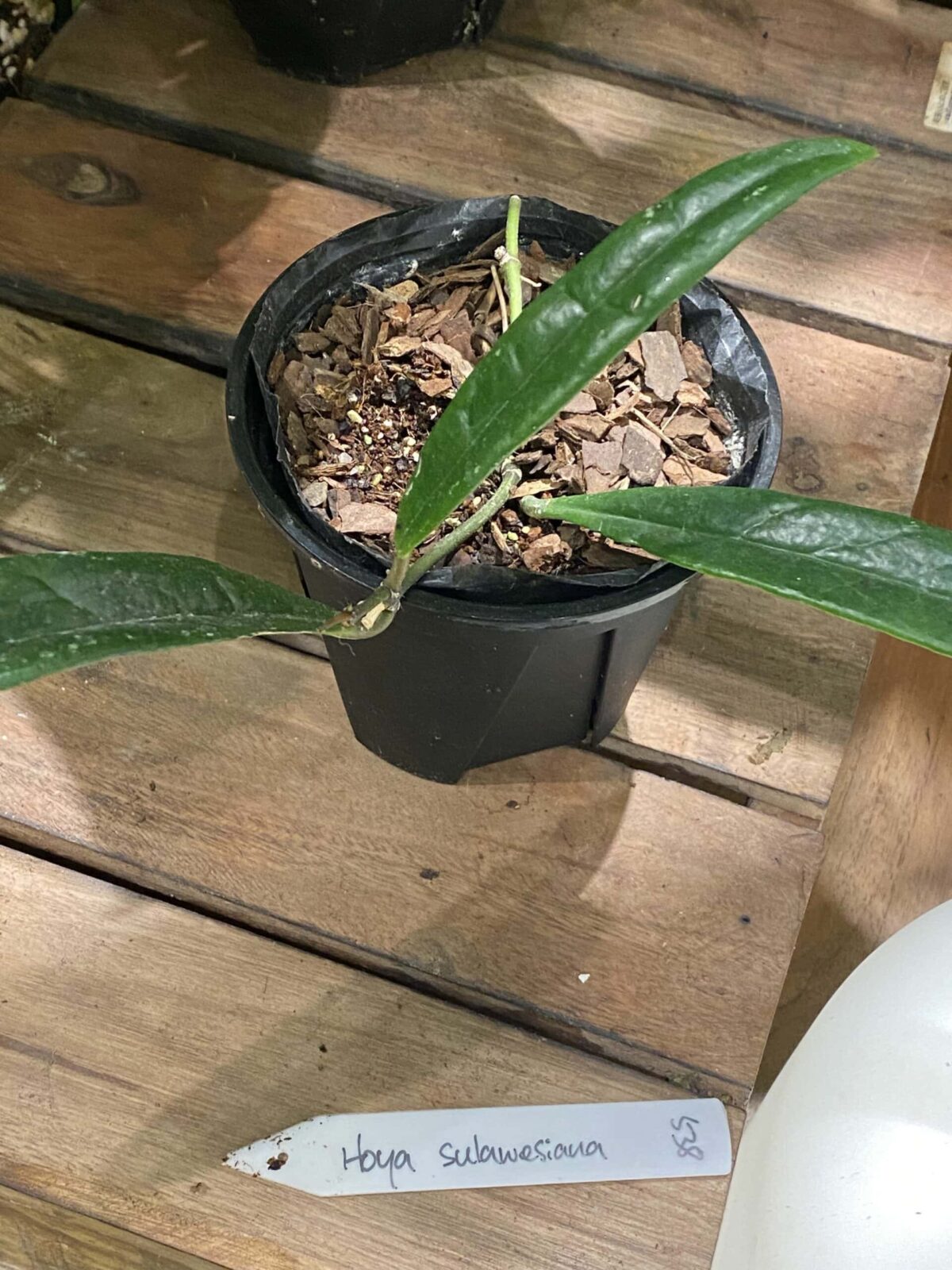
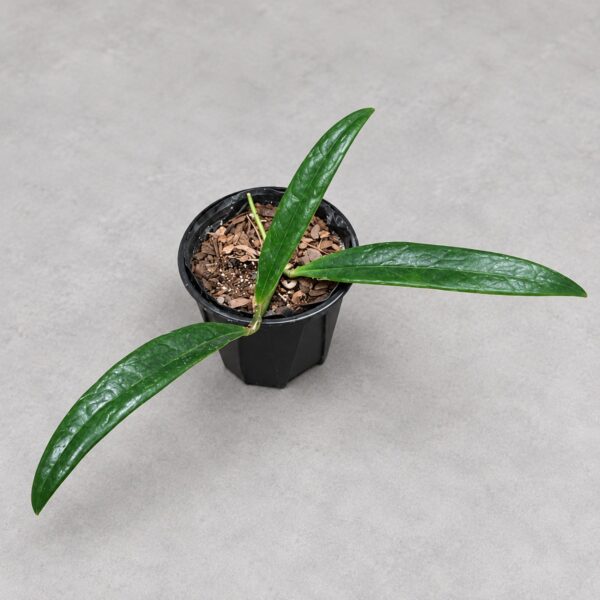
Shop this plantLong, narrow leaves carry an effortlessly elegant, flowing quality; mature foliage becomes thick and waxy, and when it flowers, star-shaped wax blooms cascade like a beaded curtain — a true class act among Indonesia's…
Botanical status: confirmed
Brand: Plantjai
Origin & characteristics
The Sulawesi Hoya is native to Sulawesi Island in Indonesia, one of the most biodiverse regions on Earth, renowned for its abundance of endemic species. It grows in tropical rainforest, attaching epiphytically to trees or rocks.
Its most distinctive feature is its long, narrow leaves, elegant and slender in shape, becoming thick and waxy as they mature. As a vining plant, when grown indoors, its stems can either trail naturally or climb. When flowering, a peduncle emerges from the leaf axils, opening into the classic star-shaped Hoya wax flower, typically in pale pink, creamy-white, or with a red corolla. The fragrance is subtle, with some plants carrying a sweet scent.
Light
- Ideal position: an east-facing window or a bright indirect light spot, tolerating gentle morning sun
- Light requirement: bright indirect light, roughly 400–700 foot-candles
- Sun tolerance: more tolerant of some direct sun than other Hoyas, but harsh midday sun should still be avoided
- Sun-stress response: leaves may develop a "sun-stress" reaction, deepening in colour or developing a red edge, which is harmless with proper care
- Tip: if internodes elongate and colour fades, that indicates insufficient light; if scorched spots appear on the leaf surface, that indicates excessive light
Watering
- Principle: "water thoroughly once dry" — water once the top 2–3 cm of the mix dries out
- Frequency: roughly every 7–10 days in summer, roughly every 10–14 days in winter
- Checking method: test with a finger inserted into the soil, or observe the leaves — slight wrinkling indicates it needs watering
- Method: water slowly around the rim until it drains from the base, discarding saucer runoff after 30 minutes
- Water quality: filtered water, rainwater, or tap water left to sit is recommended
- Winter adjustment: reduce watering frequency by roughly 25–40%, only watering once the mix has dried out
- Notes:
- ❌ Don't let the mix stay wet for extended periods, as it causes root rot
- ✅ Ensure good ventilation after watering to speed evaporation of excess moisture
Soil & pot
- Mix recipe (fast-draining, organically rich):
- 3 parts orchid bark (medium grade)
- 2 parts perlite (3–5mm)
- 2 parts coco coir chunks or coconut fibre
- 1 part pumice
- 1 part horticultural charcoal
- A little sphagnum moss (as supplementary moisture retention only)
- Pot choice: a terracotta or plastic pot with drainage holes, sized appropriately (better snug than oversized)
- Drainage requirement: drainage holes at the base are essential, discarding runoff within 30 minutes of watering
- When to repot: roughly every 1–2 years, once roots emerge from the drainage holes or growth slows
- ❌ Avoid: regular garden soil, overly moisture-retentive mixes, pots without drainage holes
Temperature & humidity
| Item | Ideal range | Notes |
|---|---|---|
| Growing temperature | 20–30°C | A warm environment suits it best |
| Minimum temperature | 15°C | Prolonged temperatures below 15°C cause cold damage |
| Humidity | 60–75% | High humidity supports growth and flowering |
| Minimum humidity tolerance | 40%+ | Adapts to typical indoor humidity |
- High humidity is an important condition for the Sulawesi Hoya's growth and flowering
- Place the pot on a pebble tray, group it with other plants, or occasionally mist to raise humidity
- Ensure good ventilation, since high humidity combined with stuffy conditions easily leads to fungal problems
Common problems
| Issue | Likely cause | What to do |
|---|---|---|
| Wrinkled, soft leaves | Underwatering or poor root absorption | Check soil moisture and water an appropriate amount; if it persists, check root health |
| Yellowing, dropping leaves | Overwatering, insufficient light, or root rot | Adjust watering frequency, check root health |
| Brown spots on leaves | Sunburn or fungal infection | Move away from strong light, improve ventilation |
| Won't flower | Insufficient light, humidity too low, or immature plant | Increase light and humidity, provide slightly cooler conditions in winter to encourage flowering |
| Leggy stems, sparse leaves | Severe light deficiency | Move to a brighter spot, prune leggy stems if necessary |
| Mealybugs | Commonly found at leaf axils and stem joints | Spot-treat with alcohol on a cotton swab, combined with neem oil spray |
How to explain to customers
"The Sulawesi Hoya is a species native to Sulawesi Island in Indonesia — look at how long and narrow the leaves are, becoming really thick and waxy to the touch once mature, so lovely. It's a vining plant, so you can let it trail or give it something to climb, and it looks great on a shelf or in a hanging pot. For care, remember: bright indirect light is best, with a bit of morning sun being fine; water once the soil has dried out, and keep humidity high — above 60% will help it grow beautifully. After it flowers, never cut off the peduncle — Hoyas rebloom from old peduncles! It's completely non-toxic to cats and dogs, so you can place it anywhere in your home with confidence."
Fun facts
- Sulawesi Island is shaped like the letter "K" and is one of Indonesia's four major islands, boasting the highest proportion of endemic species on Earth — over 70% of the island's plants and animals are found nowhere else in the world
- The Sulawesi Hoya's leaves become thicker as they mature — young leaves are thinner and softer, while old leaves develop into deep green, waxy "shields"
- It shows a "sun-stress" response, developing red edges or a red blush under stronger light, a look many collectors specifically cultivate using grow lights
- The genus Hoya is non-toxic to cats and dogs (ASPCA-certified), and the Sulawesi Hoya's harder leaves mean pets usually aren't particularly interested in chewing on it
- Hoya nectar sometimes drips onto the leaves, forming "honeydew" — this is completely normal and can be gently wiped away with a damp cloth
Keywords
Sulawesi Hoya, Hoya sulawesiana, Indonesian native species, long-leaved Hoya, vining plant, indoor plant, pet-safe plant, Plantjai, waxy flowers, star-shaped flowers, tropical plant, epiphyte, sun-stress response, high-humidity plant, Sulawesi Island
參考資料(想知來源可展開)
References
- Royal Botanic Gardens, Kew — Plants of the World Online: Hoya sulawesiana, https://powo.science.kew.org/
- ASPCA — Toxic and Non-Toxic Plant List, https://www.aspca.org/pet-care/animal-poison-control/toxic-and-non-toxic-plants
⚠️ Non-toxic to cats and dogs; sap may cause mild skin irritation in sensitive individuals.
Plantjai · Causeway Bay collector indoor plants · WhatsApp +852 66807550
For Hong Kong homes and offices. Stock and pricing follow the product page.
IN STORE NOW
Plants for this guide
Related plants in stock now — live prices, delivery or Causeway Bay pickup.
FREE PLANT ADVICE
Send us a photo before you change anything
WhatsApp a photo of the plant and your window light. Our Causeway Bay team will suggest care steps or plants that suit your space.
STORE · CAUSEWAY BAY
4/F, 39 Yiu Wa Street, Causeway Bay
Daily 12:30–8:00pm · ~3 min walk from Times Square
Map & directionsPlant Care