How to Care for Hoya Motoensis in Hong Kong | Plantjai

Plantjai 植仔 · Care Encyclopedia
Hoya Motoensis
Hong Kong care guide — useful before you buy and after it arrives.
Shop this plantA velvety sheen on every leaf and a flower cluster as delicate as a tiny fuzzy pom-pom — easy to care for and suited to both beginners and advancing collectors.
Origin & characteristics
- Native range: Motuo (Medog) County, Tibet, China — the species epithet "motoensis" comes directly from "Motuo" — growing in higher-elevation mountain forests
- Botanical name pending confirmation: some sources note that the taxonomic classification of Hoya motoensis is still under discussion; use the Plantjai label as the reference
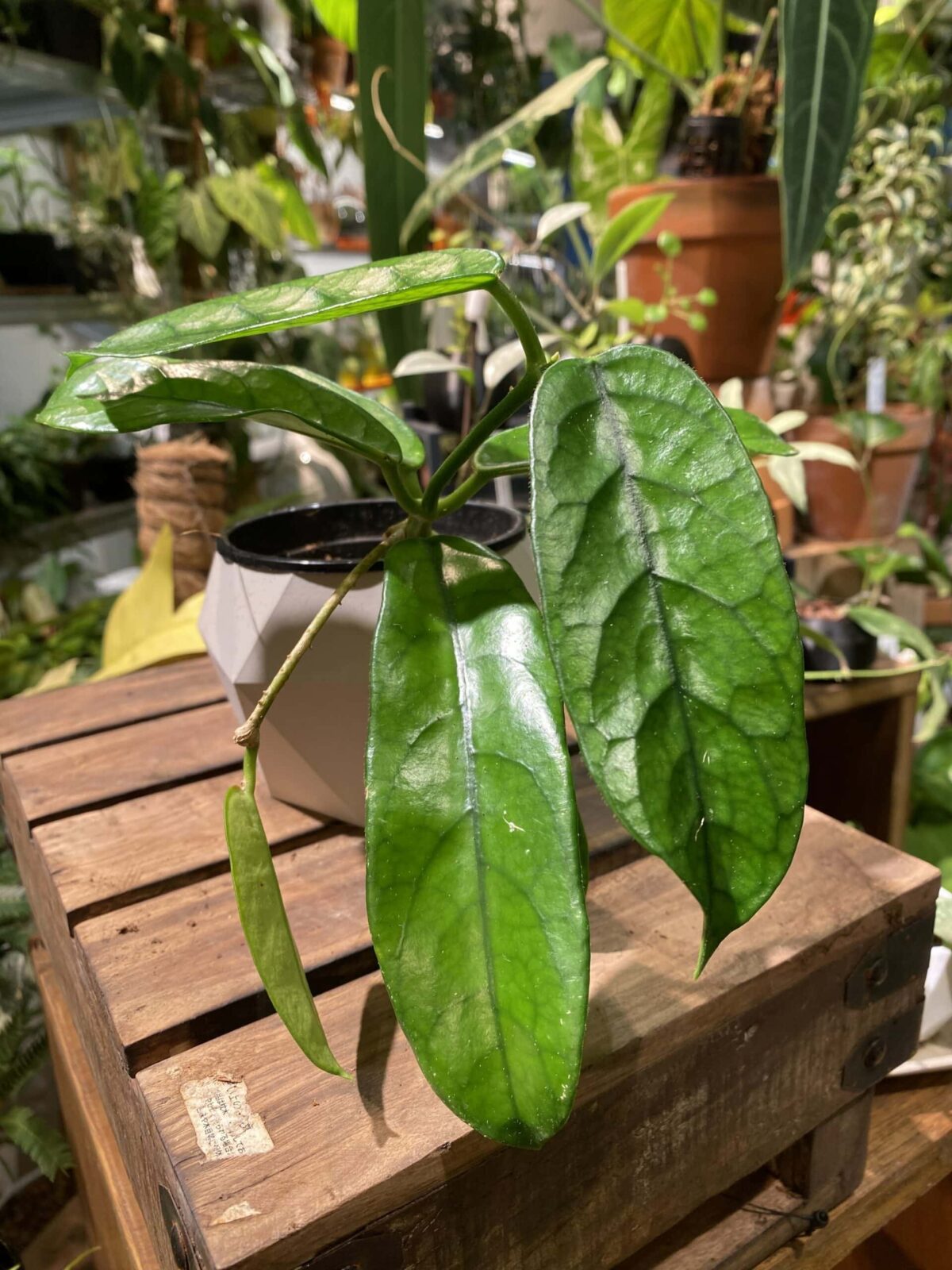
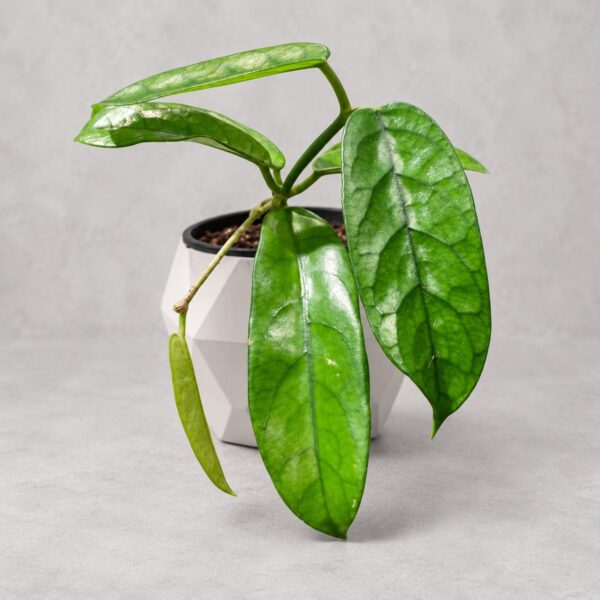
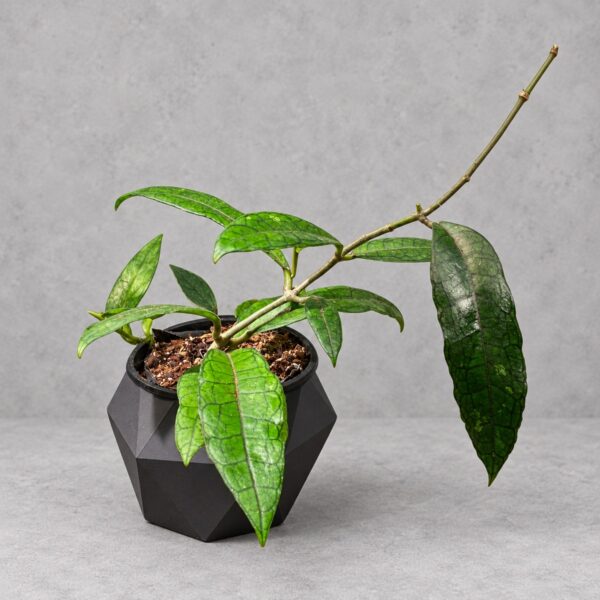
- Leaf characteristics: oval leaves with a substantial, thick texture and a distinctive velvety sheen on the surface (hence its other common name, "Glossy-Fuzz Hoya"), with a rich, deep green colour
- Flowering characteristics: small flowers clustered into globe-shaped umbels, pale yellow to creamy-white, with a gentle fragrance
- Growth habit: a climbing vining plant with moderate growth speed, suited to hanging pots or growing on a moss pole
Light
- Ideal light: mainly bright indirect light, 4–6 hours of gentle light daily is ideal
- Window placement: east- or north-facing windowsills are best; a south-facing window should be filtered through a sheer curtain
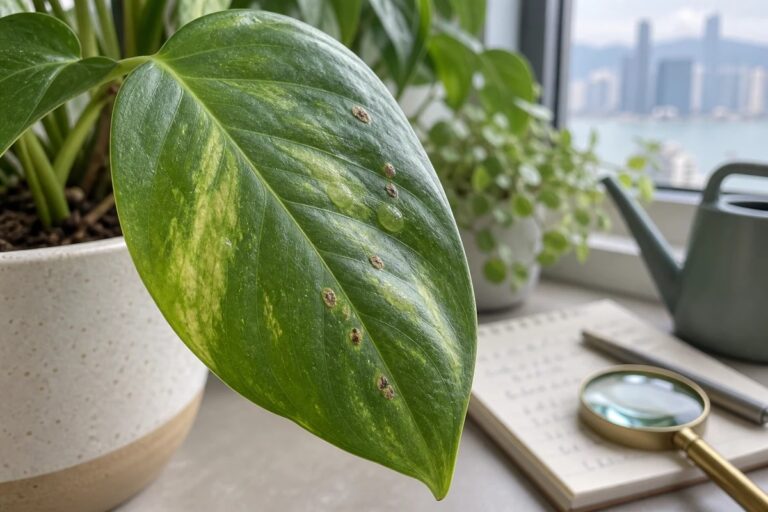
- Avoid: prolonged harsh direct sun, which easily scorches the velvety leaf surface, causing spotting
- Tip: thinner leaves or fading colour are usually a sign of insufficient light
Watering
- Principle: "water when just dry" — let the top 2–3 cm of soil dry out before watering
- Frequency reference: roughly every 7–10 days in spring/summer; roughly every 10–14 days in autumn/winter
- Method: water slowly around the rim until it drains from the base, emptying the saucer after half an hour
- Note: this species dislikes standing water, which easily causes root rot at the base; reduce watering frequency further in cold weather
Soil & pot
- Soil recipe: use a well-draining, breathable mix, such as:
- Coco coir + perlite + orchid bark (roughly 5:3:2 ratio)
- Or a dedicated Plantjai Hoya mix
- pH: slightly acidic to neutral (pH 5.5–6.5) is ideal
- Pot choice: terracotta or moss-pole-style pots are best for breathability; plastic pots need generous drainage holes at the base
- When to repot: repot once a year or every two years in spring, once you see roots emerging from the base
Temperature & humidity
- Ideal temperature: 18–28°C is most ideal
- Minimum tolerance: can briefly tolerate 12°C, but prolonged temperatures below 15°C will stall growth
- Humidity requirement: 50–70% relative humidity is best
- Ways to raise humidity: place a humidifier nearby, or set the pot on a pebble tray (keeping the pot base clear of water)
- Note: despite being native to mountain regions, watch for ventilation during Hong Kong's stuffy summer heat to prevent bacterial growth
Common problems
| Issue | Likely cause | What to do |
|---|---|---|
| Yellowing, dropping leaves | Overwatering / poor drainage | Check for standing water at the base, reduce watering frequency, repot and trim roots if needed |
| Wrinkled, soft leaves | Underwatering or root damage | Check soil moisture, water promptly if too dry; if watering doesn't help, check the root system |
| Dull leaf colour | Insufficient light | Move to a brighter spot, avoiding sudden intense exposure |
| Won't flower | Insufficient light / no temperature differential | Increase indirect light; a 5–8°C day-night differential in autumn/winter can help stimulate flowering |
| Curling new leaves | Possible mite or scale insect infestation | Check the leaf undersides, spray with neem oil or soapy water if needed |
How to explain to customers
"This Hoya motoensis is also called Glossy-Fuzz Hoya — look how beautiful the leaves are, with that natural velvety sheen! It comes from the high-mountain forests of Motuo in Tibet, so it's actually quite tough and low-maintenance. Just remember not to water too often — water once you see the soil surface has dried out, and keep it near a window with indirect light. When it flowers, you get cute little globe-shaped clusters!"
Fun facts
- Motuo was the last county in China to be connected by road: located in southeastern Tibet, Motuo County remained isolated from the outside world for a long time, only gaining a proper road connection in 2013. This Hoya comes from this "lotus sanctuary," carrying with it an air of mystery.
- The mystery of "glossy fuzz": "glossy fuzz" doesn't actually refer to hairs on the leaf surface, but rather describes the velvety sheen of the leaf, which creates a distinctive glow under light.
- High-altitude resilience: originating from higher elevations gives it a degree of adaptability to environmental changes — as long as you avoid standing water and sunburn, it's generally quite easy to care for.
Keywords
Motuo Hoya, Glossy-Fuzz Hoya, Hoya motoensis, velvet-leaved Hoya, Tibetan Hoya, high-altitude Hoya, entry-level Hoya, indirect light, dry-then-watered, non-toxic to pets
參考資料(想知來源可展開)
References
- Royal Botanic Gardens, Kew — Plants of the World Online: genus Hoya, https://powo.science.kew.org/
- ASPCA — Toxic and Non-Toxic Plant List, https://www.aspca.org/pet-care/animal-poison-control/toxic-and-non-toxic-plants
⚠️ Non-toxic to cats and dogs; sap may cause mild skin irritation in sensitive individuals.
Plantjai · Causeway Bay collector indoor plants · WhatsApp +852 66807550
For Hong Kong homes and offices. Stock and pricing follow the product page.
IN STORE NOW
Plants for this guide
Related plants in stock now — live prices, delivery or Causeway Bay pickup.
FREE PLANT ADVICE
Send us a photo before you change anything
WhatsApp a photo of the plant and your window light. Our Causeway Bay team will suggest care steps or plants that suit your space.
STORE · CAUSEWAY BAY
4/F, 39 Yiu Wa Street, Causeway Bay
Daily 12:30–8:00pm · ~3 min walk from Times Square
Map & directionsPlant Care