How to Care for Hoya Clemensiorum in Hong Kong | Plantjai

Plantjai 植仔 · Care Encyclopedia
Hoya Clemensiorum
Hong Kong care guide — useful before you buy and after it arrives.
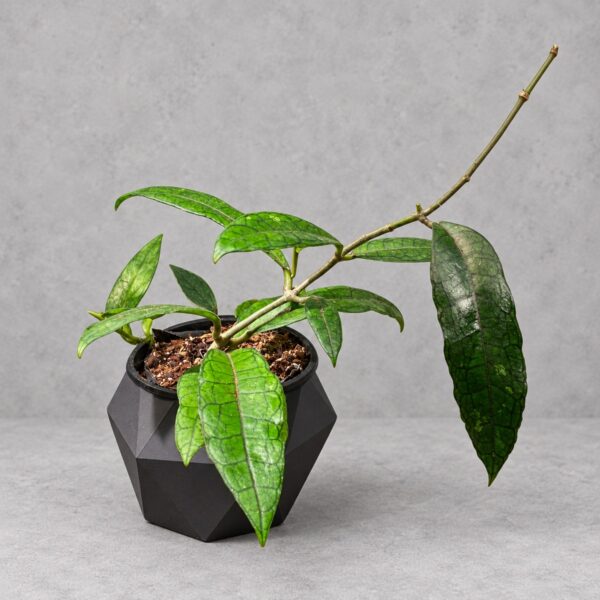
Shop this plantDeeply embossed, sculptural veining across every leaf, giving off a wild jungle presence — a rare species that Hoya collectors dream of adding to their shelves.
Brand: Plantjai
Origin & characteristics
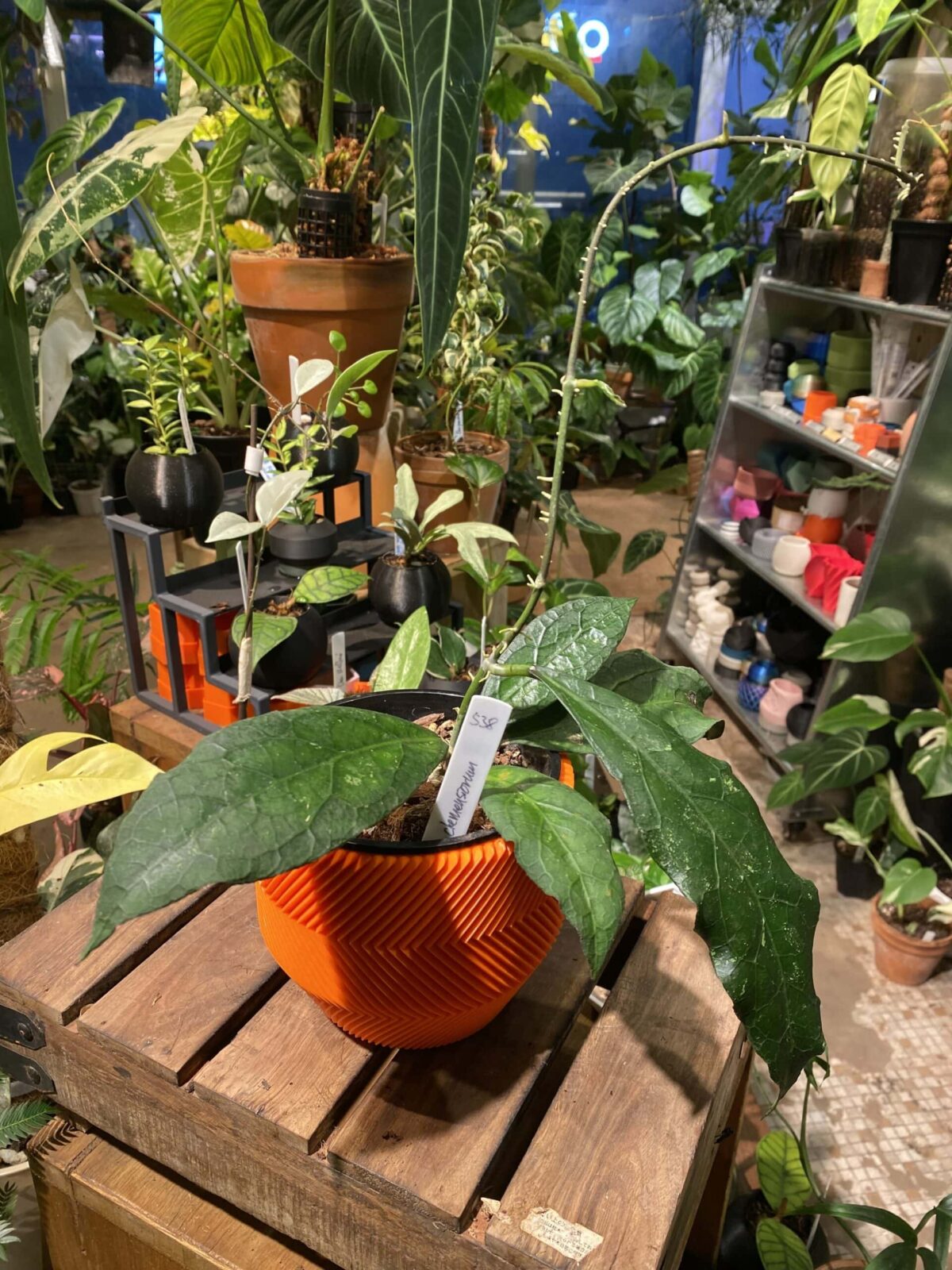
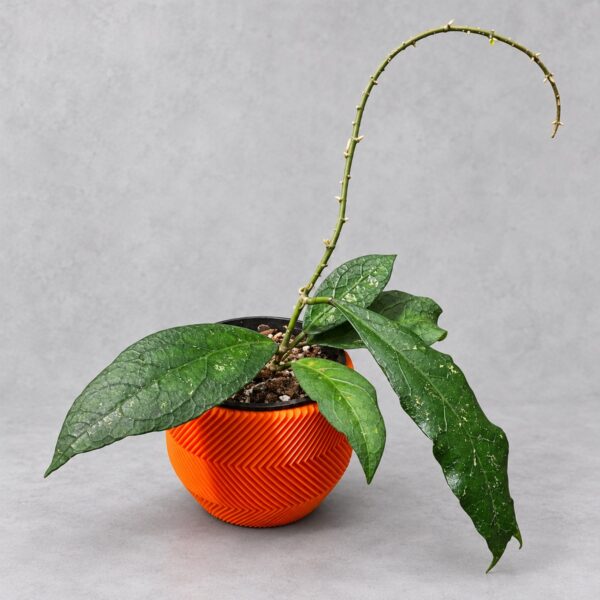
Hoya clemensiorum was formally described and named by British botanist Ted Green in 1991 — its botanical name is confirmed. Native to the lowland tropical rainforests of Sabah, Borneo, it grows as an epiphytic climber on large trees. Its standout feature is the extraordinarily deep, three-dimensional venation on the leaf surface, resembling crocodile skin or an intricately carved relief. Leaves are lance-shaped and leathery, with wavy margins, and mature leaves can reach up to 40 cm long. Flowers are star-shaped and waxy, with a faint musky citrus fragrance, though blooming indoors is relatively rare. Growth is slow, making this an advanced-level Hoya. Hoya clemensiorum is non-toxic to pets, though given how prized the foliage is, it's still best kept out of pets' reach.
Light
Hoya clemensiorum prefers bright indirect light, ideally around 10,000–20,000 lux daily. Place it near an east- or north-facing window, or about 1 metre from a south-facing window. Avoid strong midday direct sun, which can scorch the leaves or even turn them red — while some enthusiasts intentionally let the leaves blush slightly red for aesthetic effect, prolonged overly strong light damages the plant's health in the long run. Insufficient light results in smaller new leaves with less pronounced texture.
Watering
Hoya clemensiorum is extremely sensitive to overwatering — root rot is the number one killer. Let the top 2–3 cm of soil dry out completely before watering, or even wait until the mix is 60–80% dry. Use a wooden skewer or moisture meter inserted 10 cm deep to check — if still slightly moist, wait a few more days. During the growing season (spring/summer), water roughly every 10–14 days; during dormancy (autumn/winter), extend to every 3–4 weeks. Use room-temperature water, watering thoroughly and letting excess drain completely. Many experienced growers recommend a clear orchid pot for easy monitoring of root condition and mix moisture.
Soil & pot
Needs an extremely fast-draining, breathable, coarse-grained mix. Suggested recipe:
- 40% coarse orchid bark chunks (roughly 0.6–1.2 cm)
- 30% large-grain perlite
- 20% coco coir chips or sphagnum moss
- 10% horticultural charcoal
Many experienced growers use coconut husk chips mixed with a little large-grain perlite, with good results. Avoid regular potting soil with high water retention. Pots must have drainage holes, and a clear orchid pot is ideal for monitoring root health. Hoya clemensiorum is a climbing species, so providing a moss pole or trellis for support helps produce larger, healthier leaves.
Temperature & humidity
The ideal temperature range is 16–24°C, and it shouldn't drop below 10°C, as lower temperatures risk cold damage or even death. Hoya clemensiorum prefers higher humidity, ideally 60–80%. Typical household humidity may be too low, so a humidifier is recommended, or keeping the plant in a more enclosed grow tent. If humidity stays consistently below 50%, leaf edges will dry out and growth will stall. Good air circulation is equally important to prevent pest infestations.
Common problems
Q: Why aren't the leaves growing bigger?
A: Hoya clemensiorum needs stable climbing support to produce large leaves. If left only to trail, leaves are usually smaller. Provide a moss pole or trellis for support. Insufficient light or low humidity can also cause smaller leaves.
Q: Why are the leaves turning yellow?
A: Almost always caused by overwatering or poor drainage leading to root rot. Check root condition — healthy roots should be white or pale beige and firm, while rotten roots are brown, mushy, and easily fall apart. Trim any rot and repot with fresh mix if found.
Q: Why won't it flower?
A: Indoor flowering is genuinely rare for Hoya clemensiorum, requiring a mature plant (usually 3–4+ years), adequate light, high humidity, and a stable environment. Be patient — flowering will be a welcome bonus.
Q: Is there any pest risk?
A: In poorly ventilated conditions, scale insects or spider mites may appear. Check leaf undersides regularly; if found, wipe with a 70% isopropyl alcohol swab, or spray with insecticidal soap. Avoid using neem oil indoors, as it may clog leaf pores.
Q: Why are the leaves turning red?
A: This is a "sun stress" reaction, indicating light that's too strong. While some growers consider a slight red blush more decorative, if the red becomes too deep, it signals the leaf is being damaged and the plant should be moved to a shadier spot.
How to explain to customers
"Hoya clemensiorum is a species for more advanced enthusiasts — the leaf veining is so deep it looks almost carved, with real jungle character! But remember, its biggest enemy is overwatering, so it's better to keep it a bit dry than too wet. It likes higher humidity, so a humidifier or a bathroom spot works great. It grows slowly, so you'll need patience, but a well-grown specimen is genuinely gorgeous and absolutely worth the effort!"
Fun facts
The species name clemensiorum honours a husband-and-wife team of botanists — Joseph and Mary Strong Clemens. They conducted extensive plant collection and research in Borneo, contributing significantly to the region's botanical knowledge. Additionally, while Hoya clemensiorum is native to Borneo, the lowland rainforests there continue to shrink, putting wild populations under threat — cultivated specimens play an important role in preserving the species. While its flowers aren't the showiest, they release a distinctive musky citrus scent that's hard to forget once you've smelled it!
Keywords
Hoya, Hoya clemensiorum, advanced-level plant, rare species, indoor plant, climbing plant, epiphyte, deeply veined leaves, native to Borneo, high humidity plant, pet safe, non-toxic plant, collector's species, sculptural leaf texture
參考資料(想知來源可展開)
References
- Green, Ted (1991) — original description of Hoya clemensiorum
- Royal Botanic Gardens, Kew — Plants of the World Online: Hoya clemensiorum, https://powo.science.kew.org/
- ASPCA — Toxic and Non-Toxic Plant List, https://www.aspca.org/pet-care/animal-poison-control/toxic-and-non-toxic-plants
⚠️ Non-toxic to cats and dogs; sap may cause mild skin irritation in sensitive individuals.
Plantjai · Causeway Bay collector indoor plants · WhatsApp +852 66807550
Plantjai shop · In stock online
Hoya clemensiorum
HK$538.00
Hong Kong delivery · Causeway Bay pickup
For Hong Kong homes and offices. Stock and pricing follow the product page.
IN STORE NOW
Plants for this guide
Related plants in stock now — live prices, delivery or Causeway Bay pickup.
FREE PLANT ADVICE
Send us a photo before you change anything
WhatsApp a photo of the plant and your window light. Our Causeway Bay team will suggest care steps or plants that suit your space.
STORE · CAUSEWAY BAY
4/F, 39 Yiu Wa Street, Causeway Bay
Daily 12:30–8:00pm · ~3 min walk from Times Square
Map & directionsPlant Care