How to Care for Hoya Campanulata in Hong Kong | Plantjai

Plantjai 植仔 · Care Encyclopedia
Hoya Campanulata
Hong Kong care guide — useful before you buy and after it arrives.
Shop this plantBell-shaped flowers that look like tiny hanging lanterns, paired with heavily-splashed foliage — one of the most distinctive flower shapes in the entire Hoya genus.
Origin & characteristics
This "High Splash" form of Hoya campanulata (botanical name pending confirmation — likely Hoya campanulata 'High Splash' or a closely related cultivar) is native to the rainforests of Southeast Asia through to northern Australia, a perennial evergreen climbing vine in the Hoya family. "High Splash" refers to the abundant, prominent silvery variegation on the leaves — a horticulturally selected trait.
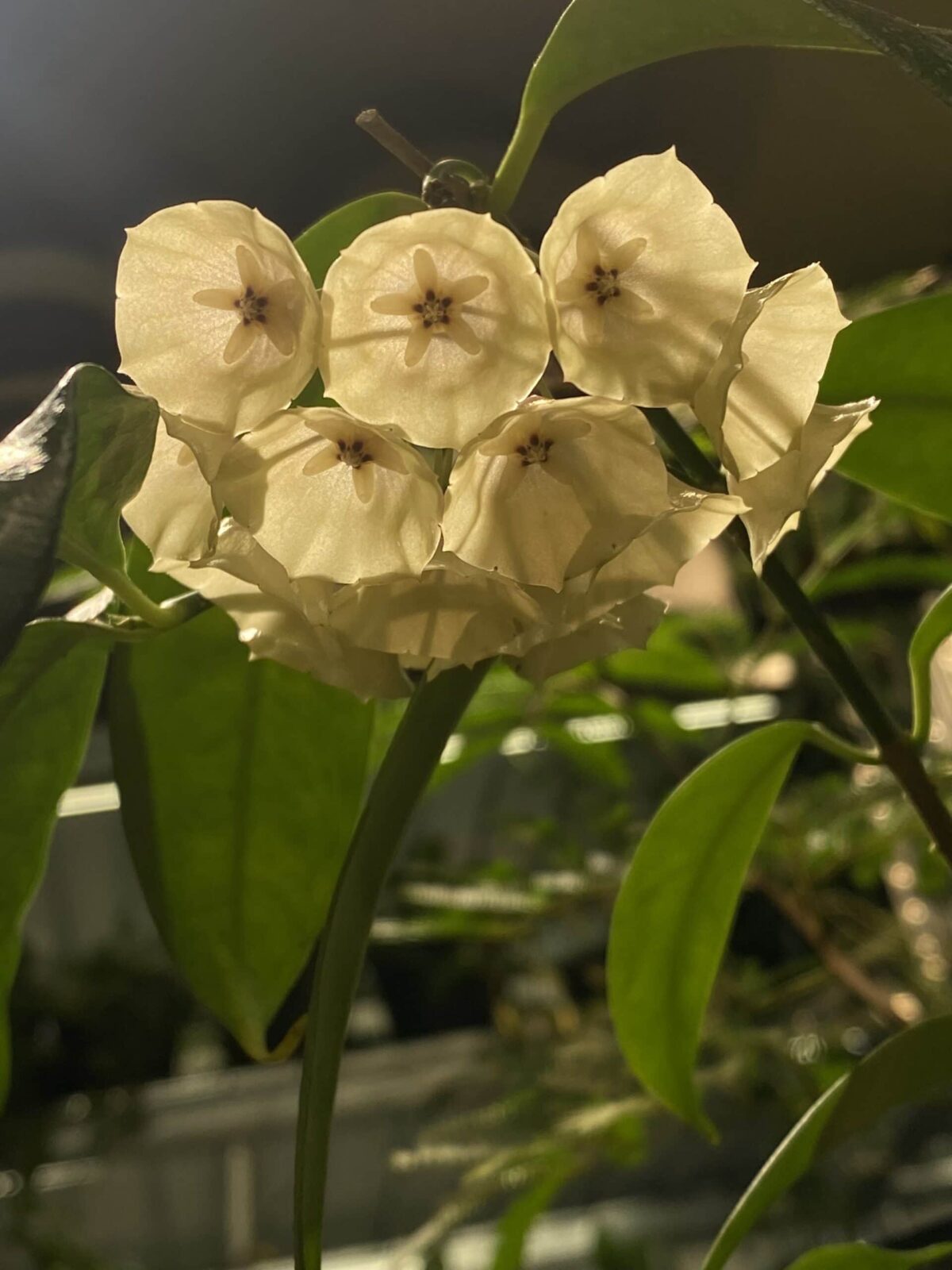
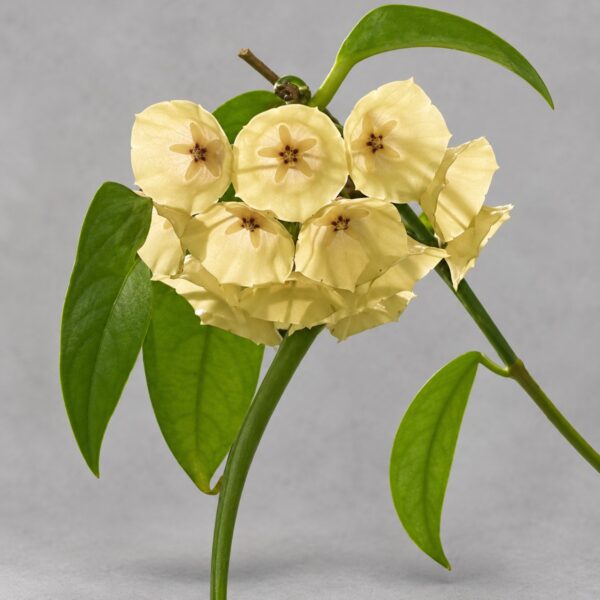
Leaves are oval to egg-shaped, thick and succulent, with a waxy sheen. In the "High Splash" form, large silvery-white or pale green patches contrast sharply with the deep green base colour, creating a striking effect. The flowers have a distinctive shape — inverted bell or cup-shaped (campanulata is Latin for "bell-shaped"), ranging from creamy white to pale yellow with a red or purple corona, clustered into pendant umbels — genuinely unique among Hoyas. Non-toxic to pets, safe for households with animals.
Light
- Ideal light: bright indirect light to partial shade, roughly 8,000–15,000 lux
- Placement: east- or north-facing windows are most suitable; keep at least 1 metre from a west-facing window
- Avoid: intense direct sun — the pale-coloured splashed areas are especially prone to sunburn
- How to tell: vivid variegation and upright leaves indicate suitable light; leaves turning uniformly dark green with fading variegation suggest too little light; scorched, yellowed pale patches mean too much
- Tip: the pale, splashed leaf areas are more light-sensitive than solid green foliage — it's best kept slightly further from the light source than green-leaved varieties
Watering
- Frequency: roughly every 5–7 days in summer, every 10–14 days in winter
- Method: let the top 2–3 cm of soil dry out before watering thoroughly, making sure no water pools at the base
- Water quality: room-temperature tap water left to sit is fine; rainwater or filtered water is even better, avoiding mineral buildup on the leaves
- Note: the thick leaves store water well and are quite drought-tolerant — err dry rather than wet
- Winter adjustment: reduce watering below 18°C, keeping the soil on the dry side
- Warning signs: slight leaf wrinkling signals underwatering; yellow, soft leaves may mean overwatering
Soil & pot
- Soil recipe: use a loose, breathable mix, such as:
- 35% quality potting or peat soil
- 30% perlite or pumice
- 20% medium to coarse bark chips
- 15% coco coir or sphagnum moss
- pH: slightly acidic to neutral (pH 6.0–7.0)
- Pot choice: terracotta, glazed, or breathable plastic pots all work; a hanging pot shows off the pendant flower clusters beautifully
- Drainage: must have drainage holes, with a layer of clay pebbles at the base
- Repotting: roughly every 1–2 years, in spring — this species doesn't have an especially extensive root system, so an oversized pot isn't needed
- Tip: a hanging pot with a hook lets the vines trail naturally, showing off the pendant flower clusters to best effect when in bloom
Temperature & humidity
- Ideal temperature: 18–28°C for best growth
- Minimum tolerance: can briefly handle 12°C, but shouldn't stay below 15°C long-term
- Summer note: above 32°C, boost ventilation and provide some shade
- Humidity: 50–75% relative humidity
- Raising humidity: use a humidifier, a pebble tray, or group with other tropical plants
- Ventilation: maintain good airflow, especially in humid conditions, to prevent fungal disease
Common problems
| Issue | Likely cause | What to do |
|---|---|---|
| Variegation fading or disappearing | Insufficient light | Gradually move to a brighter spot — the splashed pattern needs enough light to stay vivid |
| Pale patches turning scorched yellow | Direct sun exposure | Move away from strong light — the splashed areas burn especially easily |
| Yellowing, dropping leaves | Overwatering | Reduce watering frequency and check drainage |
| Wrinkled leaves | Underwatering | Water promptly, and water a bit earlier next time |
| Won't flower | Insufficient light or immature plant | Increase indirect light; be patient as the plant matures |
| Leggy vines | Severe light deficiency | Move to a brighter spot; leggy growth can be trimmed back |
| Black spots on leaves | Fungal or bacterial infection | Remove affected leaves, improve ventilation, and use fungicide if needed |
How to explain to customers
"This Hoya campanulata is really special because of its flowers — they're shaped like tiny bells, so cute! The leaves have this 'High Splash' variegation, giving them lovely depth and texture. Keep it in bright indirect light — avoid direct sun, especially since those pale splashed areas scorch really easily. For watering, remember it's better dry than wet — let the soil dry out before watering again. When it flowers, the clusters hang down beautifully, really eye-catching!"
Fun facts
- The mystery of bell-shaped flowers: most Hoyas have classic star-shaped flowers, so Hoya campanulata's bell-shaped blooms are a rare and interesting evolutionary branch within the genus.
- What "High Splash" means: in horticulture, "High Splash" describes cultivars selected for having more abundant and prominent leaf variegation, usually propagated from a mutated individual — since this isn't a stably inherited trait, new leaves may show different patterning from older ones.
- A little nectar secret: Hoya campanulata secretes a small amount of nectar when flowering, which attracts ants — in the wild, these ants help fend off pests, forming a mutually beneficial relationship.
- Also found in Australia: unlike most Hoyas which are limited to tropical Asia, Hoya campanulata's natural range extends into northern Australia, suggesting it has some tolerance for drier conditions.
Keywords
Hoya campanulata, Hoya, Apocynaceae, bell-shaped flower, indoor plant, climbing plant, non-toxic to pets, splashed leaves, hanging plant, indirect light, drought-tolerant, Hong Kong indoor plant, tropical plant, Plantjai, botanical name pending confirmation
參考資料(想知來源可展開)
References
- Royal Botanic Gardens, Kew — Plants of the World Online: genus Hoya, https://powo.science.kew.org/
- ASPCA — Toxic and Non-Toxic Plant List, https://www.aspca.org/pet-care/animal-poison-control/toxic-and-non-toxic-plants
⚠️ Non-toxic to cats and dogs; sap may cause mild skin irritation in sensitive individuals.
Plantjai · Causeway Bay collector indoor plants · WhatsApp +852 66807550
For Hong Kong homes and offices. Stock and pricing follow the product page.
IN STORE NOW
Plants for this guide
Related plants in stock now — live prices, delivery or Causeway Bay pickup.
FREE PLANT ADVICE
Send us a photo before you change anything
WhatsApp a photo of the plant and your window light. Our Causeway Bay team will suggest care steps or plants that suit your space.
STORE · CAUSEWAY BAY
4/F, 39 Yiu Wa Street, Causeway Bay
Daily 12:30–8:00pm · ~3 min walk from Times Square
Map & directionsPlant Care