
What does half strength mean? Reading and diluting liquid fertiliser

In this guide (9)
- 01Read four things before opening the bottle
- 02Work out the dose for your can
- 03Concentration, volume and frequency are separate
- 04Check what is already in the pot
- 05Example: do not guess an unmeasurable small dose
- 06Keep one useful line of records
- 07Sources and scope
- 08Further reading
- 09Related Plantjai plants
Updated: 2026-09-08
Half strength means half as much fertiliser per unit of water. It does not mean applying half the volume of the original-strength solution. Read the label for the intended plants, dilution method and frequency, then calculate for your watering can. The numbers below are arithmetic examples, not a universal dose for any fertiliser or plant.
Read four things before opening the bottle
First identify the intended use: instructions for indoor foliage, outdoor flowers and hydroponic nutrition are not interchangeable. Then identify the units: millilitres per litre of water, grams per several litres, or a capful. A cap without clear markings is unsuitable for estimating a small dose.
The third item is application frequency and the fourth is whether the product is already ready to use. Treating a ready-mixed product as concentrate and pouring concentrate directly into a pot are different mistakes. Also preserve the label distinction between adding a dose to a litre of water and making the solution up to a final litre; follow its actual wording.
Reference: Colorado State Extension — Houseplants: Fertilizing
Work out the dose for your can
Suppose an example label says 2 millilitres of concentrate per litre of water. The calculation is: fertiliser in mL = water in litres × labelled mL per litre × strength fraction. The fraction is 1 for full strength and 0.5 for half strength. Whether half strength is appropriate still depends on the product directions and the plant.
| Water | Label strength | Calculated half strength |
|---|---|---|
| 500 mL = 0.5 litre | 1 mL fertiliser | 0.5 mL fertiliser |
| 750 mL = 0.75 litre | 1.5 mL fertiliser | 0.75 mL fertiliser |
| 2 litres | 4 mL fertiliser | 2 mL fertiliser |
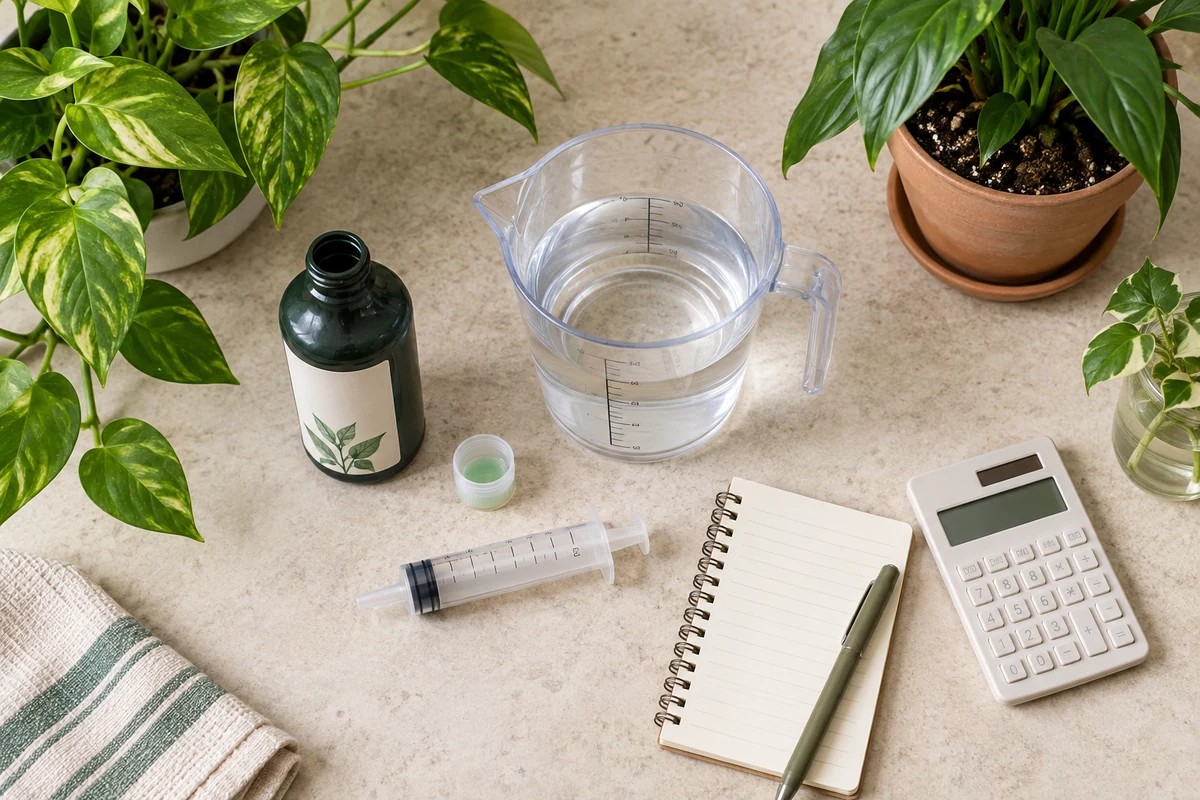
If your cup cannot measure 0.75 mL, use a dedicated measure with suitable graduations or prepare a larger accurately measurable quantity according to the label. Do not substitute a kitchen spoon, an unmeasured pour or a drop count: drop volume varies with the liquid and dropper.
Concentration, volume and frequency are separate
At 2 mL per litre, applying 500 mL or 1 litre gives the same solution concentration but a different total fertiliser input. The amount retained also depends on drainage and the medium. Lowering concentration does not create permission to increase frequency without limit.
First decide whether the plant currently needs watering, then whether that watering belongs in the feeding plan. Do not rewater a heavy, wet root ball because the calendar says “feeding day.” Avoid concentrating the solution in one small corner of the pot; apply it evenly and manage drainage according to the product instructions.
Check what is already in the pot
Fresh potting media may contain fertiliser, and a nursery may already have used a controlled-release product. Check the bag and purchase record or ask the seller. A few round granules do not reveal the remaining nutrient supply. Release depends on the formulation and conditions; a shell can persist without proving either a full supply or a need to add another layer.
Without a clear reason, one traceable feeding plan is easier to assess than combining rooting supplements, liquid feed, slow-release granules and extra trace elements. Different marketing names can conceal overlapping nutrients. Terms such as seaweed, natural or organic do not establish that a stronger mixture is harmless.
Reference: University of Illinois Extension — Houseplant Care
Example: do not guess an unmeasurable small dose
Using the hypothetical rate above, 750 mL of water at half of a 2 mL-per-litre label rate needs 0.75 mL of fertiliser. A cup marked only in 5 mL steps cannot measure that usefully. “A little less than half a cup” is not an approximation to use. Choose a dedicated graduated measure or, where the label permits, prepare a larger accurately measurable batch.
After recording “750 mL water plus 0.75 mL fertiliser”, still check whether watering and feeding are appropriate now. Follow the product’s storage and disposal directions for leftovers; do not empty them into another already-wet pot merely to finish the batch. Read the label again when changing products. Correct arithmetic establishes the mixing ratio, not that the plant needs that feed at that time.
Keep one useful line of records
A useful record is “date / plant ID / product / water volume / fertiliser amount / existing base feed / new-growth condition.” There is no need for false decimal precision, and an overnight colour change is not a success measure. Stable growth and a healthy root zone are prerequisites for assessing whether feeding is appropriate.
If you discover a mixing error, stop using that batch, retain the label and actual quantities, check whether the root zone drains normally, and seek product-appropriate advice. Do not add another product to neutralise it. Burnt tips, yellow leaves and stalled growth have multiple possible causes; none is an automatic instruction to increase the dose.
Sources and scope
- Colorado State Extension — Houseplants: Fertilizing — Feeding in relation to growth, directions and concentration. All worked numbers are hypothetical arithmetic, not universal doses.
- University of Illinois Extension — Houseplant Care — Root conditions, feeding and plant care. No fixed seasonal calendar, interval or volume for every Hong Kong houseplant.
Further reading
- The Chemistry of Fertilising: NPK and Micronutrients in Plant Nutrition
- Plant classification and selection
Related Plantjai plants
- Monstera deliciosa
A useful plant for keeping a feeding record during sustained new growth. Light, root conditions and support come first.
- Philodendron 'Pink Princess'
Its colourful foliage can invite unnecessary colour-boosting feeds. Base nutrition on growth; fertiliser cannot promise a pink percentage, especially in low light or with damaged roots.
IN STORE NOW
Plants for this guide
Related plants in stock now — live prices, delivery or Causeway Bay pickup.
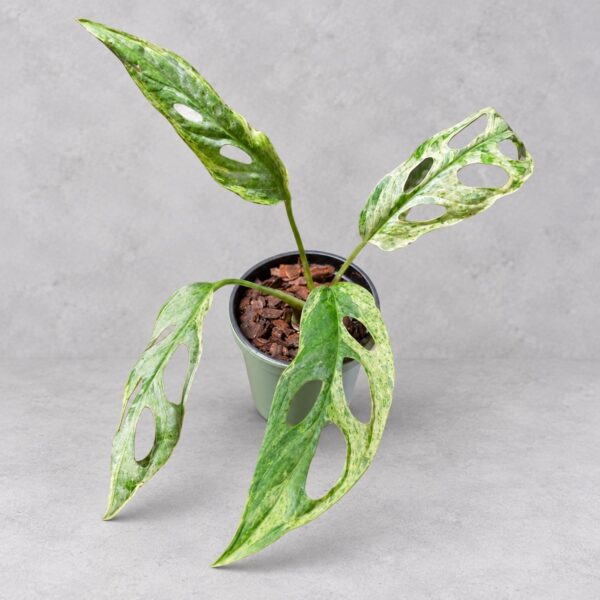
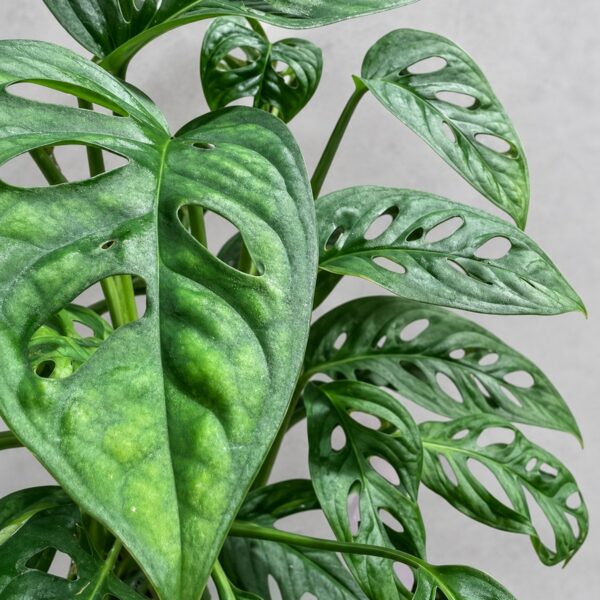
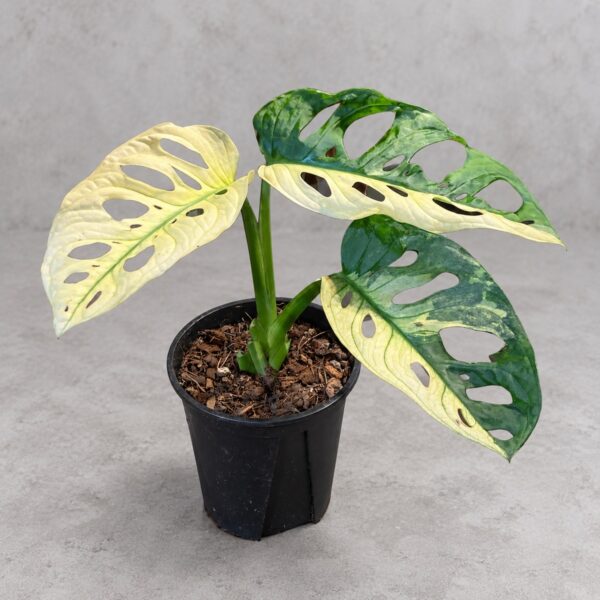
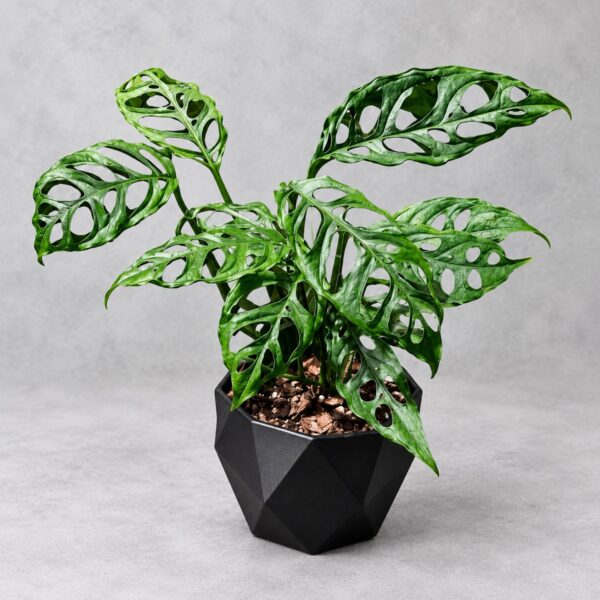
Monstera obliqua Peru
Original price was: HK$480.00.HK$280.00Current price is: HK$280.00.
In stock · store pickup
View plant
FREE PLANT ADVICE
Send us a photo before you change anything
WhatsApp a photo of the plant and your window light. Our Causeway Bay team will suggest care steps or plants that suit your space.
STORE · CAUSEWAY BAY
4/F, 39 Yiu Wa Street, Causeway Bay
Daily 12:30–8:00pm · ~3 min walk from Times Square
Map & directionsPlant Care