
How to Care for Epipremnum Pinnatum Mint in Hong Kong | Plantjai

Hong Kong care guide for Epipremnum Pinnatum Mint.
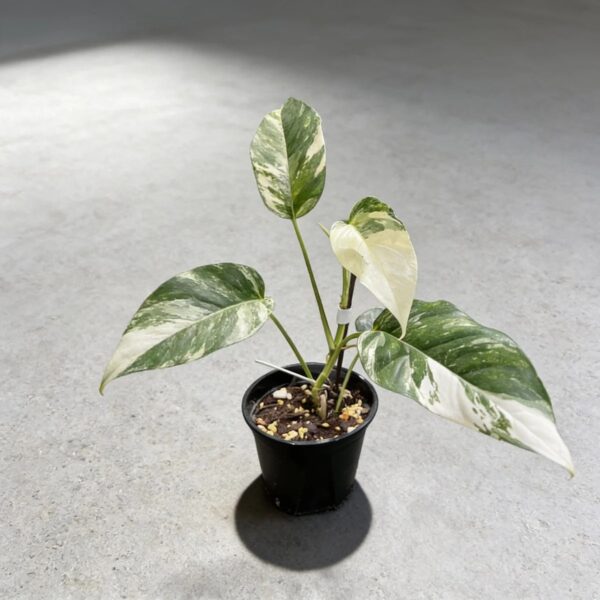
A refreshing mint-green to cream variegation with a soft, gradient blend — one of horticulture's most sought-after pastel cultivars in recent years, with every new leaf a small event.
Origin & characteristics
Origin: the mint variegata is a horticultural sport (mint variegata), with the parent species Epipremnum pinnatum native to Southeast Asian tropical rainforest. The mint variegation was stabilised and selectively bred from a genetic mutation, most commonly attributed to nurseries in Thailand or Indonesia, and has only become widely available internationally in recent years. The exact botanical designation is still debated — the horticultural trade generally labels it Epipremnum pinnatum 'Mint' or mint variegata.
Characteristics:
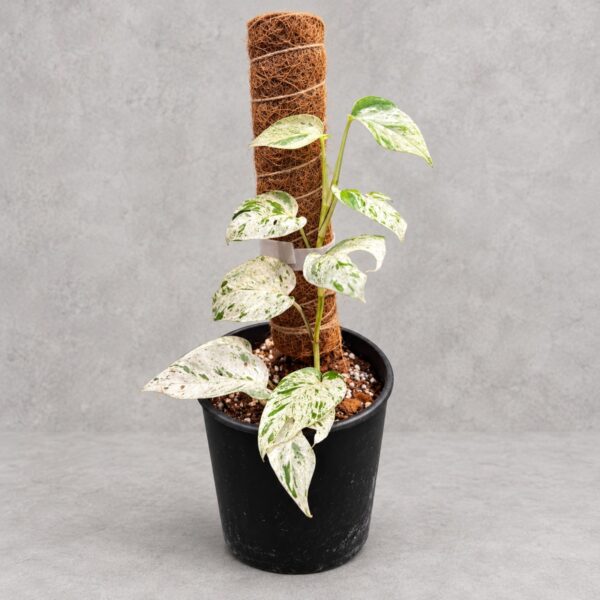
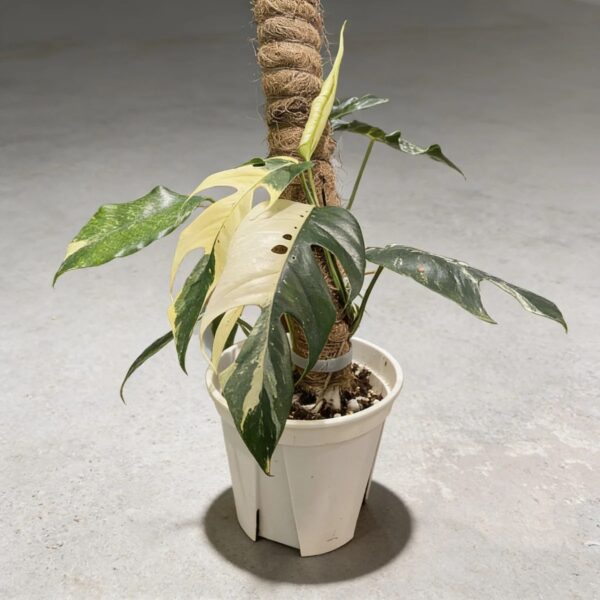
- Variegation: a soft mint-green, pale green, to creamy-white palette, with a natural gradient between the variegated and green tissue, giving a dreamy, pastel, watercolour-like effect — quite different from the sharper contrast of albo variegation.
- Juvenile stage: heart-shaped leaves showing the most pronounced variegation, with pale sections appearing almost translucent mint — an especially dreamy look.
- Mature leaves: once climbing, the leaves split into the fenestrated Epipremnum form, with the mint variegation adding rich texture and depth to the mature silhouette, with leaves reaching 30 cm or more.
- Growth characteristics: the variegation is generally more stable than albo, though the pale tissue still lacks chlorophyll, so growth is somewhat slower than the plain green form and needs a bit more attentive care.
Light
Ideal environment: bright, indirect light — needs more light than a solid green form, though slightly more shade-tolerant than the pure white albo variety.
- Key point: the mint variegation's pale green patches retain a small amount of chlorophyll, but photosynthetic efficiency is still lower than the green tissue, so it needs adequate light to thrive. At the same time, the pale sections are sun-sensitive and should avoid direct exposure.
- Best spot: an east- or southeast-facing window, 1–2 metres back, or near a north-facing window (typically sufficient light for this plant in Hong Kong).
- Reading the signs:
- New leaves fading further toward white, or losing their mint tone entirely → possibly insufficient light — gradually increase it
- Pale mint patches showing yellow-brown scorch spots → too much light — move away from direct exposure
- Supplemental light: in north-facing units or deep interior spaces, use a full-spectrum grow light for 6–10 hours daily.
Watering
Principle: water when the top 2–3 cm of soil has dried out. Mint variegata is sensitive to waterlogging — better to run slightly dry than too wet.
| Season | Watering frequency | Notes |
|---|---|---|
| Spring/summer (active growth) | Roughly every 7–10 days | In hot, dry weather, a light mist around the foliage can help (avoid the leaf centre) |
| Autumn/winter (slow growth) | Roughly every 10–16 days | Cut back significantly — a few extra dry days won't hurt |
- Method: water slowly around the rim until it runs from the base, emptying the saucer after 30 minutes.
- Water quality: filtered water, rainwater, or tap water settled for 24+ hours is recommended. The pale variegated leaves are more sensitive to water quality, and hard water can leave white residue marks.
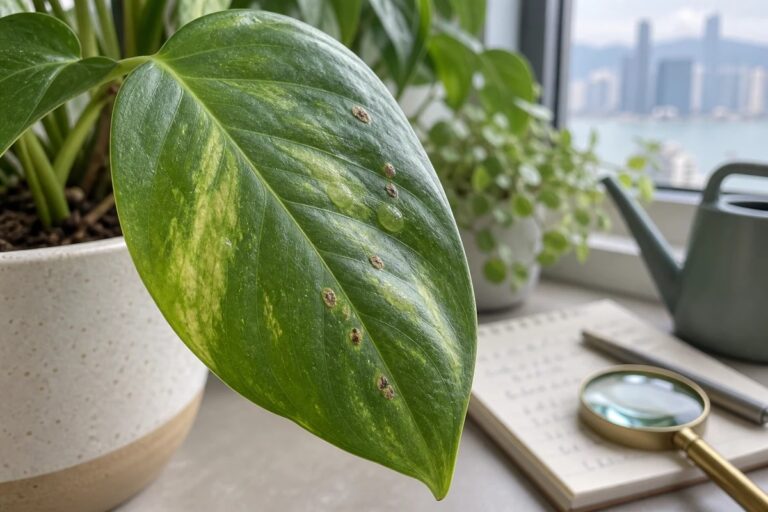
- Special note: pale variegated patches are prone to water-mark browning if left wet or under poor airflow — water the soil, not the leaves, and keep foliage dry.
Soil & pot
Soil recipe:
Mint variegata needs an especially light, airy medium:
- 40% quality indoor plant potting mix
- 25% perlite
- 25% bark or coco husk chips
- 10% coco coir
Goal: a light, breathable mix that drains excess water quickly after watering, letting roots access air.
Choosing a pot:
- Terracotta: the top choice — best drainage and airflow, significantly lowering rot risk, especially important for variegated cultivars.
- Plastic: usable, but pay extra attention to drainage, avoiding standing water at the base.
- Size: one size up (about 3 cm wider) is enough — mint variegata prefers being a touch snug in its pot, and an oversized pot invites waterlogging.
Repotting: every 1–2 years, ideally in spring. Gently check root health at repotting time, trimming away any soft or blackened roots, and refresh with new soil.
Temperature & humidity
Temperature:
- Ideal range: 20–28°C
- Minimum tolerance: around 15°C; below 12°C growth stalls noticeably, and prolonged low temperatures may cause cold-damage spotting
- Hong Kong summer: avoid direct AC airflow — sharp temperature swings can trigger stress-related yellowing on the pale leaves
- Hong Kong winter: generally safe indoors, though a north-facing window can get cold at night — move it further inside or away from the window
Humidity:
- Ideal humidity: 60–85%
- Why it matters: mint variegata's thinner leaves benefit from higher humidity, which helps keep the texture soft and the colour vivid, reducing scorching and browning
- How to raise humidity:
- A humidifier for steady, reliable humidity (most recommended)
- A pebble tray method (keep the pot base clear of the water)
- Grouping with other plants for a shared microclimate
- Occasional misting into the air (avoid spraying directly on the leaves to prevent standing water)
Common problems
| Issue | Likely cause | What to do |
|---|---|---|
| New leaves fading further, turning white, or losing variegation | Insufficient light / natural variegation fluctuation | Increase light first and observe over 1–2 rounds of new growth — variegation can fluctuate naturally |
| Pale mint patches developing yellow-brown scorch | Direct sun exposure | Move away from direct light, add a sheer curtain or move it indoors |
| Browning leaf edges | Air too dry / low humidity | Raise ambient humidity with a humidifier or pebble tray |
| Water-mark browning on the leaf surface | Standing water on leaves / poor airflow | Improve ventilation, avoid wetting leaves, use fungicide if needed |
| Stalled growth, no new leaves for a long time | Root issues / temperature too low / insufficient light | Check for root rot, adjust environmental conditions |
| Older lower leaves yellowing and dropping | Natural ageing / overwatering | Normal if just 1–2 old leaves; check watering if it's widespread |
| Elongated internodes, thinner leaves | Severe light deficiency | Move closer to a light source immediately |
| Variegation leaning more yellow than mint | Individual variation / environmental factors | Colour tone varies plant to plant — both yellowish and greenish variegation are within normal range |
How to explain to customers
Mint variegata is one of the trendiest pastel cultivars in recent years — that soft mint-to-cream gradient is unbeatable, and it brings a genuinely gentle mood to any room. Compared to albo variegation, mint tends to be a softer tone and generally holds its variegation more reliably. That said, the pale leaves are still on the delicate side — plenty of light without direct sun, and higher humidity really does make the leaves look their best. Water on the dry side; standing water is the fastest route to root rot. Keep it well away from children and pets since it's toxic, wash your hands after handling, and consider gloves if you have any cuts.
Fun facts
- The secret behind the "mint" tone: the pale green colour of mint variegata isn't a total absence of chlorophyll — it comes from underdeveloped chloroplasts or a reduced chlorophyll count, meaning the cells still retain a small amount of pigment, giving that soft mint tone rather than albo's pure white. This makes mint variegation look more like a naturally blended watercolour wash.
- A pastel plant trend: the popularity of mint variegata has helped fuel a broader "pastel variegated" collecting trend, with growers now chasing all sorts of soft-toned variegated cultivars — mint green, cream yellow, blush pink, and more. Mint variegata is considered one of the trend's flagship cultivars.
- Thanks to Thai nurseries: while its exact origin is hard to pin down, the trade generally credits Thai and Indonesian specialist nurseries with stabilising and mass-propagating mint variegata. Southeast Asia's warm, humid climate is ideal for variegated plant cultivation, and tissue-culture techniques have turned mint variegata from a rare, expensive plant into a relatively accessible collectible.
- Variegated plants can "revert": variegated plants sometimes throw fully green shoots — a phenomenon called reversion. These solid green branches grow more vigorously because their photosynthesis is more efficient. If you notice a fully green branch growing unusually fast, consider pruning it off to prevent it from outcompeting the rest of the plant and gradually pulling the whole specimen back toward solid green.
- Every leaf is a limited edition: like albo variegata, every new leaf on a mint variegata plant has a unique variegation pattern — but mint's colour range is even richer, spanning from almost fully green to half mint-green, sometimes even developing a creamy yellow-green gradient, making each new leaf something to look forward to.
Keywords
Mint variegata pothos, Epipremnum pinnatum, variegated plant, arum family, climbing plant, mint green, pastel variegated, dreamy variegation, pale green patches, collector's plant, indoor foliage, aerial roots, moss pole, high humidity plant, toxic plant, calcium oxalate, Hong Kong indoor plants, variegated plant, Thai nursery cultivar, horticultural sport, botanical name pending confirmation
Plantjai · Causeway Bay collector indoor plants · WhatsApp +852 66807550
For Hong Kong homes and offices. Stock and pricing follow the product page.
IN STORE NOW
Plants for this guide
Related plants in stock now — live prices, delivery or Causeway Bay pickup.
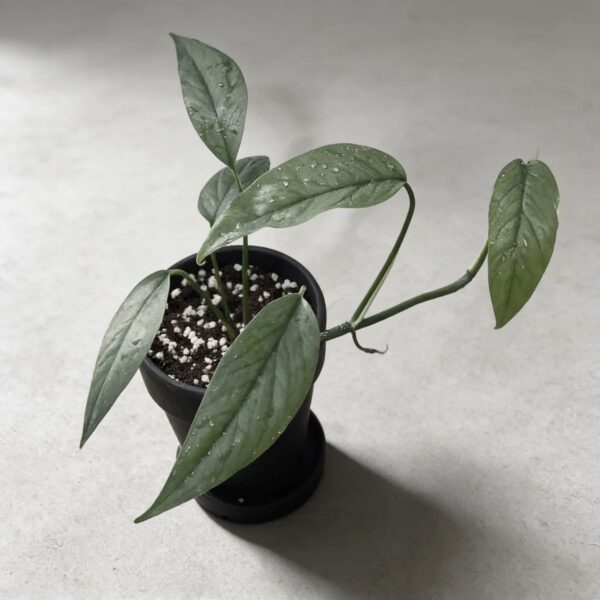
Epipremnum pinnatum 'Cebu Blue'
Epipremnum pinnatum 'Cebu Blue'
HK$298.00
In stock · store pickup
View plant
FREE PLANT ADVICE
Send us a photo before you change anything
WhatsApp a photo of the plant and your window light. Our Causeway Bay team will suggest care steps or plants that suit your space.
STORE · CAUSEWAY BAY
4/F, 39 Yiu Wa Street, Causeway Bay
Daily 12:30–8:00pm · ~3 min walk from Times Square
Map & directionsPlant Care