
How to Care for Epipremnum Aureum Shangri La in Hong Kong | Plantjai

Hong Kong care guide for Epipremnum Aureum Shangri La.
Leaves that curl in on themselves instead of opening flat, like a row of tiny green chef's hats — a top pick for anyone who wants a plant with real character.
Origin & characteristics
Also known as "sleeping pothos," 'Shangri La' is a cultivar of golden pothos (Epipremnum aureum) in the arum family (Araceae), bred by the Japanese nursery Terunoworld. Its heart-shaped leaves curl and pucker at the edges instead of opening flat, giving it a distinctive look somewhat like a bundle of steamed spinach or a jester's cap. Leaf colour is deep green with faint golden marbling, and growth is compact and dense — smaller and slower-growing than a standard pothos. It can climb or trail, is highly adaptable, and is a very popular entry-level foliage plant.
⚠️ Toxicity note: contains insoluble calcium oxalate crystals throughout; ingestion causes oral pain, drooling, and lip swelling. Irritating to cats and dogs — keep it out of reach of pets.
Light
- Prefers bright, indirect light but tolerates low to medium light
- Curling is more pronounced and growth more compact under brighter light
- Too little light leads to looser, leggier growth and fading colour
- Avoid intense direct sun, which can scorch the foliage
- Adapts well to artificial lighting, making it office-friendly
Watering
- Let the top 3–5 cm of soil dry before watering, roughly every 7–10 days
- Can stretch to every 10–14 days in winter when growth slows
- Water thoroughly, then empty any standing water from the saucer to prevent rot
- Better to run slightly dry than too wet — overwatering is the most common cause of death
- Room-temperature water is fine; filtered water reduces brown leaf tips
Soil & pot
- A well-draining, aerated mix
- Suggested recipe: potting soil : perlite : orchid bark, roughly 2:1:1
- Can also be grown on a moss pole — climbing tends to produce larger, more striking leaves
- Any pot with drainage holes works, plastic or terracotta
- Repot every 2–3 years into one size larger
Temperature & humidity
- Ideal range: 18–29°C; avoid extended periods below 10°C
- Adapts well to typical indoor temperatures, though slightly less cold-hardy than standard pothos
- Ideal humidity 40–60% — most indoor environments are already suitable
- Mist occasionally or use a pebble tray if the air is very dry
- Keep away from AC vents and heaters
Common problems
| Issue | Likely cause | What to do |
|---|---|---|
| Yellowing leaves | Overwatering/root rot, or underwatering | Check soil moisture |
| Brown leaf tips | Dry air or hard water | Switch to filtered water and raise humidity |
| Loose, leggy growth | Insufficient light | Move to a brighter spot |
| Leaves flattening out, losing curl | Too much light, or a reversion in the cultivar | Adjust light conditions |
| Pests | Watch for spider mites and scale | Clean leaves regularly |
| Smaller leaves over time | Insufficient nutrients or a root-bound pot | Consider feeding or repotting |
How to explain to customers
"'Shangri La' is a pothos variety with fun, curly leaves that don't need much fuss. Just remember: let the soil dry out before watering, roughly once a week does it. It grows slowly, so it won't suddenly outgrow its spot — perfect for a desk or windowsill."
Fun facts
The curling of 'Shangri La' leaves comes from uneven tissue growth across the leaf surface — a quirk of the cultivar. Though it grows slower than a standard pothos, that's actually part of the appeal for small indoor spaces. It propagates very easily too — just cut a section with a node and pop it in water or soil to root.
Keywords
Pothos, golden pothos, curly leaf, climbing plant, low-maintenance plant, air-purifying, shade-tolerant, easy propagation, Epipremnum, indoor plant
參考資料(想知來源可展開)
References
- Boyce, P. C., & Wong, S. Y. (2021). A Review of Epipremnum (Araceae) in Peninsular Malaysia and Singapore. Gardens' Bulletin Singapore, 73(2), 263-274.
- Wolverton, B. C. (1997). How to Grow Fresh Air: 50 Houseplants that Purify Your Home or Office. Penguin Books. ISBN 978-0-14-026243-5.
- Royal Horticultural Society. "Epipremnum aureum — Devil's Ivy." RHS Plants Database. https://www.rhs.org.uk/plants/1206/epipremnum-aureum/details
- American Society for the Prevention of Cruelty to Animals (ASPCA). "Epipremnum aureum — Toxic and Non-Toxic Plants." https://www.aspca.org/pet-care/animal-poison-control/toxic-and-non-toxic-plants/devils-ivy
⚠️ Pet/toxicity note: contains calcium oxalate crystals, toxic to humans and pets. Ingestion can cause oral burning, drooling, vomiting, and difficulty swallowing. Keep away from children and pets — cats in particular tend to chew on foliage. Wash your hands after handling, and avoid contact with eyes or mouth.
In-depth care guide
Introduction
'Shangri La', botanically Epipremnum aureum 'Shangri La', is a distinctly characterful member of the pothos family, sometimes called "wrinkle-leaf pothos." Its standout feature is leaves that grow deeply puckered and curled, bunched up almost like a jester's cap or a crumpled sheet of paper — a total departure from the "plain" reputation pothos usually carries.
The name "Shangri La" borrows from the fictional utopia in James Hilton's novel Lost Horizon, describing a cultivar that feels like it's from another world entirely — and it lives up to the name. Its curled, textured leaves make it an instant conversation piece.
'Shangri La' is genetically the same species as standard pothos (E. aureum 'Golden Pothos') — simply a leaf-form cultivar. Flowering habits and growth patterns are the same (flowering is rare indoors), but the leaves look worlds apart. 'Shangri La' leaves tend to be smaller, slightly thicker, and deep green, sometimes with faint yellow marbling. Notably, the degree of curling shifts with the environment — usually more pronounced under stronger light, and somewhat flatter (though never fully flat) in dimmer conditions.
This cultivar makes a fantastic conversation piece for a living room, study, or office, and guests will inevitably notice it. It also retains the pothos family's legendary toughness, making it "deceptively fussy-looking but genuinely easy" — ideal for beginners and busy urbanites alike.
Light needs
'Shangri La' is extremely adaptable when it comes to light — one of its biggest strengths. It grows across a wide range from low to moderately bright light, among the broadest tolerances of any common foliage plant.
The ideal is bright, indirect light, such as 1–2 metres from an east- or north-facing window. Under these conditions, growth is fastest, leaf curling most pronounced, and colour richest.
Its real strength, though, is genuine shade tolerance. Even in dimmer spots — office corners, hallways, bathrooms — it keeps growing, just more slowly, with somewhat smaller new leaves. This makes it ideal for commercial spaces and homes with less-than-ideal natural light.
Note that even though it's shade-tolerant, if kept in complete darkness indefinitely (like a closed storage room), it will eventually weaken and die. At minimum, it needs some indirect natural light or artificial lighting.
In summer, avoid intense midday direct sun, especially west-facing exposure. While pothos is more sun-tolerant than most ferns, harsh direct sun still causes scorch marks that affect appearance. If grown outdoors, keep it somewhere shaded, like under a tree canopy or shade cloth.
Under artificial light, 'Shangri La' responds well to grow lamps. A full-spectrum LED for 8–10 hours a day works fine in a completely windowless space. It can even survive under ordinary office fluorescent lighting, albeit with slower growth.
Temperature requirements
'Shangri La's comfort zone is 18°C to 28°C, covering most indoor environments. It originates from tropical Pacific islands like French Polynesia, so it favours warmth.
Its minimum tolerance is around 10°C, but sustained exposure below 15°C stalls growth, and leaves may start yellowing and dropping. In winter, keep it in a warm indoor spot away from cold drafts and thin, single-pane windows. Below 10°C, cold damage becomes a real risk, showing as water-soaked black spots.
Summer heat (above 30°C) generally isn't a problem provided watering and airflow are adequate. Note the soil dries faster in heat, requiring more frequent watering. If it's both hot and dry, misting the foliage helps cool things down.
Air-conditioned rooms are entirely fine — 'Shangri La' is a well-known office-friendly plant. As long as AC temperatures stay between 22–26°C, it grows well. Just be aware AC dries out the air, so if leaf tips start browning, step up humidity management.
'Shangri La' also handles temperature fluctuations reasonably well; brief swings generally don't cause visible issues. That said, it's still best kept somewhere with relatively stable temperatures, and moved as little as possible.
Humidity management
'Shangri La's humidity needs are fairly relaxed, another reason for its popularity. It grows well at typical indoor humidity (40–60%) and can even tolerate drier conditions (30–40%). Compared to many tropical plants demanding 70%+ humidity, 'Shangri La' is noticeably easier to please.
That said, higher humidity (60%+) does keep leaf tips greener and neater, with less browning, and speeds up growth. In winter with heaters running, or with extended AC use, humidity can drop quite low — worth countering with:
- Pebble tray: a large tray of pebbles and water, with the pot set on top. Simple, effective, and virtually free.
- Regular misting: mist the foliage once or twice a day, morning or evening. 'Shangri La' responds well to misting, and its curled leaves can even help retain some moisture.
- Grouping plants: cluster multiple plants together to raise ambient humidity around each.
- Humidifier: the most direct solution for particularly dry environments.
Note that even though 'Shangri La' doesn't demand high humidity, in persistently very dry conditions (like a strong winter heater running non-stop), leaf tips will inevitably brown somewhat. This is normal and doesn't indicate poor health — just a minor cosmetic quirk. If tip browning bothers you, actively raise humidity.
Watering method
'Shangri La' is well known for being drought-tolerant — its stems and roots store water, so forgetting a watering won't cause immediate collapse. The rule of thumb is "err dry, not wet" — let the top 2–3 cm of soil dry out fully before watering again.
Actual frequency depends on season and environment:
- Spring/summer (active growth): roughly every 7–10 days
- Autumn/winter (slow growth): roughly every 10–14 days
- Adjust actual timing based on soil dryness and weather
Water thoroughly until it runs from the drainage holes, ensuring the lower root zone gets moisture too. Don't just wet the surface, which encourages shallow rooting and an unstable plant.
'Shangri La' is very intolerant of waterlogging — overwatering is the number one killer. Persistently soggy soil causes root rot, showing as yellowing from the base up and a soft, browning stem base. Once rot sets in, recovery is difficult, so use a pot with drainage holes and a well-draining soil mix.
Practical ways to judge whether it's time to water:
- Push a finger 2–3 cm into the soil; water if it feels dry
- Lift the pot and gauge the weight — noticeably lighter means it's time
- Watch the leaves: slight drooping and loss of shine can signal thirst
As for water quality, 'Shangri La' tolerates tap water reasonably well, but long-term hard water use can lead to white mineral deposits on leaf tips. Filtered water, rainwater, or tap water left to sit overnight is preferable.
Winter watering calls for extra caution — cold soil dries slowly and roots take up water more slowly, so overwatering is easy to fall into. Wait until the top 3–5 cm is fully dry before watering in winter.
Soil recipe
'Shangri La' isn't fussy about soil composition, but the priority is always good drainage and aeration. It dislikes dense, overly moisture-retentive soil, which invites root rot.
Suggested mixes:
- Option 1 (standard): 50% general potting soil, 30% perlite, 20% coarse sand
- Option 2 (extra drainage): 40% coco coir, 30% perlite, 20% bark chips, 10% coarse sand
- Option 3 (simple): 70% pothos/foliage plant mix, 30% perlite
Perlite and coarse sand improve drainage and aeration, preventing waterlogging, while general potting soil provides basic nutrients and moisture retention. For larger pots, add a 2–3 cm drainage layer (clay pebbles or gravel) at the bottom.
'Shangri La' can even grow in pure water culture — simply place a cutting in water, and it will quickly develop white water roots. For hydroponic growing, change the water every 1–2 weeks and add a small amount of hydroponic nutrient solution — plain water alone over time will lead to nutrient deficiency.
For pH, 'Shangri La' prefers slightly acidic to neutral soil, 6.0–7.0.
Feeding
'Shangri La' grows at a moderate-to-fast pace and has moderate fertiliser needs. During the growing season (spring/summer), feed every 2–4 weeks with liquid fertiliser diluted to half strength.
A balanced formula (NPK 20-20-20) works well. If you want especially lush, green foliage, choose a formula slightly higher in nitrogen. Liquid fertiliser can be applied along with watering for convenience.
Slow-release granular fertiliser is another good option — sprinkle a small amount on the soil surface each spring, letting it release nutrients gradually with each watering. This suits busy schedules well — no need to remember exact timing.
For organic options, a diluted seaweed extract or fish emulsion every month or two provides comprehensive nutrition and trace elements, keeping the plant especially robust.
Stop feeding entirely through autumn and winter. If it's showing continued growth in a heated room during winter, an extremely diluted liquid feed every couple of months is fine.
Note that if the plant is kept somewhere darker long-term, growth slows considerably, so feeding should be reduced significantly or stopped. In low light, the plant can't use that much nutrient, and excess fertiliser accumulates as salt buildup, showing as browning tips and white crusting on the soil surface.
Repotting
'Shangri La' generally only needs repotting every 1–2 years. It actually grows slightly better when a little pot-bound, since the whole pothos family generally likes feeling "secure." The best time is spring (March–May).
Signs it's time to repot:
- Roots emerging from the drainage holes
- Water running through very quickly after watering
- The plant clearly outgrown and top-heavy relative to its pot
- Growth clearly stalled even with feeding
Since 'Shangri La' tends to climb or trail, consider your pot style accordingly:
- Hanging pot: let the vines cascade naturally for a waterfall effect
- Standard pot with a moss pole or coir pole: encourages upward climbing, producing more pronounced leaves
- Wall-mounted pot: space-saving and decorative
A new pot 3–5 cm wider in diameter than the old one is enough. Plastic pots are light and economical; terracotta breathes better but is heavier — either works.
Repotting steps:
- Reduce watering a few days beforehand so the soil is slightly drier and easier to work with
- Gently remove the plant from its old pot, loosening old soil from the base and sides
- Inspect the roots, trimming away any rotten or dried-out sections
- Add a drainage layer to the new pot, then fresh soil
- Position the plant upright, backfill gradually, and firm gently
- Water thoroughly and place somewhere shaded and well-ventilated for one to two weeks to recover
Propagation
'Shangri La' is remarkably easy to propagate — almost "whatever you cut, grows." Common methods include:
1. Stem cuttings in water (simplest)
Cut a stem section with 2–3 nodes (about 10–15 cm long), making sure each section has at least a leaf or two. Insert the cut end (below the node) into water and place it in bright, indirect light. Change the water every few days; white water roots typically appear within 1–2 weeks. Once roots reach 3–5 cm, transplant into soil.
2. Stem cuttings in soil
Similar to water propagation, but insert the cutting directly into moist propagation medium (perlite and coco coir, 1:1). Keep the medium lightly moist and the environment warm; rooting takes about 2–3 weeks. Soil propagation avoids the adjustment period that comes with transitioning from water to soil.
3. Aerial root layering
'Shangri La' stems develop aerial roots, which can be pressed into the soil of a neighbouring pot. Once rooted, cut the connecting stem, and you'll have an independent new plant. This method has nearly 100% success and gives the new plant a larger root system from the start.
4. Single-leaf cuttings (advanced)
Cut a single leaf with its petiole attached, and insert the petiole into moist sphagnum moss or perlite, keeping humidity high. Success rates are lower than stem cuttings, but new shoots can still develop.
Spring and summer are the best times to propagate, as warmth speeds rooting. Keep humidity high during propagation and avoid strong direct light.
Climbing and shaping
In the wild, 'Shangri La' is a climbing plant that clings to large trees as it grows. Indoors, you can replicate this natural habit by providing something for it to climb.
With a moss pole or coir pole, 'Shangri La' will send out aerial roots to grip the support as it climbs upward. As the plant grows taller, leaves typically become larger, and the curling may become more pronounced. Mist the moss pole regularly so the aerial roots can absorb moisture from it.
Without a support, the vines will naturally trail, creating an elegant cascading effect — ideal for a hanging pot. Trailing growth tends to keep leaves smaller but denser, giving an overall fuller, bushier look.
Regular pruning helps keep the plant fuller. Cutting the growing tip stimulates side shoots, making the plant denser overall. Cuttings from pruning can be used directly for propagation — a nice two-for-one.
Detailed common problems
Leaves turning green, curling less: likely too little light. Move to a brighter spot, and new leaves should regain their curl. Note that even under ideal light, curling intensity can vary somewhat by season and environment.
Yellowing, dry leaf tips: usually dry air or improper watering (either too much or too little). Check soil moisture, adjust watering frequency, and raise ambient humidity. Already-yellowed tips can't recover, but can be trimmed off.
Whole leaves yellowing and dropping: if it's older leaves at the base dropping one by one, that's likely natural ageing, which is normal. But if many leaves yellow at once, it could indicate overwatering causing root rot, severe light deficiency, or too-low temperatures. Investigate based on the specific circumstances.
Brown scorch spots on leaves: caused by direct sun that's too intense. Move away from strong light, or add a curtain to filter it. Already-scorched leaves won't recover and can be trimmed off.
Soft, smelly stem base: almost always root rot. Remove the plant from its pot immediately, cut away all rotten roots and stem sections, replant the healthy part in fresh soil, and place somewhere shaded and well-ventilated. If rot has reached the crown, healthy stem sections can be cut and re-propagated.
Pests: 'Shangri La' is relatively pest-resistant, but in poorly ventilated, overly humid conditions, scale, aphids, or spider mites can appear. Check leaf undersides regularly and treat early with insecticidal soap or neem oil.
Toxicity
Like all members of the arum family, 'Shangri La' contains calcium oxalate crystals, toxic to both humans and pets. Ingestion causes oral burning, drooling, vomiting, and difficulty swallowing. While generally not fatal, it can cause considerable discomfort.
Keep it away from areas accessible to children and pets, especially cats, who often enjoy chewing on plants. Wash your hands after handling, and avoid contact with eyes or mouth.
On the bright side, 'Shangri La's distinctive, wrinkled appearance might actually deter pets — after all, crumpled-looking leaves don't look especially "appetising."
References
- Boyce, P. C., & Wong, S. Y. (2021). A Review of Epipremnum (Araceae) in Peninsular Malaysia and Singapore. Gardens' Bulletin Singapore, 73(2), 263-274.
- Mayo, S. J., Bogner, J., & Boyce, P. C. (1997). The Genera of Araceae. Royal Botanic Gardens, Kew. ISBN 978-1-900347-22-1.
- Wolverton, B. C. (1997). How to Grow Fresh Air: 50 Houseplants that Purify Your Home or Office. Penguin Books. ISBN 978-0-14-026243-5.
- Missouri Botanical Garden. "Epipremnum aureum — Pothos." Plant Finder. http://www.missouribotanicalgarden.org/PlantFinder/PlantFinderDetails.aspx?taxonid=276438
- Royal Horticultural Society. "Epipremnum aureum — Devil's Ivy." RHS Plants Database. https://www.rhs.org.uk/plants/1206/epipremnum-aureum/details
- American Society for the Prevention of Cruelty to Animals (ASPCA). "Epipremnum aureum — Toxic and Non-Toxic Plants." https://www.aspca.org/pet-care/animal-poison-control/toxic-and-non-toxic-plants/devils-ivy
Plantjai · Causeway Bay collector indoor plants · WhatsApp +852 66807550
For Hong Kong homes and offices. Stock and pricing follow the product page.
IN STORE NOW
Plants for this guide
Related plants in stock now — live prices, delivery or Causeway Bay pickup.
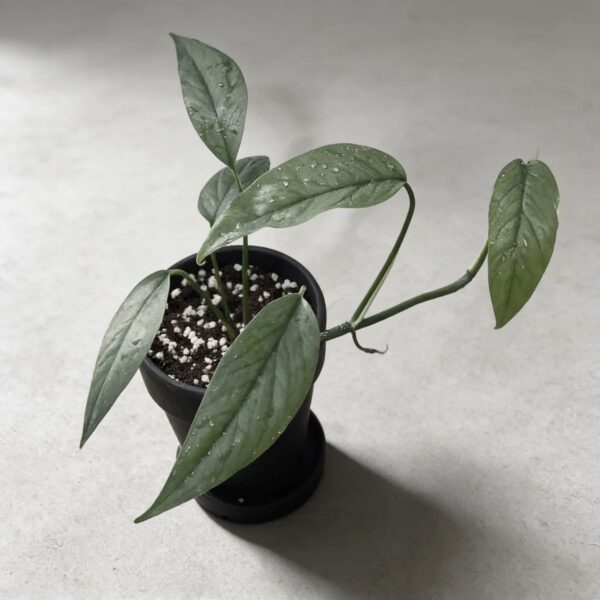
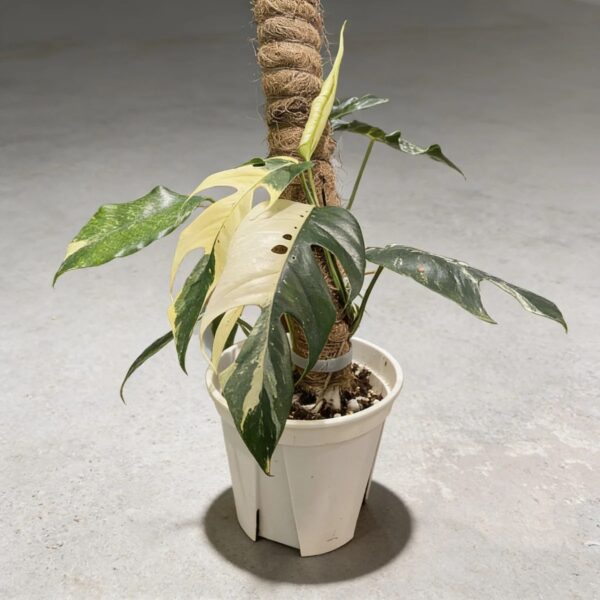
Epipremnum pinnatum 'Cebu Blue'
Epipremnum pinnatum 'Cebu Blue'
HK$298.00
In stock · store pickup
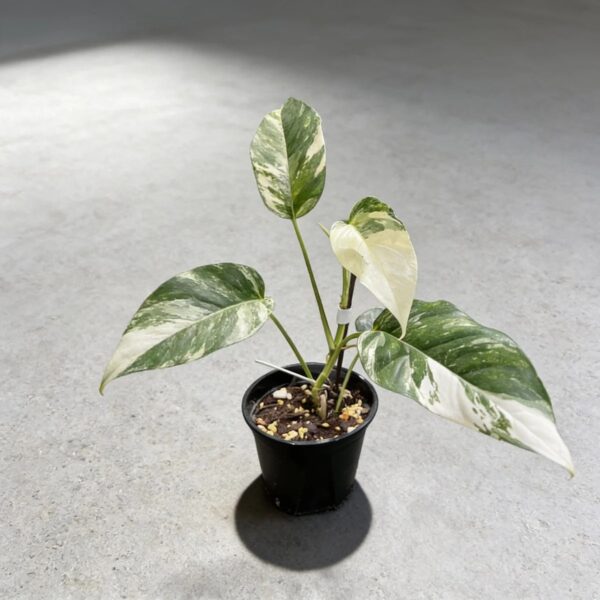
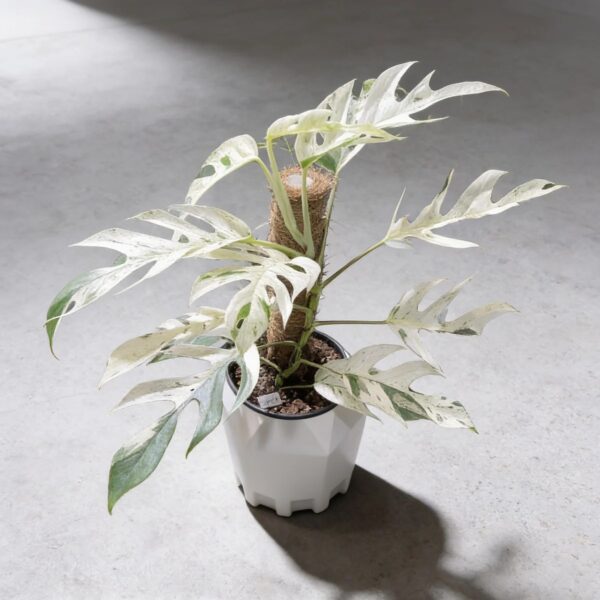
View plantEpipremnum pinnatum variegated
Original price was: HK$2,680.00.HK$480.00Current price is: HK$480.00.
In stock · store pickup
View plant
FREE PLANT ADVICE
Send us a photo before you change anything
WhatsApp a photo of the plant and your window light. Our Causeway Bay team will suggest care steps or plants that suit your space.
STORE · CAUSEWAY BAY
4/F, 39 Yiu Wa Street, Causeway Bay
Daily 12:30–8:00pm · ~3 min walk from Times Square
Map & directionsPlant Care