
Using a pot without drainage: a practical cachepot routine

In this guide (9)
- 01Test access before judging appearance
- 02Four steps for a manageable small pot
- 03What if the pot is too heavy to carry?
- 04A cachepot does not change the species into a water plant
- 05Example: a narrow rim creates a maintenance problem
- 06Check the setup with five simple actions
- 07Sources and scope
- 08Further reading
- 09Related Plantjai plants
Updated: 2026-09-08
A decorative pot without a drain can serve as a cachepot: keep the plant in a draining inner pot, let excess water escape after watering, then return it to the empty outer pot. The important question is whether you can remove, inspect and empty it. Planting directly in a sealed pot, or treating a gravel layer as drainage, creates a different and harder-to-manage setup.
Reference: NC State Extension — Plants Grown in Containers
Test access before judging appearance
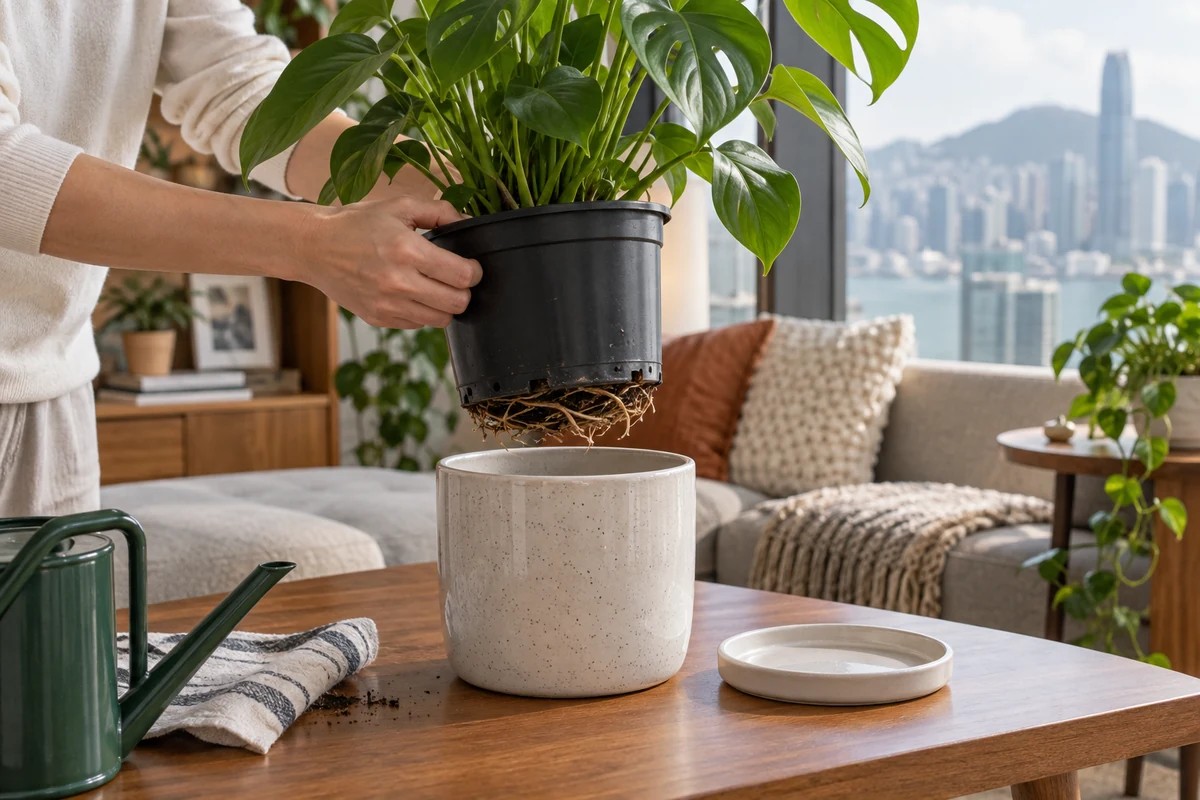
Consider the inner pot’s outside diameter, rim and grip points. A narrow mouth can trap a pot even when the outer container is wide lower down. Decorative stones hiding the rim can turn each check into a dismantling job. Test removal and replacement before the plant is wet, without lifting it by the stem or petioles.
Leave working space between pots, but there is no universal centimetre allowance. You need safe access for your hands or a suitable handle, an inner pot that does not jam, and a way to see and remove runoff. If the base is inaccessible and there is no workable emptying method, “I probably do not water much” is not a dependable solution.
Four steps for a manageable small pot
- Check: confirm that watering is needed and inspect the outer pot for water left from last time.
- Remove: put the inner pot in a sink or safe draining area, supporting the container.
- Water and drain: water evenly as appropriate for the plant and allow free runoff; check the base once obvious dripping has stopped.
- Replace: empty the cachepot, dry its outside and return the plant; check later for delayed runoff.
Returning the pot immediately after watering does not complete drainage. Coarse media, dense roots and different pot shapes drain differently. Judge the actual runoff and the outer pot rather than relying on a fixed five-minute wait.
Reference: University of Maryland Extension — Watering Indoor Plants
What if the pot is too heavy to carry?
Plan maintenance for a heavy pot before choosing its position. A stable stand with suitable load capacity or an accessible saucer may help, but consider its rated load, floor level and likely knocks. Empty-pot weight is not enough: the plant, wet medium and outer container add considerably to the load.
If watering must happen in place, the saucer needs to be visible and emptiable, or the container should have an accessible drainage design from the outset. Do not turn a sealed large planter into a hidden reservoir and use surface moisture to guess the water level below. Check material and suitability before any drilling or alteration; a rented flat’s wooden floor is not a test surface for leaks.
A cachepot does not change the species into a water plant
A snake plant and a calathea can each use a cachepot, but they need different watering decisions. The former needs a clearer drying phase; the latter should not repeatedly dry to wilting. Neither should have ordinary potting mix continuously sitting in runoff. Matching outer pots on one shelf do not justify matching watering amounts or dates.
A purpose-designed reservoir system has an appropriate medium, water level and root-zone arrangement. Water in an ordinary cachepot does not make it self-watering. Stones may raise the inner pot, but they cannot make excess water leave the outer container. Even with the base above the water, you still need an emptying and cleaning plan.
Example: a narrow rim creates a maintenance problem
Suppose a ceramic cachepot is broad at the bottom but narrow at the rim. The empty container appears large enough, yet foliage hides the inner pot’s edge and prevents a secure grip once it is inserted. Do not add decorative stones to hide the gap. Test removal somewhere dry and safe. If extraction requires pulling the stem, choose a more accessible cachepot or a visible saucer instead.
For a large floor plant, include wet medium and plant weight as well as the ceramic container. Trying removal, drainage, floor protection and replacement before purchase is easier than chasing leaks across the living room afterwards. Check dimensions and load limits for the actual containers. Two similar-looking pots need not have the same clearance or strength.
Check the setup with five simple actions
Try five actions: remove the pot without pulling the stem, see the base, empty all runoff, replace it without scraping the floor, and inspect leaf undersides in its normal position. Difficulty with any step is a reason to change the container or location. A display should remain serviceable beyond delivery day.
If you forget to empty it once, remove the water and assess the root zone and plant response. Do not conceal wet media under a large layer of dry mix. A simple “outer pot emptied” tick in your care record is enough to improve the routine.
Sources and scope
- NC State Extension — Plants Grown in Containers — Drainage holes, containers and growing media. Removal and load checks are practical suggestions to confirm on the actual setup.
- University of Maryland Extension — Watering Indoor Plants — Assessing moisture and avoiding standing water. Surface appearance or an inspection date is not a universal watering dose.
Further reading
- Repotting Timing and Techniques: When Should You Give Your Plant a New Home?
- Plant classification and selection
Related Plantjai plants
- Sanservieria 'Copper Tone'
Drought-tolerant snake plants still suffer in standing water. A good example for checking the inner pot before watering, with real light rather than a windowless corner.
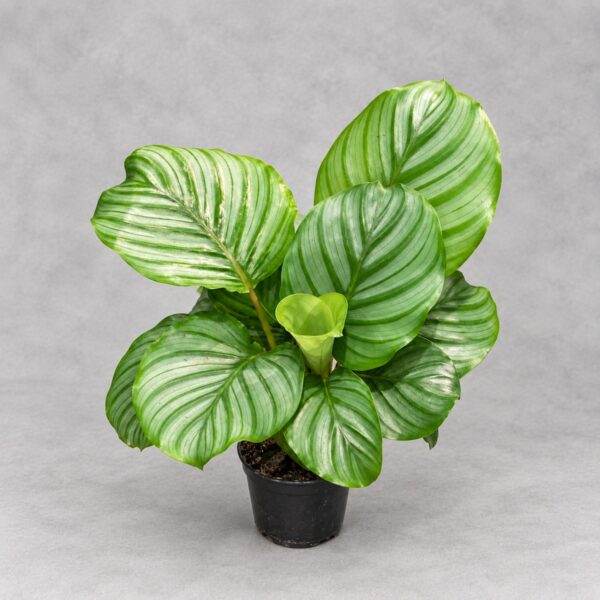
- Calathea orbifolia
It needs more consistent root moisture than a snake plant, but that does not mean a submerged pot base. Choose a bright, indirectly lit position that is easy to inspect.
IN STORE NOW
Plants for this guide
Related plants in stock now — live prices, delivery or Causeway Bay pickup.
FREE PLANT ADVICE
Send us a photo before you change anything
WhatsApp a photo of the plant and your window light. Our Causeway Bay team will suggest care steps or plants that suit your space.
STORE · CAUSEWAY BAY
4/F, 39 Yiu Wa Street, Causeway Bay
Daily 12:30–8:00pm · ~3 min walk from Times Square
Map & directionsPlant Care