How to Care for Blue Jacaranda in Hong Kong | Plantjai

Plantjai 植仔 · Care Encyclopedia
Blue Jacaranda
Hong Kong care guide — useful before you buy and after it arrives.
Shop this plantA canopy of purple-blue blooms each spring — pure fairy-tale romance in tree form.
Origin & characteristics
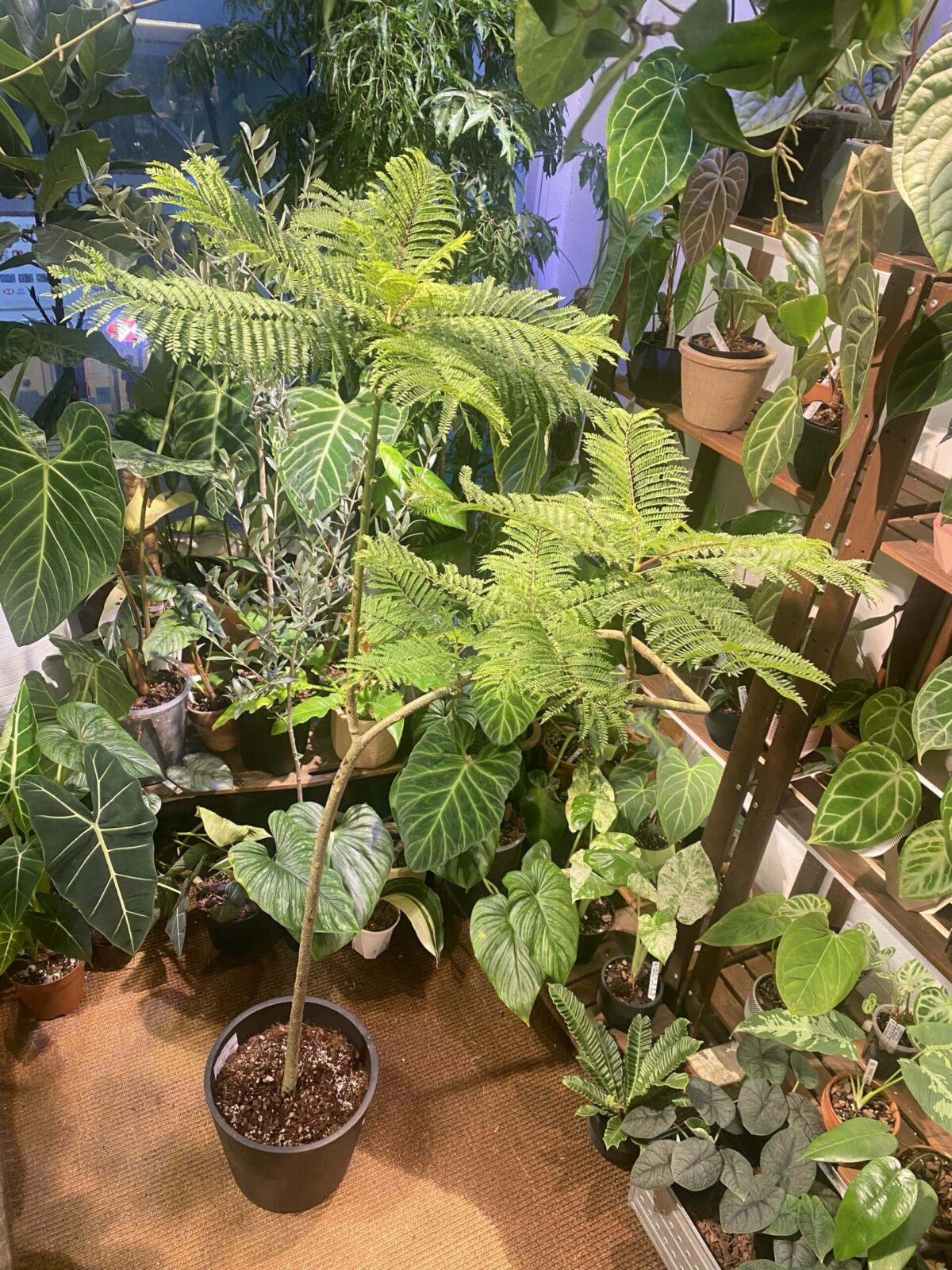
Blue Jacaranda is native to Argentina and Paraguay in South America and belongs to the family Bignoniaceae. In Hong Kong it can be grown as a small-to-medium tree or a large potted specimen, with mature trees reaching 5–15 metres. Its standout feature is the way the canopy erupts into masses of purple-blue, bell-shaped flowers in late spring to early summer (roughly April–May) — clouds upon clouds of blossom, making it one of the few trees in Hong Kong capable of producing genuinely blue flowers. After flowering, delicate feathery, fern-like foliage emerges.
⚠️ Toxicity note: the flowers, leaves, and bark of Blue Jacaranda contain small amounts of toxic compounds; ingestion may cause gastrointestinal upset, and contact with the sap can cause skin sensitivity. Keep children and pets from chewing on it, and wear gloves when pruning.
Light
- Full sun is best, with at least 6 hours of direct sunlight daily
- Sufficient light is essential for flowering — the planting spot must be genuinely sunny
- If grown indoors, place in the brightest available spot, such as a balcony or rooftop
- Insufficient light leads to leggy growth, sparse flowering, or no flowers at all
Watering
- During the growing season (spring/summer), keep the soil evenly moist, watering thoroughly once the top 3–5 cm dries out
- Reduce watering substantially during the winter dormant/deciduous period, watering only once the soil is half dry
- Potted specimens need more frequent watering than those planted in the ground — hot summer weather may require daily checks
- Avoid waterlogging, especially in pots — ensure good drainage
- Slightly restricting water before flowering can help promote flower bud formation
Soil & pot
- For ground planting: choose well-draining garden soil; tolerates slightly acidic to neutral soil
- Potting recipe: quality potting soil + perlite + river sand (roughly 6:3:1)
- Potted specimens need an extra-large pot with drainage holes, sized up gradually as the tree grows
- For ground planting, avoid low-lying spots prone to waterlogging
- A slow-release fertiliser or organic compost each spring is beneficial
Temperature & humidity
- Optimal temperature: 20–30°C
- Highly heat-tolerant, well suited to Hong Kong's hot summers
- Can briefly tolerate a minimum of 5°C, but prolonged exposure below 10°C causes leaf drop and dormancy
- Hong Kong winters generally require no special protection; colder New Territories areas may benefit from covering
- Not fussy about humidity, tolerating 30–70%
Common problems
| Issue | Likely cause | What to do |
|---|---|---|
| Little or no flowering | Insufficient light or tree too young | Move to a full-sun spot; young trees need 3–5 years to flower reliably |
| Yellowing, dropping leaves | Overwatering or poor drainage | Check drainage, adjust watering frequency |
| Leggy, sparse branches | Insufficient light | Move to a brighter spot, pruning if necessary |
| Winter leaf drop | Natural deciduous behaviour | Normal dormancy; new leaves and flowers return in spring |
| Congested, pot-bound roots | Too long without repotting | Repot into a larger pot every 2–3 years |
⚠️ Toxicity note: Blue Jacaranda contains small amounts of toxic compounds throughout, particularly in the flowers, leaves, and bark. Ingestion can cause abdominal pain and vomiting. Wear gloves when pruning and avoid direct contact with the sap. Households with young children or pets should take extra care.
How to explain to customers
"Blue Jacaranda is at its most spectacular in April and May when the whole tree turns purple-blue with flowers — truly stunning! But it absolutely needs a sunny spot, otherwise it won't flower."
"If you're growing it as a potted plant, remember to choose a larger pot, since its root system needs room to develop. A bit of fertiliser each spring will really improve the flowering."
Fun facts
Blue Jacaranda is regarded as an iconic landscape tree in cities around the world — Pretoria, South Africa, is even nicknamed the "Jacaranda City," with the entire city carpeted in purple-blue blossom every October. In Hong Kong, Jacaranda typically blooms from April to May, with sightings at Kowloon Park and Victoria Park — one of the most romantic streetscapes of Hong Kong's spring!
Keywords
Blue Jacaranda, flowering tree, purple-blue flowers, deciduous tree, full sun, well-draining soil, ornamental flowering plant, large potted plant, toxic plant, spring bloomer, Hong Kong street tree
In-depth care guide
Introduction
Blue Jacaranda (Jacaranda mimosifolia) is a deciduous tree in the family Bignoniaceae, native to Argentina and Bolivia in South America, where it can reach 25 to 50 feet tall with a canopy spread of 15 to 30 feet. What captivates people most about Jacaranda is that in late spring and early summer, the entire tree becomes completely covered in purple-blue, bell-shaped flowers, creating the appearance of a lavender cloud from a distance. When the petals fall, they carpet the ground in a dreamlike blue blanket — a truly spectacular sight.
The name "Jacaranda" comes from a Latinised Brazilian indigenous word, while the species name "mimosifolia" means "leaves like a mimosa," describing the fern-like elegance of its feathery compound leaves — hence its other common name, "fern tree." According to the Missouri Botanical Garden, Blue Jacaranda puts on its most spectacular flowering display in tropical and subtropical climates.
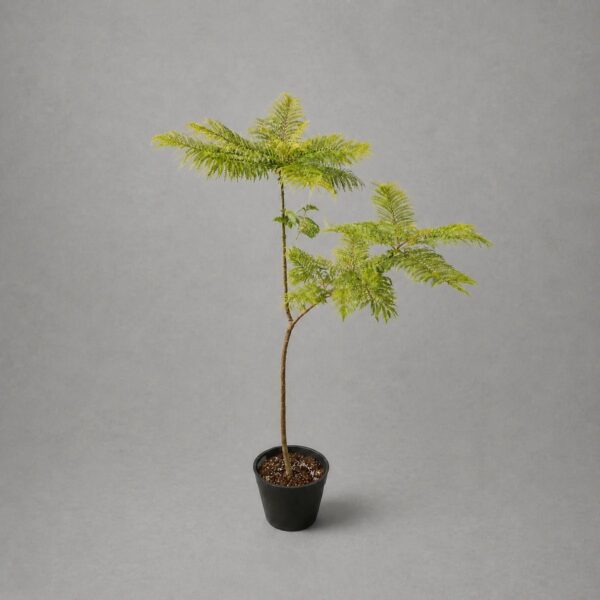
In Hong Kong and other subtropical regions, Blue Jacaranda is a highly popular street and park landscape tree. Beyond ground planting, it can also be grown in pots or even trained as bonsai, though potted specimens tend to flower less reliably and are usually appreciated mainly for their elegant feathery foliage.
Light requirements
Blue Jacaranda is a classic full-sun plant that needs ample sunlight to grow healthily and flower. In its native habitat and in ideal growing conditions, it receives direct sun all day. Both Leafy Heaven and Golden Gate Nursery emphasise that adequate sunlight is essential for compact growth, sturdy branching, healthy foliage, and flowering potential.
If growing outdoors, choose a full-sun position with at least 6–8 hours of direct sunlight daily. Planting in too shady a spot leads to leggy branches, sparse foliage, and dramatically reduced flowering, or no flowers at all.
For potted specimens, place the plant in the brightest available position, such as a south- or west-facing balcony, garden, or rooftop. Indoor growing is possible but light indoors is generally insufficient, resulting in slow growth, weak branches, and difficulty flowering. MyPlantIn notes that if indoor light is insufficient, the plant may drop leaves in winter but typically regrows come spring. If indoor cultivation is necessary, supplementing with a grow light is recommended.
Temperature and humidity
Blue Jacaranda is a tropical species with an ideal growing temperature of 19–25°C. It enjoys warm, humid climates, though sustained extreme heat can stress the trunk. According to The Spruce, Blue Jacaranda can tolerate occasional cold as low as -7°C (20°F), but generally isn't suited to climates with frequent freezing.
The Missouri Botanical Garden notes that Blue Jacaranda performs best in USDA Hardiness Zones 10–11, where it can be grown outdoors year-round. In colder regions, potted specimens need to be moved indoors or into a greenhouse during winter to avoid frost damage. Bonsai Empire cautions against temperatures below 15°C, particularly for bonsai-trained specimens, which need extra protection.
Humidity requirements are not particularly strict; the natural humidity of typical tropical and subtropical regions is generally sufficient. In especially dry environments, misting the surrounding area or growing companion plants nearby can help raise local humidity.
Watering
Blue Jacaranda has moderate water needs. During the growing season (spring and summer), keep the soil evenly moist without waterlogging. Bonsai Empire recommends keeping the roots lightly moist — if allowed to dry out completely, leaves will wilt, brown, and drop; conversely, overwatering causes yellowing and leaf drop.
Golden Gate Nursery recommends watering once the top 3–4 inches of soil has dried, especially paying attention to water needs when temperatures reach 35°C or above. During winter, as plant growth slows, watering frequency should be reduced accordingly.
For potted specimens, water thoroughly until it flows completely from the pot's base, then empty any standing water from the saucer. Potted soil holds less moisture and dries faster, so summer watering may be needed 2–3 times a week. Blue Jacaranda demands good drainage, and waterlogging easily leads to root rot.
Soil recipe
Blue Jacaranda needs well-draining, fertile, loose soil. It cannot tolerate waterlogging, so soil drainage is the single most important consideration.
For ground planting, sandy, fertile, well-draining soil is ideal. If the soil is heavy clay, improve drainage by adding organic matter (such as compost or leaf mould) and coarse sand. Avoid planting in low-lying areas prone to waterlogging.
For potted specimens, use a lightweight, well-draining mix, such as:
- 3 parts quality potting soil
- 1 part coarse sand or perlite (increases drainage)
- 1 part leaf mould or compost (provides nutrients)
Soil pH should be maintained in the slightly acidic to neutral range (pH 6.0–7.5).
Fertilising
Blue Jacaranda needs regular fertilising to support its rapid growth and abundant flowering. The Spruce recommends a once-yearly application of balanced tree fertiliser at approximately a 10-10-10 NPK ratio. Take particular care not to over-apply nitrogen, as excess nitrogen promotes foliage growth at the expense of flowering.
Golden Gate Nursery suggests a once-yearly application of slow-release 10-10-10 granular fertiliser, at roughly one tablespoon per square foot of soil under the canopy. Applying organic or phosphorus-rich fertiliser before flowering can help extend the bloom period.
For potted or bonsai specimens, MyPlantIn recommends weekly liquid fertiliser during the growing season, reduced in winter. Bonsai Empire likewise recommends weekly fertilising during growth, switching to biweekly in winter. Always dilute according to package instructions, as over-fertilising harms the plant.
Pruning
Pruning is important for maintaining Blue Jacaranda's appearance and health. Golden Gate Nursery recommends a major annual pruning in late winter, when the tree is dormant.
When pruning:
- Maintain a single trunk and central leader on young trees to establish a good structural foundation
- Remove broken, split, damaged, and diseased branches
- Remove water sprouts (upright shoots from the trunk or main branch bases), root suckers, and crossing/rubbing branches
- Prune branches with narrow crotch angles under 45 degrees, which are prone to splitting or breaking
- Never remove more than 25% of the canopy in a single pruning to avoid sunscald from sudden sun exposure
Blue Jacaranda naturally develops narrow-angled branches that are especially prone to splitting, so pay particular attention and prune appropriately.
For potted bonsai, Leafy Heaven recommends frequent pruning to maintain a compact tree form and improve branching structure. When new shoots have grown 4–5 pairs of leaves, prune back to 1–2 pairs. Oversized leaves can be trimmed anytime to control leaf size.
Propagation
Blue Jacaranda propagates mainly through two methods: seed and cuttings.
Seed propagation
Seed propagation is the most common method. Seeds should be soaked in water for at least 24 hours, then sown in containers and lightly covered with a thin layer of soil. Keep the soil moist and warm — germination typically takes 1–3 weeks. However, plants grown from seed take a long time to flower, often several years to over a decade.
Cutting propagation
Semi-hardwood cuttings can also be used. Select healthy branches, cut into 6–8 inch sections, remove lower leaves, and insert into moist, loose cutting soil. Maintain high humidity and warmth; roots typically form within 4–8 weeks. Note that the success rate of cutting propagation is lower than seed, and growth is slower.
Common problems and solutions
Not flowering
Potted or indoor-grown Blue Jacaranda often struggles to flower, mainly due to insufficient light or an immature plant. It generally needs several years before flowering, and requires ample direct sunlight daily. Avoid excess nitrogen fertiliser, and consider phosphorus fertiliser before flowering to promote flower bud development.
Yellowing, dropping leaves
If large numbers of leaves yellow and drop simultaneously, it may indicate root rot from overwatering — check soil drainage. If just a few older leaves yellow and drop, this may be normal metabolic turnover. Leaf drop during colder or low-light winter periods is normal, with new growth returning in spring.
Leggy branches, sparse foliage
A clear sign of insufficient light. Blue Jacaranda needs abundant sunlight; if light is inadequate, weak, elongated branches and sparse foliage result. Move to a brighter position as soon as possible.
Aphids
Golden Gate Nursery notes that Blue Jacaranda occasionally suffers from aphid infestations. Insecticidal soap, neem oil, or a strong water spray can eliminate aphids. Good ventilation and proper spacing help prevent infestations.
Root rot
Caused by overwatering or poor drainage. Ensure good soil drainage and avoid waterlogging. If a plant wilts despite moist soil, check the root system and trim away any rot, replacing with fresh soil.
Trunk scald
In regions with sustained high heat, strong sun can scald the trunk. Applying white protective paint to the trunk or wrapping with shade material can help prevent this.
Toxicity note
Blue Jacaranda has no record of particularly severe toxicity, but no part of it should generally be consumed. The seeds may contain mild toxic compounds, and pets and children should be prevented from accidentally ingesting them. No special protection is generally needed when handling the plant, but if you have plant allergies, gloves are recommended.
參考資料(想知來源可展開)
References
- Missouri Botanical Garden. "Jacaranda mimosifolia – Plant Finder." missouribotanicalgarden.org/PlantFinder/PlantFinderDetails.aspx?kempercode=a873
- The Spruce. (2008). "How to Grow and Care for a Jacaranda Tree." thespruce.com/growing-jacaranda-mimosifolia-3269356
- Golden Gate Nursery. (2025). "Jacaranda." goldengatenurserynaples.com/plant-library/jacaranda
- Bonsai Empire. "Care guide for Jacaranda Bonsai (Jacaranda mimosifolia)." bonsaiempire.com/tree-species/jacaranda
- Leafy Heaven. (2026). "Jacaranda Mimosifolia Bonsai: Blue Blooms Care Guide." leafyheaven.com/jacaranda-mimosifolia-bonsai
- MyPlantIn. (2022). "Jacaranda mimosifolia Bonsai Care." myplantin.com/plant/740
For Hong Kong homes and offices. Stock and pricing follow the product page.
IN STORE NOW
Plants for this guide
Related plants in stock now — live prices, delivery or Causeway Bay pickup.
FREE PLANT ADVICE
Send us a photo before you change anything
WhatsApp a photo of the plant and your window light. Our Causeway Bay team will suggest care steps or plants that suit your space.
STORE · CAUSEWAY BAY
4/F, 39 Yiu Wa Street, Causeway Bay
Daily 12:30–8:00pm · ~3 min walk from Times Square
Map & directionsPlant Care