
How to Care for Asplenium Nidus Crispy Waves in Hong Kong | Plantjai


Plantjai 植仔 · Care Encyclopedia
Asplenium Nidus Crispy Waves
火焰鳥巢蕨 Asplenium nidus ‘Crispy Waves’
Hong Kong care guide — useful before you buy and after it arrives.
Shop this plantWavy, ruffled leaf margins that look like a green flame frozen mid-flicker — the most dynamic, sculptural member of the bird's nest fern family.
Origin & characteristics
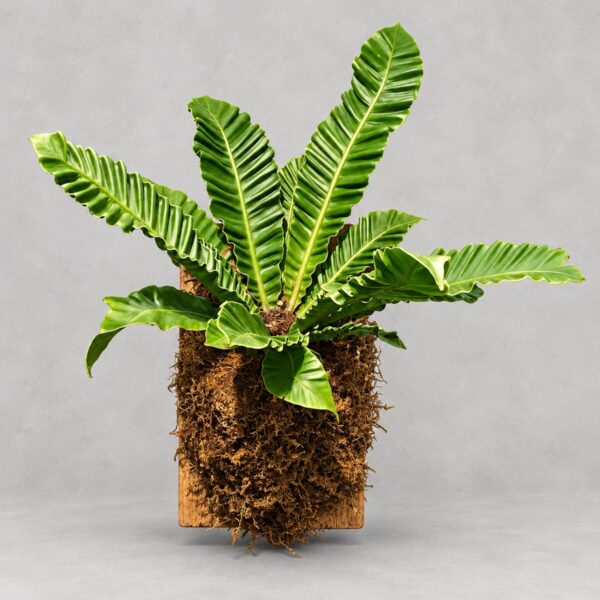
Crispy Wave Fern belongs to the Aspleniaceae family, genus Asplenium. Its parent species, Asplenium nidus, is widely distributed across tropical Asia, Australia, and Africa, growing epiphytically on the trunks and branches of tall rainforest trees. 'Crispy Waves' is a popular cultivated variety of the original species, most distinctive for its pronounced wavy, ruffled leaf margins (a crisped margin) — from a distance, it genuinely looks like a burst of green flame, giving it dramatic visual impact.
The leaves are broad and lance-shaped, thick and glossy, ranging from fresh green to deep green, with new leaves unfurling from the plant's centre in a "fiddlehead" shape — a genuinely therapeutic process to watch. The plant grows in a radial, clumping form, with a depressed centre resembling a bird's nest, hence the common name. Mature plants can reach over 60 cm in diameter, giving it real presence as an indoor plant.
Ferns are generally non-toxic, relatively safe for pets and children, though eating them isn't recommended.
Light
Crispy Wave Fern likes bright, diffused light to partial shade, native to the shade beneath the rainforest canopy, accustomed to gentle light.
- Ideal placement: 1–2 metres from an east- or north-facing window; south/west windows need a sheer curtain to filter light
- Light intensity: 800–1,500 lux is the ideal range
- Signs of adequate light: upright, glossy leaves with prominent wavy margins and active new growth
- Signs of insufficient light: leaves become thinner and softer, colour dulls, wavy margins become less distinct
- Avoid: strong direct sunlight, especially summer midday sun, which will scorch the leaves and cause brown spots
- Tip: bird's nest ferns can tolerate slightly stronger light than most ferns, but diffused light still gives the best results
Watering
Follow the principle of "keep the soil lightly moist." Bird's nest ferns like moist but never waterlogged conditions, and shouldn't be left to dry out completely before watering.
- Testing method: water once the top 1 cm of soil has dried — no need to wait for the deeper layers to dry
- Growing season (spring–autumn): check roughly every 3–5 days, adjusting to the environment
- Dormant season (winter): roughly once every 7–10 days, keeping the soil lightly moist
- Watering method: pour slowly along the pot's edge until water flows from the drainage holes
- Standing water: empty within half an hour to avoid root rot
- Water quality: room-temperature tap water is fine; switch to filtered water if leaf tips start yellowing
- Important: the central "nest" depression can occasionally receive a small amount of water, mimicking its native environment, but avoid letting water sit there long-term to prevent mosquito breeding
Soil & pot
Soil recipe
Needs a well-draining, organic-matter-rich, moderately moisture-retentive slightly acidic soil:
- Peat moss or coco coir 40%
- Perlite 20%
- Coconut husk chips or bark 20%
- Leaf mould or compost 15%
- A small amount of coarse sand 5%
Pot selection
- Plastic pot: better moisture retention, suits the bird's nest fern's preference for slight dampness
- Terracotta pot: breathable but retains less moisture, needs more frequent watering
- Hanging basket: the bird's nest fern's radial form is very well suited to hanging display, giving excellent visual impact
- Drainage holes: essential — although the bird's nest fern likes moisture, it still needs drainage to avoid root rot
- Repotting timing: once every 1–2 years in spring; the roots are fairly delicate, so handle carefully during repotting to avoid excessive root damage
Temperature & humidity
Temperature
- Ideal growing temperature: 18–26°C
- Minimum tolerance: 12°C — sustained temperatures below this stall growth
- Note: the bird's nest fern isn't cold-hardy — keep it away from AC vents and cold window drafts in winter
- Summer note: above 30°C, pay attention to ventilation to avoid stuffy conditions
Humidity
- Ideal humidity: 60–80%
- Humidification suggestions:
- Mist the surrounding air (occasional light misting on the leaves is fine, but avoid prolonged standing water)
- Pebble tray humidification
- Group with other ferns to raise mutual humidity
- Use a small humidifier in air-conditioned rooms
- Hong Kong environment: spring/summer humidity is usually sufficient; autumn/winter needs extra attention
- Leaf misting: occasional misting can help maintain leaf sheen and increase humidity, but ensure the leaf surface can dry out afterward
Common problems
| Issue | Likely cause | What to do |
|---|---|---|
| Scorched leaf tips | Air too dry / water too hard / fertiliser too concentrated | Increase humidity, switch to filtered water, dilute fertiliser |
| Whole leaf turning yellow | Overwatering causing root rot, or light too weak | Check soil moisture, adjust watering frequency or move to a brighter spot |
| Slow or malformed new leaf development | Insufficient humidity or nutrient deficiency | Increase humidity, apply diluted liquid fertiliser during the growing season |
| Brown spots on leaves | Sunburn or fungal infection | Avoid direct light, improve ventilation, avoid prolonged leaf moisture |
| Rot at the plant's centre | Excessive water in the centre or poor ventilation | Reduce water applied to the centre, ensure good ventilation |
| Wavy margins flattening out | Insufficient light or humidity too low | Increase light and humidity |
| Thin, dull leaves | Severely insufficient light | Move to a brighter spot |
How to explain to customers
"This Crispy Wave Fern has such presence! Look at those wavy, ruffled edges — from a distance it genuinely looks like a green flame, really eye-catching in any home. It's a fern, so it likes moist, cool conditions — no need for direct sun, just diffused light indoors is fine. For watering, don't wait until it's completely dry — water once the topsoil is a little dry. It's non-toxic, so no worries if you have pets or kids at home. This variety is fairly uncommon, so it's a genuinely tasteful addition to any home!"
Fun facts
- Bird's nest ferns are "epiphytes" in the wild, not parasitising trees but using the trunk to gain height and better access to sunlight, absorbing nutrients from air moisture and decomposing leaf litter. The central "nest" depression collects fallen leaves and rainwater, forming a natural nutrient reservoir.
- The wavy leaf margin of 'Crispy Waves' results from a genetic mutation (crisped mutation), where uneven cell growth at the leaf edge creates the beautiful wave effect. Similar traits can be seen in other fern cultivars too.
- The bird's nest fern's new leaf unfurling process is genuinely therapeutic to watch — emerging in a tight spiral "fiddlehead" shape from the centre, slowly unfurling into a broad leaf, a process that can take several weeks and is a favourite topic among plant enthusiasts.
- In parts of Southeast Asia, young bird's nest fern leaves are eaten as a vegetable (called "paku"), but ornamental cultivars are recommended for display purposes only.
Keywords
Asplenium nidus Crispy Waves, Crispy Wave Fern, wavy bird's nest fern, ruffled bird's nest fern, Asplenium, fern, epiphytic fern, indoor fern, foliage fern, wave-leaf bird's nest fern, bird's nest fern care, Hong Kong plant shop, shade plant, high-humidity plant, non-toxic indoor plant, Plantjai
參考資料(想知來源可展開)
References
- Royal Horticultural Society. Asplenium nidus – Bird's Nest Fern. RHS Plants Database. https://www.rhs.org.uk/plants/1206/asplenium-nidus/details
- Missouri Botanical Garden. Asplenium nidus – Bird's Nest Fern. Plant Finder. http://www.missouribotanicalgarden.org/PlantFinder/PlantFinderDetails.aspx?taxonid=276438
- University of Florida IFAS Extension. Bird's Nest Fern (Asplenium nidus). https://gardeningsolutions.ifas.ufl.edu/plants/houseplants/birds-nest-fern.html
In-depth care guide
Introduction
Crispy Wave Fern is a popular cultivated variety of Asplenium nidus, distinguished from the standard species by its pronounced wavy, ruffled leaf margins, which give it a much more dynamic, sculptural presence than the smooth-edged original form. This visual drama, combined with relatively straightforward care requirements, has made it one of the more popular fern cultivars for indoor decoration in recent years, particularly appealing to plant lovers seeking bold textural statements without the finicky care demands of some other tropical foliage plants.
Like all bird's nest ferns, 'Crispy Waves' grows epiphytically in its native habitat, clinging to the trunks and branches of tall rainforest trees across tropical Asia, Australia, and Africa. This epiphytic growth habit, rather than being a limitation, is actually an evolutionary advantage — by growing higher up on host trees, the plant gains better access to filtered sunlight and airflow than it would find on the crowded forest floor, while absorbing moisture and nutrients from the air, rainwater, and decomposing organic matter that collects in its characteristic central "nest" depression.
Physical characteristics
Mature plants form a striking radial rosette, with broad, lance-shaped leaves radiating outward from a central growing point, creating the depressed, nest-like form that gives the parent species its common name. The leaves themselves are thick, glossy, and range from fresh to deep green depending on light exposure and maturity. The defining feature of the 'Crispy Waves' cultivar is the pronounced, undulating wave pattern along each leaf's margin — a genetic trait that gives the plant its dramatic, almost flame-like silhouette. New leaves emerge from the centre of the rosette in a tightly coiled "fiddlehead" shape, gradually unfurling over several weeks into their full, wavy-edged form — a slow, satisfying process that plant enthusiasts often document and share.
Light requirements
Crispy Wave Fern does best with bright, diffused light to partial shade, roughly in the 800–1,500 lux range. A position 1–2 metres from an east- or north-facing window works well, and south- or west-facing windows should be filtered with a sheer curtain to soften the light. Under adequate light, the plant maintains an upright, glossy appearance with pronounced, well-defined wavy margins and active new growth. If light is insufficient, leaves become thinner, softer, and less vibrant in colour, and the signature wavy margins gradually flatten out, losing much of the plant's visual appeal. Direct sunlight, particularly the strong midday sun common in Hong Kong summers, will scorch the leaves and cause permanent brown spotting — always err toward gentler, filtered light for this species.
Watering technique
Keep the soil consistently, lightly moist by watering once the top centimetre of soil has dried, rather than waiting for deeper layers to dry out completely — bird's nest ferns don't tolerate drought well. During the active growing season from spring through autumn, this typically means checking roughly every three to five days; in the cooler winter dormant period, watering can stretch to roughly once every seven to ten days. Always pour slowly along the pot's edge until water flows freely from the drainage holes, and empty any standing water from the saucer within half an hour to prevent root rot. An interesting and authentic technique is occasionally adding a small amount of water directly into the plant's central "nest" depression, mimicking how rainwater and leaf litter would naturally collect there in the wild — but take care never to let water sit there long-term, since this can lead to rot at the growing point and create a breeding ground for mosquitoes in Hong Kong's climate.
Soil and potting
A well-draining, organic-matter-rich, moderately moisture-retentive medium works best: a mix of peat moss or coco coir, perlite, coconut husk chips or bark, leaf mould or compost, and a small amount of coarse sand. Plastic pots suit this fern's preference for consistent moisture better than terracotta, which dries out faster and requires more frequent watering to compensate. Given the plant's naturally radial, cascading growth form, a hanging basket makes for a particularly striking display option, letting the wavy leaves fan outward and downward for maximum visual impact. Repot roughly once every one to two years in spring, handling the relatively delicate root system with care to avoid unnecessary damage.
Temperature and humidity
The comfortable temperature range is 18–26°C, and the plant shouldn't be exposed to sustained temperatures below 12°C, which will stall growth. Ideal humidity sits between 60% and 80%. In Hong Kong, spring and summer humidity is usually naturally sufficient, but autumn and winter — particularly when heating or air conditioning is running — may require supplemental humidification through methods like a pebble tray, grouping with other ferns, or a small room humidifier. Occasional light misting of the leaves can help maintain their glossy appearance and boost humidity briefly, but always ensure the leaf surface has a chance to dry afterward to avoid fungal issues.
Common problems
Scorched leaf tips: typically caused by dry air, hard water, or fertiliser that's too concentrated — address all three factors together for the best results.
Whole leaves turning yellow: check for overwatering and root rot first, then consider whether light levels might be insufficient.
Slow or malformed new growth: usually points to insufficient humidity during the critical unfurling period, or a nutrient deficiency that light feeding during the growing season can resolve.
Rot at the plant's centre: almost always caused by too much water accumulating in the central nest depression combined with poor ventilation — reduce how often you add water there and ensure good airflow around the plant.
Flattening wavy margins: a sign that light or humidity (or both) have dropped too low — gradually increase both and watch for improvement in newer leaves.
Toxicity information
Ferns, including Crispy Wave Fern, are generally considered non-toxic and relatively safe around pets and children, though as with all houseplants, eating any part of the plant isn't recommended and could cause mild digestive upset in large quantities.
References
- Royal Horticultural Society. Asplenium nidus – Bird's Nest Fern. RHS Plants Database. https://www.rhs.org.uk/plants/1206/asplenium-nidus/details
- Missouri Botanical Garden. Asplenium nidus – Bird's Nest Fern. Plant Finder. http://www.missouribotanicalgarden.org/PlantFinder/PlantFinderDetails.aspx?taxonid=276438
- University of Florida IFAS Extension. Bird's Nest Fern (Asplenium nidus). https://gardeningsolutions.ifas.ufl.edu/plants/houseplants/birds-nest-fern.html
- Hoshizaki, B. J., & Moran, R. C. (2001). Fern Grower's Manual. Timber Press.
For Hong Kong homes and offices. Stock and pricing follow the product page.
IN STORE NOW
Plants for this guide
Related plants in stock now — live prices, delivery or Causeway Bay pickup.
Asplenium nidus var plicatum
Original price was: HK$428.00.HK$180.00Current price is: HK$180.00.
In stock · store pickup
View plant
FREE PLANT ADVICE
Send us a photo before you change anything
WhatsApp a photo of the plant and your window light. Our Causeway Bay team will suggest care steps or plants that suit your space.
STORE · CAUSEWAY BAY
4/F, 39 Yiu Wa Street, Causeway Bay
Daily 12:30–8:00pm · ~3 min walk from Times Square
Map & directionsPlant Care