How to Care for Anthurium Crystallinum Dorayaki in Hong Kong | Plantjai

Hong Kong care guide for Anthurium Crystallinum Dorayaki.
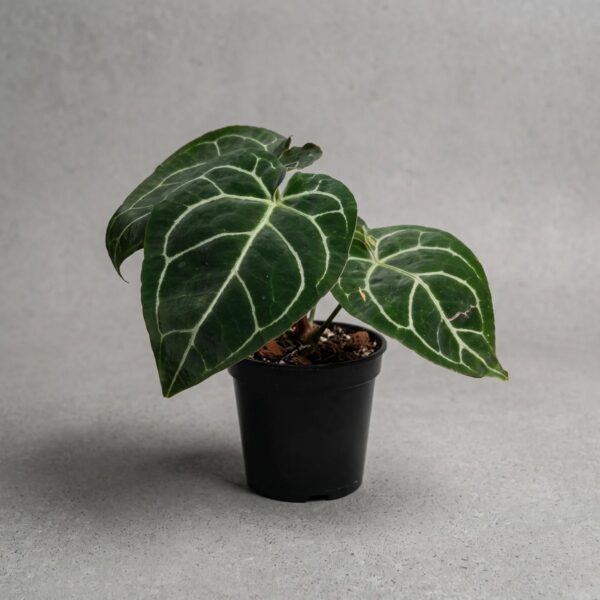
Round, plump leaves with dazzling silver striping — the crowd-pleasing "dessert" of the Anthurium world.
Origin & characteristics
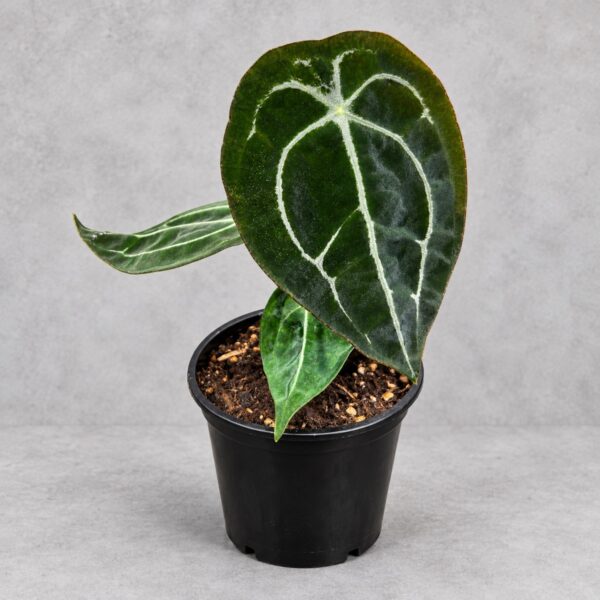
Dorayaki Anthurium is a selectively bred cultivar of Anthurium crystallinum, descended from the original Crystal Anthurium native to Central American rainforests. Its leaves are short and rounded, thick and plump, resembling the shape of a Japanese dorayaki pancake, with strikingly prominent silver-white radiating veins across a velvety leaf surface. Mature leaves can reach 20–25 cm, with exceptional ornamental value — a genuine classic in any serious tropical plant collection.
Light
Bright, diffused light suits it best — avoid direct sun, which will scorch the leaves. Position it near a window with a sheer curtain to filter light, or use a grow light for 8–10 hours daily as a supplement. Insufficient light causes the silver veining to fade and leaves to thin; too much light easily scorches the leaf edges. East- or north-facing windows are ideal.
Watering
Keep the soil lightly moist but never waterlogged, watering once the top 2–3 cm of soil has dried. Roughly every 5–7 days in summer, extending to 10–14 days in winter. Use room-temperature settled water to avoid shocking the roots with cold water. Combine with a pebble tray or humidifier when humidity is low, maintaining 60%–80% ambient humidity. Never let the pot sit in standing water, or root rot will result.
Soil & pot
Use a strongly draining, well-aerated medium: peat 30% + perlite 25% + bark 25% + charcoal 10% + sphagnum moss 10%. A ceramic pot or terracotta pot works best, with drainage holes essential at the base. Its roots tend toward aerial growth, so don't bury it too deep when repotting — leaving part of the root system exposed helps it breathe. Check the roots every spring and size up the pot if needed.
Temperature & humidity
Ideal temperature 20–28°C; don't let it drop below 16°C, and growth slows above 32°C. Pay attention to ventilation and cooling during Hong Kong summers, and avoid direct AC drafts in winter. Maintain humidity at 60%–80% — below 50%, leaf tips easily dry and scorch. A bathroom windowsill or a humidifier both work well; grouping multiple plants together also helps raise local humidity.
Common problems
| Issue | Likely cause | What to do |
|---|---|---|
| Yellowing leaves | Mostly overwatering or poor drainage leading to root rot | Check for standing water and soil moisture, repotting and trimming roots if necessary |
| Fading venation | Insufficient light or lacking nutrients | Move to a brighter spot and feed diluted liquid fertiliser every 2–3 months |
| Scorched leaf tips | Air too dry or hard water | Switch to filtered water and raise environmental humidity |
| Small new leaves | Pot may be root-bound, or insufficient nutrition | Consider repotting or increasing feeding frequency |
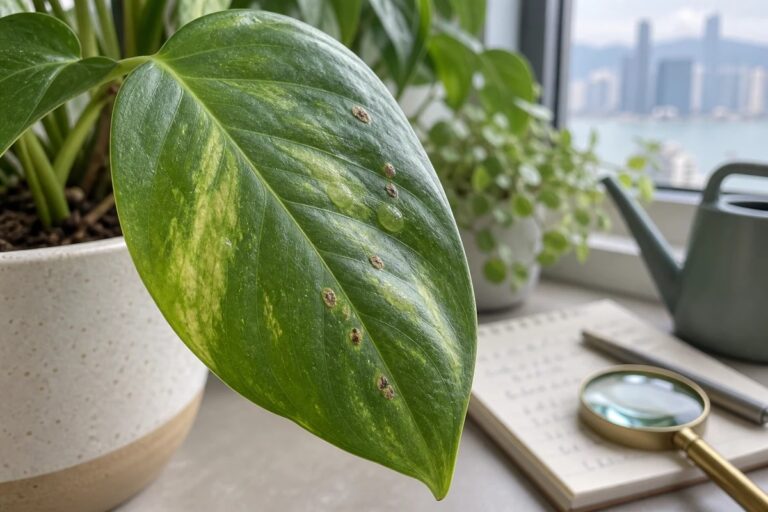
| Spider mites | Common in dry conditions | Isolate the plant immediately, wipe with a damp cloth, and spray with neem oil |
How to explain to customers
"Dorayaki has such cute, round leaves, and the silver stripes really sparkle — it's a genuine eye-catcher at home! It's fairly easy to look after too — just don't let it get sunburned, and keep the humidity up, and it's beginner-friendly."
Fun facts
Dorayaki Anthurium gets its name from the Japanese dessert dorayaki, because its round, plump leaves genuinely resemble a green dorayaki pancake.
Keywords
Dorayaki Anthurium, Anthurium crystallinum Dorayaki, Crystal Anthurium, tropical foliage plant, silver-veined Anthurium, velvet leaf, indoor plant, foliage plant, Anthurium genus, collector plant, toxic to pets
參考資料(想知來源可展開)
References
- Foliage Factory — Anthurium 'Dorayaki'. https://foliage-factory.com/products/anthurium-dorayaki
- Royal Horticultural Society (RHS) — How to grow anthuriums. https://www.rhs.org.uk/plants/anthuriums/how-to-grow-anthuriums
- Proven Winners — Caring for Anthurium Plants Indoors. https://www.provenwinners.com/learn/houseplants/anthurium
⚠️ Pet / toxicity note: Anthuriums contain calcium oxalate crystals, toxic to pets and children. Ingestion may cause oral pain, drooling, and vomiting. Keep out of reach of pets and small children. If accidental ingestion occurs, rinse the mouth immediately and seek medical attention.
In-depth care guide
Introduction
Dorayaki Anthurium, scientifically Anthurium crystallinum 'Dorayaki', is a highly popular cultivar within the genus Anthurium. What makes this cultivar so endearing is its round, plump leaves — a striking departure from the typical oval-elongated leaf shape of most Crystal Anthuriums. The velvety leaf surface is covered in silver-white shimmering veins that create a strong contrast against the deep green base, giving it a genuinely layered, dimensional look.
The name "Dorayaki" comes from the Japanese red-bean pancake, a well-known dessert, because this cultivar's round, plump leaves, with their gently upturned edges, genuinely resemble that dish. It's an offspring of a cross between Anthurium crystallinum and Anthurium clarinervium, combining both the shimmering veins of the Crystal Anthurium and the rounded leaf shape of A. clarinervium. According to Foliage Factory, this cultivar belongs to an upright, clumping epiphytic herbaceous plant, with mature specimens reaching about 50 cm tall and 50 cm wide (Foliage Factory, 2026).
New leaves start out paler in colour and softer in texture, gradually deepening and firming up as they mature, with the leaf surface's sheen and velvety texture becoming more pronounced over time. The round leaf shape makes the silver-white veining pattern appear even more concentrated and eye-catching, which is really this cultivar's biggest selling point.
Native environment
Anthurium species are primarily distributed across the tropical rainforests of Central and South America, with Anthurium crystallinum's native range including Panama and Colombia (Onszaden, 2025). In the wild, they typically grow epiphytically on large trees, with their root systems clinging closely to the bark, absorbing moisture and nutrients from the air and rainwater. The rainforest understorey has weak but steady light, humidity consistently above 70%, and temperatures between 18–27°C, with good air circulation. These are all environmental conditions we need to try to replicate as much as possible when growing this plant indoors.
Light requirements
Dorayaki Anthurium likes bright, diffused light, with an ideal light intensity of roughly 10,000–20,000 lux (Foliage Factory, 2026). You can position it near an east- or north-facing window, letting it enjoy gentle morning light or steady indirect light. If placed near a south- or west-facing window, remember to use a sheer curtain or light-diffusing film to filter out direct midday sun, otherwise its velvety leaves easily develop sunburn spots.
If light is too weak, new leaves will grow thin and small, with the venation pattern appearing dim and unclear, and the whole plant will become loose and weak overall. Prolonged insufficient light can also stall growth and make the plant more susceptible to pests. It's recommended to rotate the pot every one to two weeks, allowing all sides of the leaves to receive even light, preventing lopsided growth.
Watering method
Watering is key to caring for Dorayaki Anthurium. It likes the medium to stay evenly lightly moist, but absolutely cannot tolerate waterlogging. A general recommendation is to water once the top two to three centimetres of medium begins to dry (JOMO Studio, n.d.). You can test by inserting a finger into the medium — if it feels slightly dry, it's time to water.
For water quality, it's best to use filtered water, distilled water, or rainwater. Long-term accumulation of chlorine and minerals from tap water can harm the roots and may also leave white water marks on the leaf surface. In winter, temperatures are low and evaporation is slow, so watering frequency should be correspondingly reduced, roughly once every seven to ten days; in summer's peak growing season, this can shorten to once every three to five days, depending on the environment's humidity and ventilation.
When watering, water thoroughly, letting excess water drain completely from the pot's base, then remember to empty any standing water in the saucer after half an hour. If using the soak method, placing the pot in a shallow water tray for about fifteen to twenty minutes lets the medium absorb water from the base, avoiding water splashing on the leaves and triggering fungal problems (Proven Winners, n.d.).
Humidity requirements
As a tropical rainforest plant, Dorayaki Anthurium has certain humidity requirements. The ideal range is 50–70% or higher (Foliage Factory, 2026). If your home's humidity stays persistently below 40%, new leaves will easily get "stuck" while unfurling, or their edges will dry out — a phenomenon known as "stuck leaf."
There are many ways to raise humidity: the most reliable is placing a humidifier near the plant; you can also cluster several plants together, forming a naturally humid microclimate; or place a tray filled with pebbles beneath the pot (remembering the water level should stay below the pot's base, to avoid root submersion). Regularly opening windows to maintain air circulation is also important — a stuffy, unventilated environment easily breeds bacteria and mould.
Temperature control
Dorayaki Anthurium's ideal growing temperature is 18–27°C (Collectors Online, n.d.). It doesn't tolerate cold, and below 15°C it will start showing frost-damage symptoms, such as leaf yellowing and stalled growth. Prolonged exposure to low temperatures may even lead to root rot. In summer, avoid direct AC exposure, and in winter, stay away from cold window draughts and heater vents. If you live somewhere with lower winter temperatures, it's recommended to prepare a heating mat or move the plant to a warmer indoor location.
Growing medium
Dorayaki Anthurium's root system needs plenty of oxygen, so the growing medium must be well-draining and aerated. It's recommended to use a bark-based medium, mixed with perlite, coco coir, and a small amount of sphagnum moss, with a medium-to-coarse particle size (Foliage Factory, 2026). A simple recipe would be: 40% orchid bark + 30% perlite + 20% coco coir + 10% sphagnum moss. This combination ensures water drains quickly while retaining some moisture for the roots to absorb.
Avoid using ordinary garden potting soil, since it's too fine and dense, easily leading to waterlogging and root rot. For pots, it's recommended to choose plastic or ceramic pots with drainage holes; when first potting small seedlings, avoid using a pot that's too large, otherwise the medium will stay wet and heavy for too long, increasing the risk of root rot.
Feeding recommendations
During the growing season (spring through autumn), you can apply a diluted balanced liquid fertiliser (such as NPK 20-20-20) every week, diluted to half strength. The Royal Horticultural Society recommends using an orchid-specific fertiliser, since Anthurium's growing conditions resemble those of orchids (RHS, 2026). Make sure the medium is already moist before feeding, avoiding concentrated fertiliser directly contacting dry roots, which could cause fertiliser burn.
In late autumn and winter, as the plant's growth slows, you can pause feeding or reduce to once a month with a diluted, weak fertiliser. If you notice new leaves are pale in colour and grow slowly, that might be a signal of insufficient nutrients; conversely, scorched leaf tips or a white salt crust on the soil surface indicate overfeeding, requiring a thorough flush of the medium with plain water to dilute it.
Repotting timing
Dorayaki Anthurium generally needs repotting every one to two years, ideally in spring just before the growing season starts. If you notice the roots have filled the pot or are even emerging from the drainage holes, it's time to size up (roughly increasing the pot diameter by 2–3 cm). When repotting, gently loosen tangled roots, trim away any rotten or blackened sections, then place the plant into fresh medium. For the first few days after repotting, keep the plant in a relatively shaded spot, allowing it to adjust to its new environment.
Propagation methods
Dorayaki Anthurium can be propagated by division. Once the plant develops multiple growth points, you can carefully separate the root clusters during repotting, ensuring each division has healthy roots and at least one to two leaves. After division, maintain high humidity and avoid strong light, and new growth should typically begin within two to three weeks. You can also try stem cuttings: cut a stem section with two to three nodes, insert it into sphagnum moss or perlite, and keep it in a warm, humid environment, where roots typically form within three to four weeks (The Indoor Plant Co, n.d.).
Common problems
New leaves stuck, unable to unfurl: usually related to a sudden drop in humidity, pest infestation, root damage, or human interference. Check whether humidity is stable, whether there are signs of pests, and try to avoid frequently touching the plant while new leaves are developing.
Browning leaf edges: could be caused by improper watering, humidity that's too low, fertiliser salt buildup, or root problems. Investigate each possibility one by one, adjusting watering frequency, and repotting to check root health if necessary.
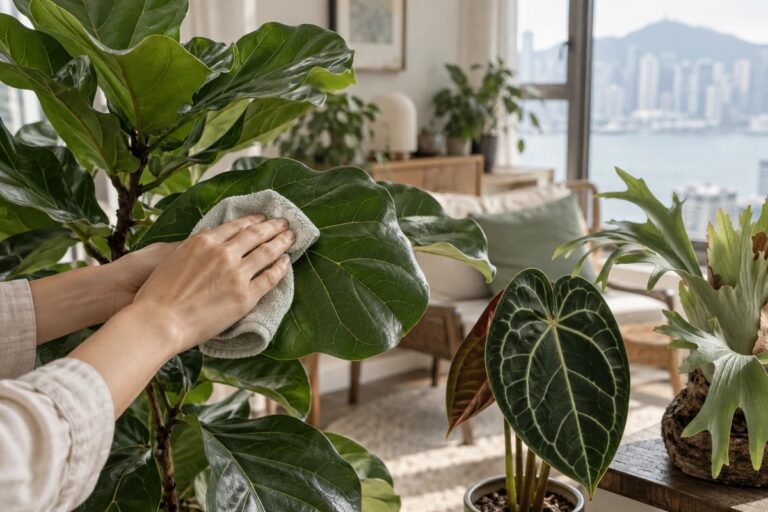
Scratch marks on leaves: velvety leaves easily retain permanent marks, so handle them gently when moving or cleaning, avoiding friction with other plants or hard objects.
Thinner leaves: check whether light is adequate, whether feeding is sufficient, and whether the plant has recently undergone transport or repotting stress.
Lower leaves yellowing: usually caused by the medium staying overly wet for extended periods, or a pot that's too large causing prolonged root dampness. Check drainage and watering frequency.
Toxicity information
Dorayaki Anthurium contains calcium oxalate crystals, toxic to both humans and pets. Ingestion may cause oral and throat irritation, drooling, vomiting, and difficulty swallowing. Direct skin contact with the sap can also cause allergic reactions, so it's best to wear gloves when pruning or handling the plant, and keep it out of reach of children and pets (Chalet Boutique, 2023).
References
- Foliage Factory. (2026). Anthurium 'Dorayaki'. https://foliage-factory.com/products/anthurium-dorayaki
- JOMO Studio. (n.d.). Anthurium Dorayaki Care Guide. https://jomostudio.com/products/anthurium-dorayaki
- Collectors Online. (n.d.). Anthurium crystallinum 'Dorayaki'. https://collectorsonline.com.au/products/anthurium-crystallinum-dorayaki
- Onszaden. (2025). Anthurium crystallinum 'Dorayaki' – seeds. https://onszaden.com/Anthurium-crystallinum-Dorayaki
- Royal Horticultural Society (RHS). (2026). How to grow anthuriums. https://www.rhs.org.uk/plants/anthuriums/how-to-grow-anthuriums
- Proven Winners. (n.d.). Caring for Anthurium Plants Indoors. https://www.provenwinners.com/learn/houseplants/anthurium
- Chalet Boutique. (2023). Anthurium Plant Care Guide. https://chaletboutique.com/blogs/plant-care/anthurium-plant-care-guide
- The Indoor Plant Co. (n.d.). Anthurium – Plant Care Guide. https://www.theindoorplantco.com.au/plant-care/anthurium
For Hong Kong homes and offices. Stock and pricing follow the product page.
IN STORE NOW
Plants for this guide
Related plants in stock now — live prices, delivery or Causeway Bay pickup.
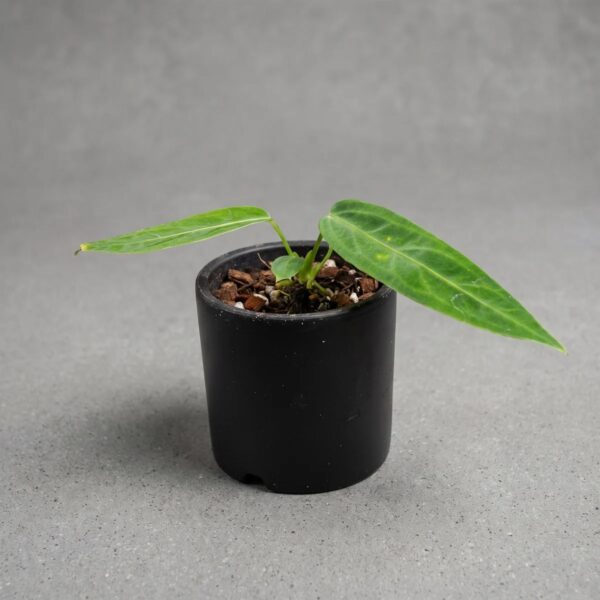
Anthurium crystallinum
Anthurium crystallinum
Original price was: HK$780.00.HK$380.00Current price is: HK$380.00.
In stock · store pickup
View plant
FREE PLANT ADVICE
Send us a photo before you change anything
WhatsApp a photo of the plant and your window light. Our Causeway Bay team will suggest care steps or plants that suit your space.
STORE · CAUSEWAY BAY
4/F, 39 Yiu Wa Street, Causeway Bay
Daily 12:30–8:00pm · ~3 min walk from Times Square
Map & directionsPlant Care