How to Care for Platycerium Wandae in Hong Kong | Plantjai

Hong Kong care guide for Platycerium Wandae.
The queen of the staghorn fern world — the largest, most commanding species, with basal fronds that extend upward into crown-like points, reaching over 2 metres across at maturity — a genuine "wall monster."
Origin & characteristics
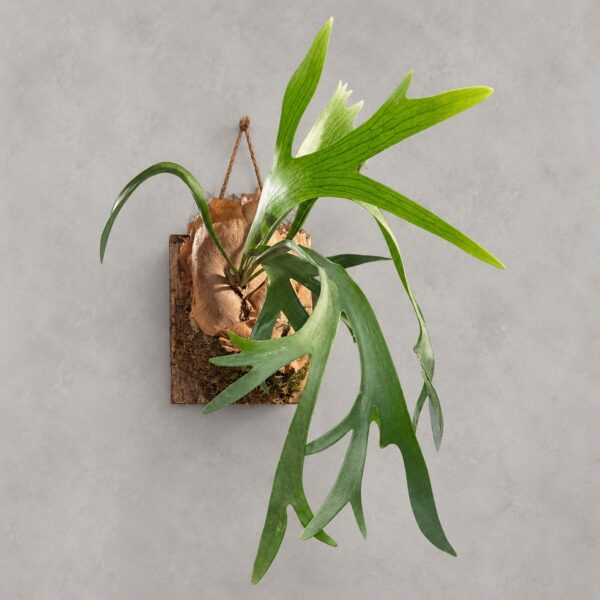
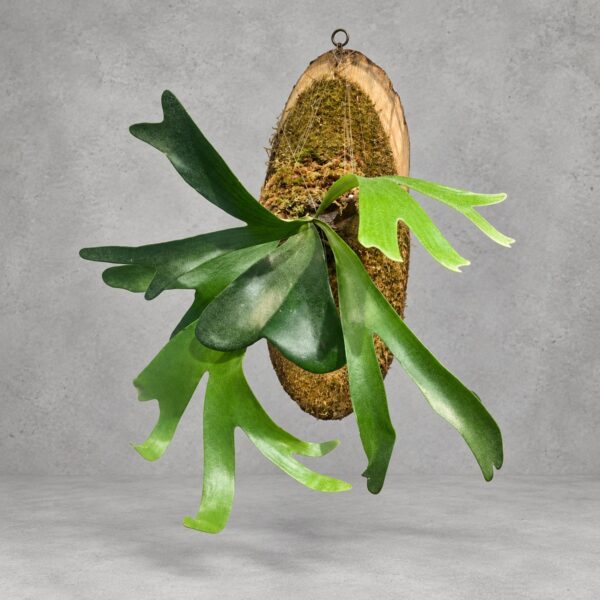
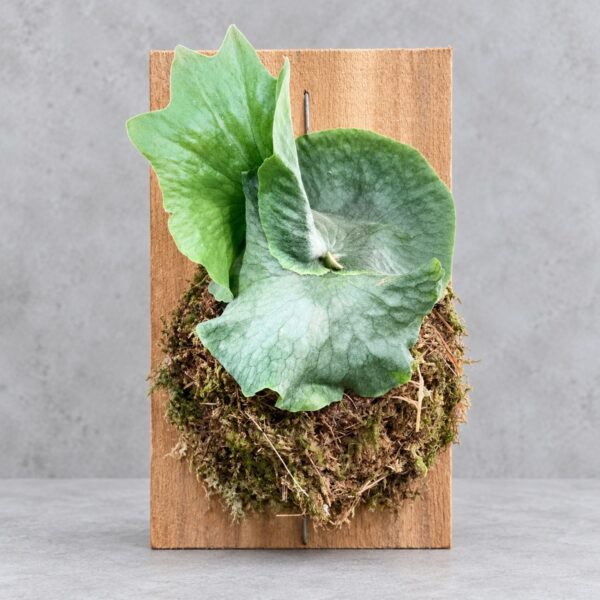
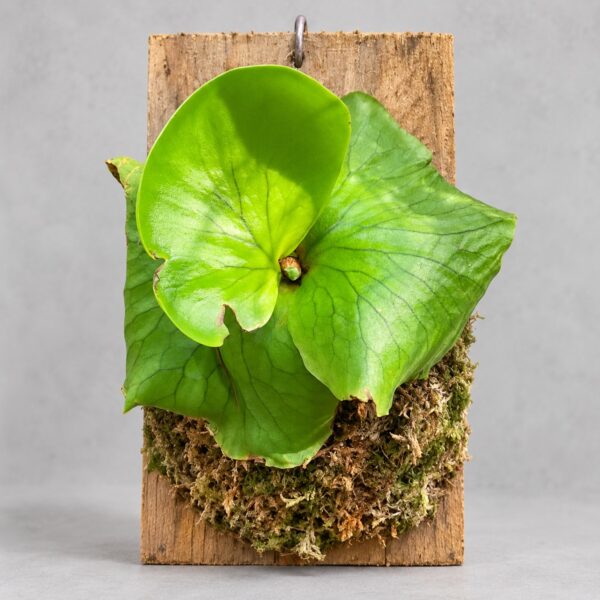
The queen staghorn fern is native to the tropical rainforests of New Guinea, belongs to the epiphytic genus Platycerium in the family Polypodiaceae, and is the largest known staghorn fern species. Like other staghorn ferns, it produces two frond types: round, shield-shaped basal fronds that hug the mounting surface, protecting the roots and gathering nutrients. Its most iconic feature, though, is that the tips of its basal fronds extend upward into finger-like forked points, forming what's known as a "finger crown" — a uniquely elegant form. Its fertile fronds are broad, deeply forked, with wavy edges, and a mature plant's overall diameter can exceed 1.5-2 metres — a truly spectacular sight. Growth is slower than other staghorn ferns, but every new frond is a genuine reveal. The entire plant is non-toxic, safe for pets and children.
Light
- Ideal placement: bright indirect light beside an east- or north-facing window, or 2-3 metres from a south-facing window
- Tolerance range: soft to medium indirect light of roughly 500-1,500 foot-candles
- Native environment: grows high on large rainforest tree trunks, accustomed to bright but filtered light
- Avoid: direct sun, especially harsh afternoon west sun, which scorches the fronds
- Signs of insufficient light: extremely slow growth, new fronds growing thinner, poor finger crown development
Watering
- Principle: keep the base of the basal fronds and the roots lightly moist, but the substrate surface should never stay wet long-term
- Seasonal frequency:
- Spring/summer (growing season): soak or spray roughly every 4-6 days
- Autumn/winter (slower growth): roughly every 7-10 days
- Recommended methods:
- Soak method: submerge the whole fern in room-temperature water for 10-15 minutes, letting the roots fully absorb water, then drain
- Spray method: spray directly at the base of the basal fronds and the roots, letting excess water run off
- Water quality tip: filtered water, rainwater, or tap water left standing overnight is ideal
- Key point: larger, mature queen staghorn ferns use significantly more water, and may need more frequent watering during summer
Substrate & mounting
- Substrate choice: as an epiphyte, it doesn't need soil; common planting methods include:
- Board mounting: nailed to a large wooden board, bark board, or tree fern board, with roots wrapped in quality sphagnum moss for support
- Large pot: once the plant is very large, a big, loose, breathable pot filled with pure bark chips, coconut husk, or coarse coco coir can be used
- Mounting materials: fishing line, nylon line, or soft horticultural strapping (avoid copper wire or any metal prone to rust)
- Support for large plants: a mature queen staghorn fern is extremely heavy — make sure the mounting board or support structure is sturdy, ideally solid wood or a metal frame
- Remounting timing: roughly every 1-2 years, once the moss starts breaking down and its water retention declines
Temperature & humidity
- Ideal temperature: 22-28°C, preferring a stable, warm environment
- Minimum tolerance: around 15°C — growth stalls significantly below this, and prolonged cold may cause frost damage
- Humidity requirements: 60-80% — higher humidity supports healthy finger crown and fertile frond development
- Humidifying methods:
- A humidifier for stable, consistent humidity (most ideal)
- Regular misting of the surrounding air
- Grouping with other plants to create a high-humidity microclimate
- Ventilation: maintain good air circulation — moisture tends to accumulate around large plants, and stuffy conditions easily trigger fungal issues
Common problems
| Symptom | Likely cause | What to do |
|---|---|---|
| Poor finger crown development | Insufficient humidity or light | Raise humidity above 70%, ensure bright indirect light |
| Fertile fronds yellowing and dropping | Overwatering or root suffocation | Reduce watering, check substrate breathability |
| Large areas of frond tips browning | Humidity too low or water quality issue | Increase surrounding humidity, switch to filtered water or rainwater |
| New fronds staying furled for a long time | Temperature too low or environmental stress | Keep above 22°C, minimise moving the plant |
| Sphagnum moss growing mould | Poor airflow or overwatering | Improve air circulation, reduce watering, replace moss if needed |
| Overall growth stalled | Severely insufficient light or root issues | Check light intensity, inspect root health |
How to explain to customers
"The queen staghorn fern is the largest, most commanding species in the staghorn fern family — a mature plant can span over two metres, genuinely impressive. What makes it special is that the tips of its basal fronds extend upward into finger-like forks, forming a beautiful 'finger crown.' Because it keeps getting bigger, you'll need to leave enough space, and the mounting board needs to be really sturdy. The soak method works best for watering — submerge the whole plant for ten-odd minutes, then drain. It likes higher humidity, so a humidifier is worth considering if you have one. It's completely non-toxic, but given its size, just make sure your wall can handle the weight."
Fun facts
- Platycerium wandae was named to honour Wanda, the wife of a Dutch botanist, making it one of the few staghorn fern species named after a woman
- The queen staghorn fern (wandae) and crown staghorn fern (coronarium) share the word "crown" in their common names but are different species — wandae grows larger with a more prominent finger crown, while coronarium's fertile fronds hang down long and tassel-like
- In its native New Guinea, the queen staghorn fern often grows on trees up to 20 metres tall, and mature plants can weigh over 50 kg — a genuine "aerial giant"
- The finger crown of a staghorn fern is actually a modified extension of the basal frond, likely functioning to increase the surface area for collecting rainwater and fallen leaves, while also protecting the growing tip
Keywords
Staghorn fern, Platycerium, wandae, queen staghorn fern, Polypodiaceae, fern, epiphyte, large plant, foliage plant, board mounting, indoor plant, indirect light, high humidity, non-toxic plant, finger crown, rainforest plant, collector's plant
參考資料(想知來源可展開)
References
- Missouri Botanical Garden — Plant Finder: Platycerium, https://www.missouribotanicalgarden.org/PlantFinder/PlantFinderDetails.aspx
- Royal Botanic Gardens, Kew — Plants of the World Online: genus Platycerium, https://powo.science.kew.org/
Plantjai · Causeway Bay collector indoor plants · WhatsApp +852 66807550
For Hong Kong homes and offices. Stock and pricing follow the product page.
IN STORE NOW
Plants for this guide
Related plants in stock now — live prices, delivery or Causeway Bay pickup.
Platycerium alcicorne
Platycerium alcicorne (Willemet) Desv.
HK$580.00
In stock · store pickup
View plant
FREE PLANT ADVICE
Send us a photo before you change anything
WhatsApp a photo of the plant and your window light. Our Causeway Bay team will suggest care steps or plants that suit your space.
STORE · CAUSEWAY BAY
4/F, 39 Yiu Wa Street, Causeway Bay
Daily 12:30–8:00pm · ~3 min walk from Times Square
Map & directionsPlant Care