How to Care for Platycerium Alcicorne in Hong Kong | Plantjai

Hong Kong care guide for Platycerium Alcicorne.
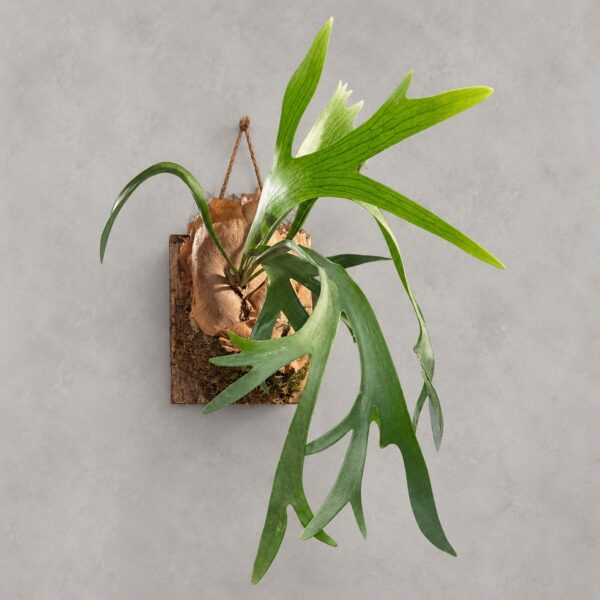
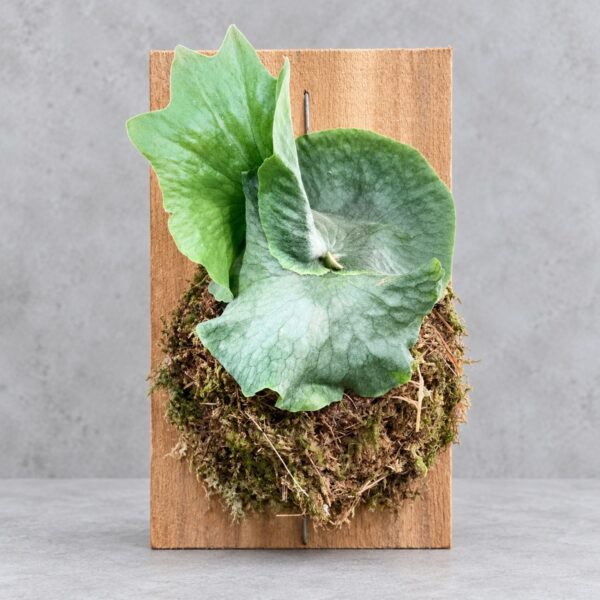
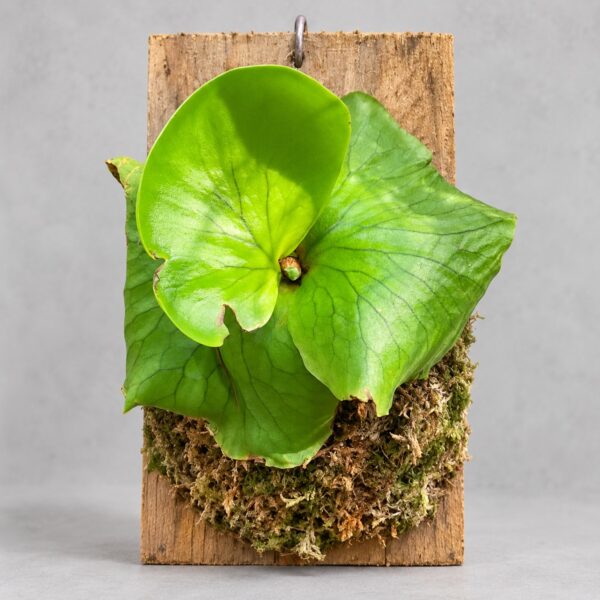
Round, silvery-white shield fronds paired with delicately forked antler fronds, growing in tight, sculptural clusters — one of the most artistic collector's picks in the staghorn fern family.
Origin & characteristics
- Native range: the tropical rainforests of eastern Madagascar and coastal Mozambique
- Growth habit: an epiphytic fern, growing on tree trunks or rocks in the wild — not a parasite
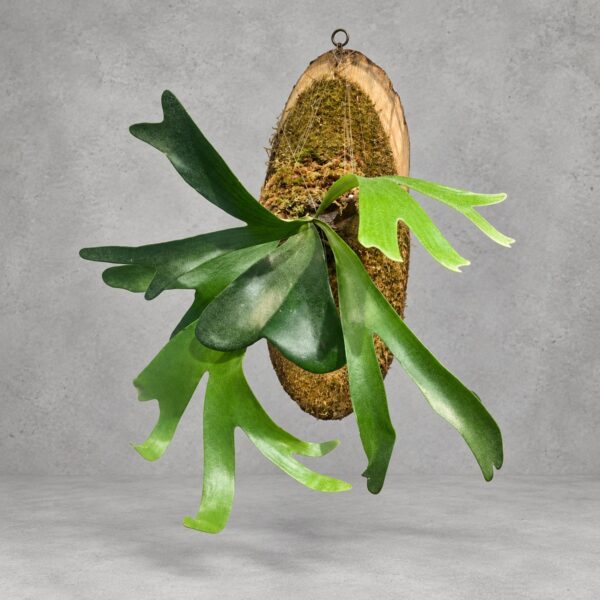
- Frond characteristics: it produces two distinct frond types — round shield fronds (basal fronds) hug the base and turn silvery-white as they age; drooping, forked fertile fronds resemble small antelope horns, bright green with a waxy surface
- Mature size: roughly 60-80 cm tall, 80-90 cm across
- Growth rate: slow
- Toxicity: ✅ Non-toxic. Safe for cats, dogs, and humans — can be placed anywhere in the home with peace of mind
Light
- Ideal environment: bright indirect light to partial shade
- Placement: 1-2 metres from an east- or north-facing window, or a south-facing window filtered with a sheer curtain
- Notes:
- Avoid direct sun — the waxy leaf surface develops white scorch spots
- Too little light causes fertile fronds to thin and fade in colour
- One of the more shade-tolerant staghorn fern species — can maintain growth even in partial shade
Watering
- Principle: keep the substrate moist but not waterlogged during the growing season, reducing water during dormancy
- Frequency reference:
- Spring/summer: roughly every 5-7 days
- Autumn/winter: roughly every 10-14 days
- Method (potted):
- The soak method is recommended — submerge the entire pot in room-temperature water for 15-20 minutes, letting the substrate fully absorb water, then drain
- Watering from above easily causes water to pool at the base of the shield frond and rot
- Method (mounted):
- Submerge the entire mount, plant and all, in water for 15-20 minutes, then drain and rehang
- Water quality: rainwater, distilled water, or water left standing is best; avoid hard water with high mineral content
- Key tips:
- The shield frond has a natural waxy protective layer — never wipe it off thinking it's dust
- Don't spray water directly onto the frond surface — lingering moisture easily causes rot
Soil & pot
- Substrate recipe: a dedicated epiphytic fern mix, extremely loose and breathable
- Recommended ratio: 40% sphagnum moss + 30% orchid bark + 20% coco coir + 10% perlite
- Key point: the substrate should mimic a tree-bark environment — breathable yet able to hold moisture intermittently
- Planting method options:
- Board mounting (recommended): wrap the roots in sphagnum moss against a wooden board, secure with garden twine or fishing line — the closest match to how it grows in nature
- Potted: use a wide, shallow pot with drainage holes
- Hanging basket: line with sphagnum moss for good air circulation
- Repotting/remounting timing: roughly every 2-3 years in spring, once the moss starts breaking down and turning black
Temperature & humidity
- Ideal temperature: 18-27°C
- Minimum temperature: no lower than 15°C — growth stalls below this
- Humidity: 50-70% is most ideal
- One of the more delicate staghorn fern species, fairly sensitive to dry air
- Hot, dry environments (e.g. near a heater) easily cause fertile frond tips to crisp
- A humidifier or grouping with other ferns is recommended to raise humidity
- Environmental notes:
- Keep away from heaters and AC vents
- Avoid strong direct wind — needs good air circulation but not a strong draft
Common problems
| Issue | Cause | Solution |
|---|---|---|
| Shield frond turning brown and dry | Natural aging | Never peel it off — it's a natural barrier protecting the roots |
| Fertile frond tips scorching | Humidity too low or air too dry | Raise humidity, keep away from heaters, increase soaking frequency |
| Fertile fronds soft and yellowing | Overwatering / waterlogged substrate | Reduce watering, check substrate drainage |
| Growth stalled overall | Temperature too low or insufficient light | Keep above 18°C, move to a brighter position |
| White powdery coating on fronds | Natural waxy protective layer | This is normal — never wipe it away |
| Brown patches on frond undersides | Sporangia (reproductive structures) | This is normal — a sign of a mature, healthy plant |
| Scale insects or whitefly | Insufficient humidity or poor airflow | Check leaf axils, wipe with alcohol-soaked cotton or spray with neem oil |
How to explain to customers
"The Madagascar elkhorn fern has a really distinctive look — it grows two kinds of fronds. The round shield fronds at the base slowly turn silvery-white, and they're protecting the roots, so please don't peel them off even once they look dry. The forked fronds growing upward and outward are the 'antler' fronds, and they really do look like a little antelope's horns. For watering, the soak method works best — submerge the whole pot in water for ten-odd minutes, then drain and put it back; don't water from the top, since the shield frond area rots easily if water pools there. It needs decent humidity, ideally above 50%. It's completely non-toxic to cats and dogs, so you can display it worry-free. It grows slowly, but over time it forms a beautifully sculptural clustered shape."
Fun facts
- The species epithet "alcicorne" in Platycerium alcicorne comes from the Latin "alces" (elk) + "cornu" (horn), describing how the fertile fronds fork like elk antlers
- Its shield fronds turn silvery-white with age, forming a tight "round shield" that protects the roots — the origin of its common name
- Unlike many staghorn ferns, alcicorne tends to form tight clusters rather than spreading outward, making it well suited to limited indoor space
- The waxy leaf coating is an evolutionary adaptation to reduce water loss, helping it survive dry seasons
- Staghorn ferns are technically "non-parasitic epiphytes" — they cling to trees for support but don't steal nutrients, relying entirely on air and rainwater
Keywords
Madagascar elkhorn fern, Platycerium alcicorne, staghorn fern, shield frond, fertile frond, epiphyte, Polypodiaceae, bright indirect light, soak method, high humidity, non-toxic plant, pet-safe, fern, foliage plant, Plantjai
參考資料(想知來源可展開)
References
- Missouri Botanical Garden — Plant Finder: Platycerium, https://www.missouribotanicalgarden.org/PlantFinder/PlantFinderDetails.aspx
- Royal Botanic Gardens, Kew — Plants of the World Online: genus Platycerium, https://powo.science.kew.org/
Plantjai · Causeway Bay collector indoor plants · WhatsApp +852 66807550
For Hong Kong homes and offices. Stock and pricing follow the product page.
IN STORE NOW
Plants for this guide
Related plants in stock now — live prices, delivery or Causeway Bay pickup.
Platycerium alcicorne
Platycerium alcicorne (Willemet) Desv.
HK$580.00
In stock · store pickup
View plant
FREE PLANT ADVICE
Send us a photo before you change anything
WhatsApp a photo of the plant and your window light. Our Causeway Bay team will suggest care steps or plants that suit your space.
STORE · CAUSEWAY BAY
4/F, 39 Yiu Wa Street, Causeway Bay
Daily 12:30–8:00pm · ~3 min walk from Times Square
Map & directionsPlant Care