

Tissue Culture and Propagation Industry: Where Do Variegated Plants Come From?

Introduction
Welcome back to the Specimen Archive. Today’s lesson pulls back the curtain on a topic many plant enthusiasts find fascinating yet mysterious — where did that beautiful variegated Monstera in your hands actually come from?
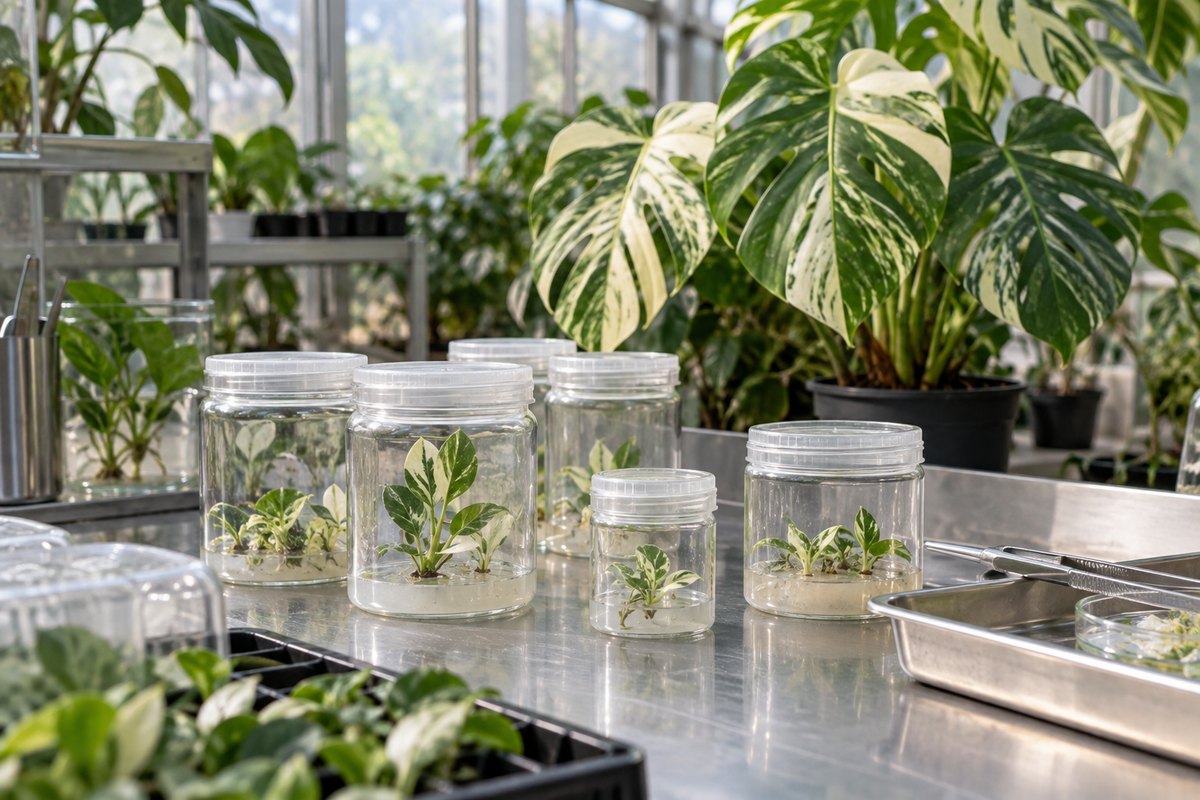
If you assume all foliage plants sprout from seeds and grow slowly, this article may upend that belief. The modern plant propagation industry has evolved to an astonishing degree, and tissue culture technology is the invisible engine driving it all. From a tiny tissue sample in a laboratory to the tens of thousands of variegated specimens on the market, the story in between is far more captivating than you might imagine.
Let me take you inside a tissue culture lab and show you the full picture of this industry.
Tissue Culture Technology: Creating Life in a Sterile World
Tissue culture (TC) sounds highly technical, but its core concept is actually straightforward: in a sterile environment, a small piece of plant tissue (could be a shoot tip, leaf segment, embryo axis, or even just a few cells) is placed on a nutrient medium containing specific ingredients, where it grows and differentiates under controlled conditions until it becomes a complete plant.
This process has several key elements:
Sterile environment: This is the make-or-break factor for tissue culture. The medium is rich in sugars and nutrients — paradise for bacteria and fungi. Once contaminated, an entire batch may be lost. Professional tissue culture facilities enforce strict decontamination protocols, and technicians work inside laminar flow hoods.
Medium formulation: Different plants require different medium recipes, much like different people have different dietary preferences. The formulation must precisely control plant hormone ratios — the balance between auxins and cytokinins determines whether tissue tends to produce roots or shoots.
Environmental control: Temperature, light cycles, and humidity all require precise management. TC plants are like ICU patients — every variable is carefully monitored and adjusted.
Three Major Commercial Applications of Tissue Culture
Why is the commercial propagation industry so enthusiastic about tissue culture? Because it solves several problems that traditional propagation methods cannot overcome:
Rapid Mass Production
A mother plant through traditional cuttings might produce only a dozen or two offspring per year. Through tissue culture, a small shoot tip sample can multiply into thousands of plantlets within months. This exponential growth rate is the core commercial value of TC.
Maintaining Cultivar Consistency
Traditional propagation (especially seed propagation) tends to produce variation, and offspring don’t always perfectly retain the parent’s characteristics. Tissue culture is a form of asexual (vegetative) propagation that can, in theory, produce a 100% genetic copy of the mother plant. This is crucial for commercial cultivars that need consistent traits.
Of course, there’s an exception — variegated plants present special challenges in tissue culture, which we’ll discuss shortly.
Virus Elimination
Many plants accumulate viruses through long-term vegetative propagation, leading to weakened growth and declining quality. The “shoot tip culture” technique in TC can eliminate the vast majority of viruses, since viruses are typically unevenly distributed within plants, and meristematic tissue at shoot tips usually has the lowest viral concentration. This produces “virus-free” plants, giving old cultivars a new lease on life.
Challenges of Variegated Plant Tissue Culture: Why Can’t All Variegation Be Mass-Produced?
This is one of the most brain-bending puzzles in the entire plant tissue culture field.
Variegation is essentially a developmental abnormality in chloroplasts. In a variegated plant, two cell types typically coexist: green cells with normal chloroplasts, and white or yellow cells where chloroplasts are abnormal or missing. These two cell types interweave in some pattern, creating the variegated patterns we see.
The problem: variegated cells and green cells grow at completely different rates. Green cells contain chloroplasts and can photosynthesize efficiently, growing strong and vigorous; variegated cells can barely photosynthesize, growing slowly or even relying entirely on neighboring green cells for nutrients.
During tissue culture, if conditions slightly favor green cell growth, the resulting plantlets may completely lose their variegation and revert to all-green. Conversely, if variegated cells become too dominant, the plantlet may be too weak to photosynthesize sufficiently and could die.
This “chimeric stability” problem makes variegated plant tissue culture success rates far lower than ordinary green plants. It’s also why certain variegated cultivars (like Monstera deliciosa ‘Albo Borsigiana’) remain in short supply and command high prices — it’s not that the technology doesn’t exist, but success rate issues prevent costs from dropping.
Thailand’s Tissue Culture Industry: Scale and Impact
Talking about plant tissue culture without mentioning Thailand would be incomplete. The scale of Thailand’s TC industry in the global foliage plant sector is enormous.
Thailand’s tissue culture industry began with orchid cultivation in the 1980s. Orchids, as high-value crops, drove rapid development and popularization of TC technology in Thailand. When the foliage plant market exploded in the late 2010s, Thailand already possessed mature TC infrastructure, abundant technical talent, and well-developed supply chains.
Thailand’s TC industry has profoundly impacted the global foliage plant market:
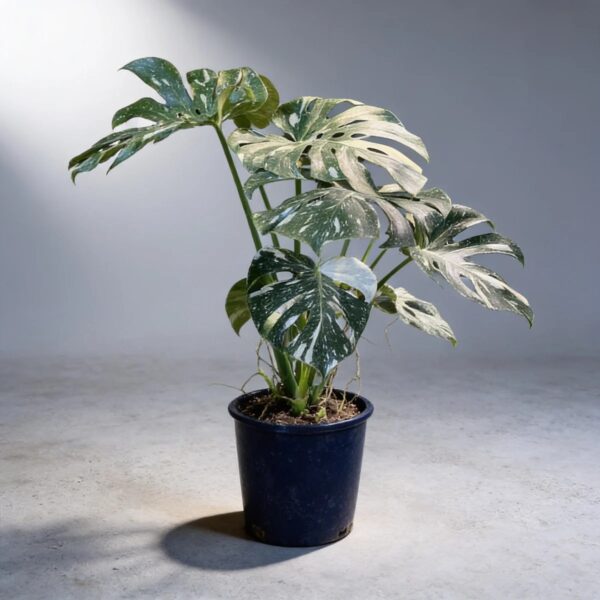
Democratization of variegated plants: Thanks to mass production by Thai tissue culture facilities, many variegated cultivars once accessible only to top collectors have become relatively affordable. Monstera deliciosa ‘Thai Constellation’ is the perfect example — this cultivar itself is a masterpiece of Thailand’s tissue culture industry.
Structural price declines: When mass production technology for a cultivar is cracked, market supply surges and prices naturally fall. This is good news for everyday consumers, but brutal reality for early collectors who paid premium prices — their “assets” depreciate rapidly.
Persistent quality inconsistency: Large-scale production also brings quality control challenges. Some TC facilities prioritize volume over quality, flooding the market with weak, problematic plantlets. This is precisely why we at Plantjai place such emphasis on careful sourcing and screening.
Ethics and Conservation: The Double-Edged Sword of Tissue Culture
The booming plant propagation industry also raises questions worth our serious consideration.
Concerns About Genetic Diversity
Tissue culture is fundamentally asexual propagation — every plantlet produced is genetically nearly identical to the mother plant. When a popular cultivar’s market supply comes almost entirely from tissue-cultured offspring of a single mother plant, we face the risk of dramatic genetic diversity loss.
What’s the problem? Imagine if a disease suddenly targets this cultivar — since all plants share nearly identical genes, their disease resistance is also nearly identical. The result could be catastrophic large-scale infection. Agricultural history offers countless painful lessons on this front.
Wild Poaching vs. Tissue Culture Alternatives
On the other hand, tissue culture technology offers a path forward for wild plant conservation. When a wild species can be mass-propagated in a lab, market demand for wild-collected specimens decreases, indirectly reducing poaching pressure. This is a positive direction, but only if we support responsible tissue culture operations rather than encouraging opportunistic businesses that use wild plants as mother stock without investing in research and development.
How to Identify Tissue Culture Plants vs. Seedlings or Cuttings
As a consumer, you might wonder: is the plant I bought a tissue-cultured specimen? What’s the difference?
Typical Characteristics of TC Plants
TC plants grow up in artificial environments from a young age, carrying certain “marks”: roots tend to be fine and dense but lack a prominent main root; leaves may appear thinner or more delicate than naturally grown plants; stems may be slimmer with longer internodes (related to higher humidity and lower light in tissue culture facilities).
Characteristics of Seed-Grown Plants
Seedlings grown from seed typically have well-developed main root systems, grow more vigorously, and show more variation (since sexual reproduction produces genetic recombination). For variegated plants, seed-grown specimens usually show less stable variegation than TC plants.
Characteristics of Cutting-Grown Plants
Cuttings are branches taken directly from a mother plant, also a form of asexual propagation. Cuttings retain the maturity characteristics of the mother (such as adult leaf forms), and typically grow faster than both TC plants and seedlings. Roots emerge from the cutting point, with no main root.
Accurately determining a plant’s origin isn’t always easy, especially once it has grown beyond the “marking period” of tissue culture. The most direct approach is simply asking the seller, and purchasing through reputable channels.
Conclusion
Tissue culture technology is the cornerstone of the modern foliage plant industry, and the fundamental reason we in this era can enjoy so many beautiful cultivars at relatively accessible prices. It’s a double-edged sword — driving the democratization of plant culture while bringing challenges in quality, ethics, and ecology.
As an informed collector, understanding the technology and industry logic behind variegated plant sources empowers you to make smarter purchasing decisions. You’re not just buying a plant; you’re participating in a massive industry chain — and your choices influence where this industry heads.
If you’d like to learn more about plant tissue culture or are interested in acquiring quality specimens from professional tissue culture facilities, visit [plantjai.com](https://plantjai.com) to browse our curated selection. Our shop at 4/F, Nan Hing Place, 39 Yiu Wa Street, Causeway Bay also carries TC plants and cuttings from reliable sources — each one rigorously screened by us for health and quality. Come chat with me; I’d love to share more stories from behind the tissue culture scenes.
IN STORE NOW
Plants for this guide
Related plants in stock now — live prices, delivery or Causeway Bay pickup.
Monstera obliqua Peru
Original price was: HK$480.00.HK$280.00Current price is: HK$280.00.
In stock · store pickup
View plantMonstera 'Thai Constellation'
Monstera 'Thai Constellation'
from HK$280.00
In stock · store pickup
View plant
FREE PLANT ADVICE
Send us a photo before you change anything
WhatsApp a photo of the plant and your window light. Our Causeway Bay team will suggest care steps or plants that suit your space.
STORE · CAUSEWAY BAY
4/F, 39 Yiu Wa Street, Causeway Bay
Daily 12:30–8:00pm · ~3 min walk from Times Square
Map & directions