

The Science of Variegation Decoded: Why Do Plants Develop White or Yellow Patterns?

Introduction
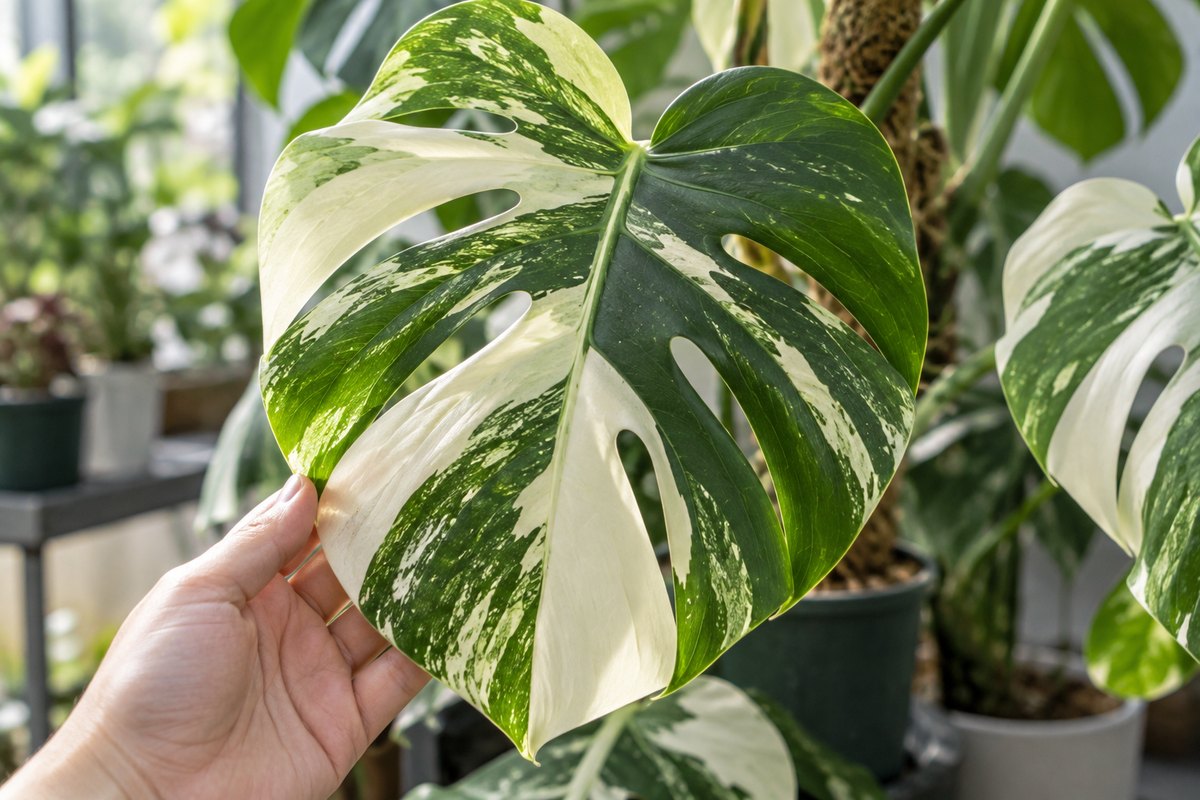
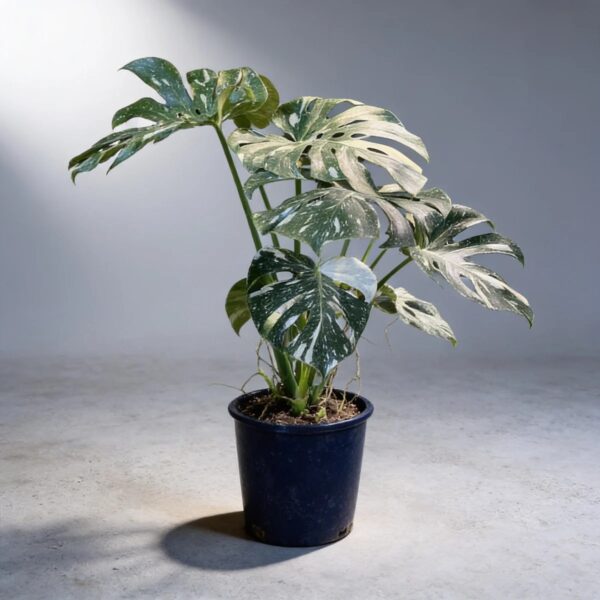
A customer once visited the Archive, pointing at a variegated monstera (Monstera deliciosa ‘Albo Variegata’) and asked, “Chief, is this plant malnourished? Why is half the leaf white?” I smiled. This seemingly naive question touches on one of the most fascinating areas in botany — variegation.
If you’ve ever been drawn to variegated plants’ canvas-like patterns but wondered why they grow this way; if you want to understand why variegated plants are particularly difficult and expensive to keep; if you’re curious about what “reversion” means — this article is for you. Welcome back to the Specimen Archive. Let’s open our microscopes and enter the cellular world within a leaf.
Cellular-Level Explanation of Variegation: The Mystery of Chimeras
What Is a Chimera?
The essence of variegation is a special tissue structure called a “chimera.” Imagine a leaf as a mosaic — green and white areas interspersed, each composed of different cell types. Green regions contain normal chloroplasts and can photosynthesise; white regions lack chloroplasts or chlorophyll and cannot photosynthesise.
This phenomenon arises because the plant’s growing point (meristem) simultaneously contains two different cell lines: normal green cells and mutated white cells. When these cells jointly participate in leaf development, the variegated pattern we see is created.
Dual Chimerism in Epidermis and Growing Point
Botanically, chimeras are classified by the layer where they occur. A plant’s growing point consists of several cell layers (called L-I, L-II, and L-III). When mutation occurs only in the surface layer (L-I), it forms a “mericlinal chimera”; when mutation penetrates deeper layers (L-II or L-III), it forms a “sectorial chimera.” The depth and pattern of this chimerism directly determine variegation’s appearance — whether it’s speckled distribution or large blocks of pure colour.
Different Types of Variegation
Variegation isn’t a single phenomenon. It manifests in multiple ways, each with distinct underlying mechanisms.
Mottled Variegation
This is the most common form, with green and white or yellow interweaving in irregular patterns. Golden pothos and common variegated dwarf umbrella tree belong to this category. Mottled variegation tends to be relatively stable because chimeric cells in the growing point have achieved a balanced coexistence.
Sectorial Variegation
This type presents as large blocks of pure colour — often half a leaf is pure white while the other half is pure green. The classic “yin-yang leaf” of variegated monstera exemplifies sectorial variegation. This variegation originates from deeper-layer chimeras, creates the most dramatic visual impact, but is also the least stable — because the distribution of white and green cells in the growing point easily becomes unbalanced.
Half-moon Variegation
Certain varieties develop variegation regularly on one side of the leaf, forming crescent-like patterns. This regularity suggests that chimeric cells occupy relatively fixed positions in the growing point. Pink Princess philodendron (Philodendron erubescens ‘Pink Princess’) sometimes displays this characteristic.
Marginal Variegation
White or yellow appears only at leaf margins, with the centre remaining green. This variegation typically results from mutations in the epidermal layer (L-I), since leaf margins develop primarily from epidermal tissue. Variegated lily of the valley is an example of marginal variegation.
Central Variegation
The opposite of marginal variegation, colour changes concentrate in the leaf centre while margins remain green. This type is relatively rare in horticulture.
Mint Variegation
This is a variegation type particularly coveted in recent horticultural circles, appearing as pale green or mint-coloured light patches rather than pure white. Monstera mint (Monstera deliciosa ‘Mint’) is representative. The mechanism behind this variegation differs slightly, possibly involving partially blocked chlorophyll synthesis rather than complete absence.
Causes of Variegation: From Gene Mutation to Cytoplasmic Inheritance
Gene Mutation
The root cause of variegation is mutation in genes controlling chloroplast development or chlorophyll synthesis. Such mutations may occur naturally (random replication errors) or be induced by environmental factors (UV radiation, chemicals, radiation, etc.). When mutation occurs in the meristematic cells of the growing point, it gets passed to all subsequently developed tissues.
Cytoplasmic Inheritance
Chloroplasts contain their own DNA (called cpDNA), and mutations in these genes also cause variegation. Since chloroplasts are inherited through cytoplasmic (maternal) inheritance, the inheritance pattern of such variegation differs from nuclear gene mutations and is typically more complex.
Chimera Formation Mechanisms
Two main pathways create chimeras: either originally normal cells in the growing point undergo somatic mutation, producing white cell descendants; or tissue originally composed of white cells undergoes a reverse mutation, regenerating green cells. In either case, the key is maintaining coexistence of two or more cell lines in the growing point.
Why Can’t Variegated Parts Photosynthesise?
This is a question many people ask. White or yellow tissue lacks chlorophyll, which is the core molecule for absorbing light energy during photosynthesis. Without chlorophyll, light energy cannot be converted to chemical energy, and nutrients cannot be manufactured.
What does this mean? The higher the variegation degree, the weaker the photosynthetic capacity. A nearly all-white leaf essentially cannot produce nutrients for the plant — it’s actually a “consumer,” still requiring water and minerals to survive without giving anything back. This is the fundamental reason why variegated plants grow slowly, have weaker root systems, and are more sensitive to environmental conditions.
Think of a variegated plant as a “partially unemployed” factory — green areas work hard, while white areas “sit idle.” The larger the white areas, the lower the factory’s overall efficiency.
Variegation Stability Issues: Reversion Phenomenon and Causes
What Is Reversion?
Reversion is when variegated plants’ offspring or new growing points gradually lose variegation characteristics, returning to all-green. This is the worst nightmare for variegated plant propagators and collectors. A valuable variegated monstera that produces all-green new leaves sees its value plummet significantly.
Biological Causes of Reversion
The root cause of reversion is competitive imbalance between green and white cells in the growing point. Remember? Green cells can photosynthesise and produce nutrients; white cells cannot. In the growing point’s “resource battlefield,” green cells are often more competitive because they’re self-sufficient. If environmental conditions are unfavourable (such as insufficient light), green cells’ advantage becomes even more pronounced, potentially completely replacing white cells and causing reversion.
Another cause is the randomness of cell division. The chimeric state in the growing point requires precise balance between two cell lines, and cell division isn’t always equal. Once one cell type achieves absolute numerical dominance, the chimeric state breaks.
How to Slow Reversion?
Adequate light is key to slowing reversion. Under stronger light, although white cells cannot photosynthesise, green cells’ photosynthetic efficiency increases, providing sufficient overall nutrients to support white cells’ coexistence. Conversely, under insufficient light, green cells accelerate proliferation to protect themselves, crowding out white cells.
Regularly pruning all-green new shoots is also an important management measure. Once a completely green new shoot is spotted, it should be promptly removed to prevent green tissue from further expanding. It’s somewhat like horticultural “surgery” — removing potential threats to protect the precious chimeric state.
Artificial Variegation Induction Methods and Controversies
Chemical Induction
Certain chemicals, such as sodium azide and specific herbicides, can interfere with chloroplast development and induce variegation. However, this method is extremely unreliable, typically produces unstable variegation, and the chemicals are harmful to overall plant health. The Archive’s position is that we don’t recommend this approach.
Radiation Induction
Radiation (such as X-rays and gamma rays) can induce gene mutations and is commonly used in plant breeding. Some variegated cultivars were developed through radiation mutagenesis. This method requires professional equipment and expertise — not something amateur enthusiasts can attempt.
Tissue Culture
Through tissue culture technology, chimeric tissue can be isolated from variegated plants’ growing points and propagated under sterile conditions. This is the primary method for commercial variegated plant production. However, during tissue culture, chimeras easily undergo separation (green and white cells growing independently), resulting in plants that are either all-green or all-white — the latter typically cannot survive.
Ethics and Controversies
The commercialisation of variegated plants has sparked some controversy. On one hand, variegation is a natural phenomenon in plants, and humans have simply discovered and preserved these variations. On the other hand, excessive commercial hype has driven prices of certain variegated varieties sky-high, with incidents of mislabeling and fraud. The Archive believes appreciating variegated plants should be grounded in understanding their scientific principles, rather than simply chasing market trends.
Conclusion
Variegation is a strange and wonderful gift from nature. The coexistence of “working” and “non-working” tissues on the same leaf, two cell lines peacefully sharing a single growing point — this is a small biological miracle in itself. Next time you admire a variegated plant, consider the invisible stories unfolding at the cellular level.
Variegated plants are indeed difficult to keep, and indeed expensive. But if you understand their scientific principles, you’ll know how to give them the most appropriate care — adequate but not excessive light, stable conditions, and sufficient patience.
The PLANTJAI Specimen Archive houses a curated collection of variegated foliage plants, from classic variegated monstera to rare mint variegated varieties. If you’d like to see these “living artworks” in person, visit us on the 4th floor of Nam Hing Fong, 39 Yiu Wa Street, Causeway Bay. You can also browse our variegated plant collection at plantjai.com. Remember: every variegated leaf is a unique painting at the cellular level.
May your green corner always have a few white patches shining bright.
IN STORE NOW
Plants for this guide
Related plants in stock now — live prices, delivery or Causeway Bay pickup.
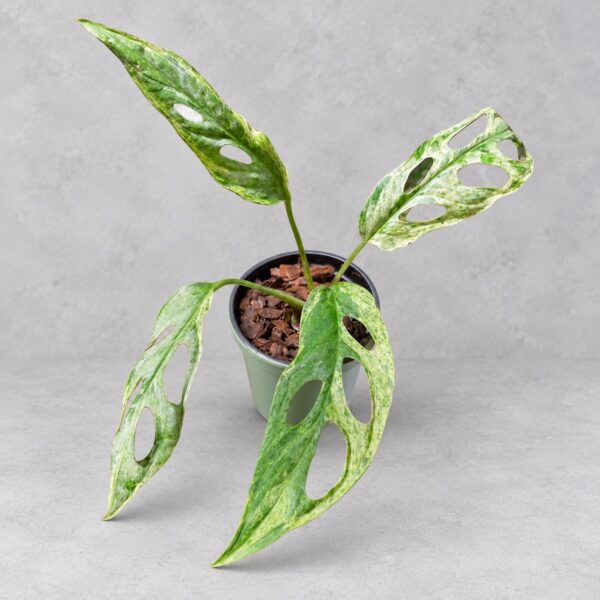
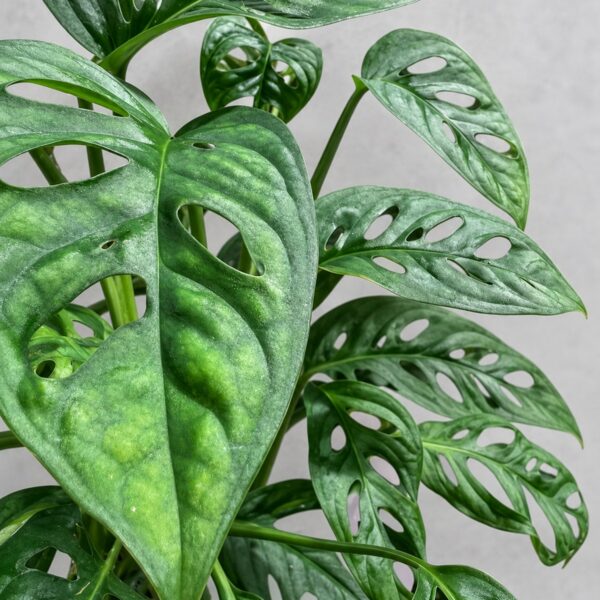
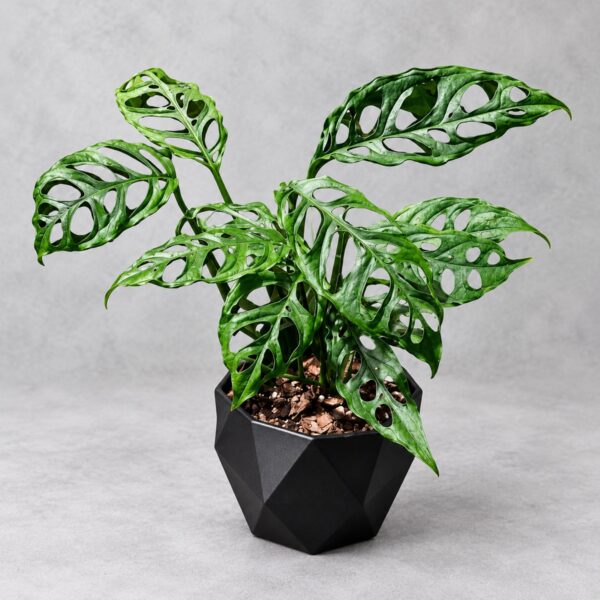
Monstera obliqua Peru
Original price was: HK$480.00.HK$280.00Current price is: HK$280.00.
In stock · store pickup
View plantMonstera 'Thai Constellation'
Monstera 'Thai Constellation'
from HK$280.00
In stock · store pickup
View plant
FREE PLANT ADVICE
Send us a photo before you change anything
WhatsApp a photo of the plant and your window light. Our Causeway Bay team will suggest care steps or plants that suit your space.
STORE · CAUSEWAY BAY
4/F, 39 Yiu Wa Street, Causeway Bay
Daily 12:30–8:00pm · ~3 min walk from Times Square
Map & directions