

Philodendron Family Guide: Fish Bone, Fiddle Leaf, Golden Pothos & Rare Species


Getting to Know the Philodendron Family
Climbing Masters of the Araceae Family
The genus Philodendron belongs to the Araceae family, which also includes familiar houseplants like Monstera, Alocasia, and Syngonium. Members of this family share common traits: they mostly have well-developed aerial root systems, are adept at climbing tree trunks or rocks, and their leaves often display dramatically different forms between juvenile and adult stages.
The name Philodendron comes from the Greek words philos (love) and dendron (tree), meaning “tree-loving plant” — a remarkably fitting name, since in their native habitats, Philodendrons are almost always found embracing tree trunks.
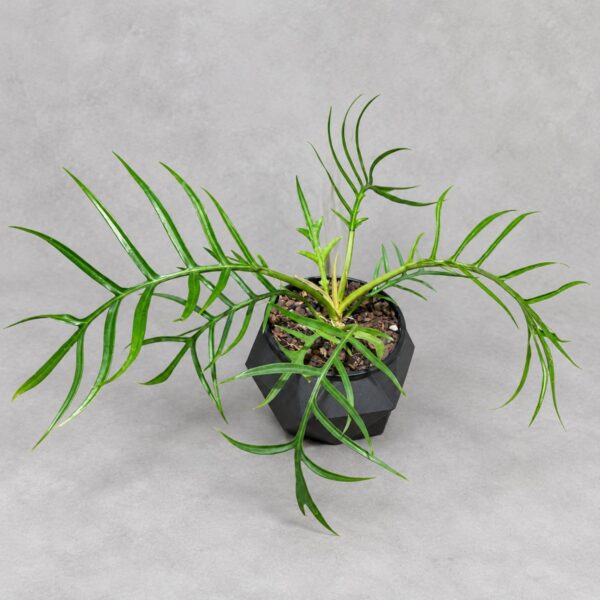
Fish Bone Philodendron Philodendron bipennifolium
Leaves Like Fish Bones
Most people do a double-take the first time they see Philodendron bipennifolium — the leaves look like something out of a comic book.
The mature leaves of this species have a uniquely distinctive fish bone or horse-head shape, with deep notches on both sides, a prominent central vein, and a highly three-dimensional silhouette. Juvenile leaves are still relatively normal heart shapes, but as the plant climbs upward, the leaves gradually transform into that unforgettable, eye-catching form.
I have a large P. bipennifolium at the Archive that has climbed all the way to the ceiling, and it’s always the center of attention during tours. Its mature leaves can reach 40–60 cm long, with dark green leathery surfaces that gleam under lights — a true statement piece for any living room.
Care Tips
Caring for P. bipennifolium isn’t difficult. It likes bright, indirect light, warm and humid conditions, and well-draining potting mix. Most Hong Kong living rooms suit it perfectly. The main thing to remember: it loves to climb — give it a pole, and it will reward you with bigger, more beautiful leaves.
We have quality Philodendron bipennifolium specimens available at plantjai.com. If you want to add some wild tropical rainforest energy to your home, this is an excellent choice.
Fiddle Leaf Philodendron Philodendron panduriforme
Tropical Elegance in Violin Shape
If P. bipennifolium is a rock star, P. panduriforme is a classical musician. Its mature leaves have an elegant violin or pipa (Chinese lute) shape — narrower in the middle with sides that curve inward slightly before flaring out at the tip, creating very fluid, graceful lines.
Philodendron panduriforme has relatively stiff leaves with a glossy surface in rich, saturated dark green. It’s not as flashy or dramatic as the Fish Bone Philodendron, but its understated elegance is deeply appealing, especially in study rooms or offices.
This variety grows at a moderate pace, prefers humid environments and bright, indirect light. Its vines are quite thick and need sturdy support. I once saw a P. panduriforme that had been growing for over ten years — its leaves were nearly a meter long. The sight was truly awe-inspiring.
Golden Pothos: Wait, You’re in the Philodendron Family Too?
A Taxonomic Tidbit
Here’s something many people don’t know. The plant we’ve called “golden pothos” since childhood has actually been reclassified into the genus Philodendron under the latest taxonomic research, with the scientific name Philodendron aureum (previously commonly known as Epipremnum aureum).
However, in the horticultural world, everyone still calls it golden pothos — the name is simply too deeply ingrained. Whatever you call it, its golden-variegated heart-shaped leaves and near-unkillable resilience have made it one of the most popular houseplants worldwide.
The World of Golden Pothos Varieties
From the basic green pothos to the golden-variegated Golden Pothos, to nearly all-white Marble Queen and Snow Queen cultivars, the number of variegated varieties is countless. It’s also the perfect introductory plant for observing the leaf-shape transformation pattern in Philodendron/Epipremnum species — heart-shaped juvenile leaves splitting into mature forms, a rule it demonstrates beautifully.
Philodendron vs. Epipremnum: How to Tell Them Apart
Key Differences
Back to that opening question. To distinguish Philodendron from Epipremnum, here are a few observable traits:
Spathe structure: This is the most accurate distinction, but your houseplants probably won’t flower, so it’s not very practical.
Aerial roots: Philodendron aerial roots are generally thicker, with sticky secretions at the tips to aid climbing; Epipremnum aerial roots are more slender.
Leaf texture: Philodendron leaves typically have a unique “philodendron feel” — thicker, more leathery, with venation patterns slightly different from Epipremnum. Touch and observe enough of them, and you’ll gradually sense the difference.
Petioles: Philodendron petioles are usually wrapped in a leaf sheath, while Epipremnum sheaths tend to fall off earlier.
Honestly though, for the average enthusiast, it doesn’t really matter if you can’t tell them apart. Their care requirements are virtually identical — both are easy-going, beautiful foliage plants. I’ve met experienced growers with decades under their belts who still occasionally hesitate at the boundary between the two.
Universal Care Rules for Philodendrons
Love Humidity and Warmth, Hate Cold
Most Philodendron family members love warm, humid environments. Hong Kong’s natural climate is practically a perfect match. Try not to let temperatures drop below 15°C in winter, as most species come from tropical regions with almost no cold tolerance.
Give Them a Pole, They’ll Grow Better
This is a universal need for all climbing Philodendrons. In nature, they climb tree trunks upward, with larger and more beautiful leaves the higher they go. Indoors, giving them a moss pole or coco coir pole not only provides support but also allows aerial roots to attach and absorb more moisture and nutrients, promoting better leaf development.
Potting Mix and Watering
Well-draining mixed potting mix is key. The standard recipe: peat moss, perlite, and pine bark. Watering principle: “water when the top layer is dry.” Better slightly underwater than waterlogged. During the growing season, feed with diluted liquid fertilizer every two weeks.
Conclusion: Step Into the Fascinating World of Philodendrons
The Philodendron family is like a book that never ends. Every time I think I’ve seen all this family has to offer, I discover an unfamiliar variety in some corner that leaves me marveling at nature’s creativity once again.
Whether it’s the exotic boldness of P. bipennifolium, the elegant flowing lines of P. panduriforme, or the familiar comfort of golden pothos, this family has a member that will speak to you.
If you’d like to begin exploring the world of Philodendrons, visit plantjai.com to discover our curated selection of Philodendron bipennifolium and other varieties. And of course, you’re welcome to visit our Causeway Bay store — the Archive holds many more rare specimens that can’t be showcased online, waiting for you to see in person. I’ll be here, ready to turn the next page of this tropical plant guidebook for you.
IN STORE NOW
Plants for this guide
Related plants in stock now — live prices, delivery or Causeway Bay pickup.
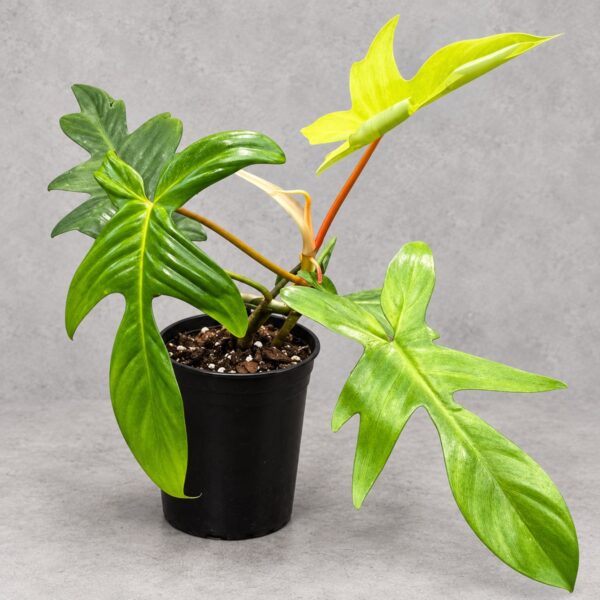
Philodendron 'Florida Ghost'
Philodendron 'Florida Ghost'
from HK$118.00
In stock · store pickup
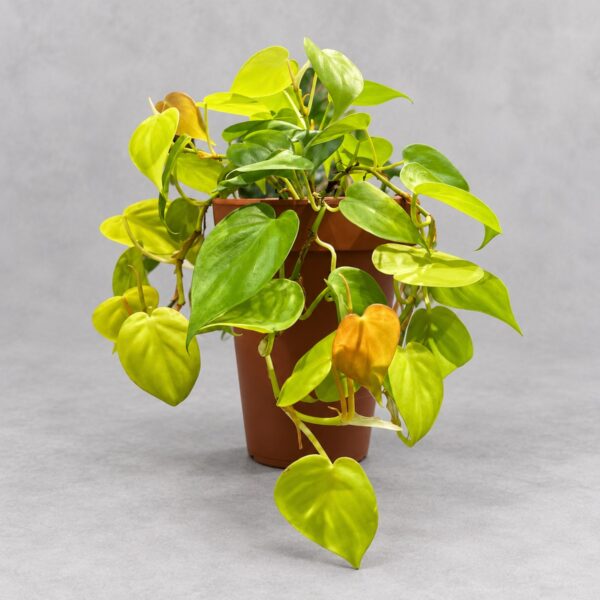
View plantPhilodendron hederaceum 'Lemon Lime'
Philodendron hederaceum 'Lemon Lime'
HK$198.00
In stock · store pickup
View plant
FREE PLANT ADVICE
Send us a photo before you change anything
WhatsApp a photo of the plant and your window light. Our Causeway Bay team will suggest care steps or plants that suit your space.
STORE · CAUSEWAY BAY
4/F, 39 Yiu Wa Street, Causeway Bay
Daily 12:30–8:00pm · ~3 min walk from Times Square
Map & directions